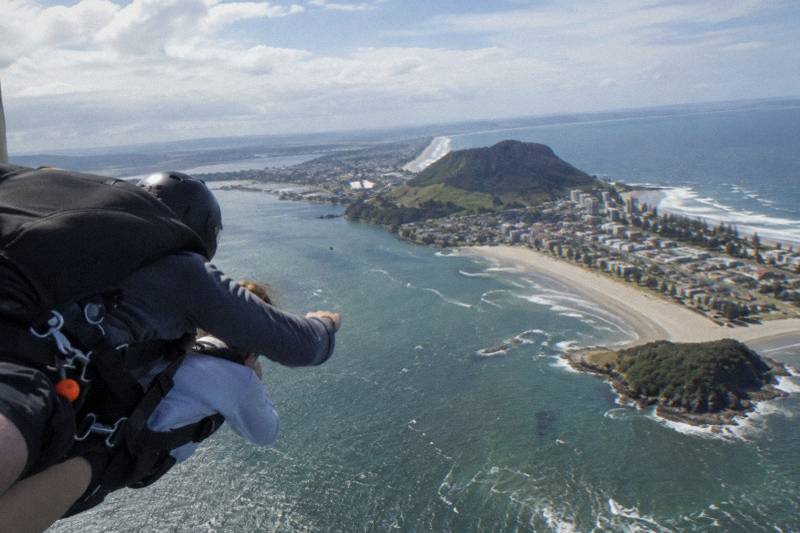
Skydiving Weather At Mount Maunganui: Wind, Cloud And Rebooking
Weather decides whether a tandem jump flies on any given day at Tauranga Airport. Here is what holds a day up, how the operator reschedules around it, and which cancellation terms apply to you.
Short answer
Wind, low cloud and rain are the three things that hold a skydive day at Tauranga Airport. The operator phones you on the day and works out a new time that fits your schedule. Every jump product here carries free cancellation up to 24 hours before the start for a full refund, and direct bookings follow the operator's own terms.
Tandem jumps from Tauranga Airport sit at the mercy of three things: wind, low cloud and rain. The From Tauranga: Skydive over Mount Maunganui product is one of several ways to book that day, and every one of them carries the same core protection, free cancellation up to 24 hours before the start for a full refund. The rest of this page walks through what actually happens when the forecast turns, how a hold gets worked out, and what to settle before you pay anything. Start from the 15,000ft Tandem Skydive tour page if you want the headline jump option first.
| Fact | Detail |
|---|---|
| What holds a jump day | Wind, low cloud and rain |
| Who makes the call | The operator, on the day |
| How you hear about it | The operator phones you on the day and works out a new time |
| Cancellation on the jump products | Free up to 24 hours before the start, full refund |
| Direct-booking terms | Free before the day before, 50 percent the day before, full price on the day |
| Total time to allow on site | 1.5 to 2 hours |
| Arrival before takeoff | 30 minutes early |
| Takeoff and landing | Both at Tauranga Airport, Mount Maunganui |
How Does Weather Affect A Tandem Skydive At Tauranga Airport?
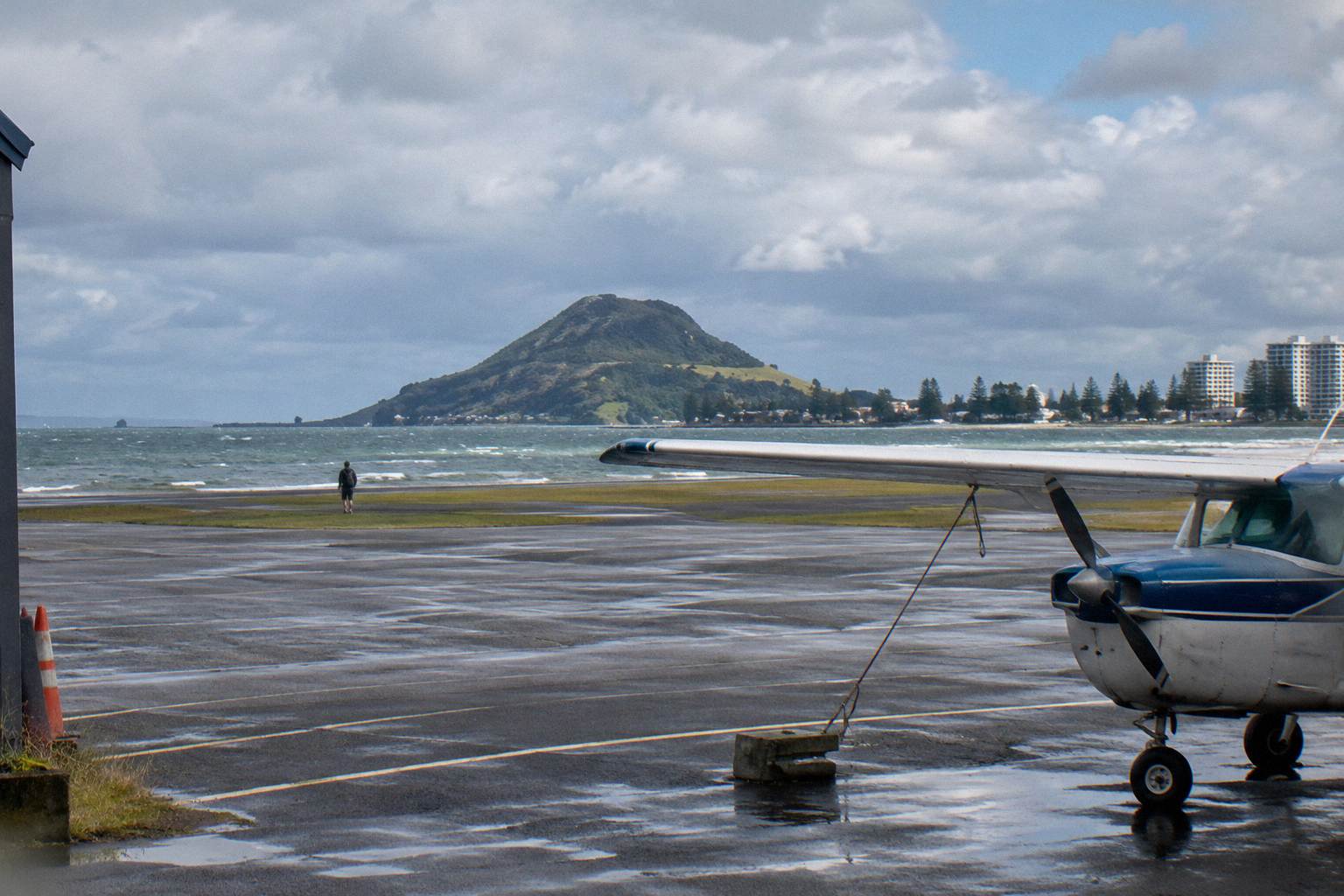
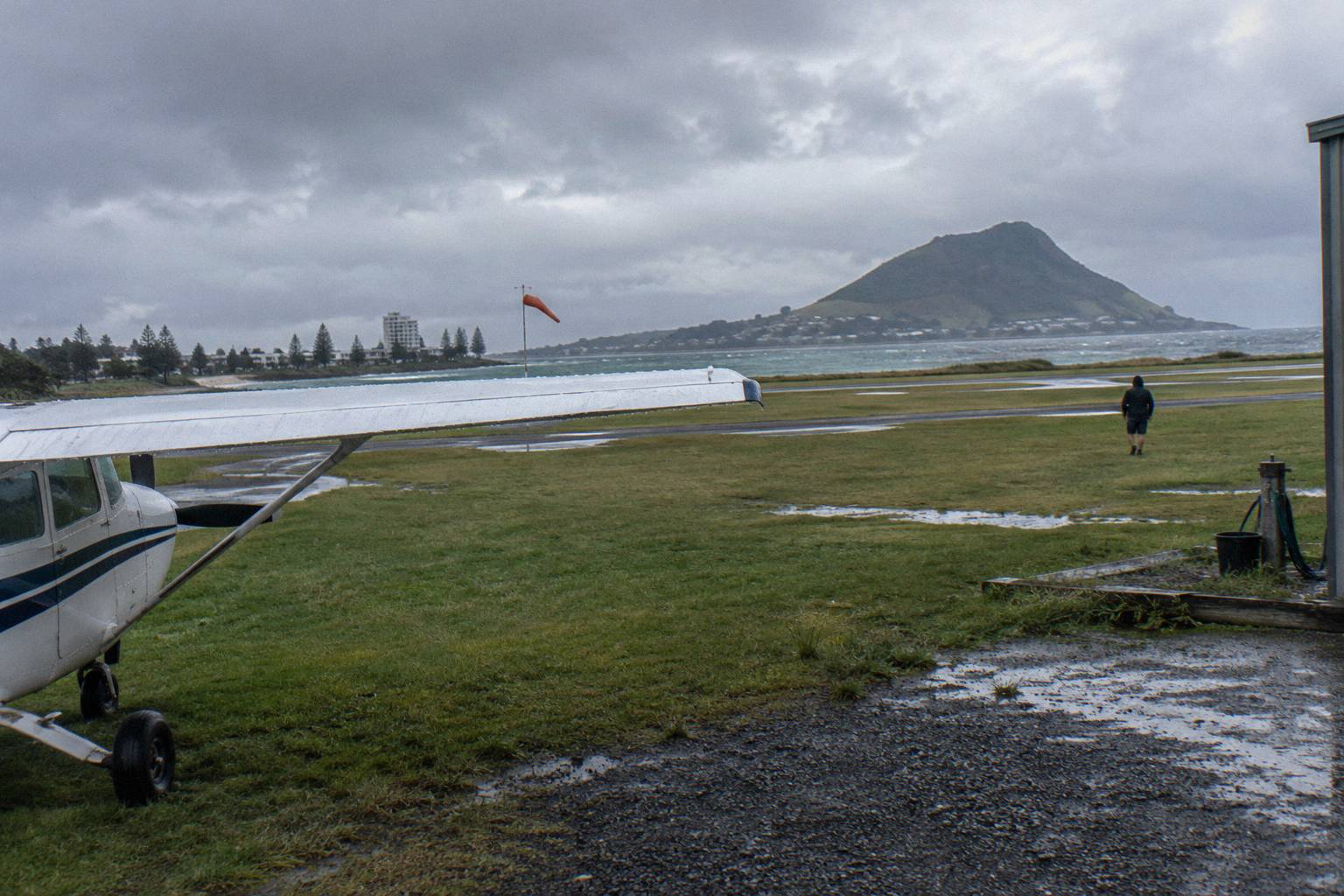
A tandem skydive is an aircraft flight before it is a jump, so the sky that grounds a Cessna grounds a jump day. Wind that is too strong or gusty, low cloud that breaks visibility rules, and rain all put a hold on operations. The operator makes the call on the day, phones you, and works out a new time. A hold changes your timing, not your booking.
That last point matters more than people expect. A hold is a scheduling problem, not a cancellation. The aircraft, the instructors and the harness all stay ready; the day simply gets rearranged around the sky. Because the operator runs a Cessna 182 that takes two tandems at a time and can reach altitude in 15 to 20 minutes, a gap in the weather can be used quickly. A morning that starts grim can still produce an afternoon jump slot once the wind eases, which is why the operator prefers to move you rather than strike you off.
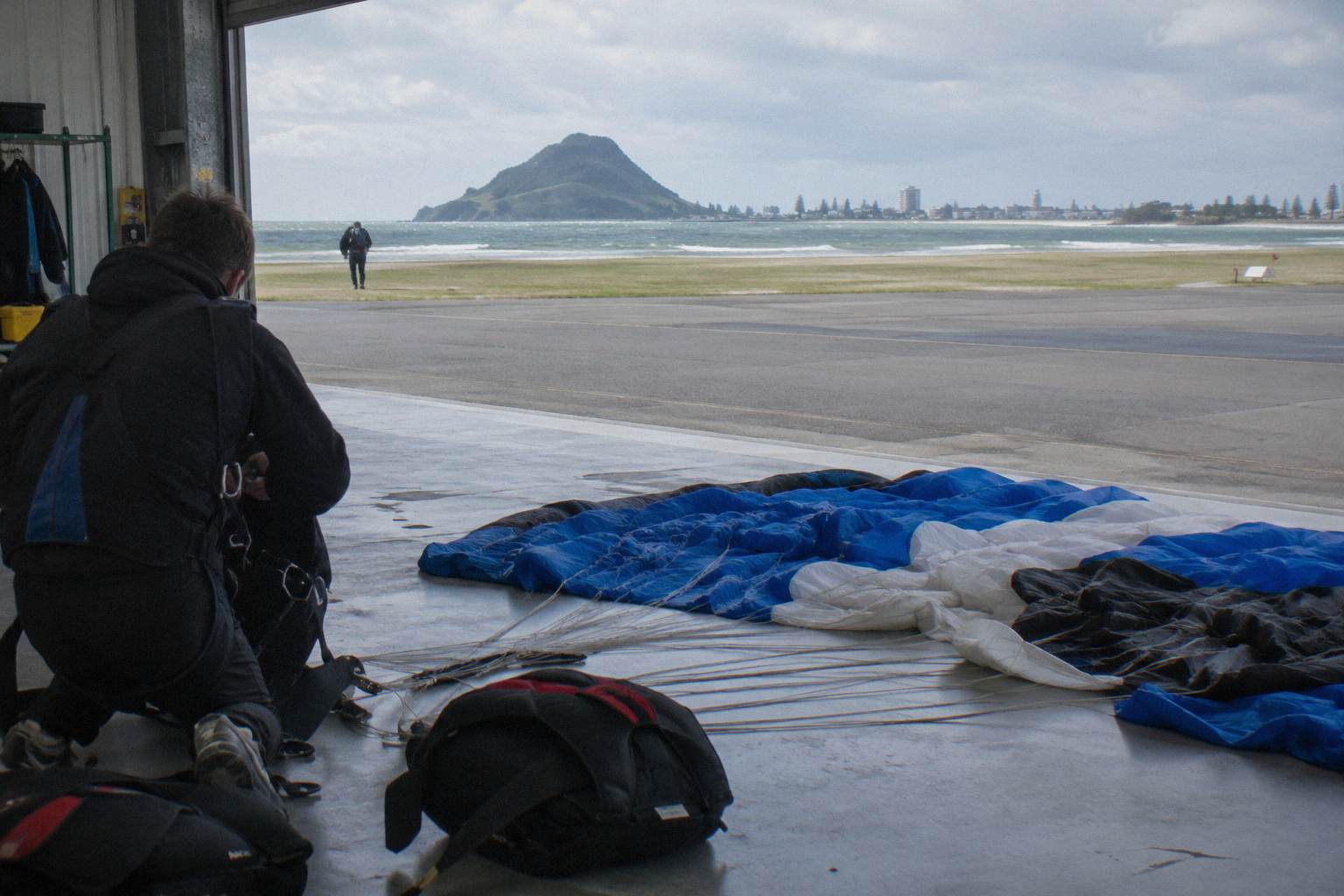
The geography of the drop zone shapes the risk too. Tauranga Airport sits in the Mount Maunganui suburb beside Tauranga Harbour, about 3 km northeast of the central city, according to the Tauranga Airport page. A coastal airfield at that position gets the full force of changing sea breeze and frontal weather, and the harbour approach means cloud can sit low over the water while the land stays clear, or the reverse. None of that is a reason to avoid the jump; it is simply a reason to build slack into your day, which the Tauranga day plan guide covers in detail.
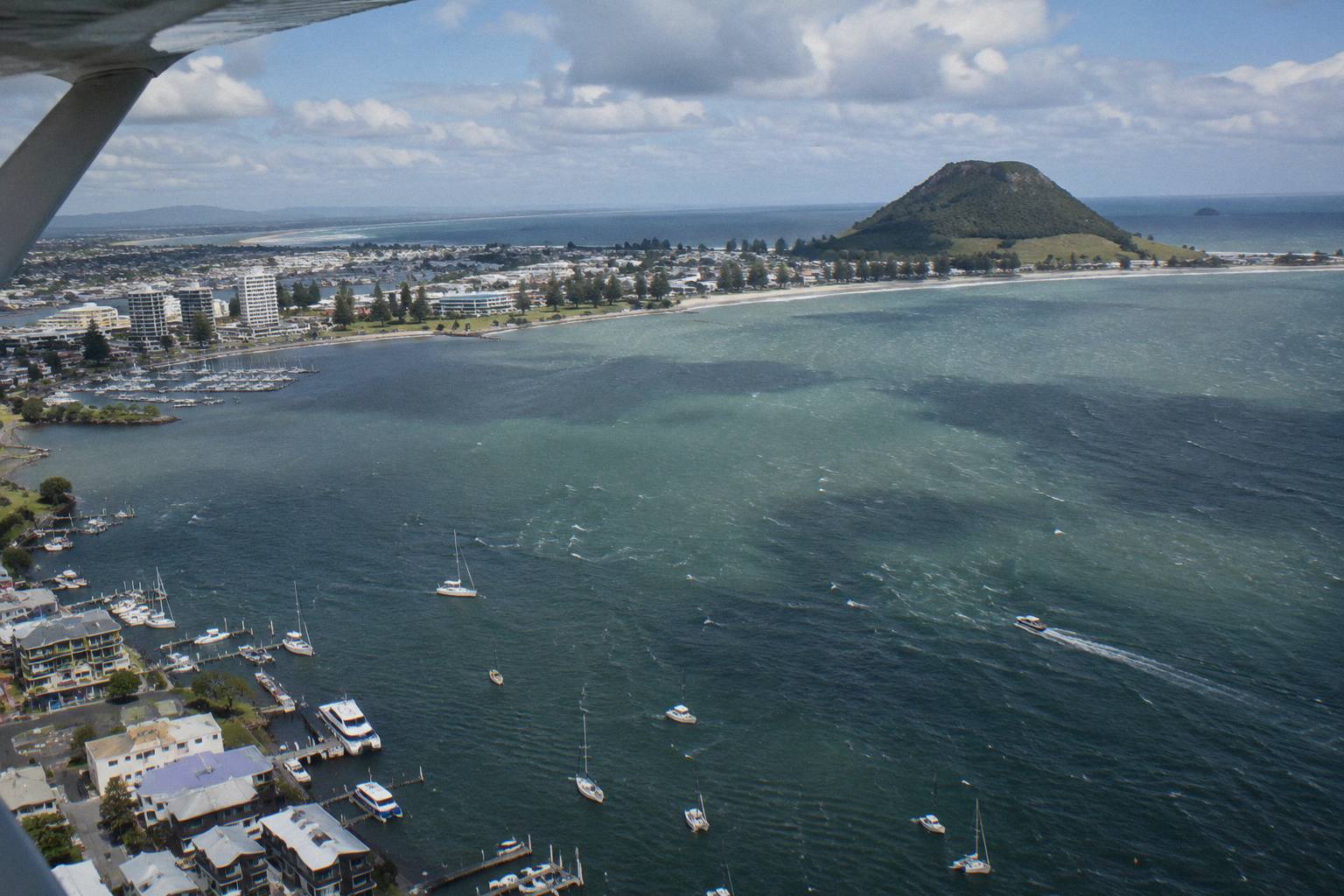
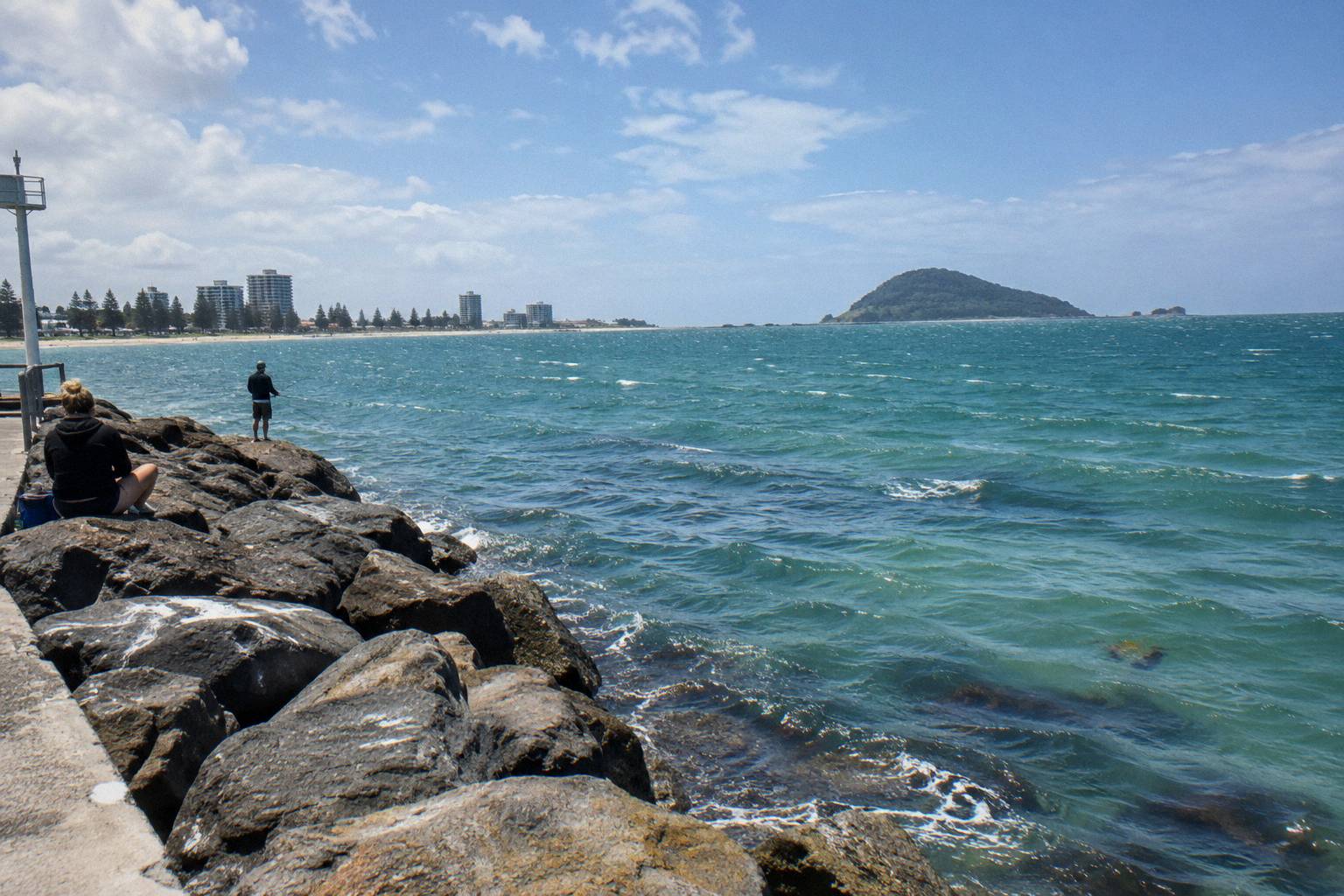
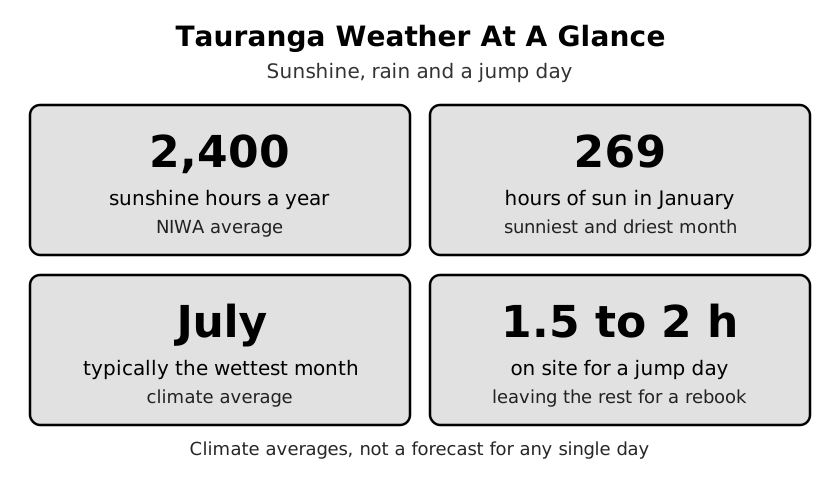
Tauranga is, on the whole, a friendly place to bet on. NIWA data puts the city at around 2,400 sunshine hours a year, and January alone averages roughly 269 hours of sun. July is typically the wettest month and January the driest. That does not guarantee a clear morning on any single date, but it does explain why so many visitors book here without hedging: the base rate of good flying weather is genuinely high, and the rebooking process exists for the days when it fails.
What Weather Actually Calls Off A Skydive Day?
Three conditions hold skydiving operations: wind speeds that are too strong or gusty, low cloud ceilings that violate visibility rules, and rain that cuts visibility and affects equipment. Those are the standard reasons across the sport, not special rules at this drop zone. The operator publishes no wind speed limit and no cloud ceiling figure, and the decision is made on the day by the people watching the sky.
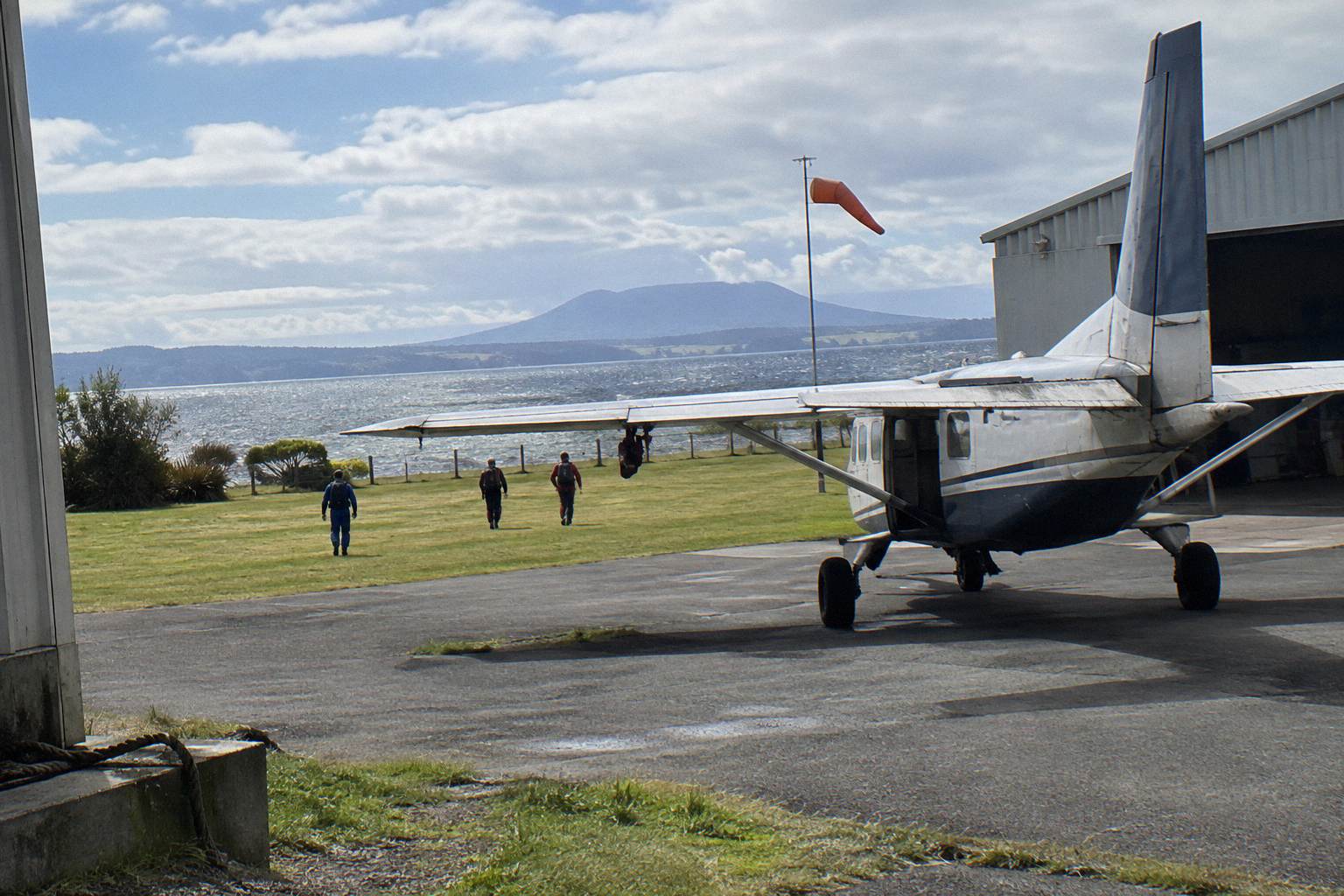
Each of the three affects a different part of the flight. Strong or gusty wind matters most at the end of the jump: the parachute ride down is slow and exposed, and the landing area at the airport is small, with the operator noting there are plenty of rules for co-existing with scheduled airline traffic there. Low cloud matters most at the start: the climb to 12,000 or 15,000 ft needs clear air layers, and a ceiling that sits under exit altitude can scrap the flight even on a windless day. Rain matters in between, reducing visibility for the pilot on the climb and affecting equipment on the way down.
It helps to know that no part of this is guesswork in the regulatory sense. Skydiving in New Zealand is regulated by the Civil Aviation Authority rather than audited as a land-based adventure activity, as the WorkSafe adventure activities guidance sets out. Weather decisions fall inside that aviation framework: they are operational flying calls, the same category of decision an airline makes when it holds a departure.
One trap worth naming: a grey morning is not a cancelled morning. Frontal rain often clears the coast by mid-morning, and sea-breeze cloud can burn off before the first afternoon slot. The operator's own position is simply that they will phone you on the day and work something out to fit your schedule. If your day has zero flexibility, that conversation is the one to plan around.
How Does A Weather Hold Get Rebooked?
The operator phones you on the day of your jump and works out a new time with you rather than cancelling outright, which is their stated process in their own words. If you booked a jump product rather than direct, the 24 hour free cancellation window still applies up to the start, so a hold never locks you into a date you cannot make; the practical move is to answer the call with two or three alternative slots in mind.
How that plays out depends on how you booked. If you booked direct with the operator, their own terms govern what happens if you then cancel the rebooked slot: free before the day before, 50 percent of the jump price if you cancel the day before, and the full price if you cancel on the day. If you booked through a jump product, the cancellation window is cleaner: free up to 24 hours before the start for a full refund. Neither set of terms punishes you for a weather hold the operator initiates, so the risk sits with your own changes, not with the sky.
The 24 hour line deserves a moment of thought. It means the safest structure for a tight itinerary is to book the earliest practical slot on your most flexible day. An early slot that gets held can often be rebooked later the same day, since the whole experience takes 1.5 to 2 hours and you are asked to arrive 30 minutes before takeoff. A late slot that gets held has nowhere to go except tomorrow, and tomorrow may be your departure day.
For cruise passengers the arithmetic is tighter still. The operator notes the airport is a 5 to 10 minute drive from the cruise ship dock, and the 2026 to 2027 Tauranga cruise season runs from October to April with 79 ship calls expected. That is close enough that a rebooked afternoon slot is usually workable, but port departure times are fixed in a way hotel nights are not, so a same-day rebook is the only kind that helps you. The skydive on a Tauranga cruise stop guide works through that decision in full.
What Happens If You Cancel Rather Than The Weather?
Cancelling yourself is a different transaction from a weather hold. Every jump product here carries free cancellation up to 24 hours before the start for a full refund. If you booked direct with the operator, their own terms apply instead: free before the day before, 50 percent of the price if you cancel the day before, and the full price if you cancel on the day. The distinction that matters is who pulled the plug, you or the sky.
Read that as a decision tool rather than fine print. Watching an uncertain forecast two days out? The product window lets you step away free, so there is no penalty for waiting until you have better information. Watching it the night before, with a direct booking? You are now inside the 50 percent band, so the cheaper move is usually to keep the slot and let the operator make the weather call for you, since a hold initiated by them does not trigger those charges. The mistake is cancelling in a panic at 10pm when the sky would have decided in your favour by 9am.
| Scenario | Which terms apply | Outcome |
|---|---|---|
| Weather hold, operator calls it | Operator rescheduling process | A phone call on the day and a new time that fits your schedule |
| You cancel more than 24 hours before start, on a jump product | 24 hour free cancellation window | Full refund |
| You cancel the day before, booked direct with the operator | The operator's direct terms | 50 percent of the jump price |
| You cancel on the day, booked direct | The operator's direct terms | Full price of the jump |
| No-show, booked direct | The operator's direct terms | Your card is charged |
The operator's FAQ page is the source for the direct-booking figures and the rescheduling wording alike, and it is worth a read before you commit either way. One more wrinkle: if you book through the operator's own website, your card is taken to hold the slot rather than to pay, and you pay on the day. That structure slightly changes the psychology of a wobbly forecast, since the money has not moved yet when the phone rings.
Which Months Give You The Best Odds?
Tauranga averages around 2,400 sunshine hours a year on NIWA data, January is both the sunniest month at roughly 269 hours and the driest, and July is typically the wettest. Those are climate averages, not a forecast for your Saturday, but they tilt the odds firmly toward the October to April stretch. The operator publishes no season and no operating hours.
| Timing signal | What the data says |
|---|---|
| Annual average | About 2,400 sunshine hours a year on NIWA data |
| January | Sunniest month, about 269 sunshine hours, and the driest |
| July | Typically the wettest month |
| October to April | The Tauranga cruise season, with 79 ship calls expected |
The practical reading is straightforward. Summer and the shoulder months around it stack the deck: more sunshine, less rain, more hours in the day for a rebooked slot if the morning fails. Midwinter is not off the table, but it compresses your options, since a morning hold in July has fewer daylight hours to recover into, and the wettest-month tag means the hold is more likely in the first place. If your travel dates are fixed and your skydive is the priority, choosing the month is the single biggest weather decision you will make, bigger than anything you can do on the day itself.
The time of day is the second lever. The best time of year to skydive in Tauranga and best time of day to skydive in Tauranga guides work through both levers with the same sourced numbers. The short version for this page: book the earliest slot your schedule allows, because an early hold leaves the whole day as recovery space, while the operator's afternoon options shrink as the clock runs.
If Tauranga weather defeats you entirely and your travels take you inland, the Lake Taupo 12,000-Foot Tandem Skydiving product runs from a separate drop zone at Wharewaka in Taupo, roughly a 1 hour 50 minute to 2 hour drive away, with a 5.0 rating from 457 reviews. Different sky, different operator, and the same 24 hour free cancellation window on the booking. It is not a same-morning substitute, but it is a genuine plan B for a multi-day Bay of Plenty itinerary.
What Does A Weather Delay Do To The Rest Of Your Day?
A hold costs you hours, not the jump. The full experience runs 1.5 to 2 hours with a 30 minute early arrival, and the aircraft reaches altitude in 15 to 20 minutes, so a rebooked slot can be turned around quickly once the sky clears. Build a day that survives a two or three hour slide and a hold becomes an inconvenience; build a day where everything hinges on a 10am exit and a hold becomes a ruined afternoon.
The numbers make the case. You arrive 30 minutes before takeoff, gear up, fly the climb, freefall for 40 seconds at 12,000 ft or about a minute at 15,000 ft, then spend a few minutes under canopy before landing back where you took off. Even a full delay of several hours still leaves room for the rest of a Mount Maunganui day, and the operator notes that on a quiet day the whole thing can run quicker than the 1.5 hour allowance. The failure mode is not the hold itself; it is a schedule with no slack, a ferry to catch at noon, a tour booked for 1pm, a flight out at 3pm.
Two practical rules follow. First, keep the jump day free of hard afternoon commitments wherever possible, and if that is impossible, book the earliest slot and say so when the operator phones. Second, decide in advance what you would do with a gifted half day, because the things to do in Mount Maunganui after a skydive list turns a hold from dead time into the fallback plan. A booking page check before you travel shows the slots still open on your date, which tells you how much recovery space exists if the morning is held.
The inland option also buys altitude flexibility. The Taupo: Tandem Skydive up to 15,000ft over Lake Taupo product, rated 4.9 from 376 reviews, offers 12,000 or 15,000 ft by option and includes free pickup and drop-off from Taupo accommodation, which removes the drive-yourself problem if you are basing yourself lakeside for part of the trip. The same 24 hour free cancellation applies. It shares nothing operationally with the Tauranga drop zone: different aircraft, different staff, different sky above a lake that covers 616 square kilometres.
What Trips People Up When Weather Threatens A Jump
The common errors are cancelling inside the penalty window out of pure nerves, booking a late slot on a tight itinerary, treating a grey sunrise as a cancellation, and never answering an unknown number on jump morning. Each one converts a manageable weather hold into a lost booking or a lost refund. The fixes are cheap: book early, wait for the operator's call, know which cancellation terms your booking carries, and keep your phone on.
| What trips people up | The fix |
|---|---|
| Cancelling inside the penalty window out of nerves | Wait for the operator's on-the-day call; a hold they initiate does not trigger the direct-booking charges |
| A late slot on a tight itinerary | Book the earliest practical slot so a hold leaves recovery hours in the day |
| Treating a grey sunrise as a cancellation | Frontal rain often clears the coast by mid-morning; let the operator decide |
| A silenced phone on jump morning | Keep the phone on; the rescheduling process starts with a call to you |
The first error is the expensive one. Someone sees rain on the forecast app at 8pm, panics, and cancels a direct booking, landing in the 50 percent or full price band for a jump the operator might have rebooked for free the next morning. Forecast apps resolve poorly at 12 hour horizons on a coastline, and the operator's own process is to phone on the day and work something out. Unless you genuinely cannot make any alternative slot, the hold is their decision to make, not yours to preempt.
The second is structural: the late slot with a hard evening commitment. If a 3pm jump is held at 2pm, there is no same-day recovery, and the 24 hour product window has already closed, so a rebook now needs a spare day you do not have. The third is informational: assuming the jump lands on the beach and planning around that, when in fact takeoff and landing are both at Tauranga Airport and the beach is a view from altitude. The fourth is simply a silenced phone. The operator's rescheduling process starts with a call to you; miss it and you lose the best chance at a slot that day.
There is also a weather-shaped alternative worth knowing exists. The Mount Ruapehu Scenic Flight from Tauranga is a two hour fixed-wing flight climbing to 10,000 ft toward the volcano, run by the same skydive operator from the same airport. Nobody jumps, so the weather envelope is a pilot's rather than a parachute's, and it can fly on days a jump would not. It is not a substitute for a tandem, but as a forecast-proof plan B booked for the following day it has saved more than one Bay of Plenty itinerary.
If weather is the whole reason you are reading, the summary is this: book the Skydive Over Mount Maunganui product or one of its siblings early in your stay, on your most flexible morning, and check availability once your dates are firm. Everything else on this page is contingency, and Tauranga Skydive exists precisely to help you pick the right one.
Common Questions About Weather And Rebooking
Does Wind, Cloud Or Rain Cancel A Tauranga Skydive?
Wind that is too strong or gusty, low cloud and rain all hold skydiving operations. The operator publishes no wind speed limit or cloud ceiling figure, and the decision is made on the day.
Who Decides Whether My Jump Goes Ahead?
The operator does, on the day. They will phone you and work out a new time that fits your schedule rather than cancelling outright.
Can I Cancel For Free If The Forecast Looks Bad?
Every jump product carries free cancellation up to 24 hours before the start for a full refund. Direct bookings follow the operator's own terms: free before the day before, 50 percent the day before, full price on the day.
What Happens If The Operator Cancels For Weather?
They phone you on the day and work something out with you to fit your schedule, which usually means a rebooked slot the same day or the next.
Which Month Has The Best Skydive Weather In Tauranga?
January is the sunniest and driest month on NIWA averages, with roughly 269 sunshine hours, and July is the wettest. The operator publishes no season or operating days.
How Long Should I Allow In Case Of A Weather Delay?
The experience itself takes 1.5 to 2 hours with a 30 minute early arrival. If a morning slot is held, keep the afternoon open so a rebooked time still fits your day.