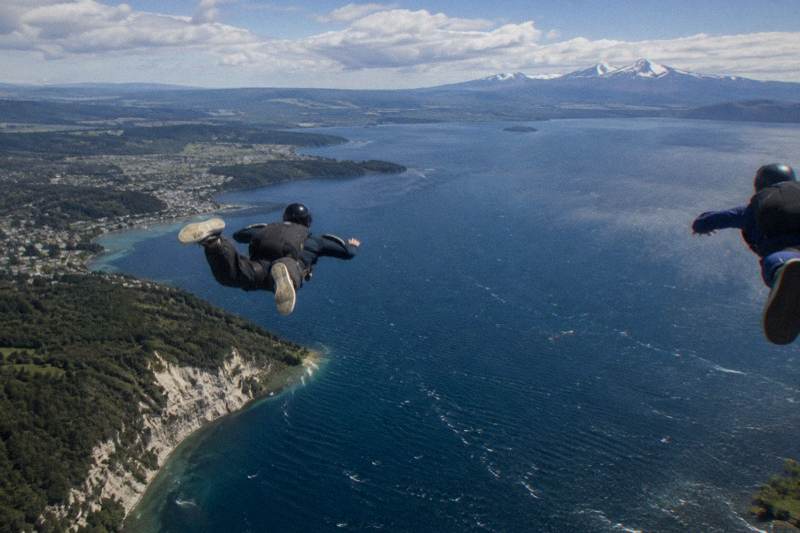
Tauranga Vs Taupo Skydive: Coast Or Lake?
Two of the North Island's best known tandem drop zones sit about two hours apart by road, and the choice between them changes what you see, who can jump and how the day is built.
Short answer
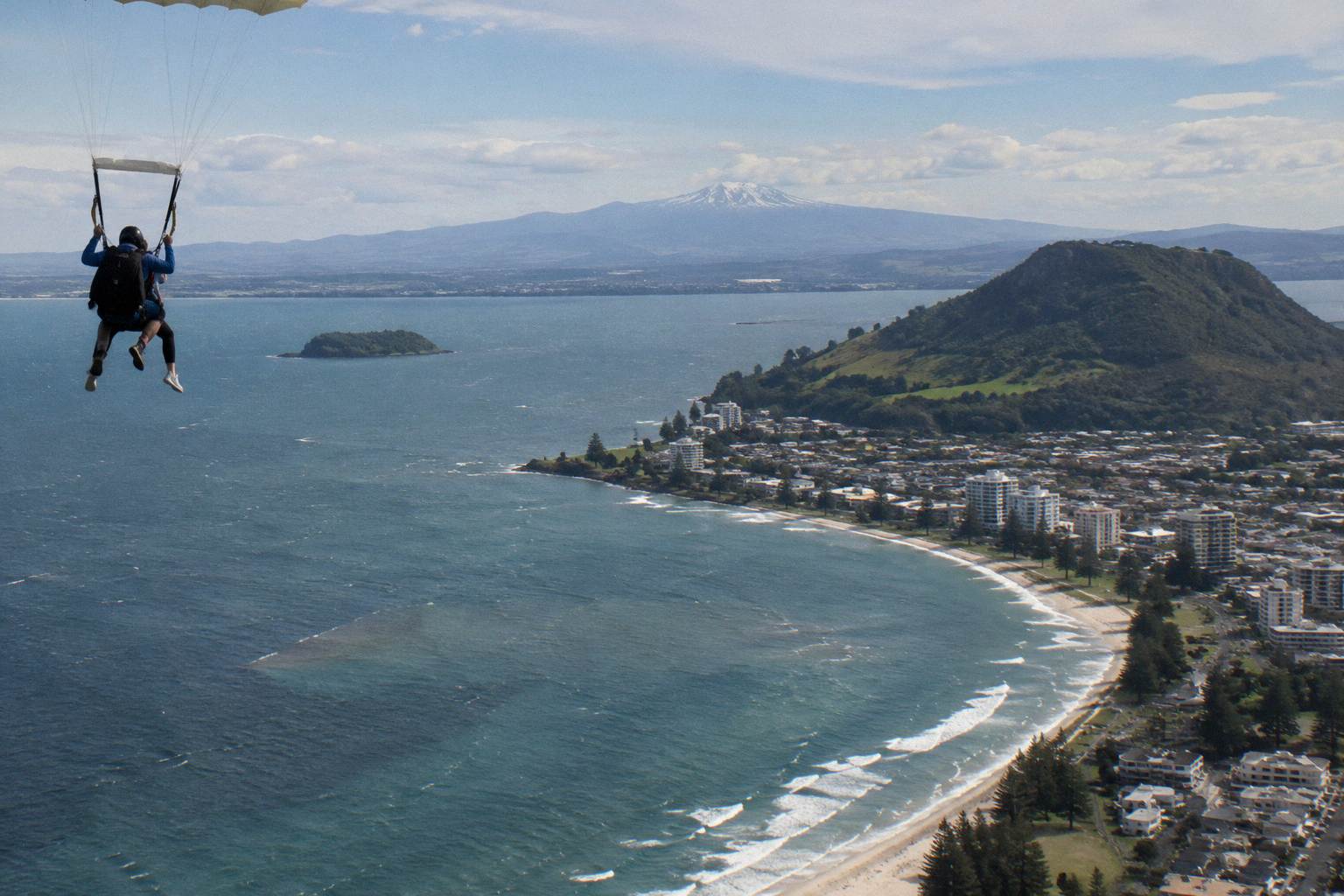
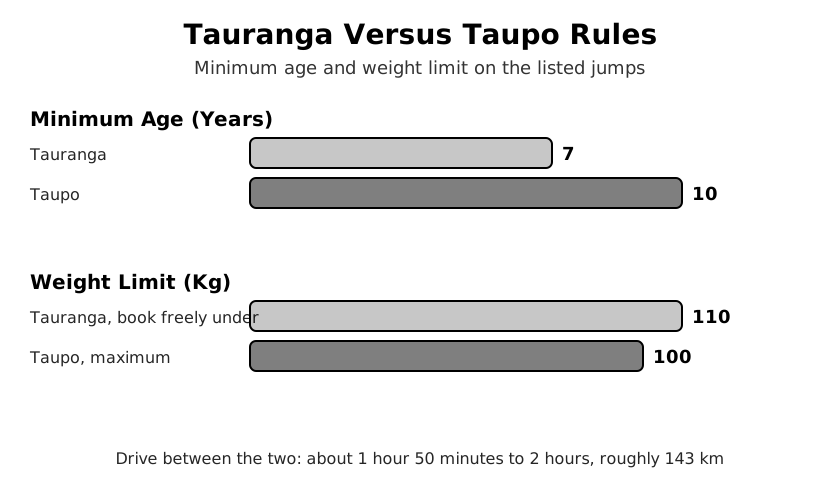
Jump from Tauranga Airport and you take off and land beside Mount Maunganui with a coastal view, from age 7 and under 110 kg. Jump at Taupo and you freefall above New Zealand's largest lake, from age 10 and up to 100 kg on the 12,000 or 15,000 ft listing, with free Taupo pickup on some trips. Driving between them takes about 1 hour 50 minutes to 2 hours.
The Bay of Plenty coast and Lake Taupo are the two headline skydive settings within reach of Tauranga, and they suit different itineraries. The Taupo skydive trips from Tauranga hub gathers the lake listings in one place, while the Tauranga Airport jumps stay close to the coast. Working out which one deserves your money comes down to your dates, who is jumping and how much of the day you want to give to the road.
| Fact | Detail |
|---|---|
| Tauranga drop zone | Tauranga Airport, Mount Maunganui |
| Tauranga minimum age | 7, with a consent letter under 18 |
| Tauranga weight rules | Minimum 30 kg, book freely under 110 kg, phone above it |
| Taupo minimum age | 10 on the 12,000 or 15,000 ft listing |
| Taupo weight rules | 100 kg maximum on the 12,000 or 15,000 ft listing |
| Drive between the two | About 1 hour 50 minutes to 2 hours, roughly 143 km |
| Lake Taupo | 616 square kilometres, New Zealand's largest lake |
| Cancellation on bookings | Free up to 24 hours before the start on every listing |
Which Should You Choose: Coast Or Lake?
Choose the coast if you are staying in Tauranga or Mount Maunganui, since the airport jump saves a four hour round drive, and pick the lake if your trip already includes the central North Island, where Taupo offers New Zealand's largest lake, a 5.0 rating from 457 reviews on the 12,000 ft listing and free pickup from Taupo accommodation on some trips.
The two experiences are more alike than the marketing suggests. Both drop zones fly you to 12,000 or 15,000 ft, both give a tandem freefall measured in seconds rather than minutes, and both run through the same kind of booking terms, free cancellation up to 24 hours before the start. What differs is the frame around the jump: the drive, the eligibility rules, and the view.
For a family with a keen eight year old, the choice is made by the age rule, not the scenery. For a traveller staying in Taupo town without a car, the choice is made by the pickup. For someone on a two night Mount Maunganui holiday, the four hours of driving to Taupo and back is a poor trade for a lake you can also see on a scenic flight. Each of those readers needs a different page of the comparison, so the sections below take the decision one factor at a time.
What You Actually Jump Over At Each Place
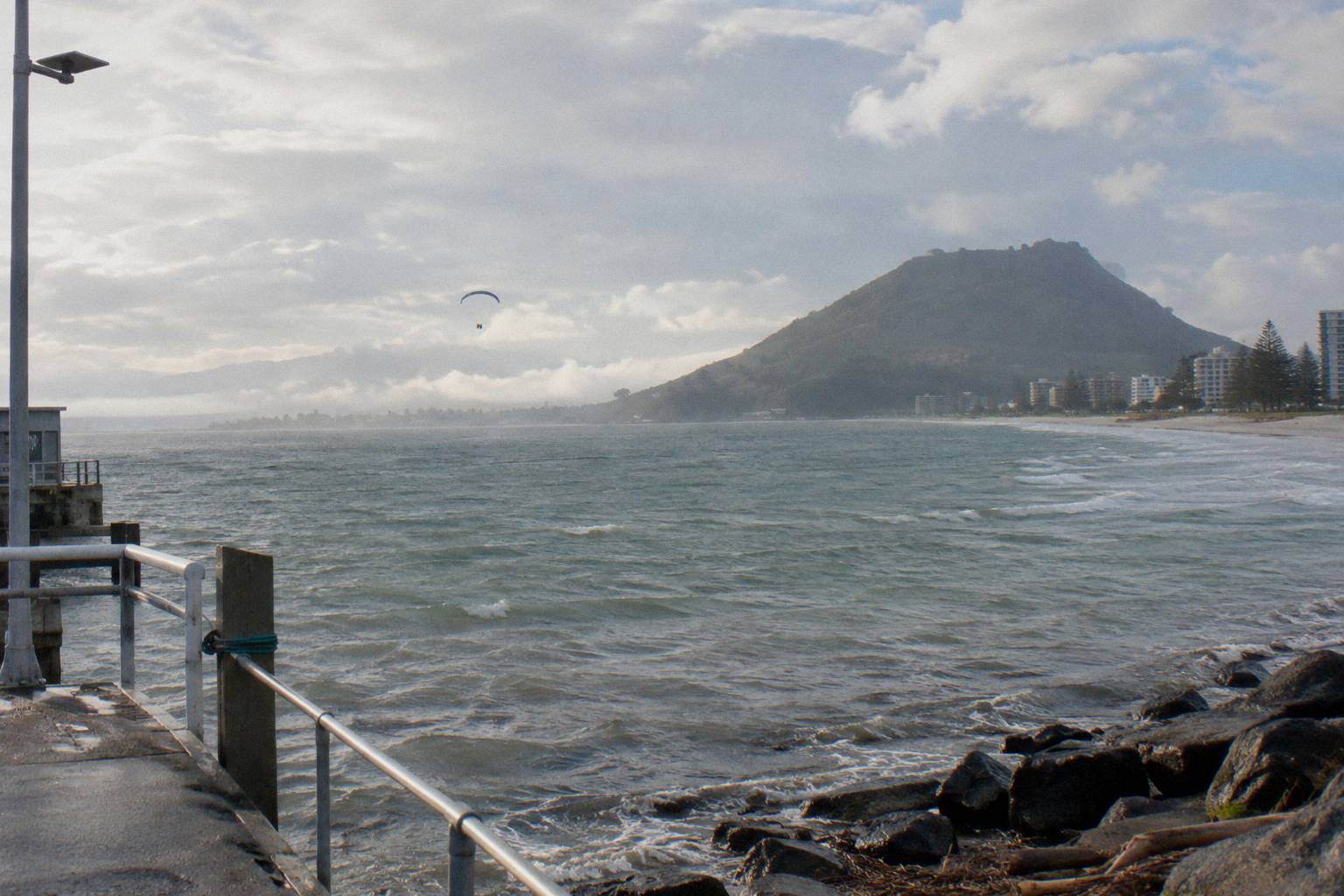
At Tauranga you jump over the Bay of Plenty coast, with Mount Maunganui, the harbour and Matakana Island in the frame during the climb and the canopy ride. At Taupo you jump over Lake Taupo, a 616 square kilometre body of water formed in a volcanic caldera, with the volcanic plateau around it. Neither offers a guarantee of what you will see: cloud, wind and the flight path decide, and the operator makes the call on the day.
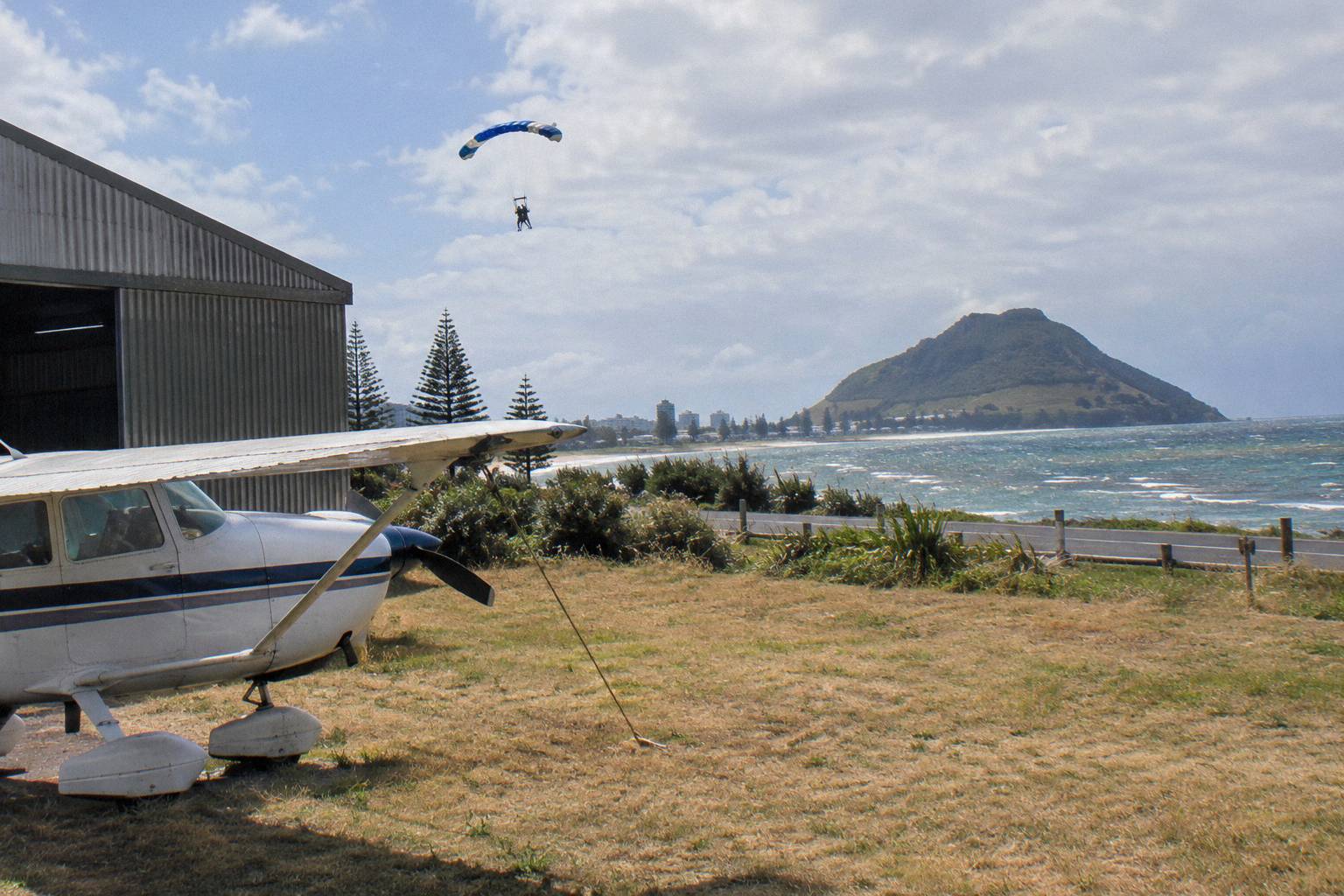
The Tauranga climb is a 15 to 20 minute scenic flight in a Cessna 182 that carries two tandems at a time, according to the operator's about page. The aircraft takes off and lands at Tauranga Airport, which sits in the Mount Maunganui suburb next to Tauranga Harbour, roughly 3 km northeast of the city centre, as described on the Wikipedia page for Tauranga Airport. Mauao, the extinct volcano at the harbour entrance, stands 232 metres high, and the sand barrier of Matakana Island stretches 20 kilometres along the coast, two landforms that dominate the view from altitude on a clear day.
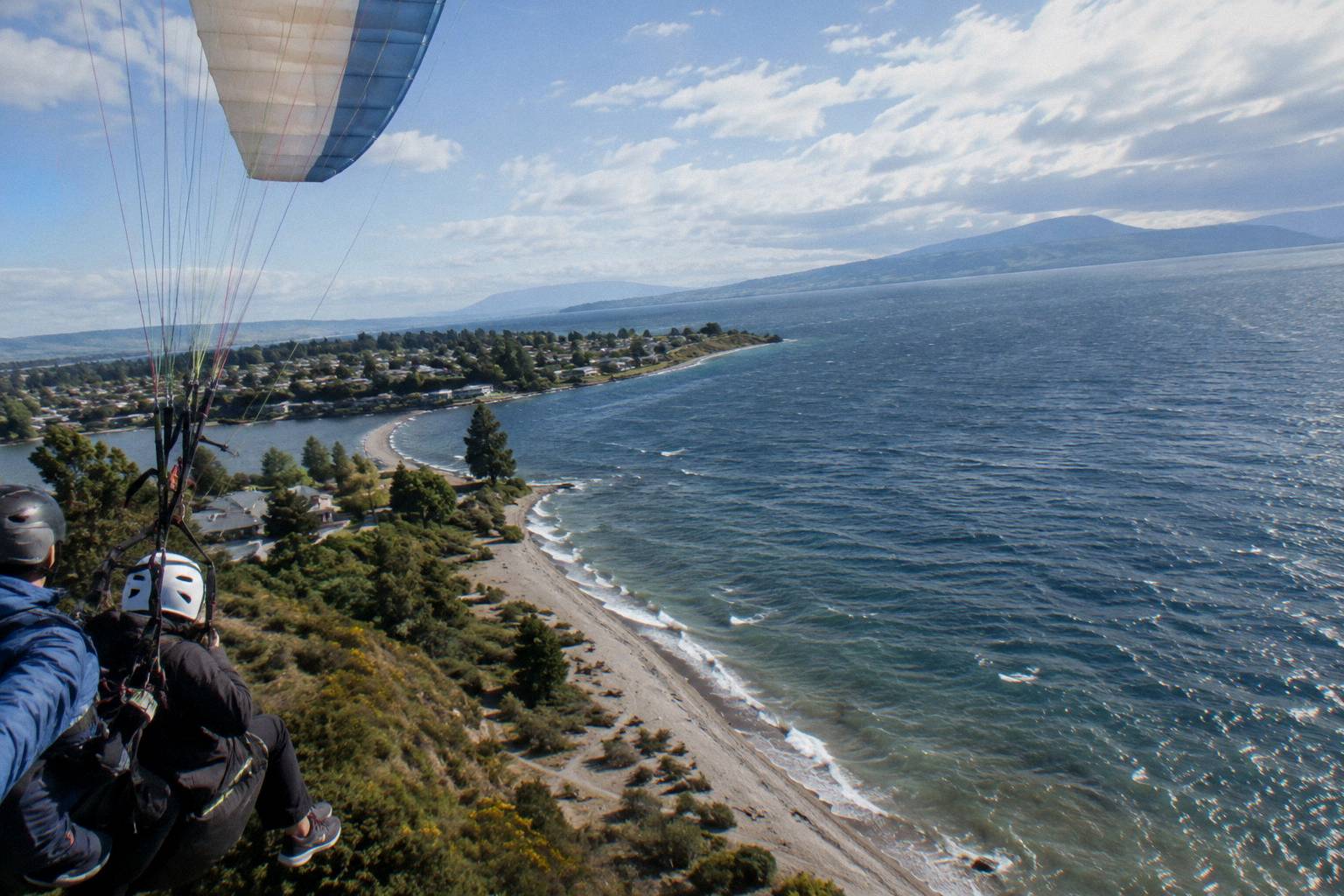
The Taupo picture is built on scale rather than coastline. Lake Taupo is New Zealand's largest lake at 616 square kilometres, and the drop zone flights put that expanse of water under you for the exit, the freefall and the several minutes under canopy. Where the Tauranga view is a patchwork of harbour, ocean and town, the Taupo view is dominated by a single inland sea with the Kaimai Range and the volcanic centre beyond it on clear days.
One caution belongs here: nobody can promise conditions. The Bay of Plenty gets around 2,400 sunshine hours a year on average, and January is its sunniest month on the NIWA normals, but a morning fog bank or a gusty westerly can ground either drop zone. Weather holds are normal at both, and operators reschedule or work something out with you, so a flexible day matters more than the postcode. The deeper skydive weather and cancellation guide covers how those calls get made.
The Rules Side By Side: Age, Weight And Pickup
Tauranga skydiving takes jumpers from age 7, requiring a parent or guardian consent letter for anyone under 18 plus a preliminary dropzone visit for under 12s, with a 30 kg minimum weight and free booking up to 110 kg before a phone call is needed above it. Taupo accepts jumpers from age 10 with a 100 kg maximum, and several of its trips add free pickup and drop-off from local accommodation.
| Rule | Tauranga Airport jumps | Taupo 12,000 or 15,000 ft listing |
|---|---|---|
| Minimum age | 7 | 10 |
| Under 18 consent | Parent or guardian letter | Parent or guardian consent, check terms |
| Minimum weight | 30 kg | Check with the operator |
| Maximum weight | Book freely under 110 kg, phone above it | 100 kg maximum |
| Pickup | None listed | Free from Taupo accommodation on the up to 15,000 ft listing |
| Meeting point | Tauranga Airport, Mount Maunganui | Yellow hangar at Taupo Airport, or 1227 Anzac Memorial Drive, Wharewaka |
| Photos and video | Paid extras | Paid extras, check per listing |
| Cancellation | Free up to 24 hours before start | Free up to 24 hours before start |
The age gap is the sharpest practical difference. A seven year old who meets the 30 kg minimum and fits the harness can jump at Tauranga, provided a parent consents in writing and, for under 12s, the family visits the dropzone first so staff can fit the harness and meet the child. That visit is an operator rule, not a legal one: New Zealand law sets no age limit for tandem skydiving, and the operator states the child's own willingness matters. Taupo's age 10 floor on the key listing closes that door for younger children regardless of enthusiasm.
Weight works the other way. Tauranga's published threshold is 110 kg, with a small surcharge above it that goes to the tandem instructor, and the operator asks heavier passengers to phone first, as explained on the operator's FAQ page. Taupo's 12,000 or 15,000 ft listing carries a 100 kg maximum. A 105 kg passenger can book at Tauranga without a conversation but cannot jump on that Taupo listing, so the scale can decide the destination before any view does. The full rules sit in the weight limit guide and the age limit guide.
Pickup tilts toward Taupo for anyone without a car. The "Up To 15,000ft Over Lake Taupo" listing includes free pickup and drop-off from your Taupo accommodation, and the 12,000 ft listing includes hotel pickup, which turns the lake jump into a door to door trip for Taupo based travellers. The Tauranga listings have no pickup listed: you make your own way to the airport, which is a short drive from most of the city and about 5 to 10 minutes from the cruise dock, per the operator's FAQ.
Travel Time And Building The Day Around It
Driving from Tauranga to Taupo covers roughly 143 km and takes about 1 hour 50 minutes to 2 hours each way, so a Taupo jump from a Tauranga base means four hours on the road, while the Tauranga Airport jump is minutes from Mount Maunganui and about 5 to 10 minutes from the cruise terminal. Allow 1.5 to 2 hours on site for either jump experience, plus the drive.
| Route | Distance | Typical drive time |
|---|---|---|
| Auckland to Tauranga | 204 km | About 2 hours 30 to 40 minutes |
| Hamilton to Tauranga | About 105 km | About 1 hour 25 minutes |
| Rotorua to Tauranga | About 57 km | About 50 minutes |
| Taupo to Tauranga | About 143 km | About 1 hour 50 minutes to 2 hours |
| Tauranga cruise terminal to Tauranga Airport | About 5 to 6 km | 5 to 10 minutes |
Those road numbers shape the day more than any other single fact on the page. A Taupo jump from Tauranga is a full day out: two hours up, 1.5 to 2 hours at the drop zone as the operator advises, then two hours back, and that assumes weather plays along. The same jump from a Taupo hotel, with free pickup on the up to 15,000 ft listing, is a half day. The Tauranga jump fits inside a morning and leaves the afternoon for the beach.
Rotorua based travellers sit in a useful middle: about 50 minutes to Tauranga and roughly 1 hour 15 to the lake via Taupo, so both drop zones are genuinely on the table and the rules comparison above should make the call. Cruise passengers almost always land on the Tauranga option by default, since the airport is a 5 to 10 minute drive from the dock and shore time rarely stretches to a four hour round trip, a trade the cruise stop skydive guide works through in detail.
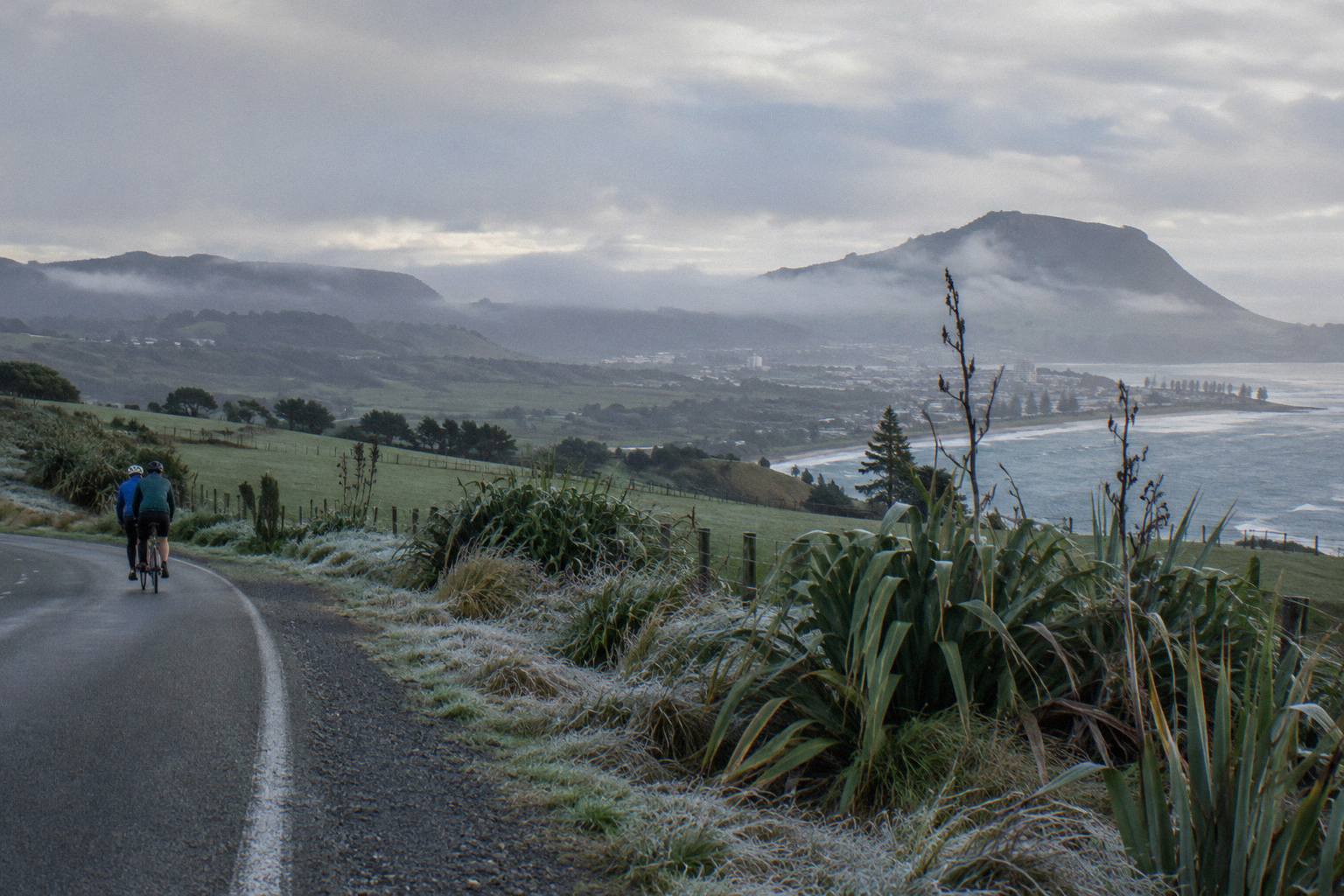
Build in slack either way. The operator warns that jumps can run late due to weather or airport traffic, and a tight afternoon appointment after a skydive is a classic way to lose the booking. Book the morning slot if the day has a hard edge to it, and check the dates on the tour page before you plan the drive.
Which Listings Exist At Each Drop Zone
The Tauranga listings are three tandem products from one operator at Tauranga Airport, Mount Maunganui: two 15,000 ft tandems and a Mount Maunganui skydive rated 5.0 from 66 reviews. Taupo offers a 12,000 ft tandem rated 5.0 from 457 reviews, an up to 15,000 ft tandem rated 4.9 from 376 reviews, and a helicopter plus 15,000 ft skydive combination from a separate operator.
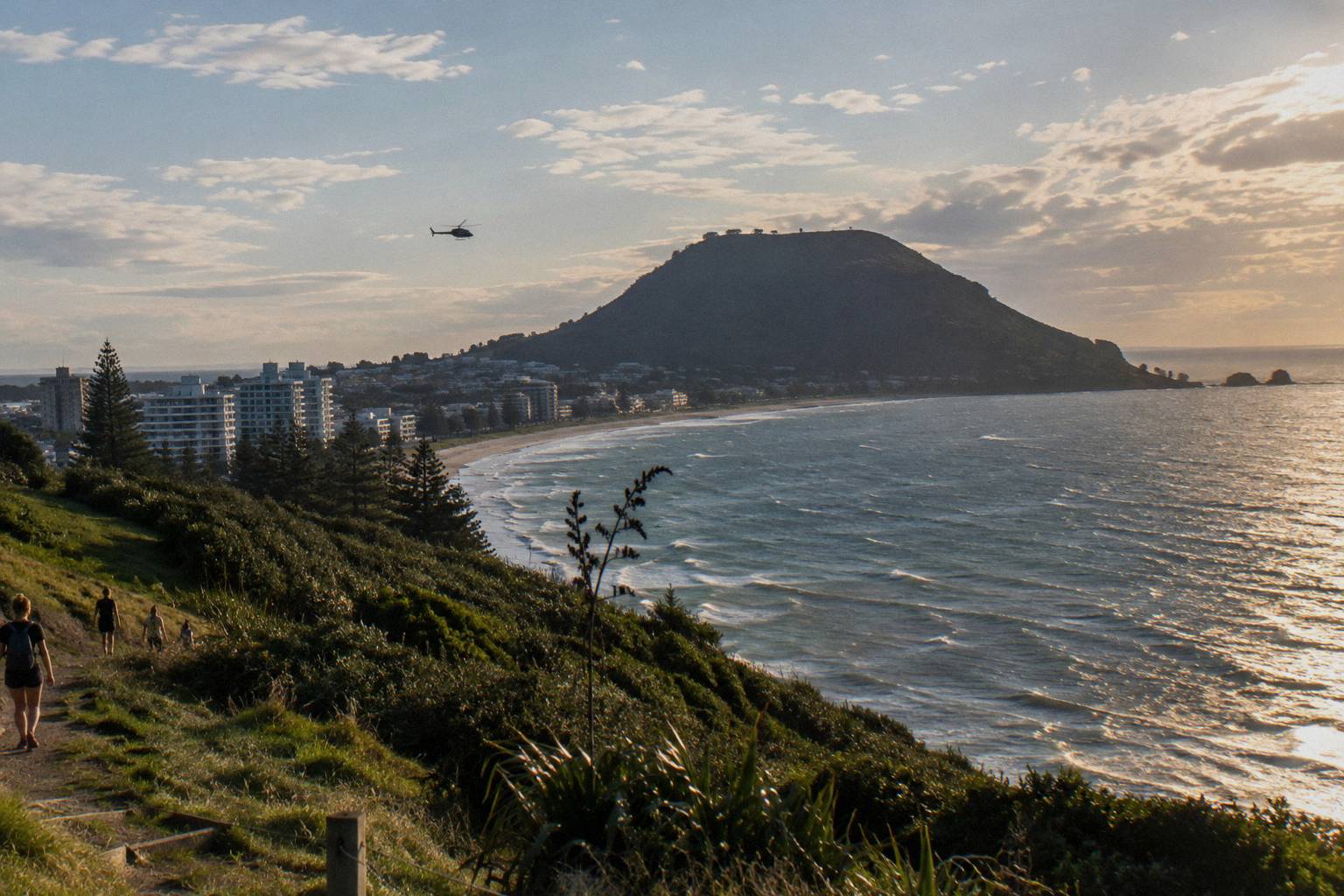
Start with the ratings that are published. The "Skydive Over Mount Maunganui" listing carries 5.0 from 66 reviews, and it is the Tauranga product with a stated 20 to 25 minute scenic flight, freefall of 30 to 45 seconds at 12,000 ft or about 1 minute at 15,000 ft, and about 5 minutes under canopy. The "Lake Taupo 12,000ft Skydive" carries 5.0 from 457 reviews, a much larger pool, with about 2 hours duration and hotel pickup included. The "Up To 15,000ft Over Lake Taunganui" listing, to give it its short form, rates 4.9 from 376 reviews and includes free Taupo accommodation pickup and drop-off. Ratings tell you about satisfaction, not about which view is better, and the pools differ in size.
The other Tauranga 15,000 ft listings carry the same core numbers: about 1.5 hours, 15,000 ft, up to 40 seconds of freefall, age 7 from, 30 to 110 kg, paid photo and video extras, and free cancellation up to 24 hours before the start. The "15,000ft Tandem Skydive in Tauranga - Bay of Plenty" and the "Bay Of Plenty 15,000ft Skydive" both run through the same operator and airport, so choosing between them is mostly a matter of which page and date you book, not a different experience. See the full Tauranga airport tandem listings for the Mount option.
The Taupo combination product is the wildcard. "Helicopter Plus 15,000ft Skydive" pairs a 15-minute plane ride to 15,000 ft with a helicopter flight, includes photos and videos, and meets at Huka Falls Road in Wairakei rather than the Taupo Airport hangar. It is the one listing in this comparison where camera media is included rather than a paid extra, and it suits a jumper who wants both rotors and freefall in one booking.
There is also a scenic flight path for anyone who decides not to jump. Nobody has to leave the aircraft to see the lake or the coast, and the skydive versus scenic flight comparison sets out that trade, including the Tauranga scenic options from the same airport.
Freefall, Altitude And Timing Compared
Both drop zones offer the same 12,000 and 15,000 ft options, with freefall physics identical at either: the operator states 40 seconds of freefall at 12,000 ft and about 1 minute at 15,000 ft, though times vary with weather and body shape, and canopy time runs 3 to 5 minutes. Expect roughly 1.5 to 2 hours on site at Tauranga and about 2 hours at Taupo.
The altitude ladder is where the two markets converge. A typical New Zealand progression runs 9,000 ft with up to 25 seconds of freefall, 12,000 ft with up to 45 seconds, and 15,000 ft with up to 60 seconds, and both drop zones here sell the top two rungs. Whether the extra seconds are worth the price difference is a separate question, and the 12,000 vs 15,000 ft comparison works it through with the operator's own timing figures. The short version: the 15,000 ft jump buys roughly twenty more seconds of freefall and a five minute longer climb.
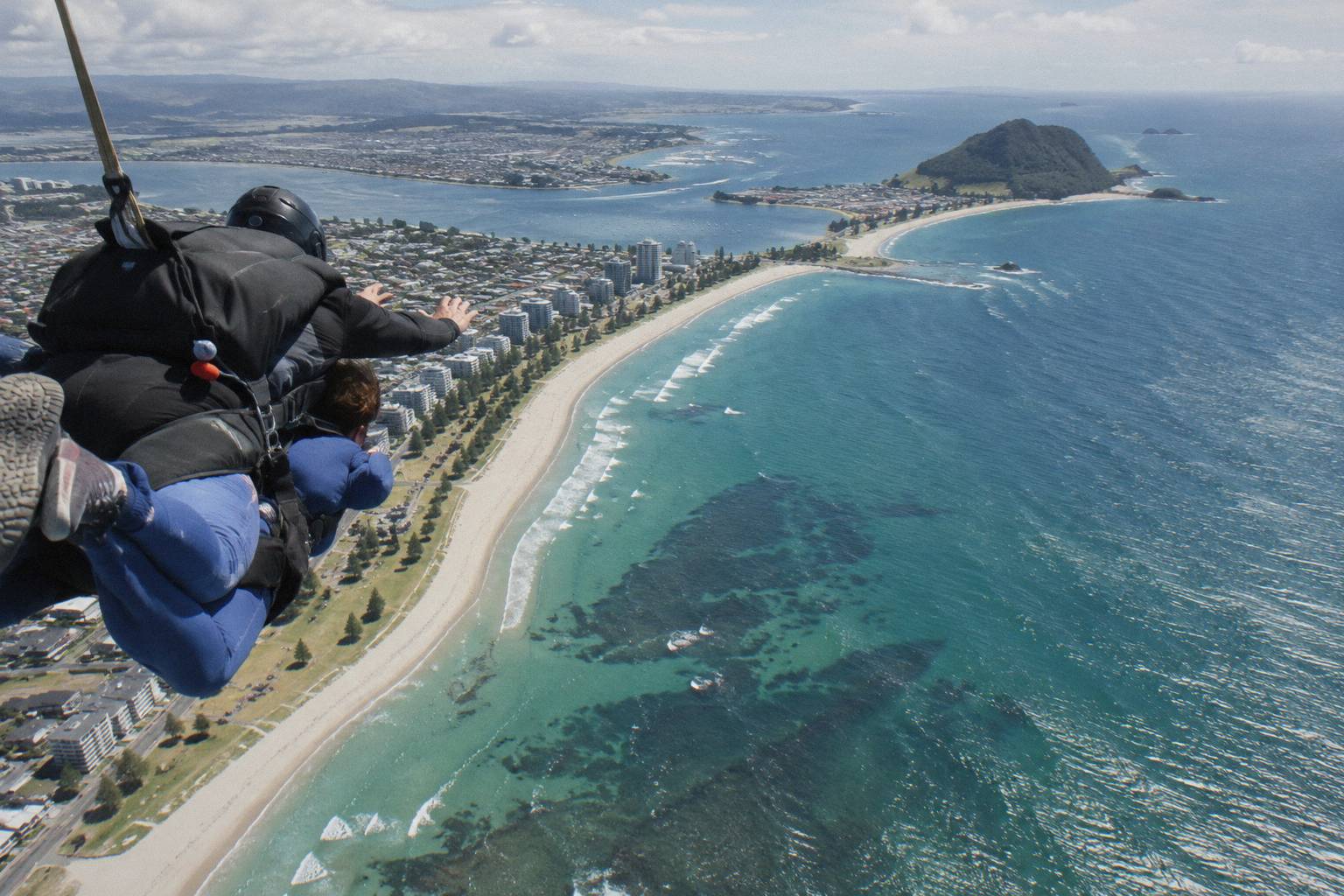
The climb itself is scenery time, not dead time. Tauranga's Cessna 182 takes two tandems at a time and reaches altitude in 15 to 20 minutes, flying the coast on the way up. The Taupo listings fly the lake and its shoreline. In both cases you are paying for that window as much as for the exit, and both operators describe the ride to altitude as a scenic flight in its own right.
Speed is the same story at both. The operator quotes freefall speeds over 200 km/h, and a tandem pair in a stable position typically falls at around 120 mph, the figure explained on the Wikipedia page for terminal velocity. What differs between the drop zones is the floor under you: ocean and harbour versus lake and caldera, in the seconds when the view is rushing up. Neither operator promises what the cloud will do.
Safety And Regulation At Both Drop Zones
Both operations sit inside the same New Zealand regulatory frame: tandem parachute operations are adventure aviation, and an operator must hold a Part 115 operator certificate from the Civil Aviation Authority, with parachuting itself governed by Part 105. The rules are national, so the safety system around a Tauranga jump and a Taupo jump is the same in law, whatever the landscape below. Tandem skydiving carries real risk at both, and no operator or view removes that.
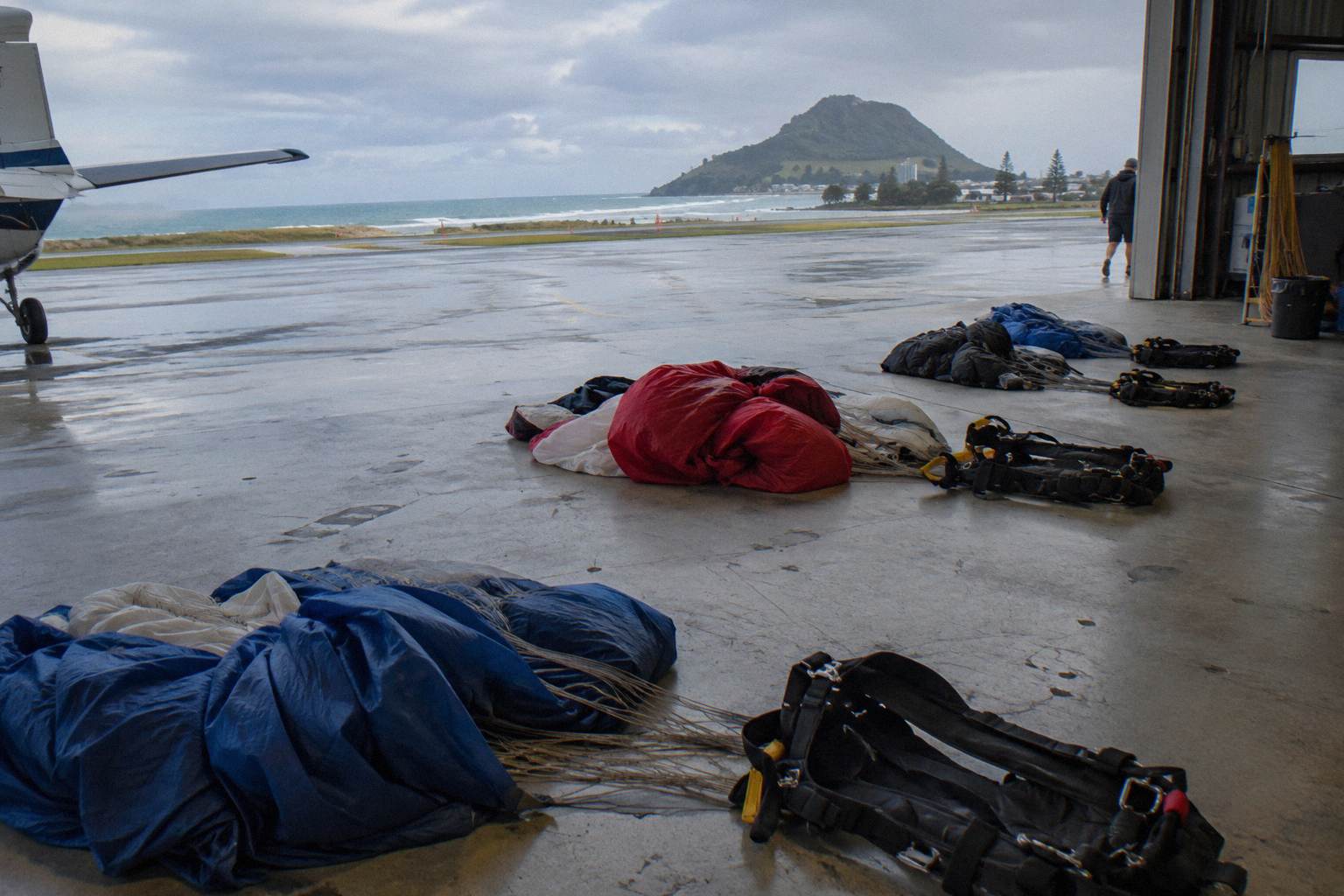
The regulatory chain is worth knowing as a consumer. The Civil Aviation Authority Part 115 rule requires adventure aviation operators, including tandem parachute operations, to hold an operator certificate, and the Civil Aviation Authority Part 105 rule sets the parachuting requirements underneath it, including the rule that a tandem master must open the main parachute at not less than 5,000 feet. WorkSafe treats skydiving as CAA regulated rather than as a WorkSafe adventure activity, per the WorkSafe adventure activity guidance.
The numbers that exist are sober rather than frightening, and they are not New Zealand numbers. In the United States, the US Parachute Association recorded 16 civilian skydiving fatalities from roughly 3.47 million jumps in 2025, a rate of 0.46 per 100,000, according to the US Parachute Association safety page. Internationally, the FAI recorded 27 fatalities across 41 reporting countries in 2024 from over 7.28 million jumps, three of them tandem. New Zealand's Civil Aviation Authority reported one tandem parachute accident with broken bones and no fatalities in its adventure aviation sector for 2024 to 2025. None of these figures lets anyone call a jump safe or unsafe in absolute terms, they simply describe rare, real outcomes. The fuller treatment is in the is skydiving in Tauranga safe guide.
Equipment and procedure are shared across the industry. A tandem rig carries a main and a reserve parachute plus an automatic activation device that deploys the reserve if the pair is falling too fast at low altitude. Tandem passengers do not normally wear helmets while instructors do, a deliberate design choice about head contact in the aircraft and on exit. For a nervous first timer, the how scary is first time skydiving post addresses the fear question directly.
What Trips People Up Before You Book
The common mistakes are choosing by view alone and ignoring the rules and the road: booking Taupo from a Tauranga hotel without allowing four hours of driving, assuming the Tauranga weight threshold applies at the lake, arriving at the wrong Taupo meeting point, and forgetting that photos and video are paid extras on nearly every listing. Each of these is avoidable with one check before you pay.
First, the weight crossover. Passengers between 100 and 110 kg can book at Tauranga without a phone call but exceed the maximum on the Taupo 12,000 or 15,000 ft listing. Check your own numbers against the specific listing, not against a friend's story from another drop zone, because per product rules differ and a figure stated for one operator is never true of another. The age floor works the same way: 7 at Tauranga, 10 at Taupo, no exceptions for a keen sibling.
Second, the meeting points. The Taupo listings do not all meet in the same place: the 12,000 ft product meets at 1227 Anzac Memorial Drive in Wharewaka, the up to 15,000 ft listing at the yellow hangar at Taupo Airport, and the helicopter combination at Huka Falls Road in Wairakei. Arriving at the right town but the wrong address still costs the slot. The Tauranga jumps all meet at Tauranga Airport, Mount Maunganui, which is harder to get wrong.
Third, the camera question. On every Tauranga listing and both standard Taupo tandems, photos and video are paid extras, never included in the jump. The one exception in this comparison is the Taupo helicopter plus skydive combination, which includes photos and videos. Budget for media before you book, and if you want the outside camera flyer package at Tauranga, it needs to be prebooked, per the operator's camera packages page.
Fourth, the drive versus the day. Travellers who book a midday Taupo jump from Tauranga, then discover the 2 hour drive each way, end up rushed or late. Arrive 30 minutes early at the drop zone, allow 1.5 to 2 hours for the experience, and put the drive on either side of that in full. If the maths does not fit, the coast jump from the same airport is the fix, not a faster car. The how to book a Tauranga tandem skydive guide walks through the booking steps.
Common Questions About Choosing A Drop Zone
Is It Better To Skydive In Tauranga Or Taupo?
Neither is better for everyone. Tauranga suits younger jumpers from age 7, passengers up to 110 kg and anyone based in Tauranga or on a cruise stop, with the airport minutes from the city. Taupo suits travellers already near the lake, with pickup included on some listings and a 5.0 rating from 457 reviews on the 12,000 ft product. Choose by your base, your dates and the rules, not by the view alone.
How Far Apart Are The Tauranga And Taupo Drop Zones?
About 143 km by road, a drive of roughly 1 hour 50 minutes to 2 hours each way. A Taupo jump from a Tauranga base means around four hours of driving plus 1.5 to 2 hours at the drop zone, effectively a full day. From Auckland, Tauranga is 204 km and about 2 hours 30 to 40 minutes.
Can Children Jump At Both Drop Zones?
No. The Tauranga listings accept jumpers from age 7, with a parent or guardian consent letter for anyone under 18 and a dropzone visit first for under 12s. The Taupo 12,000 or 15,000 ft listing sets a minimum age of 10. For a family with a child between 7 and 9, Tauranga is the only option of the two.
What Are The Weight Limits At Each Place?
At Tauranga the minimum weight is 30 kg, you can book freely under 110 kg, and above 110 kg you phone the operator, with a small surcharge that goes to the tandem instructor. The Taupo 12,000 or 15,000 ft listing carries a 100 kg maximum. Passengers between 100 and 110 kg can jump at Tauranga but not on that Taupo listing.
Is Pickup Included At Taupo?
On some listings, yes. The up to 15,000 ft Taupo tandem includes free pickup and drop-off from your Taupo accommodation, and the 12,000 ft product includes hotel pickup. The Tauranga listings have no pickup listed, so you make your own way to Tauranga Airport, Mount Maunganui, which is a 5 to 10 minute drive from the cruise dock.
Are Photos Included With A Tauranga Or Taupo Skydive?
Not on the standard tandems. Photos and video are paid extras on every Tauranga listing and on the standard Taupo tandems. The single exception is the Taupo helicopter plus 15,000 ft skydive combination, which includes photos and videos. At Tauranga, the outside camera flyer package must be prebooked.
The final trade, then: coast or lake, child or no child, car or pickup, four hours of road or five minutes of it. Whatever the answer, checking dates and prices on the live pages is the last step before money changes hands, and both drop zones hold your slot with free cancellation up to 24 hours before the start on the booking page.
For the lake side of the comparison, the Up To 15,000ft Over Lake Taupo listing, rated 4.9 from 376 reviews with free Taupo pickup, is the one to price first, and you can check availability for your dates. On the coast side, see the dates for the Mount Maunganui jump before you commit. The wider field, including drop zones further afield, is mapped in the North Island skydive drop zones compared guide.
The last practical word goes to Tauranga Skydive readers deciding with a calendar open: write the drive into the plan, or jump where you are. Both views are real, and both drop zones run the same heights with the same 24 hour cancellation window, so the decision is yours to make on facts rather than slogans.
Common Questions About Choosing A Drop Zone
Which Costs More, Tauranga Or Taupo?
Prices for both drop zones sit on the booking pages and vary by date and group size, so compare your own dates rather than a remembered figure. The Tauranga operator's direct prices, in New Zealand dollars, are NZ$449 for 12,000 ft and NZ$549 for 15,000 ft, with camera packages from NZ$149 to NZ$349. Taupo figures are not published here, check when booking.
Can You Do A Taupo Skydive As A Day Trip From Tauranga?
Yes, if you treat it as a full day. The drive is about 1 hour 50 minutes to 2 hours each way, and the jump experience itself runs about 2 hours on the 12,000 ft listing, so allow roughly six to seven hours end to end plus slack for weather holds. With free Taupo pickup on the up to 15,000 ft listing you still need to reach Taupo first.
Do Both Drop Zones Offer 15,000 Ft Jumps?
Yes. The Tauranga listings run 12,000 or 15,000 ft, with the Mount Maunganui product offering both by option, and the Taupo side offers a 12,000 ft tandem plus listings up to 15,000 ft. Freefall at 15,000 ft is about 1 minute, an indication only, varying with conditions and body shape.
What Happens If The Weather Cancels The Jump?
The operator phones you on the day and works something out to fit your schedule, per the Tauranga FAQ, and every listing here carries free cancellation up to 24 hours before the start on the booking page. Weather holds are normal at both drop zones. If you are on a tight cruise or flight schedule, book the earliest practical date so there is room to rebook.