Tandem Skydive Age Limit At Tauranga Airport: Kids, Teenagers And Seniors
Seven is the minimum age for a tandem jump at Tauranga Airport, set by the operator rather than by law, and New Zealand has no upper age limit at all. Between those two numbers sit a consent letter, a harness fitting and a few practical checks worth settling before anyone pays.
Short answer
The minimum age to tandem skydive at Tauranga Airport is 7, an operator rule rather than a legal one. Jumpers under 18 need a consent letter from a parent or guardian, and children under 12 are asked to visit the dropzone first for a harness fitting. New Zealand law sets no maximum age, and the operator assesses fitness and harness fit on the day.
If you are weighing jump options alongside scenic flights, the Skydive Over Mount Maunganui listing gathers the headline jump in one place, with its height options and cancellation terms.
| Fact | Detail |
|---|---|
| Minimum age at Tauranga Airport | 7, set by the operator |
| Legal age limit in New Zealand | None, minimum or maximum |
| Under 18 | Needs a parent or guardian consent letter |
| Under 12 | Asked to visit the dropzone first for a harness fitting |
| Minimum weight | 30 kg, with a safe harness fit |
| Jump heights offered | 12,000 ft or 15,000 ft |
| Total time on site | 1.5 to 2 hours, arriving 30 minutes early |
| Free cancellation | Up to 24 hours before the start, on the booking page |
How Old Do You Have To Be To Skydive At Tauranga Airport?
Seven is the youngest age the operator will take on a tandem jump, and the rule belongs to the company rather than to any New Zealand statute. The operator's reasoning is that the jump has to be the child's own decision to make, not a parent's. Alongside the age threshold sits a weight floor of 30 kg, because the real constraint at the young end is whether a small body fits safely into a tandem harness.
The detail comes straight from the operator's FAQ page, which frames the age limit as a deliberate choice: New Zealand imposes no age restriction, but the company has set its own floor at 7. The child also needs to meet the weight rule of 30 kg minimum, and the phrasing matters, because the operator says the weight figure is really about the harness. A tall, light 9-year-old and a compact 11-year-old can present very different fitting problems, which is why the operator does not treat the numbers alone as a green light.
For families, the practical reading is this: a 7th birthday does not automatically mean a jump. The operator asks that any child under 12 be brought to the dropzone before the jump day, so staff can meet them, let them see the experience and, most importantly, fit them in a harness. That visit costs nothing beyond the drive and it removes the single most common reason a young jumper is turned away on the day, an unsuitable harness fit.
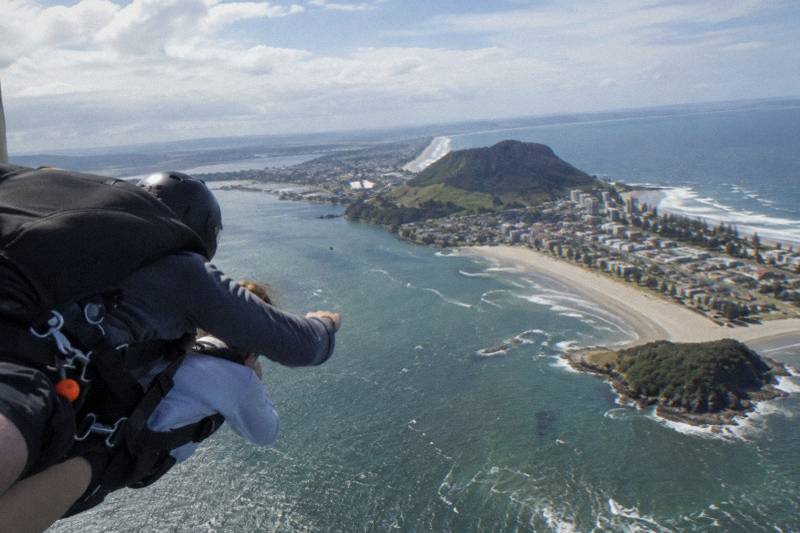
It is worth pairing the age rule with a realistic look at the jump itself. The 15,000 ft options, including the Skydive Over Mount Maunganui link for the Skydive Over Mount Maunganui listing, involve a 20 minute climb to altitude and freefall of up to about a minute at speeds the operator describes as over 200 km/h. A 12,000 ft jump shortens both. Some children take to it immediately, others decide the viewing area is the better place to stand, and the operator's own framing, that the jump must be the child's decision, is designed to leave room for exactly that choice.
The weight question deserves its own attention for teenagers, and the full rules, including the 110 kg threshold above which you phone the operator, are covered in the Tauranga skydive weight limit guide.
What Does A 7 To 11 Year Old Need Before Jumping?
A child under 12 needs three things before the jump can happen: a visit to the dropzone to be fitted in a harness, a parent or guardian's consent in writing, and a personal weight of at least 30 kg. The operator asks for the pre-visit in plain terms on its FAQ page, and it exists because a harness that does not fit safely cannot be worked around on the day. The jump itself remains the child's choice throughout.
The pre-visit is the part families most often miss. It is not a medical check and it is not a training session; the operator describes it as coming in to meet the staff, discover the experience and be fitted in a harness. For a family driving in from out of town this can be folded into an earlier trip, and Tauranga Airport sits roughly 5 to 6 km from the cruise terminal end of Mount Maunganui, so it is a short detour from almost anywhere in the town. Booking the jump before the visit is fine, because every listing carries free cancellation up to 24 hours before the start, which covers the small chance the harness fitting does not work out.
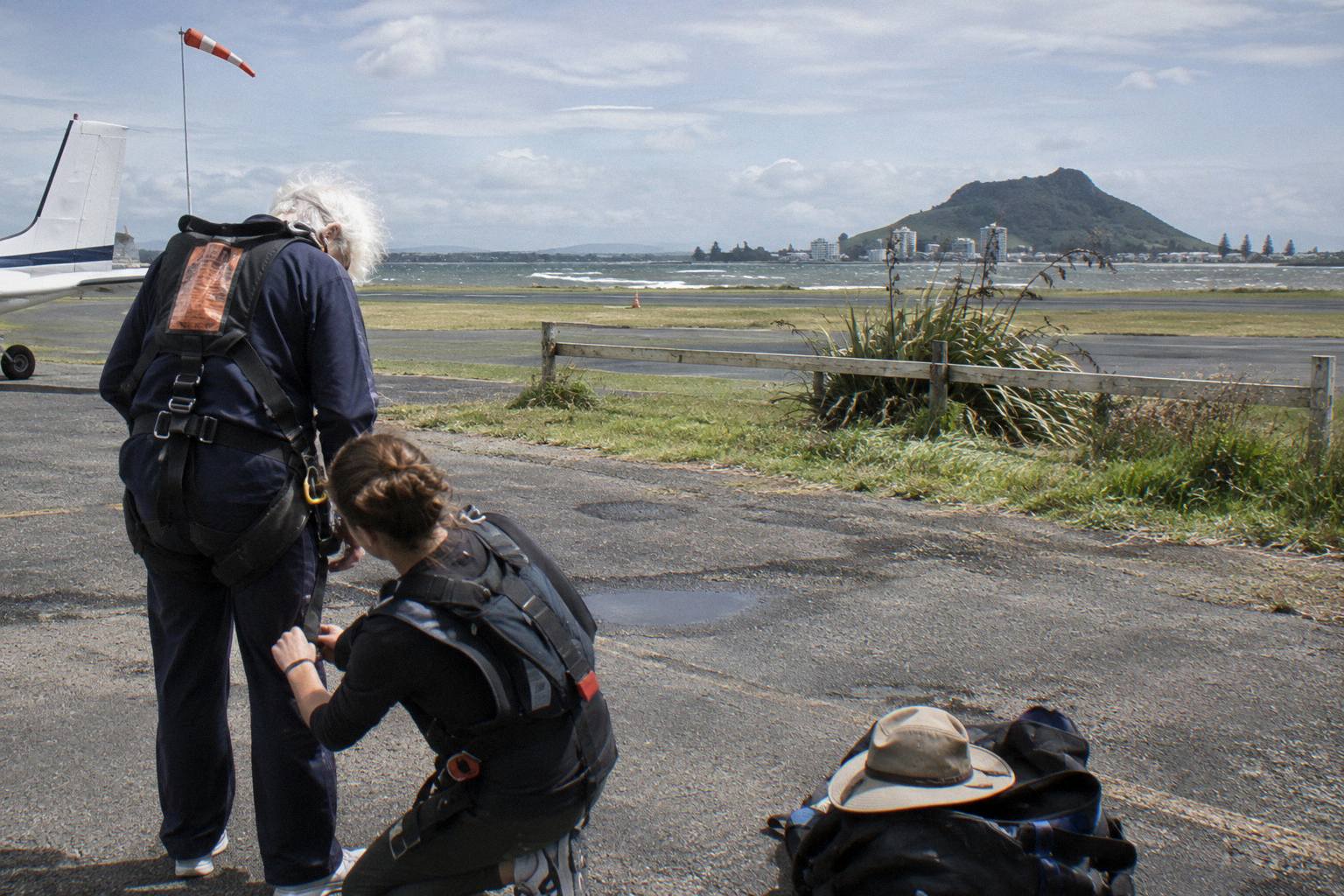
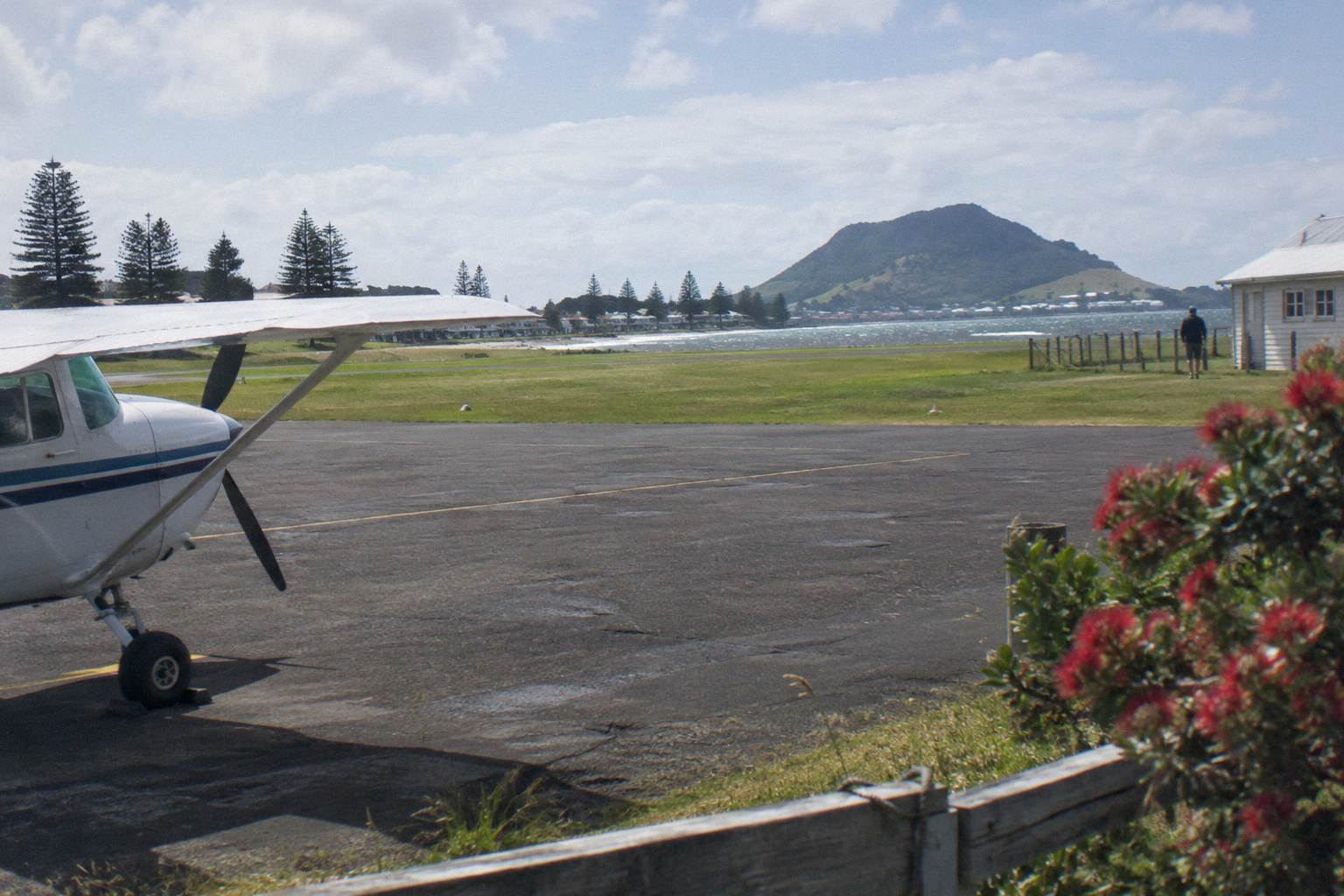
The consent letter for under 18s is a simple document. The operator asks for a letter of consent from a parent or guardian, and the parent does not need to jump or even be present in the aircraft area, though the airport has a viewing area for spectators where the plane both takes off and lands. What the letter does is put an adult's signature on a decision the operator insists belongs to the child. If a birthday trip is the plan, it is worth reading the skydive day plan for Tauranga guide to sequence the fitting visit, the paperwork and the jump itself.
One plain note on what a young jumper actually experiences: the operator supplies a hat, which it attributes to New Zealand civil aviation regulations, plus goggles that fit over glasses. Closed shoes are mandatory for everyone. The freefall time, 40 seconds at 12,000 ft or about a minute at 15,000 ft, is described by the operator as an indication only, varying with weather and body shape, and a smaller body changes that arithmetic a little. No operator can promise how any particular child will respond, and none of the facts here suggest one should.
Do Teenagers Jump Differently Or Need Extra Paperwork?
A 12 to 17 year old skips the pre-visit harness fitting that younger children need, because at that size the standard tandem harness usually works, but the consent letter from a parent or guardian still applies all the way up to the 18th birthday. Beyond paperwork the jump is identical to an adult tandem: same aircraft, same heights, same weight rules, same freefall. Age stops being a special category at 18, and weight becomes the only physical gate.
The consent letter is the single extra item, and it travels with the teenager rather than the parent. A 17-year-old arriving with a school group, a sports team or an older sibling needs that letter physically present, and the operator's waiver adds a second layer worth knowing about: it asks everyone to declare medical conditions such as severe motion sickness, asthma, allergies, heart conditions, epilepsy or sinus congestion, and it reserves the right to withdraw anyone the operator believes may endanger themselves or others. For a teenager with a managed condition this is a declaration, not an automatic bar, and the operator's health guidance is covered in more depth in the Tauranga skydive medical conditions guide.
Teenagers are also the group most likely to be bought a jump as a gift, and the mechanics of that matter here. Vouchers from the operator's own shop are valid for a year, non refundable but transferable, and a NZ$500 gift certificate can be put against a jump or a camera package. The weight rule of 30 kg minimum and 110 kg booking threshold is the same at 15 as it is at 50, so a tall 16-year-old over 110 kg needs the same phone call an adult would make.
What changes with age, if anything, is the choice of height. Freefall at 15,000 ft runs about a minute against 40 seconds at 12,000 ft, and the operator's direct prices for the two heights are NZ$549 and NZ$449 respectively, amounts in New Zealand dollars that vary by date on the booking calendar. A first jump at either height is a complete experience; the 12,000 vs 15,000 ft comparison guide works through that trade-off in full. The 15,000ft Tandem Skydive in Tauranga listing caps a booking at two travellers, which matters for a group of teenagers who all want the same slot.
Is There A Maximum Age For A Tandem Skydive In New Zealand?
No. New Zealand law sets no maximum age for tandem skydiving, and operators across the country regularly take jumpers well past retirement age, with some reporting passengers old enough to be great-grandparents. What replaces an age ceiling is an on-the-day assessment of fitness and harness fit, plus the operator's waiver, which reserves the right to refuse anyone whose safety it is concerned about. In practice, age alone has never stopped a tandem jump here.
The operator at Tauranga Airport publishes no upper age figure and no senior-specific rule. Its waiver asks every jumper, whatever their age, to declare relevant medical conditions, and it specifically recommends against a skydive during pregnancy, within 24 hours of scuba diving, or with a spinal or back injury. Those three recommendations apply at 25 and at 85 alike, and they are the closest thing to a health gate the operator publishes. Beyond them, the decision rests on the day: how the person moves, how the harness fits, and the instructor's judgement.
Older jumpers, and the family members booking for them, tend to ask the same sensible questions. Landing is one: tandem landings are controlled by the instructor, with the passenger lifting their legs, and the how painful is skydiving post works through what the landing actually involves. Vision is another, and the operator answers it directly, with goggles supplied that fit over glasses, and contacts welcomed. Fitness expectations, gentle rather than extreme, are set out in the skydive fitness and health checks guide.
How Do The Age Rules Compare Between Tauranga And Taupo Listings?
The Tauranga Airport listings set a minimum age of 7; the Lake Taupo listing from Taupo Tandem Skydiving sets a minimum age of 10. Both are operator rules, not legal ones, and both sit under the same New Zealand reality of no statutory age limit. A family with children between 7 and 9 therefore has a drop zone decision that is purely about age, while everyone 10 and older can choose on scenery, price and travel instead.
The comparison matters because Taupo is a realistic day trip from Tauranga, roughly 143 km and just under two hours of driving, and the Taupo operators run their own weight rules too, a 100 kg maximum on the 12,000 and 15,000 ft listing, against the Tauranga threshold where you book freely under 110 kg and phone above it. Age and weight rules never cross over between operators: what applies at Tauranga Airport applies only there.
| Listing | Operator | Minimum age | Under 18 paperwork |
|---|---|---|---|
| Skydive Over Mount Maunganui | Skydive Tauranga | 7 | Consent letter |
| 15,000ft Tandem Skydive in Tauranga | Skydive Tauranga | 7 | Consent letter |
| Bay Of Plenty 15,000ft Skydive | Skydive Tauranga | 7 | Consent letter |
| Lake Taupo 12,000ft Skydive | Taupo Tandem Skydiving | 10 | Check when booking |
| Up To 15,000ft Over Lake Taupo | Taupo Tandem Skydiving | 10 | Check when booking |
For the Tauranga side, the under 18 paperwork is the consent letter described above, and the under 12 harness visit applies to all three jump listings at the airport. The wider decision between the two drop zones, scenery, travel time and price structure, is worked through in the Tauranga vs Taupo skydive comparison, and the North Island drop zones compared guide places both in the national picture.
Which Age Band Should Choose Which Jump Height?
No height rule is tied to age: a 7-year-old and a 70-year-old jump from the same two options, 12,000 ft or 15,000 ft. The differences are climb time, 15 minutes against 20, and freefall, about 40 seconds against about a minute. Price separates them too, NZ$449 against NZ$549 booked direct, in New Zealand dollars.
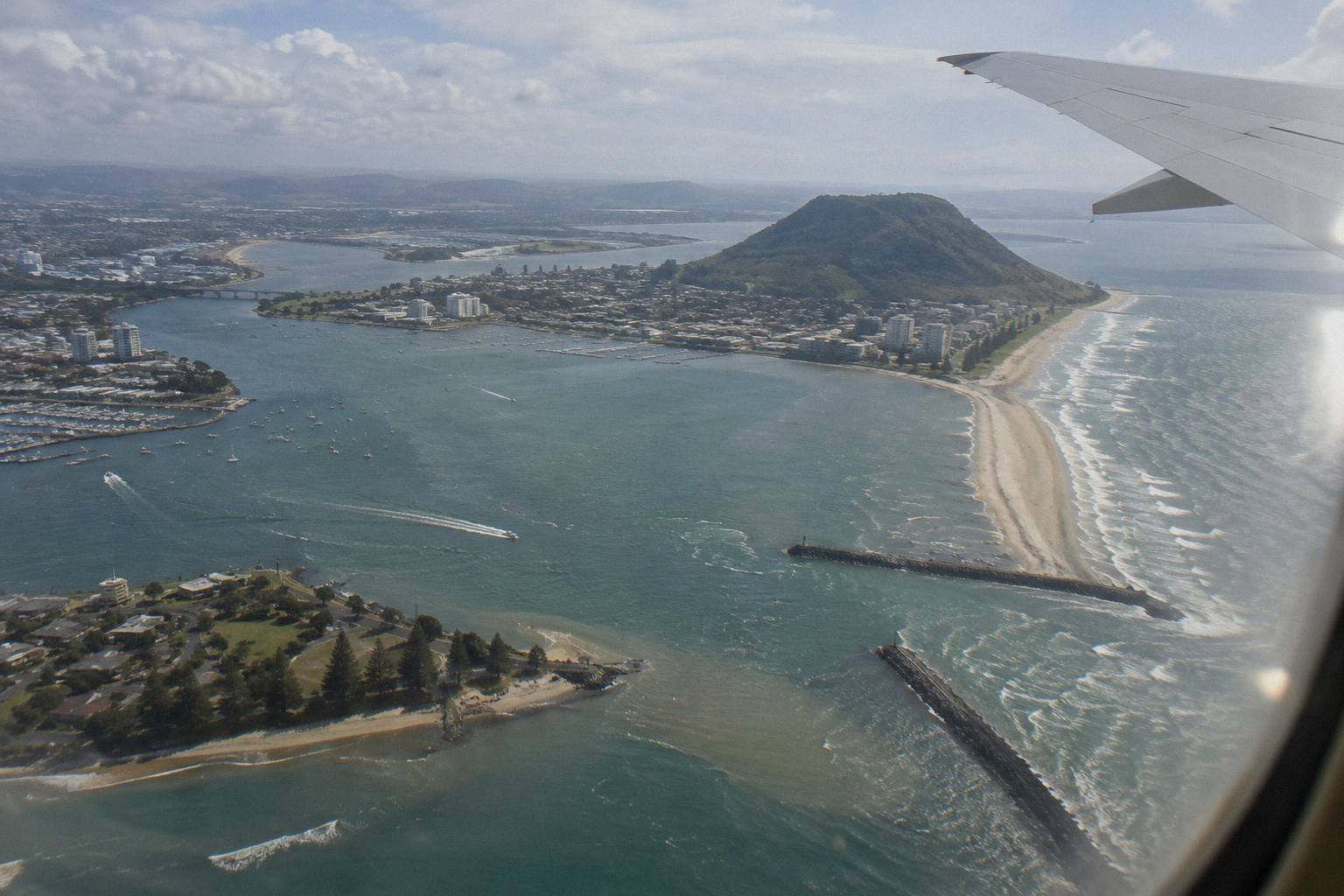
The argument for 12,000 ft as a first jump is not about daring, it is about total exposure time. The operator asks everyone to allow 1.5 to 2 hours on site, and the flight to altitude is 15 to 20 minutes in a Cessna 182 that carries two tandems at a time. A younger or older jumper who is unsure about the whole idea gets a shorter aircraft ride, a shorter freefall and the same views of the coast, the harbour and Matakana Island, the 20 km long sandbar that shields Tauranga Harbour. The argument for 15,000 ft is simply more of the thing itself: another 20 seconds of freefall and a longer look at the Mount Maunganui skydive views.
| Age band | Before the jump | On the day | Sensible starting height |
|---|---|---|---|
| 7 to 11 | Dropzone visit, harness fitting, consent letter | Harness re-check, child's own final call | 12,000 ft |
| 12 to 17 | Consent letter, medical declaration | Same jump as an adult | Either |
| Adults 18 and over | Medical declaration | Weight and harness check | Either |
| Over 70 | Medical declaration, conditions declared | Fitness and harness assessment on the day | 12,000 ft is a common first choice |
That final row is a planning observation, not an operator rule, and no operator publishes a height recommendation by age. What the operator does publish is that freefall times are an indication only, and that the whole experience, from check-in to landing back at the same spot on the airport, runs 1.5 to 2 hours. Families splitting heights, one parent at 12,000 ft with the child and one at 15,000 ft, should tell the operator when booking, because the aircraft takes two tandems at a time and slots pair up.
What Trips People Up Before You Book
Four things catch families out: assuming a birthday alone clears the jump, arriving without the consent letter, skipping the under 12 dropzone visit, and confusing the weight rules between operators. Each one is avoidable in minutes. The consent letter is the most common failure on the day, and the harness fitting is the most common reason a young jumper is declined, which is exactly what the pre-visit exists to prevent.
The weight confusion deserves a plain statement. The operator's own pages disagree on the maximum, 110 kg on the booking form and FAQ, 115 kg including clothes and shoes on the what-to-know page, so the working number to plan around is 110 kg, with a phone call above it and a small surcharge that goes to the tandem instructor. A teenager close to that line should be weighed at home, not at the hangar. None of the Tauranga figures transfer to Taupo, where the listing maximum is 100 kg, and none of the helicopter weight rules apply to jumps at all.

The other traps are smaller. Closed shoes are mandatory, and a child arriving in sandals cannot jump in them. The camera rules surprise people too: no tandem passenger may carry their own phone or camera under New Zealand civil aviation rules, so a teenager planning to film the jump needs one of the operator's camera packages instead, from NZ$149 for photos to NZ$349 for the outside camera flyer, which must be prebooked. Those packages are extra to the jump on every Tauranga listing, and the full detail is in the photo and video packages guide. If weather intervenes, the operator calls on the day and works something out, and the weather and cancellations guide explains what that means for your booking.
Common Questions About Skydive Age Rules
How Old Do You Have To Be To Skydive In New Zealand?
New Zealand law sets no minimum age for tandem skydiving. The operator at Tauranga Airport sets its own minimum of 7, chosen so the jump is the child's own decision, and the Taupo Tandem Skydiving listing sets its minimum at 10.
Can A 7 Year Old Do A Tandem Skydive At Tauranga Airport?
Yes, if the child weighs at least 30 kg, fits safely in the tandem harness and brings a consent letter from a parent or guardian. The operator asks that any child under 12 visit the dropzone first so staff can check the harness fit before the jump day.
Do Parents Need To Be Present For A Teenager To Jump?
The operator asks for a letter of consent from a parent or guardian for anyone under 18, but the parent does not need to jump. The airport has a viewing area for spectators, and the aircraft takes off and lands in the same place.
Is There An Age Limit For Seniors?
No maximum age exists in New Zealand law, and operators here take tandem passengers across every adult age group. The operator assesses fitness and harness fit on the day, and its waiver asks every jumper to declare conditions such as heart conditions, epilepsy or asthma.
Does A Child Pay A Different Price?
No age-based price exists. The operator's direct prices are NZ$449 for 12,000 ft and NZ$549 for 15,000 ft, amounts in New Zealand dollars, and prices vary by date and group, with the booking page showing the figure for your date. Camera packages are extra for every jumper.
Which Age Is Too Young For The 15,000 Ft Jump?
Neither height has its own age rule: the same minimum of 7 and the same 30 kg weight floor apply to both. The differences are climb time, 15 minutes against 20, and freefall, about 40 seconds against about a minute, with the operator noting freefall times are an indication only.
Whether the jumper is 8 or 80, the paperwork is light and the age rules are generous, and Tauranga Skydive walks through every one of them. The 12,000 ft and 15,000 ft listings both carry free cancellation up to 24 hours before the start, so the consent letter and the harness question can be settled without any financial risk.