Tandem Skydive Ratings At Tauranga Airport: What The Listings Show
Ratings are the fastest signal a buyer has, but a number without context tells you little. Here is what the tandem skydive products at Tauranga Airport actually show, how the heights and extras differ, and which one fits the kind of jumper you are.
Short answer
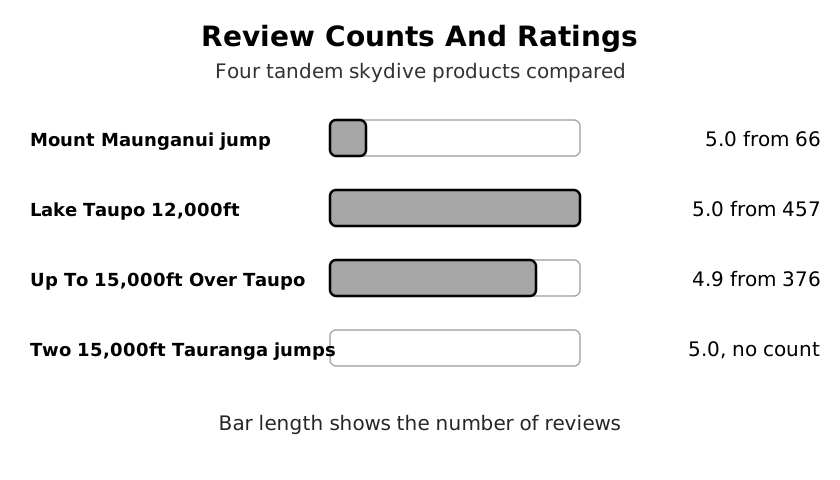
The Tauranga Airport jump over Mount Maunganui shows 5.0 from 66 reviews. The two 15,000 ft Tauranga products show 5.0 with no count printed. For comparison, the Taupo products show 5.0 from 457 reviews and 4.9 from 376. Ratings never rank anything; the details of each product decide which suits you.
Tandem skydiving over the Bay of Plenty has become one of the signature adventure purchases for visitors to this stretch of the North Island, and the first thing most buyers look at is the star rating. That is a reasonable instinct, but a rating is a summary, not a decision. The three jump products that run from Tauranga Airport differ in altitude, in what is included, and in who they suit, and those differences matter more than a decimal point between scores. This page walks through what each product shows, starting from the jump over Mount Maunganui, the listing that carries the printed score, then the two 15,000 ft products beside it.
| Fact | Detail |
|---|---|
| Top jump product at the airport | Skydive Over Mount Maunganui, 5.0 from 66 reviews |
| The two 15,000 ft Tauranga products | Both show 5.0, no review count printed |
| Taupo comparison points | 5.0 from 457 reviews and 4.9 from 376 reviews |
| Jump heights from Tauranga Airport | 12,000 ft or 15,000 ft |
| Freefall from 15,000 ft | Up to about 1 minute, indication only |
| Freefall from 12,000 ft | 30 to 45 seconds by option |
| Photo and video | Paid extras on all Tauranga jumps, NZ$149 to NZ$349 direct |
| Cancellation on the booking page | Free up to 24 hours before the start |
What The Tandem Skydive Ratings At Tauranga Airport Show
The headline number belongs to Skydive Over Mount Maunganui, which shows 5.0 from 66 reviews. The two 15,000 ft Tauranga products, the 15,000ft Tandem Skydive in Tauranga and the 15,000ft Tandem Skydive in Bay of Plenty, both show 5.0 with no count printed. A 5.0 from 66 reviews is a strong score on a real pool; treat any score without a visible count as unverified until you open the booking page yourself.
Sixty-six reviews is a modest pool compared with the big drop zones further south, where the Taupo products carry 457 and 376 reviews respectively. A smaller pool cuts both ways. It means the score has not been smoothed by thousands of bookings, and it also means a handful of unusual days could move it. What the 66-review score does tell you, plainly, is that jumpers who bought this specific product, a 12,000 or 15,000 ft tandem with a 20 to 25 minute scenic flight over the coast, came away happy enough to log a top mark.
The scenic flight element is worth pausing on, because it is part of the product, not a bonus. The Mount Maunganui jump includes a 20 to 25 minute flight to altitude, which the operator describes as scenic in its own right. Buyers who leave reviews on a product like this are rating the whole package: the check-in, the flight up, the freefall, and the few minutes under canopy. A top score across that whole chain says something about the operation, not just the adrenaline moment.
What a rating never tells you is whether the product matches your situation. A 5.0 score on a 15,000 ft jump does not help a parent wondering whether a seven-year-old can jump, or a traveller weighing more than the booking threshold who needs to phone ahead. Those answers come from the operator's rules, and the safest summary of them is on the operator's FAQ page: minimum age 7, minimum weight 30 kg, book freely under 110 kg and call above that. Every rating in the world is secondary to whether you are eligible on the day.
How 12,000 Ft And 15,000 Ft Differ Beyond The Rating
The two heights sold from Tauranga Airport are 12,000 ft and 15,000 ft, and the difference is measured in seconds: 30 to 45 seconds of freefall at the lower height against up to about 1 minute at the higher one. Both heights share the same aircraft, the same meeting point, the same eligibility rules, and the same paid camera extras. The rating gap between them is effectively noise; the freefall gap is the entire purchase decision.
The operator's own numbers frame it well. The 12,000 ft option is a 15 minute scenic flight to altitude with about 40 seconds of freefall; the 15,000 ft option is a 20 minute flight with about 1 minute of freefall, then 3 to 5 minutes under canopy either way. Freefall times are an indication only, as the operator states on its waiver page, and they vary with conditions and body shape. Nobody should book the higher option believing they are buying a guaranteed 60 seconds.
Whether the extra 20 seconds of freefall is worth the price step is a personal call, and the straight answer is the physics: terminal velocity is the same at both heights, so the higher jump is more of the same sensation, not a different one. If anything, the longer scenic flight at 15,000 ft, 20 minutes against 15, matters as much to travellers who came for the views of Matakana Island and the harbour. The Wikipedia entry on terminal velocity explains why a tandem pair settles at a steady speed rather than accelerating all the way down.
First-time jumpers agonise over this choice more than they need to. Both heights deliver the same exit, the same roar of wind, the same instructor-controlled canopy ride, and the same landing back at the airport apron. Jumpers who choose 12,000 ft report nothing missing; jumpers who choose 15,000 ft report the extra time. The people who end up disappointed are the ones who expected the height to change the character of the experience, and it does not.
| Product | Height Options | Scenic Flight | Freefall | Rating |
|---|---|---|---|---|
| Skydive Over Mount Maunganui | 12,000 or 15,000 ft | 20 to 25 minutes | 30 to 45 seconds (12,000) or about 1 minute (15,000) | 5.0 from 66 reviews |
| 15,000ft Tandem Skydive in Tauranga | 15,000 ft | 20 minutes | Up to 40 seconds freefall listed; about 5 minutes under canopy | 5.0, no count printed |
| 15,000ft Tandem Skydive in Bay of Plenty | 15,000 ft | 20 minutes | Same 15,000 ft profile | 5.0, no count printed |
The three products above cover both heights from the same drop zone. The Mount Maunganui product lets you pick 12,000 or 15,000 ft at booking, which is why it suits undecided buyers; the two 15,000 ft products are for people who have already settled on the top height and want the simplest booking path. Prices sit on the booking page rather than in any printed figure here, because they vary by date and group size.
How To Read A Skydive Rating Without Being Fooled
A rating is an average of self-selected feedback from people who completed the activity, and that shapes what it can tell you. Jumpers whose booking was cancelled for weather often never leave a review; jumpers who had an extraordinary day always do. Read the score alongside the review count, the date range of the feedback, and what the product actually includes, and never treat a higher score as proof one drop zone is safer or better run than another.
Start with the count. A 5.0 from 66 reviews, the score carried by Skydive Over Mount Maunganui, is a real signal from a real pool. The same 5.0 from eight reviews would tell you almost nothing, because one good fortnight could produce it. The Taupo scores, 5.0 from 457 and 4.9 from 376, are drawn from pools an order of magnitude larger, which typically means the score has survived busy seasons, bad-weather days, and the full range of human temperament.
Next, remember what a skydive rating actually measures. It measures the whole customer journey: booking ease, check-in, the wait, the instructor, the flight, the jump, the landing, and how the photos turned out. That is why operations with strong ground handling often score as well as operations with flashier aircraft. It is also why a rating says nothing about objective safety. Safety in New Zealand tandem skydiving is a regulatory question, and tandem operations need a Part 115 adventure aviation operator certificate under the Civil Aviation Authority Part 115 rule, which is a matter of law rather than customer satisfaction.
A final discipline: never compare ratings as a ranking between products. A 5.0 and a 4.9 from different drop zones, different pools, and different years are not the same measurement. The comparison that means something is within one product: what its reviewers say it includes, what it cost them beyond the jump price, and whether they would repeat it. That is the comparison the rest of this page makes.
If the 5.0 from 66 reviews has settled the rating question for you, the remaining question is height. The Mount Maunganui product offers both on one booking calendar, and free cancellation up to 24 hours before the start means an early decision is not a locked one. Check availability on the date you are considering before the calendar fills.
What The Camera Extras Add To The Total Cost
On every Tauranga Airport jump, photos and video are paid extras, never included in the jump price. Direct with the operator, the packages run NZ$149 for photos only, NZ$159 for video only, NZ$189 for both, NZ$229 for a 360 video, and NZ$349 for an outside camera flyer who jumps alongside you, and that last one must be prebooked. Reviewers who feel shortchanged almost always assumed media was included.
All amounts here are New Zealand dollars, taken from the operator's own camera packages page. The gap between the wrist-camera packages and the outside camera flyer is the difference between footage from your instructor's wrist and footage shot from a second skydiver flying formation alongside you. The 360 option captures the whole experience and is edited by hand into a video a few minutes long. Delivery comes by email with a download link by the end of the day, per the operator's what-to-know page.
| Camera Package | Direct Price | What You Get |
|---|---|---|
| Photos only | NZ$149 | Still images from a camera on the instructor's wrist |
| Video only | NZ$159 | Video from the instructor's wrist camera |
| Photos and video | NZ$189 | Both wrist-camera formats combined |
| 360 video | NZ$229 | Instructor wears a 360 camera; footage hand edited into a video a few minutes long |
| Outside camera flyer | NZ$349 | A second skydiver films you in freefall; must be prebooked |
One rule catches many first-timers: passengers may not carry their own camera. Under New Zealand civil aviation rules, no tandem passenger is allowed a phone or camera in freefall, so the packages are the only route to footage. There is no bargain workaround, and arriving with a GoPro strapped somewhere will not change that. The operator's camera packages page shows exactly what each tier includes.
Budget-wise, a realistic planning range for a 15,000 ft jump with the combined photo and video package sits around the operator's direct figures for the jump plus NZ$189, though prices vary by date and group and the booking page shows the price for your date. Decide the camera question before you arrive rather than at the manifest desk, when the queue behind you and the adrenaline ahead of you both press against careful thinking.
The Taupo Comparison: Bigger Pools, Different Products
The Taupo products reachable from Tauranga show 5.0 from 457 reviews for the Lake Taupo 12,000ft Skydive and 4.9 from 376 reviews for the Up To 15,000ft Over Lake Taupo product. Those larger pools reflect a longer-running, higher-volume drop zone at Taupo Tandem Skydiving, not a better jump. The trade is real: a long drive each way against a jump over New Zealand's largest lake.
Taupo is a different product, not an upgrade. Lake Taupo has a surface area of 616 square kilometres, making it New Zealand's largest lake, and the jump is built around that vista. The 12,000 ft Taupo product takes about 2 hours on site and includes hotel pickup, a practical difference for travellers staying in Taupo itself rather than driving over from the Bay of Plenty. The drive between the two towns runs roughly 143 km and takes about 1 hour 50 to 2 hours, so a Taupo jump from a Tauranga base is a full-day commitment.
For a fuller breakdown of the two drop zones side by side, including the different age and weight rules that apply at Taupo, read the companion comparison of Tauranga versus Taupo skydives. The short version for the buyer at the rating stage: the Taupo scores are bigger and marginally lower, and neither fact should decide your trip. The geography should. If your holiday is based in Mount Maunganui or Tauranga, the local airport jump wins on logistics; if you are touring the central North Island anyway, the Taupo products are strong options with their own eligibility rules.
There is also a combined Taupo product worth knowing about at this stage of research: a scenic helicopter flight plus a 15,000 ft tandem skydive operated from Wairakei, with photos and videos included on that specific product. That inclusion is unique among the jumps covered here, and it explains some of the appeal for buyers who want media without the à la carte decisions.
Which Product Suits Which Kind Of Jumper
Match the product to your situation, not the score. Undecided first-timers at Tauranga Airport should book the Mount Maunganui product because it offers both heights on one calendar and carries the printed 5.0 from 66 reviews. Confident buyers who know they want maximum altitude choose either 15,000 ft product. Families weighing eligibility, and travellers over the weight threshold, have phone calls to make before any of the three matter.
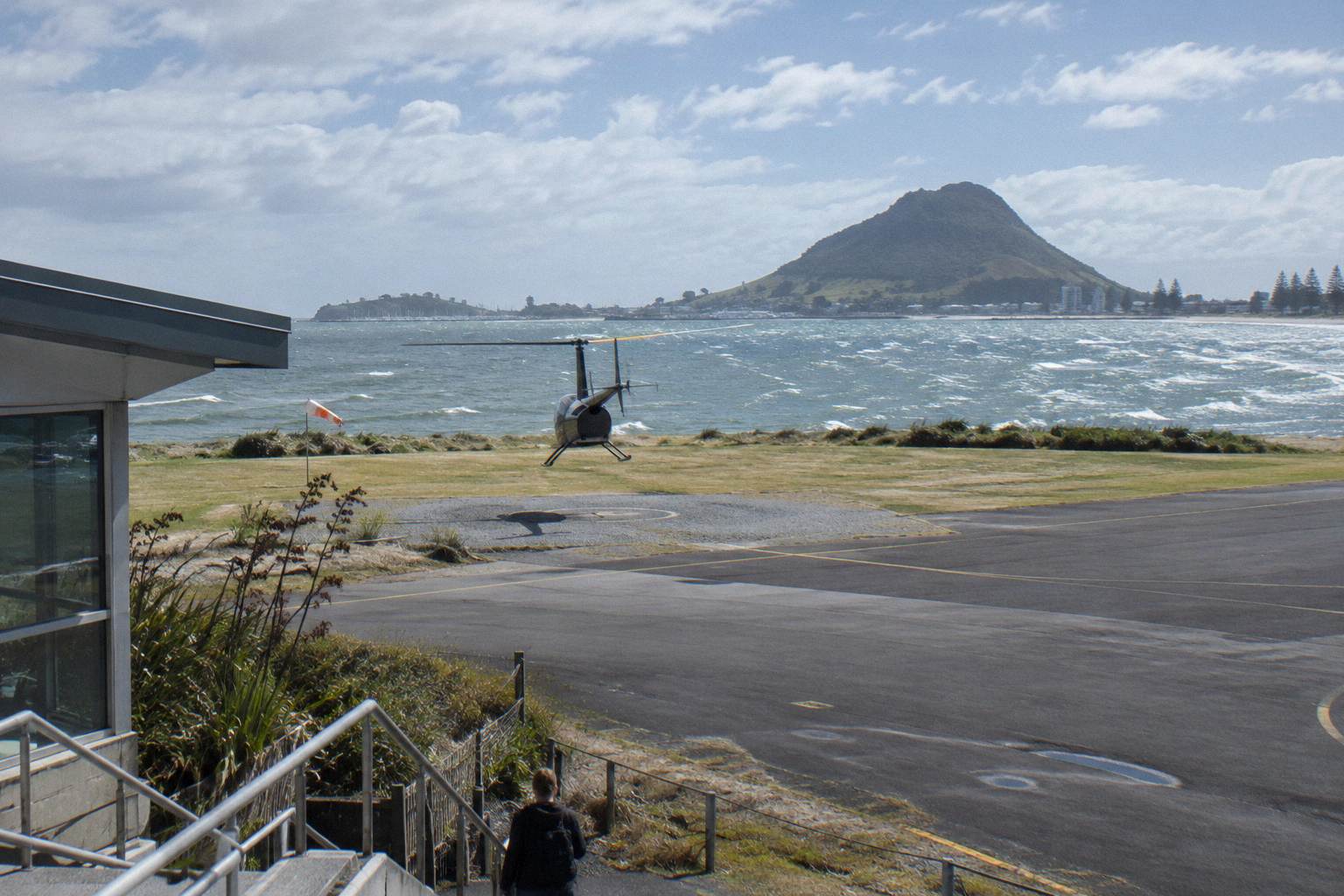
The eligibility rules at the Tauranga drop zone are straightforward and worth restating at the decision point: minimum age 7 with a parent or guardian consent letter under 18, minimum weight 30 kg, and free booking under 110 kg with a call to the operator above that. Under-12s are asked to visit the dropzone first for a harness fitting. These are operator rules rather than law, and they belong to the Tauranga products specifically; the Taupo products carry their own age and weight rules, so never assume one drop zone's limits apply at another.
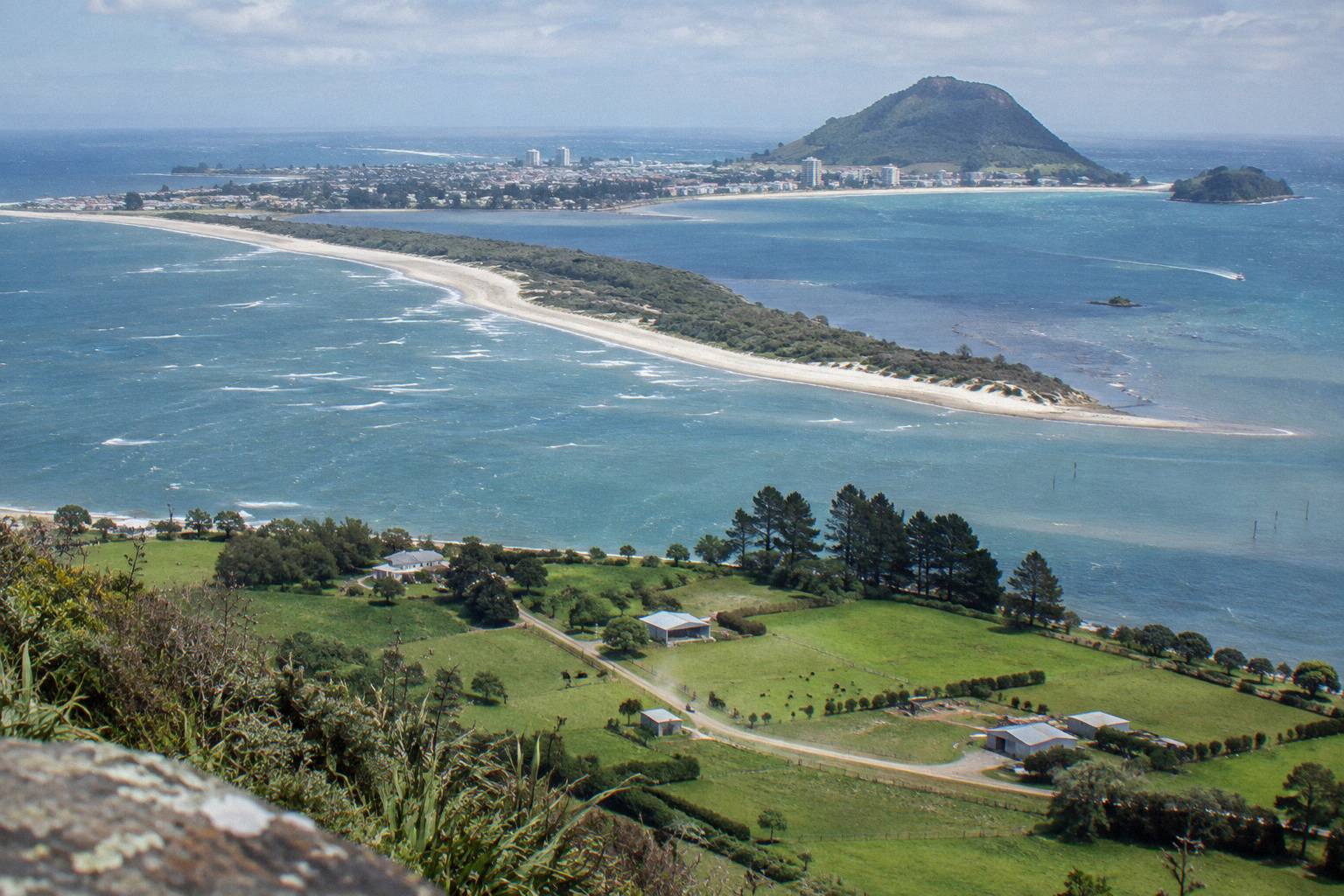
Time-poor travellers, including cruise passengers, tilt strongly toward the local airport jump. The whole experience takes 1.5 to 2 hours with a 30 minute early arrival, and the airport sits about 5 to 6 km from the cruise terminal at Mount Maunganui, a drive of a few minutes. A Taupo jump from a cruise stop is simply not feasible in port time. The maths of the decision is set out in more detail in the guide to skydiving on a Tauranga cruise stop.
For buyers still at the safety question, the scores on this page are not the tool. Read the companion page on whether skydiving in Tauranga is safe, which covers the regulatory framework, the US and international statistics, and what the equipment on a tandem rig actually does. The one-line version: tandem skydiving carries real risk, it is regulated in New Zealand by the Civil Aviation Authority, and customer ratings measure satisfaction rather than safety.
Where The Scenery In Those Reviews Comes From
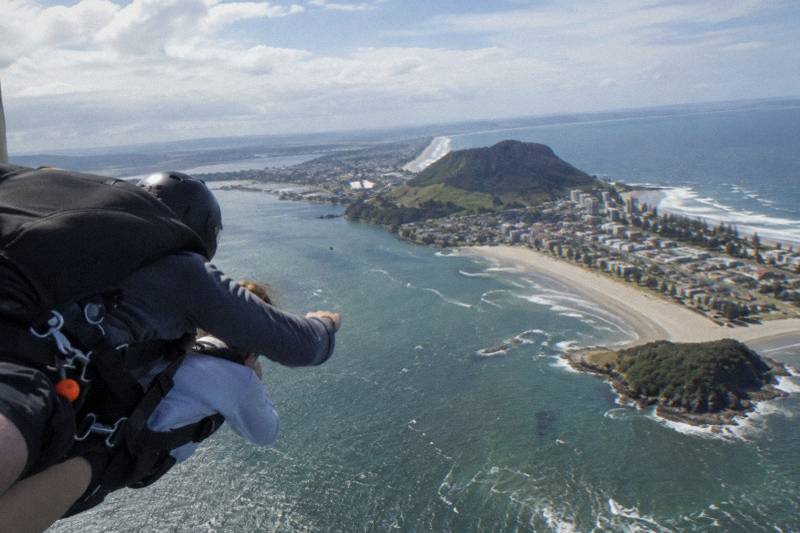
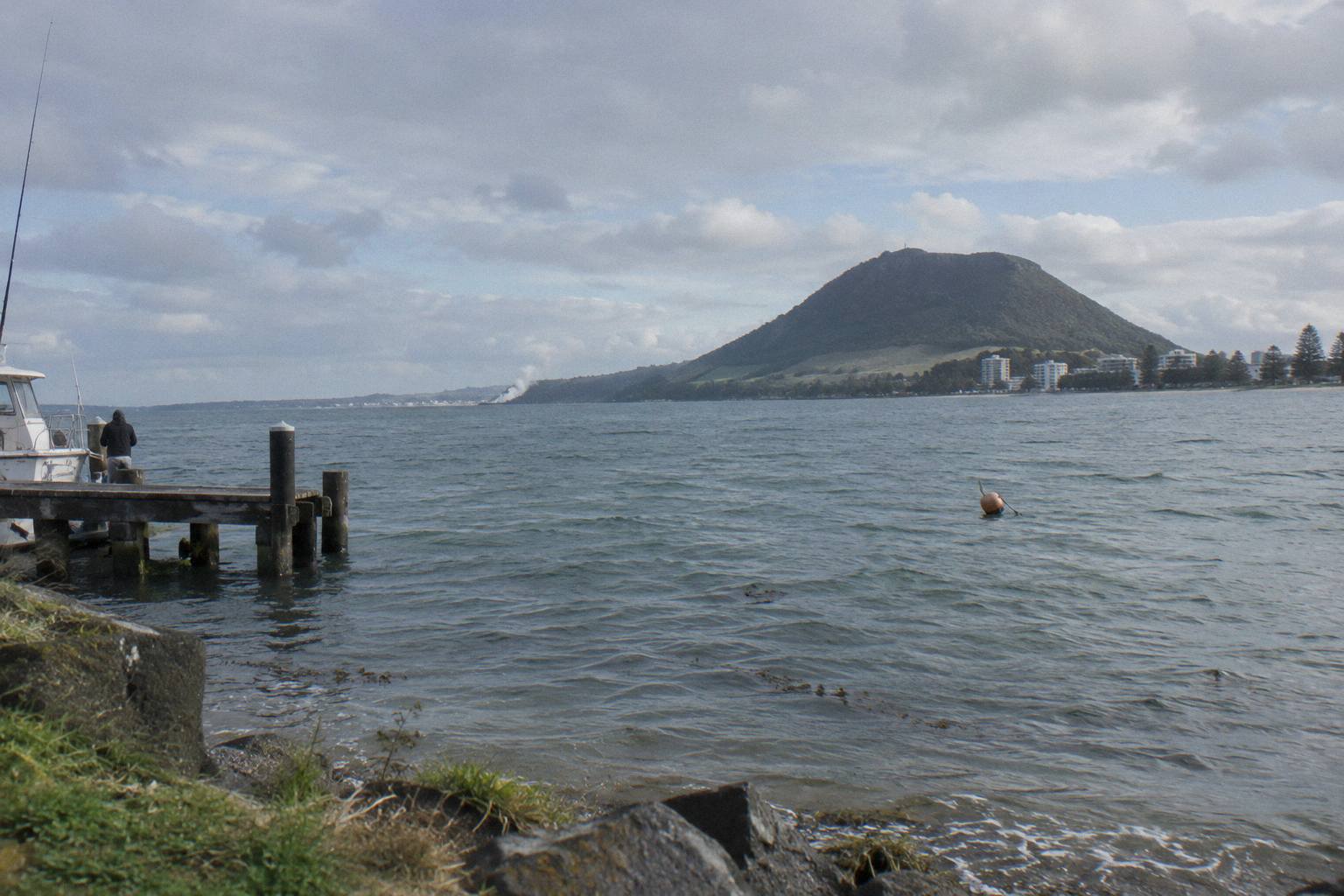
The views that fill the photos in reviews are a specific geography: Mauao rising 232 metres above the harbour entrance, Matakana Island stretching 20 kilometres along the barrier, and the Kaimai Range inland. The jump is sold from Tauranga Airport, which sits in the Mount Maunganui suburb beside the harbour, about 3 km from the Tauranga CBD. Every reviewer's photo of the coast starts from that same piece of map.
Knowing the geography helps you judge the imagery you will see on a booking page. The aircraft climbs over the harbour with the port side toward the open Bay of Plenty and the barrier island; on a clear day the Kaimai Range sits inland and the volcano of the central North Island can sit far to the south. The place facts behind these views are summarised in the guide to Mount Maunganui skydive views, which is worth a read before you pick a jump date around weather.
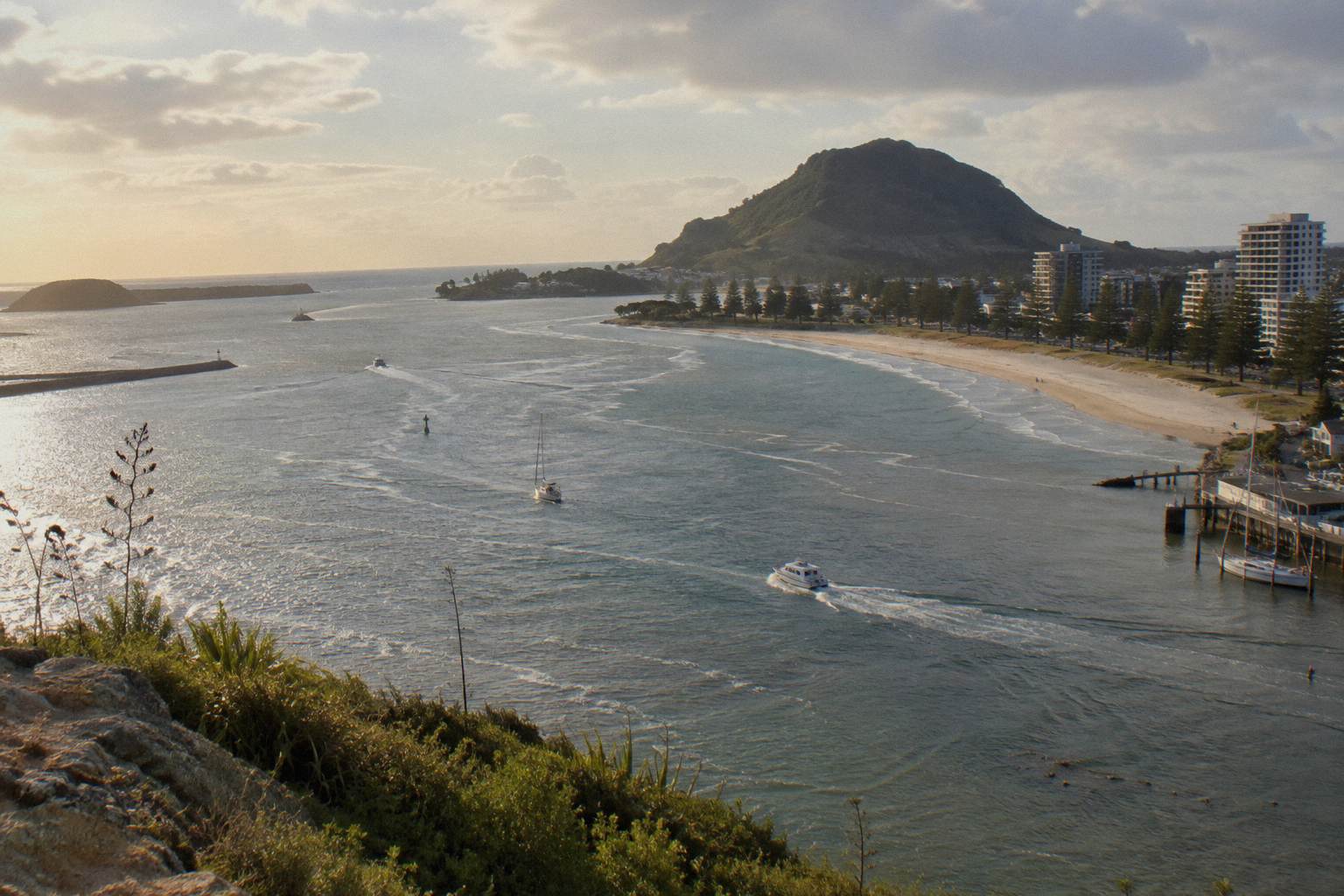
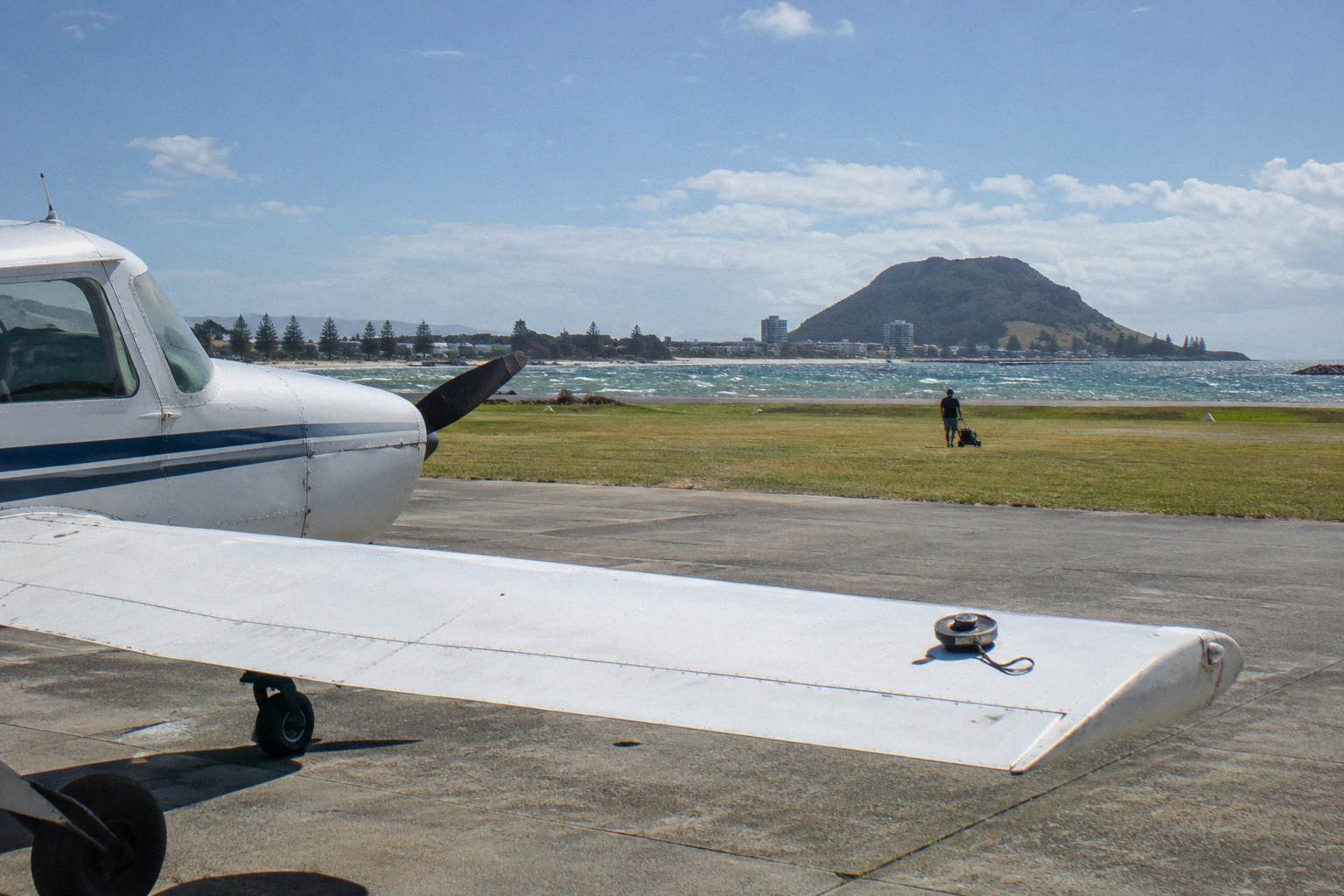
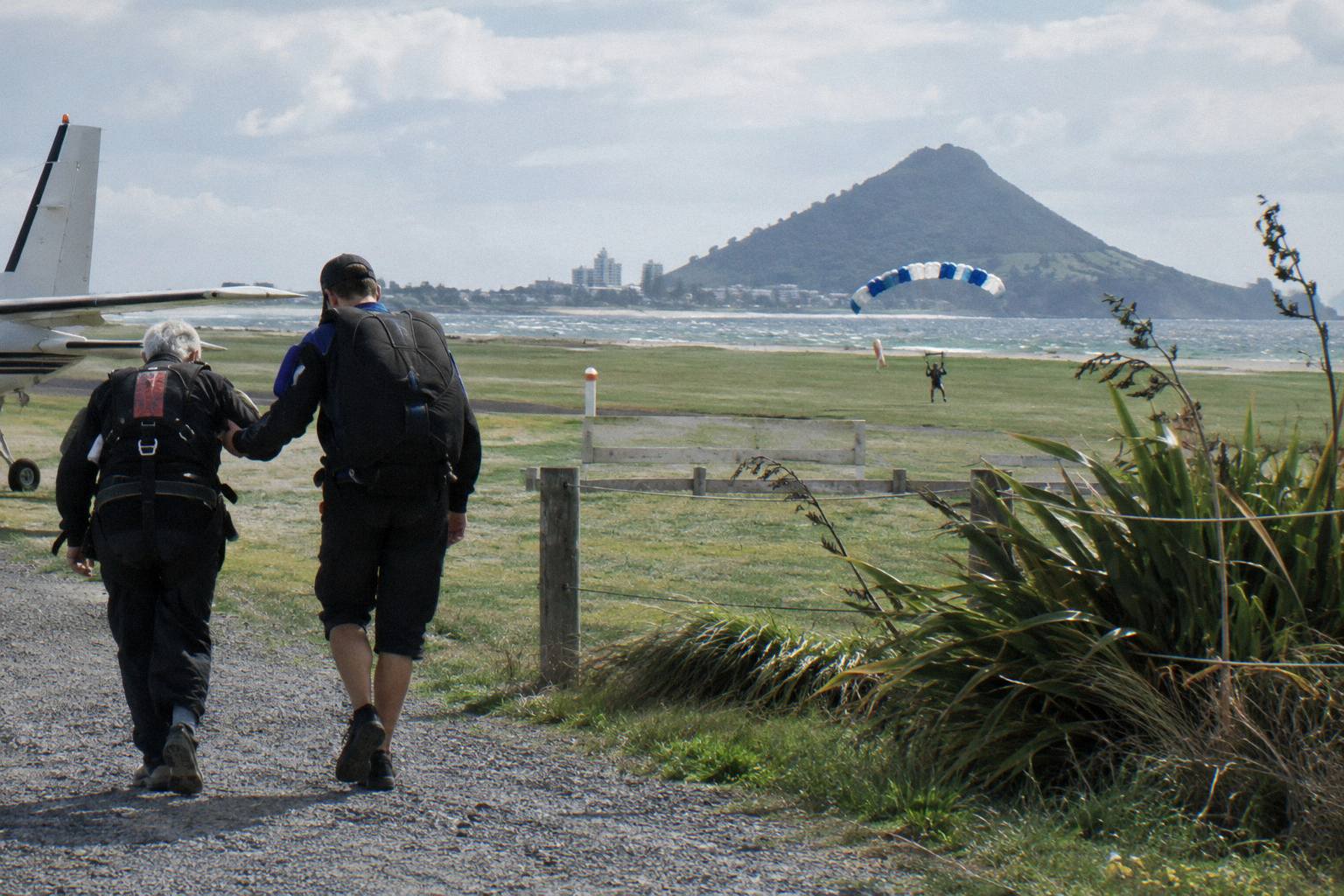
One misconception deserves a direct correction, because it shapes expectations: the jump does not land on the beach. Takeoff and landing are both at Tauranga Airport, in the same spot, and the beach is a view from above rather than a touchdown zone. Any mental image of stepping out of a harness onto sand needs adjusting before booking day. Spectators have a viewing area at the airport and watch the plane return to the same place it left.
Weather decides how much of this geography you actually see, and the operator calls it on the day. Cloud, wind and rain all ground jump aircraft, and the operator phones booked customers when conditions look doubtful. If your dates are fixed, the practical reading on seasons and times of day is in the guides on the best time of year and the best time of day to jump, though no operator can promise conditions.
What Trips People Up Before You Book
The recurring mistakes are assuming media is included, expecting a beach landing, mixing up the weight rules between drop zones, and booking too tight against a departure. Photos and video cost extra on every Tauranga jump, the aircraft lands where it took off, the 110 kg threshold belongs to this operator alone, and the whole visit needs 1.5 to 2 hours plus a 30 minute early arrival. Each of these is avoidable with five minutes of reading.
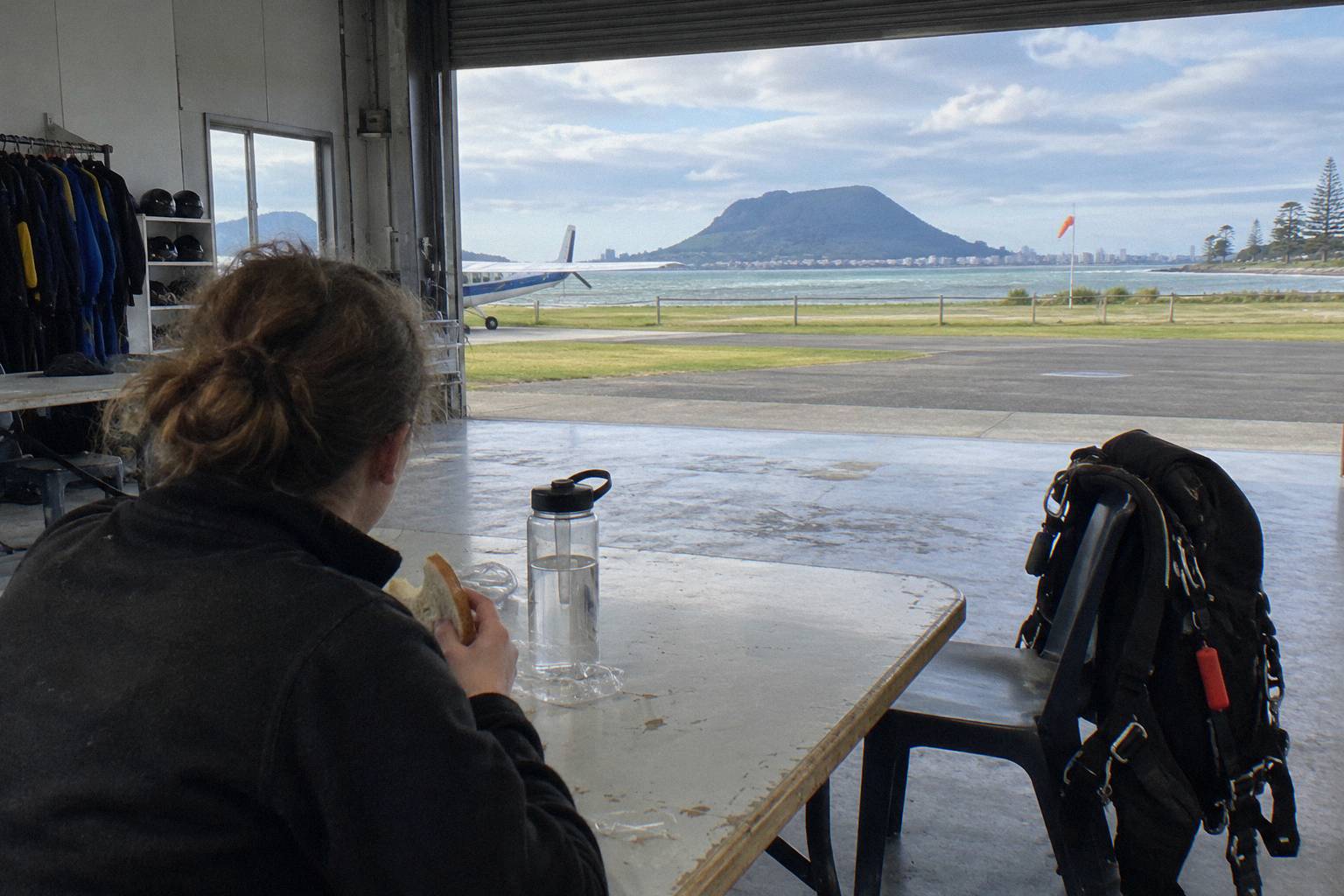
The weight confusion deserves special care. The operator's own pages carry two figures, 110 kg on the booking form and FAQ against 115 kg on the what-to-know page, and the practical instruction is the lower one: book freely under 110 kg and phone above that. There is no published surcharge amount, only that a small one applies and goes to the tandem instructor. Jumpers between 110 and 115 kg who arrive unannounced on a busy day are the classic avoidable disappointment.
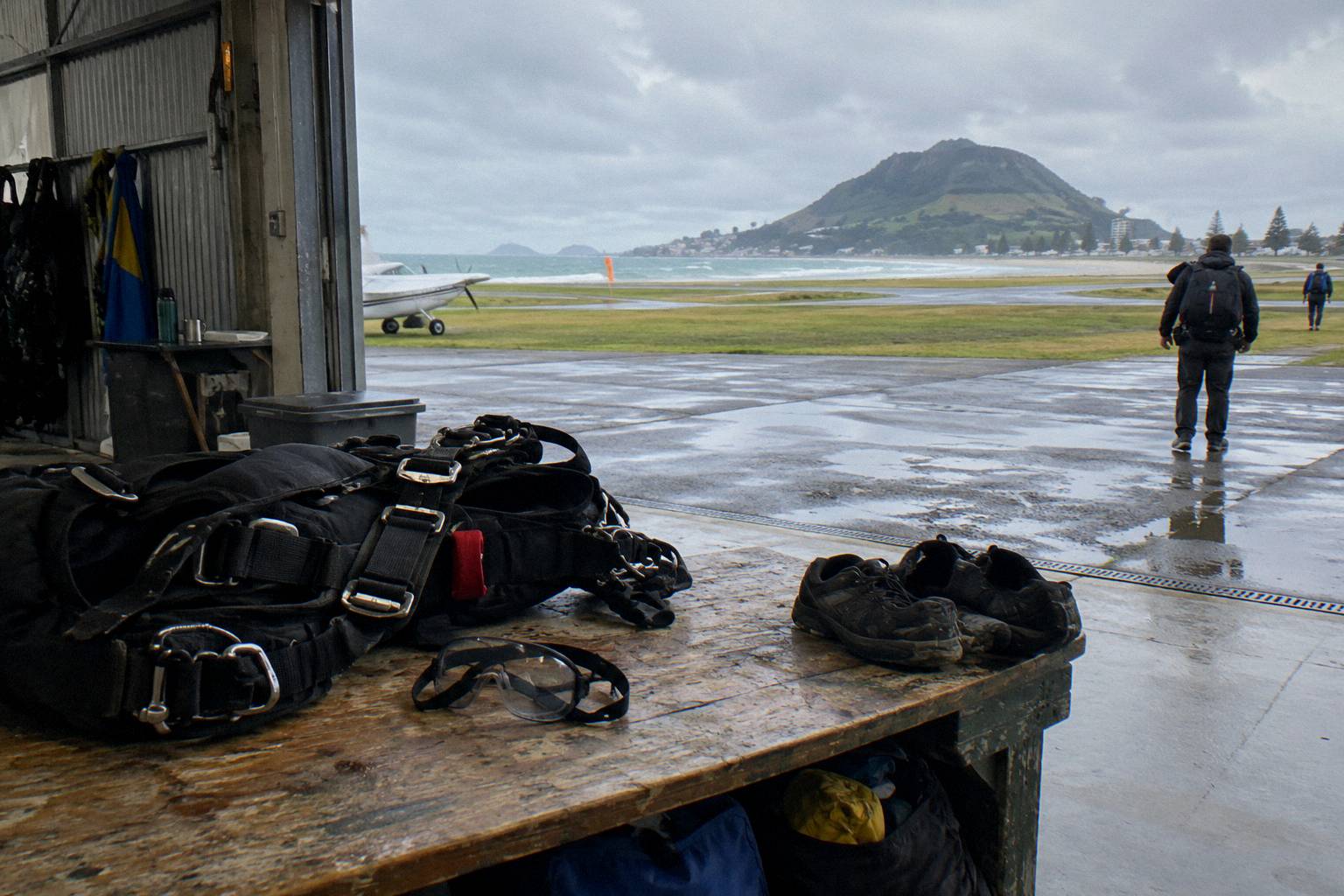
| Thing To Settle | Where The Answer Sits | Quick Planning Note |
|---|---|---|
| Height choice | Your own preference | Extra 20 seconds freefall and 5 minutes of flight at 15,000 ft |
| Camera package | Operator's camera packages page | NZ$149 to NZ$349 direct, outside flyer prebooked |
| Weight eligibility | Operator's FAQ and booking form | Book freely under 110 kg, phone above |
| Age eligibility | Operator's FAQ | Minimum 7, consent letter under 18, dropzone visit under 12 |
| Clothing | Operator's FAQ | Closed shoes mandatory, jumpsuit and goggles supplied |
| Timing | Booking calendar | Allow 1.5 to 2 hours on site, arrive 30 minutes early |
Footwear is the small one that stops people at the door: closed shoes are mandatory, full stop. Clothing should be comfortable and weather appropriate, with a jumpsuit, hat and goggles supplied and gloves available in the colder months. Glasses are fine, since the supplied goggles fit over frames. Eating normally before a jump is better than arriving empty, and alcohol is off the table in the hours before a jump at any certificated operation. The fuller checklist lives in the guide on what to wear for a Mount Maunganui skydive.
The last trap is calendar arithmetic. Departure times are chosen on the booking calendar rather than printed on a schedule, and the operator's booking form notes that with no existing booking the first morning jump is 10am and the first afternoon jump 12pm, with earlier or later slots assigned by availability. Cruise passengers and day-trippers should build the 1.5 to 2 hour window plus arrival margin into their plans, and everyone should keep the free cancellation window, 24 hours before the start on the booking page, in mind when dates are uncertain.
Whichever of the three you lean toward, the decision sequence is the same: confirm eligibility, pick a height, settle the camera question, and check the date. A last practical note for buyers comparing across sites: the pages on Tauranga Skydive cover the booking path, the costs, and the comparisons in more depth than any star rating can.
Common Questions About Tandem Ratings
What Rating Does The Mount Maunganui Skydive Have?
Skydive Over Mount Maunganui shows 5.0 from 66 reviews. It offers both 12,000 and 15,000 ft options on one booking calendar, with a 20 to 25 minute scenic flight to altitude and free cancellation up to 24 hours before the start.
What Rating Do The Two 15,000 Ft Tauranga Products Have?
Both the 15,000ft Tandem Skydive in Tauranga and the 15,000ft Tandem Skydive in Bay of Plenty show 5.0, with no review count printed. Open the booking page for each to see the current feedback before you compare them.
How Do The Taupo Skydive Ratings Compare?
The Lake Taupo 12,000ft Skydive shows 5.0 from 457 reviews and the Up To 15,000ft Over Lake Taupo product shows 4.9 from 376. Larger pools, slightly lower scores: they describe different drop zones and should not be read as a ranking.
Do A Higher Rating And A Higher Altitude Go Together?
No. Altitude changes the freefall length, from 30 to 45 seconds at 12,000 ft to up to about 1 minute at 15,000 ft, and nothing about the rating. All heights from Tauranga Airport share the same aircraft, meeting point and eligibility rules.
Are Photos And Video Included In The Jump Price?
No. On every Tauranga Airport jump, photo and video are paid extras. Direct with the operator the packages run NZ$149 to NZ$349, amounts in New Zealand dollars, and the Outside Camera package must be prebooked.
Can A Rating Tell Me Which Jump Is Safest?
No. Ratings measure customer satisfaction, not safety. Tandem operations in New Zealand operate under Civil Aviation Authority rules, and the safety picture comes from the regulatory framework and statistics, not from star scores.