Is Skydiving In Tauranga Safe? Operator, Rules And Record
Tandem skydiving carries real risk, and any page that tells you otherwise is selling something. What you can weigh before you book at Tauranga Airport is the regulatory structure around New Zealand tandem operations, the equipment on your back, and the accident record that regulators actually publish.
Short answer
Tandem skydiving in New Zealand operates under Civil Aviation Authority rules, Part 115 and Part 105, and a tandem rig carries a main parachute, a reserve and an automatic activation device. The regulator reported one tandem accident with broken bones and no fatalities in its 2024 to 2025 year. The risk is real but small, and it is structured.
Tandem skydiving is an adventure aviation activity, and like every activity in that class it carries real risk. That is the accurate starting point, and it is the only starting point worth having, because everything else on this page is about how that risk is structured rather than whether it exists. What a hesitant buyer can actually weigh before booking a jump at Tauranga Airport falls into three buckets: the regulatory frame that governs New Zealand tandem operations, the equipment and procedures that sit between you and the ground, and the accident numbers that regulators publish. All three are checkable, none of them require you to take a marketing page on faith, and together they give you a far better answer than the word "safe" ever could.
If you are weighing a first jump, the tandem listings that take off from Tauranga Airport are where the decision starts, and the three core options there are covered in detail further down this page. The rest of this guide looks at what sits underneath that decision.
| Fact | Detail |
|---|---|
| Regulator | Civil Aviation Authority of New Zealand, under Part 115 and Part 105 |
| Aircraft | Cessna 182, carrying two tandems at a time |
| Takeoff and landing | Both at Tauranga Airport, Mount Maunganui |
| Rig | Main parachute, reserve parachute, automatic activation device |
| Minimum deployment | A tandem master must open the main parachute at not less than 5,000 ft |
| NZ accident record 2024 to 2025 | One tandem accident, broken bones, no fatalities, per the CAA annual report |
| Minimum age | 7, set by the operator; under 18 needs a parent or guardian consent letter |
| Weight rules | Minimum 30 kg, book freely under 110 kg, phone the operator above that |
Who Regulates Skydiving In New Zealand?
Skydiving in New Zealand is regulated by the Civil Aviation Authority, not by WorkSafe, and the operative rules are Part 115 for adventure aviation operators and Part 105 for parachuting operations. A person must not perform an adventure aviation operation except under the authority of an adventure aviation operator certificate issued by the Director, and tandem parachute operation is one of the listed authorised activities. That is the legal frame every commercial tandem jump in the country sits inside.
The detail matters. Part 115 is the certification rule for adventure aviation: it covers tandem skydives, parachute-drop aircraft operations, ballooning and similar commercial flying. Part 105 is the operating rule for parachuting itself, covering equipment and procedures. The two work together, and rule 115.575 requires a certificate holder to establish operating procedures that comply with Part 105. You can read the certificate requirement yourself on the Civil Aviation Authority Part 115 rule and the parachuting requirements on the Civil Aviation Authority Part 105 rule.
A common point of confusion is where WorkSafe fits. WorkSafe audits and registers "adventure activities" under the Health and Safety at Work (Adventure Activities) Regulations 2016, but its own guidance lists skydiving among activities nearly certain not to be subject to those regulations, because adventure aviation sits with the Civil Aviation Authority. The practical consequence for you as a jumper is simple: the safety oversight chain for your tandem jump runs through aviation regulation, with its certificate holders, instructors and equipment rules, rather than through the land-based activity audit regime. The WorkSafe adventure activity guidance sets out that split in its own words.
One thing this page will not do is tell you that any specific operator holds a current certificate, because that claim needs a live check of the regulator's own list rather than a sentence on a content page. What you can verify directly is the rule itself: commercial tandem parachuting in New Zealand requires an adventure aviation operator certificate, and jumping with a certificated operator is the baseline expectation any customer should have.
| Body | Role | What It Means For A Jump |
|---|---|---|
| Civil Aviation Authority | Regulates adventure aviation under Part 115 and parachuting under Part 105 | Certificates operators, sets operating rules, investigates aviation occurrences |
| WorkSafe | Administers the Adventure Activities Regulations | Lists skydiving as adventure aviation, nearly certain not to be subject to those regulations |
| NZ Parachute Industry Association | Industry body for training, standards and safety systems | Supports education and standards aligned with CAA rules |
What Safety Systems Does A Tandem Skydive Use?
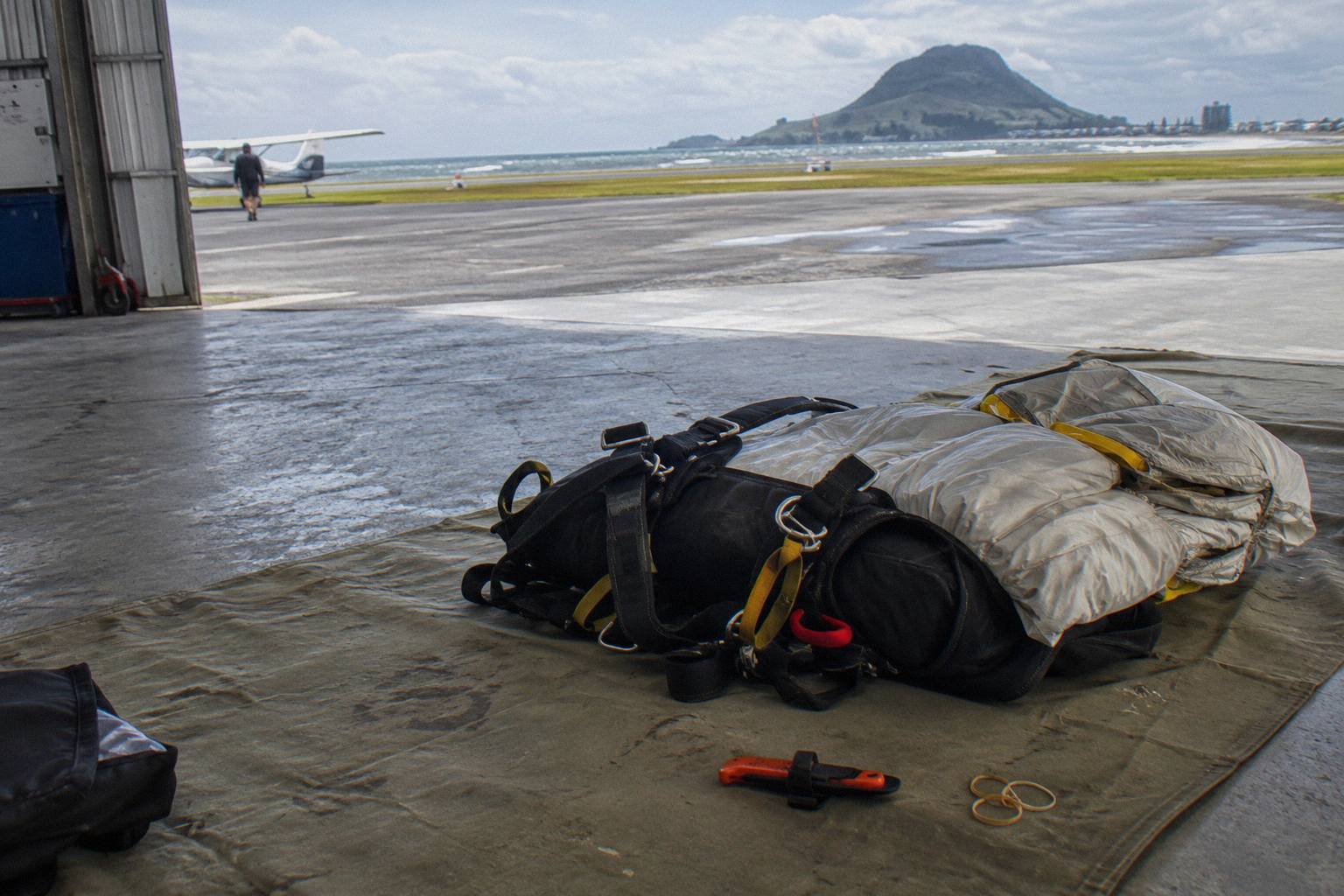
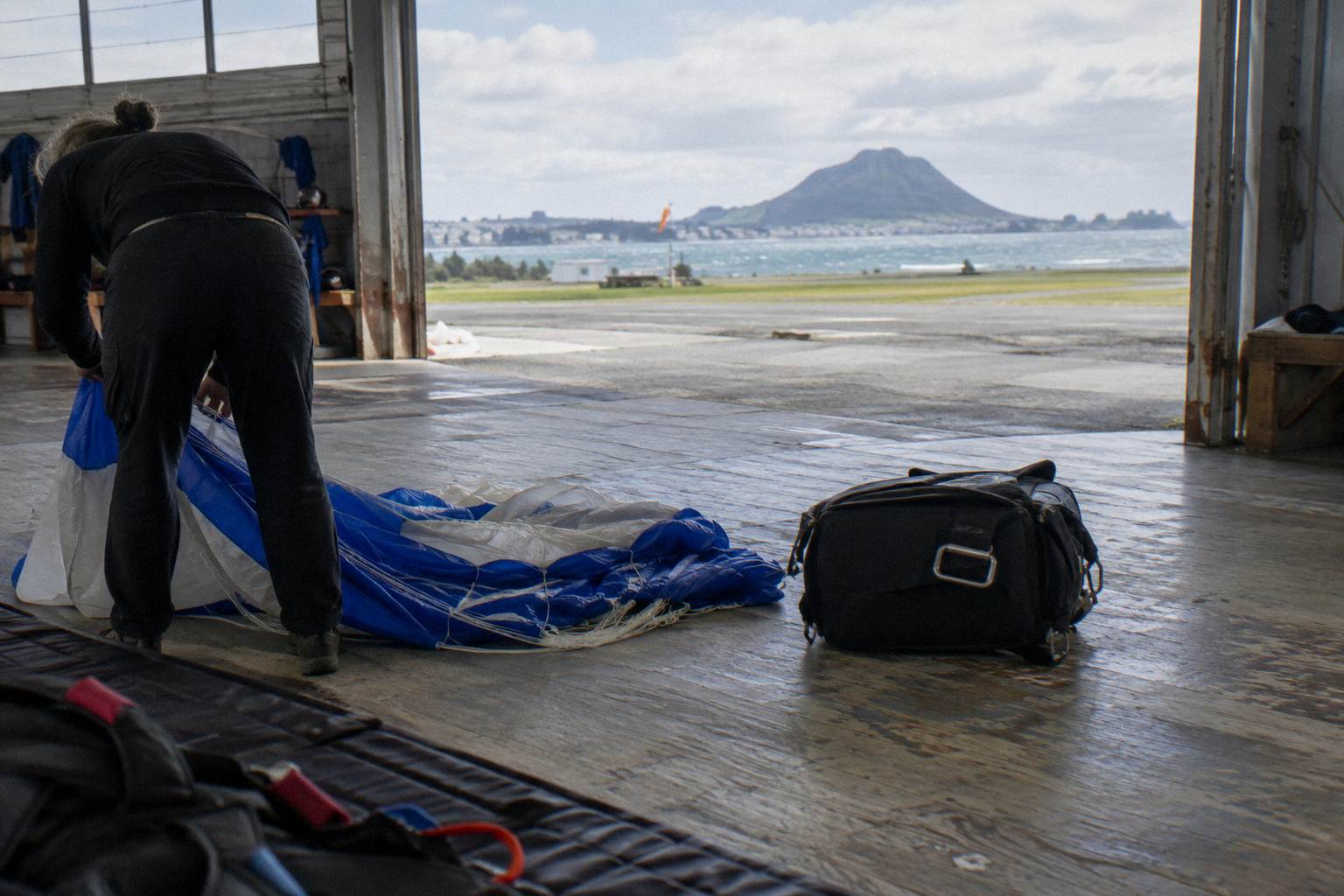
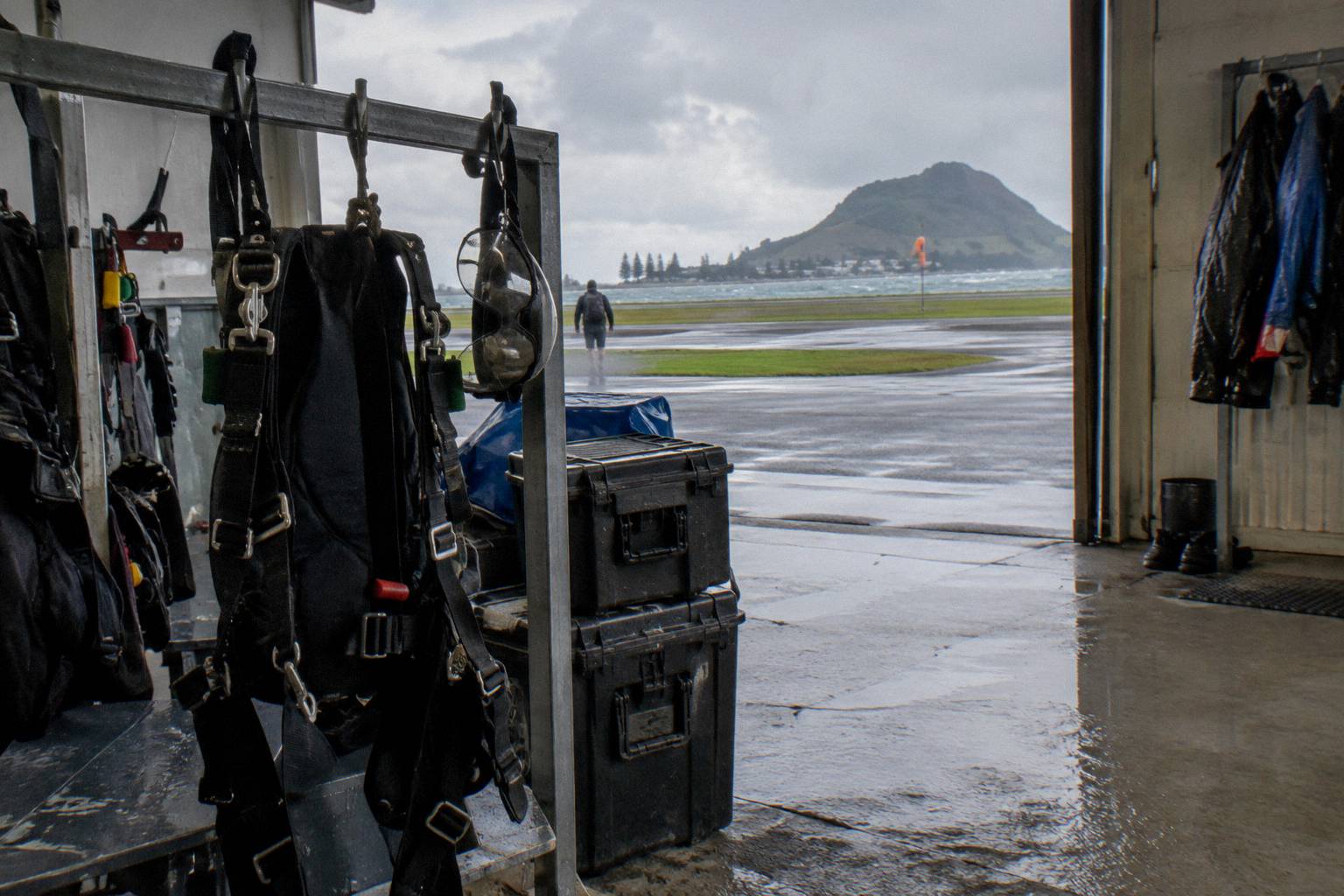
A tandem rig carries two parachutes and an automatic activation device, and the law sets a floor on deployment height: a tandem master must activate the main parachute at a height of not less than 5,000 feet. The reserve is packed and inspected on a fixed cycle regardless of use, and the automatic activation device monitors altitude and descent rate, deploying the reserve automatically if the pair is falling too fast too low.
Start with the redundancy, because it is the core of the design. You are not hanging under one canopy. The main parachute is the one intended to be used, and the reserve is a second, independently packed system there for the rare case the main is unusable. The automatic activation device, standard on tandem systems, is a computer that watches altitude and descent rate; if it detects a tandem pair still in rapid descent at a low altitude, it fires the reserve. It is a backup to the instructor, not a replacement for one.
The operating rules then layer procedure on top of hardware. The 5,000 foot deployment floor comes from Part 105 and exists to leave time and altitude to handle a problem: a main canopy that needs cutting away and a reserve that needs time to open. The instructor flying you is the third layer, trained for the abnormal cases as well as the normal one, including the rare event of a passenger losing consciousness, where the instructor maintains control of the descent and the automatic activation device stands behind them.
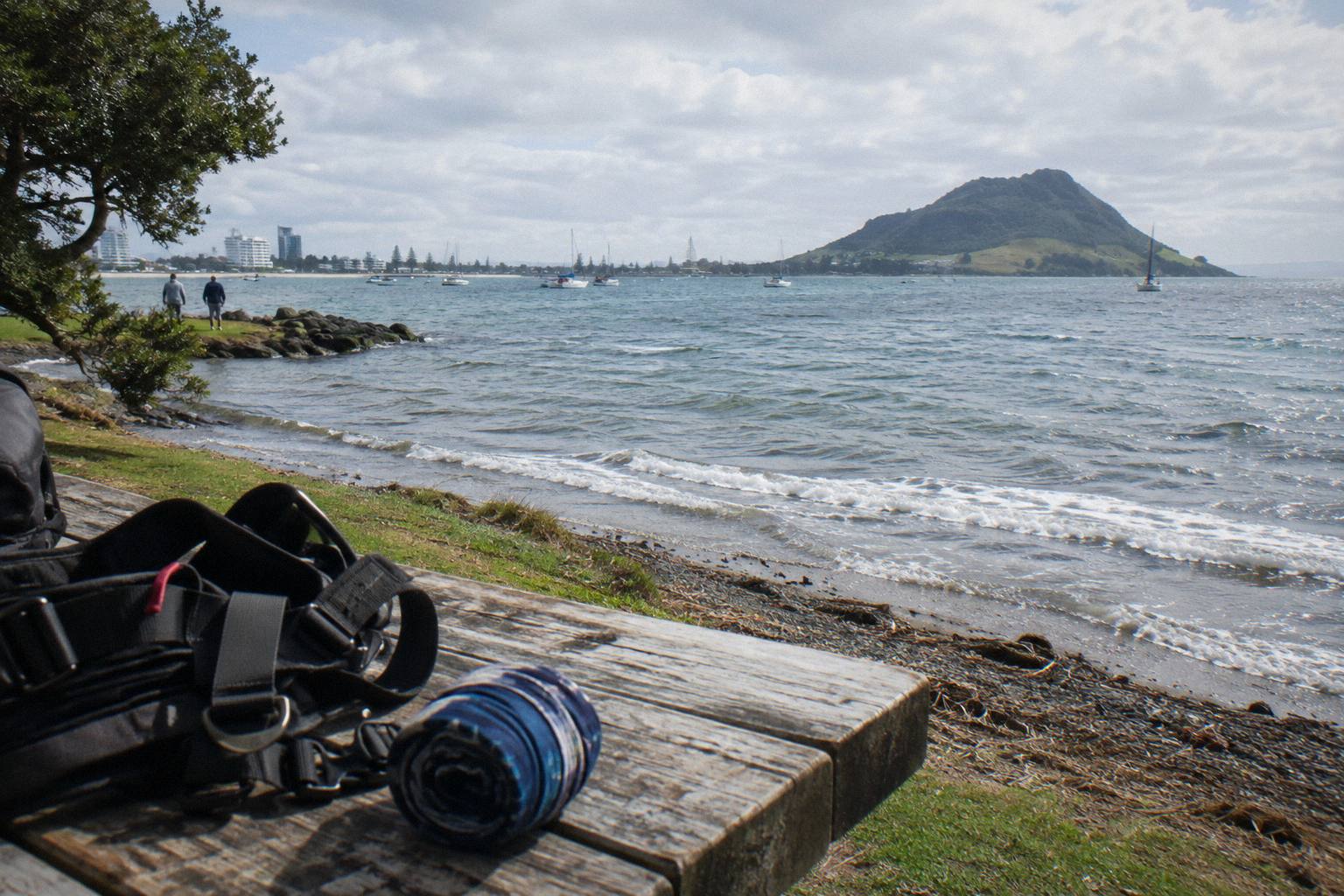
Two details are worth knowing so nothing on the day surprises you. Tandem passengers do not typically wear helmets while instructors do, which looks odd until you hear the reason: in a harness configuration where two bodies are pressed together, a passenger helmet can itself become a hazard to the instructor's head during exit and freefall. And passengers may not carry their own phone or camera on the jump, a rule the operator ties to New Zealand civil aviation law; photos and video are handled through camera packages rather than passenger-held devices.
| System | What It Does | Backed By |
|---|---|---|
| Main parachute | The intended canopy for the jump | Packed and maintained per Part 105 equipment rules |
| Reserve parachute | Second, independent canopy | Packed and inspected on a fixed 180-day cycle regardless of use |
| Automatic activation device | Deploys the reserve if descent is too fast at low altitude | Standard on tandem systems |
| Deployment floor | Main activated at not less than 5,000 ft | Part 105 rule 105.11(c) |
| Tandem master | Flies the pair, handles abnormalities | Part 115 operating procedures |
What Do The Accident Numbers Actually Show?
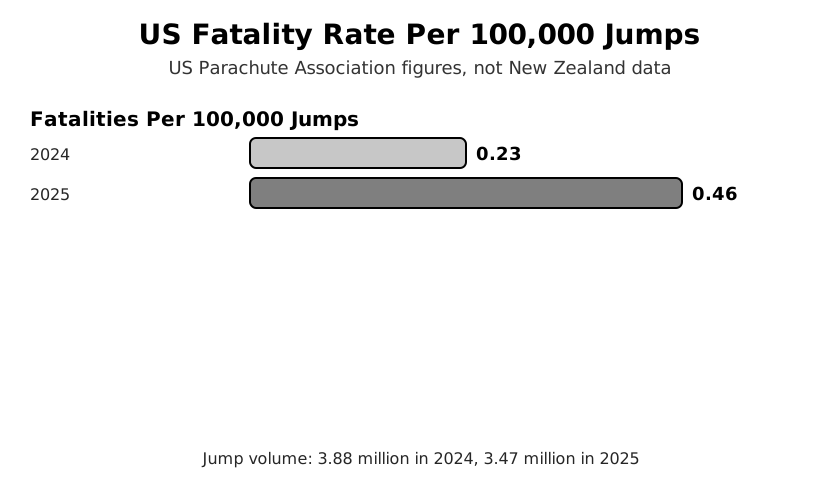
The Civil Aviation Authority's 2024 to 2025 annual report records one tandem parachute accident in the adventure aviation sector, resulting in broken bones and no fatalities. In the US, the Parachute Association recorded 16 skydiving fatalities from roughly 3.47 million jumps in 2025, a rate of 0.46 per 100,000 jumps, down from a record-low rate the year before. These are the numbers regulators publish, labelled by country, and they are small without being zero.
The New Zealand figure comes from the regulator's own annual reporting, and it covers the adventure aviation sector for that financial year: one tandem accident, broken bones, no fatalities. That is the whole New Zealand tandem record for the period as the regulator reports it. It does not mean risk has vanished, and it should not be stretched into a promise about any individual jump; it means the most recent reported year contained a single serious tandem injury nationally.
The US numbers are bigger because the jump volume is vastly bigger, and that volume is what makes the rate meaningful. About 3.47 million jumps and 16 fatalities in 2025 gives 0.46 fatalities per 100,000 jumps. In 2024 the same source recorded 9 fatalities from about 3.88 million jumps, 0.23 per 100,000, which the association described as a record low. Year to year the counts move; the order of magnitude does not. The US Parachute Association safety page publishes the underlying figures, and they are US numbers, not New Zealand ones.
Internationally, the FAI's 2024 skydiving safety report recorded 27 fatalities across 41 reporting countries from more than 7.28 million jumps, including 3 tandem fatalities. Among the US 2025 cases, landing problems accounted for a quarter of fatalities, which is a useful detail for a hesitant buyer: the risk profile of skydiving is not dominated by equipment failure but concentrates in the landing phase, which is exactly where tandem procedure puts the instructor in control and asks the passenger to lift their legs.
| Figure | Country And Year | Number | Rate |
|---|---|---|---|
| Skydiving fatalities | US, 2025 | 16 from about 3.47 million jumps | 0.46 per 100,000 jumps |
| Skydiving fatalities | US, 2024 | 9 from about 3.88 million jumps | 0.23 per 100,000 jumps |
| Tandem accidents | New Zealand, 2024 to 2025 | 1, broken bones, no fatalities | Reported per sector year |
| Skydiving fatalities | International, FAI 2024 | 27 from over 7.28 million jumps, 41 countries | Includes 3 tandem fatalities |
Who Can And Cannot Jump From Tauranga Airport?
The operator sets a minimum age of 7, requires a parent or guardian consent letter for anyone under 18, and asks that children under 12 visit the dropzone first to be fitted in a harness. Weight rules are a 30 kg minimum and a 110 kg booking threshold, with a phone call required above that. Certain health conditions are declared on the waiver, and the operator can refuse a jump on safety grounds.
None of these are marketing filters; they map directly onto the equipment. The minimum weight is about fitting safely into the harness, and the 110 kg threshold is about the added load on the tandem instructor and the certified limits of the parachute system. Above 110 kg it becomes a conversation rather than an automatic no, with a small surcharge that goes to the instructor, so the right move is to call rather than guess. If your situation is near a boundary, the weight rules explained in full cover the detail.
The health questions are declared rather than banned outright. The waiver asks you to list conditions such as severe motion sickness, asthma, allergies, heart conditions, epilepsy, or nasal and sinus congestion, and it names pregnancy, scuba diving within 24 hours, and spinal or back injury as cases where a skydive is not recommended. Declaring is the mechanism: the operator uses the information to decide whether you can be included safely, and reserves the right to withdraw anyone likely to endanger themselves or others. For the medical detail, including how managed conditions are commonly handled, read the medical conditions and declarations page.
If a younger family member is the reason you are asking, the age rules are more permissive than most people expect: 7 is the operator's own floor, chosen so the jump is the child's decision, with the consent letter for under 18s and the pre-visit for under 12s. The three core Tauranga listings share these rules, so a booking for the 15,000ft Tandem Skydive and one for the From Tauranga: Skydive over Mount Maunganui listing run through the same eligibility screen.
What Happens If The Weather Turns?
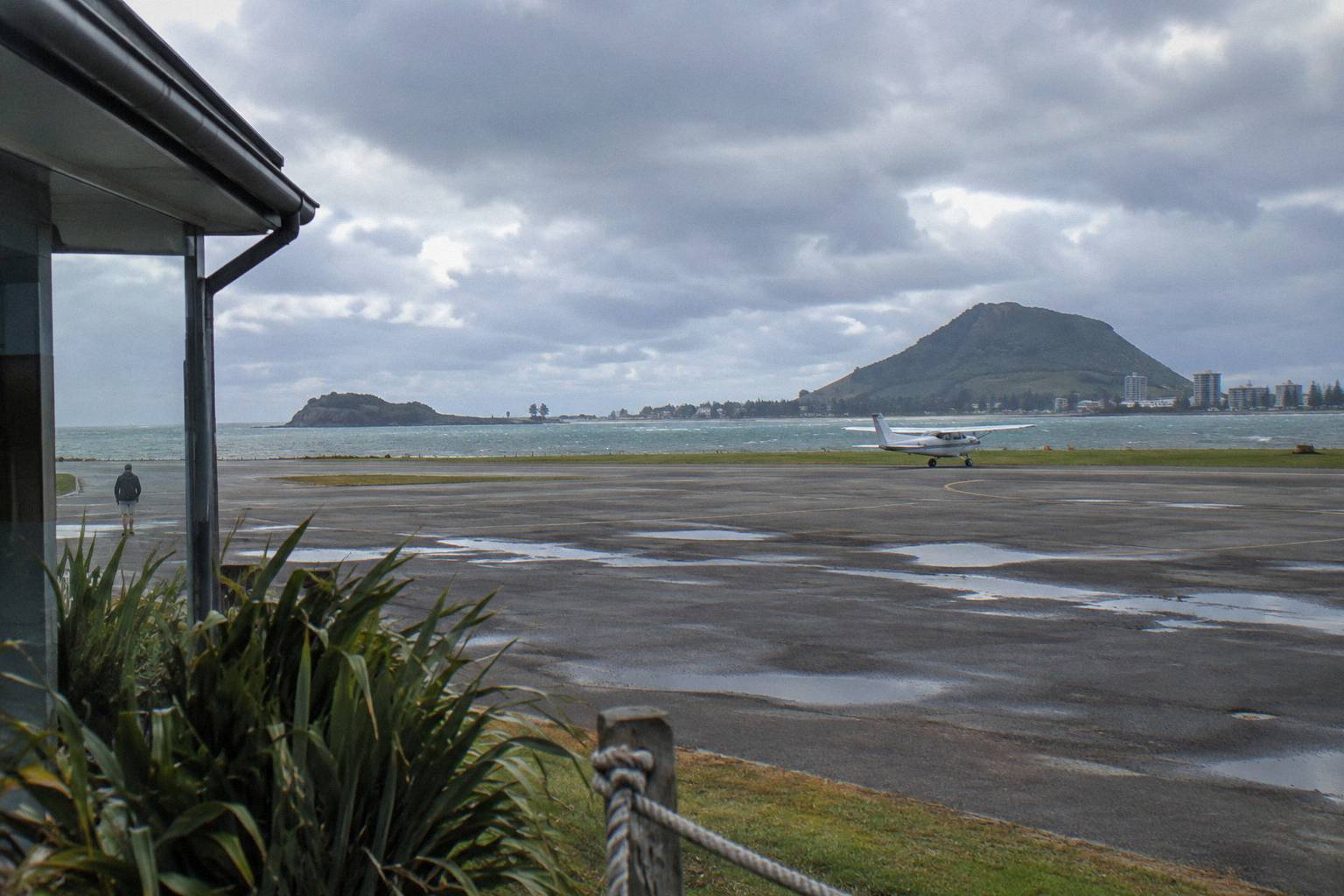
The operator watches the conditions and calls you on the day if the weather does not look workable, then works out a reschedule that fits your plans. Skydiving operations are generally limited by strong or gusty wind, low cloud that breaks visibility rules, and rain. A weather call is an operational decision, not a cancellation penalty, so a forecast that turns bad does not put your money at risk the way a same-day change of mind can.
The practical structure is worth separating. Weather decisions belong to the operator: wind, cloud and rain determine whether a jump runs at all, and the operator phones on the day to rearrange. Customer cancellations are a different track entirely, and the terms differ by how you book. Every booking-page listing carries free cancellation up to 24 hours before the start for a full refund. If you book direct with the operator instead, their terms are stricter: free before the day before, 50 percent if you cancel the day before, and full price on the day.
For a hesitant buyer, that difference is a genuine safety valve. Booking through a listing with the 24 hour free cancellation window means you can commit to a date early, when slots are open, and still step back inside the window. The weather and cancellation terms in detail walk through both tracks, including how a weather hold interacts with a rebooked date.
What weather does not do is make a jump run badly. A jump either meets the operating conditions or it does not fly, and the operator's own wording is that they will call and work something out. If you are on a cruise stop, the airport is a 5 to 10 minute drive from where the ship docks, so a same-day rearrangement is at least geographically workable, though tight port windows deserve an early morning slot and a conversation with the operator when booking.
What The Operator Controls On The Day
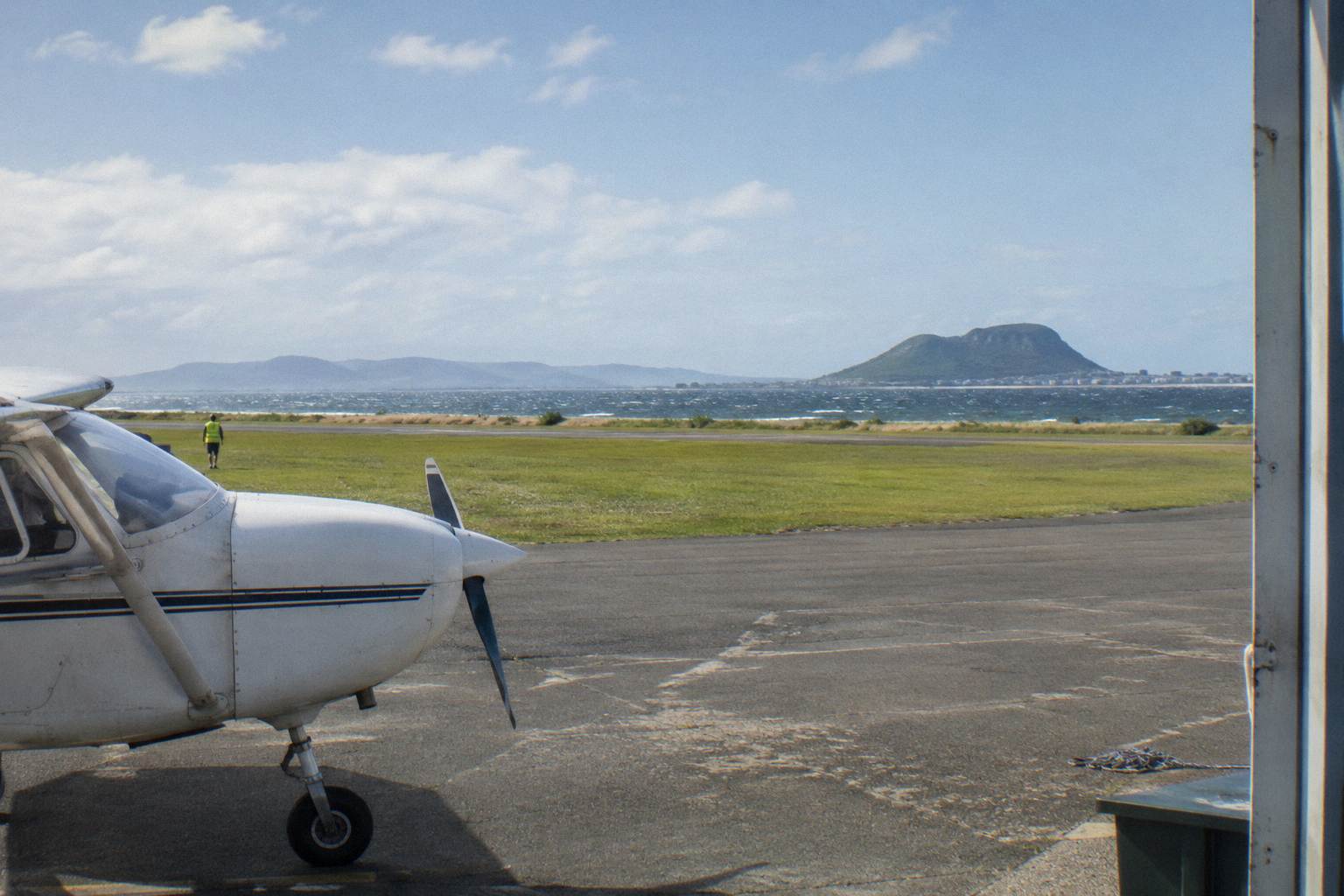
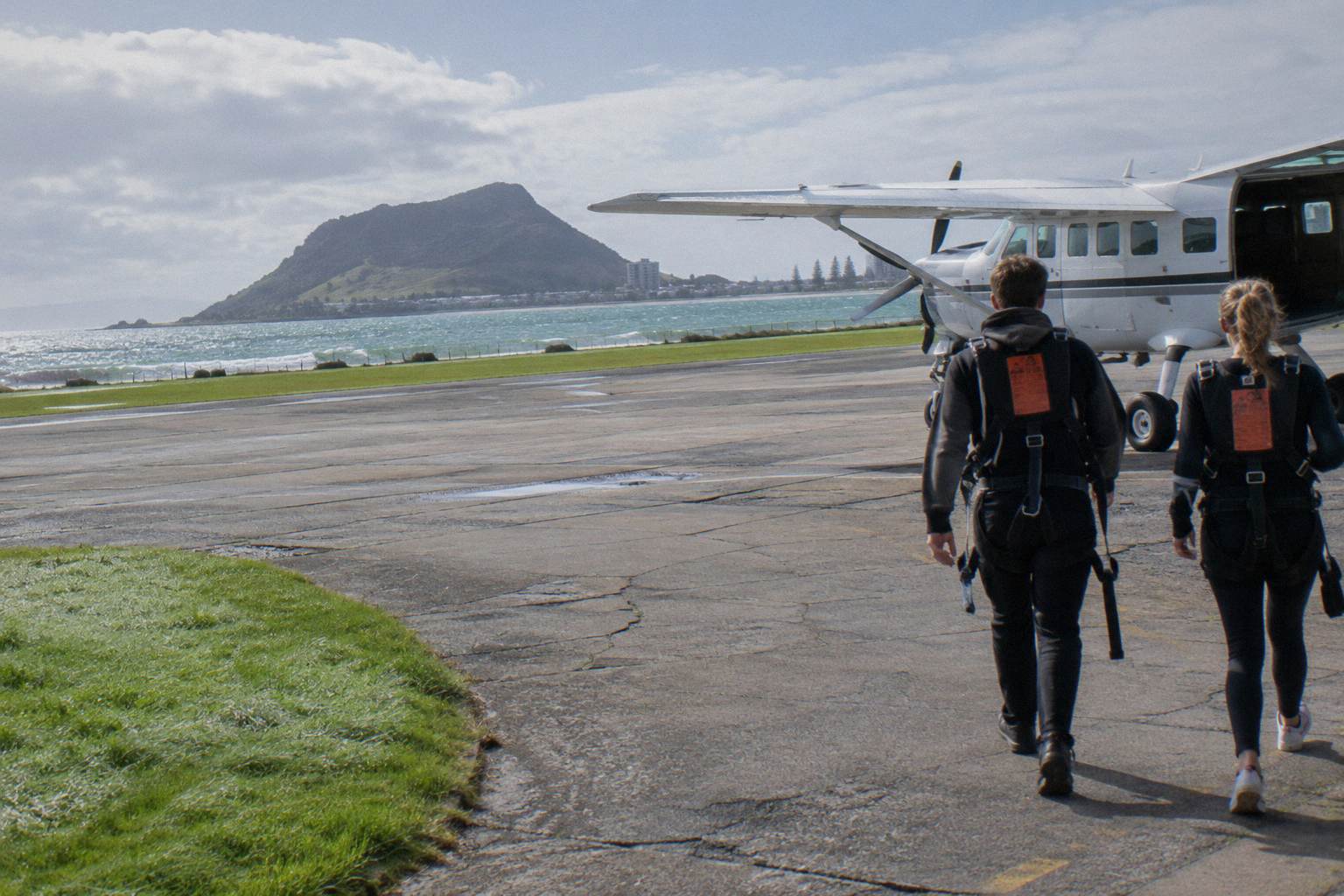
On the day, the operator controls the aircraft, the rigging, the instructor pairing and the timing: you arrive 30 minutes before your scheduled takeoff, allow 1.5 to 2 hours for the whole experience, and fly in a Cessna 182 that takes two tandems at a time on a 15 to 20 minute climb to altitude. Takeoff and landing are both at Tauranga Airport, with a viewing area for spectators.
The 30 minute arrival buffer is not padding. It covers check-in, the waiver, harness fitting and a briefing, and it is the point at which the eligibility questions get their final check. The two-tandem aircraft shapes the day too: with two tandems per lift, a pair booking climbs together, and the total 1.5 to 2 hour allowance holds unless weather or airport traffic adds delay, which the operator flags as a possibility on their own pages.
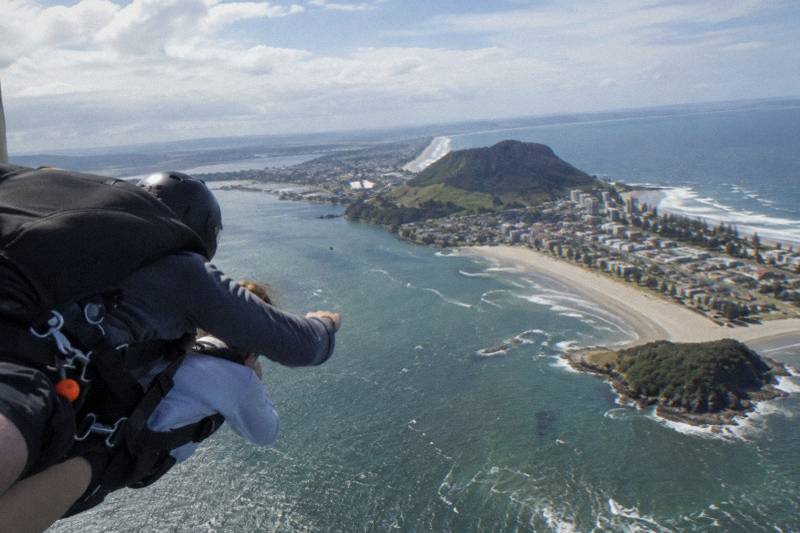
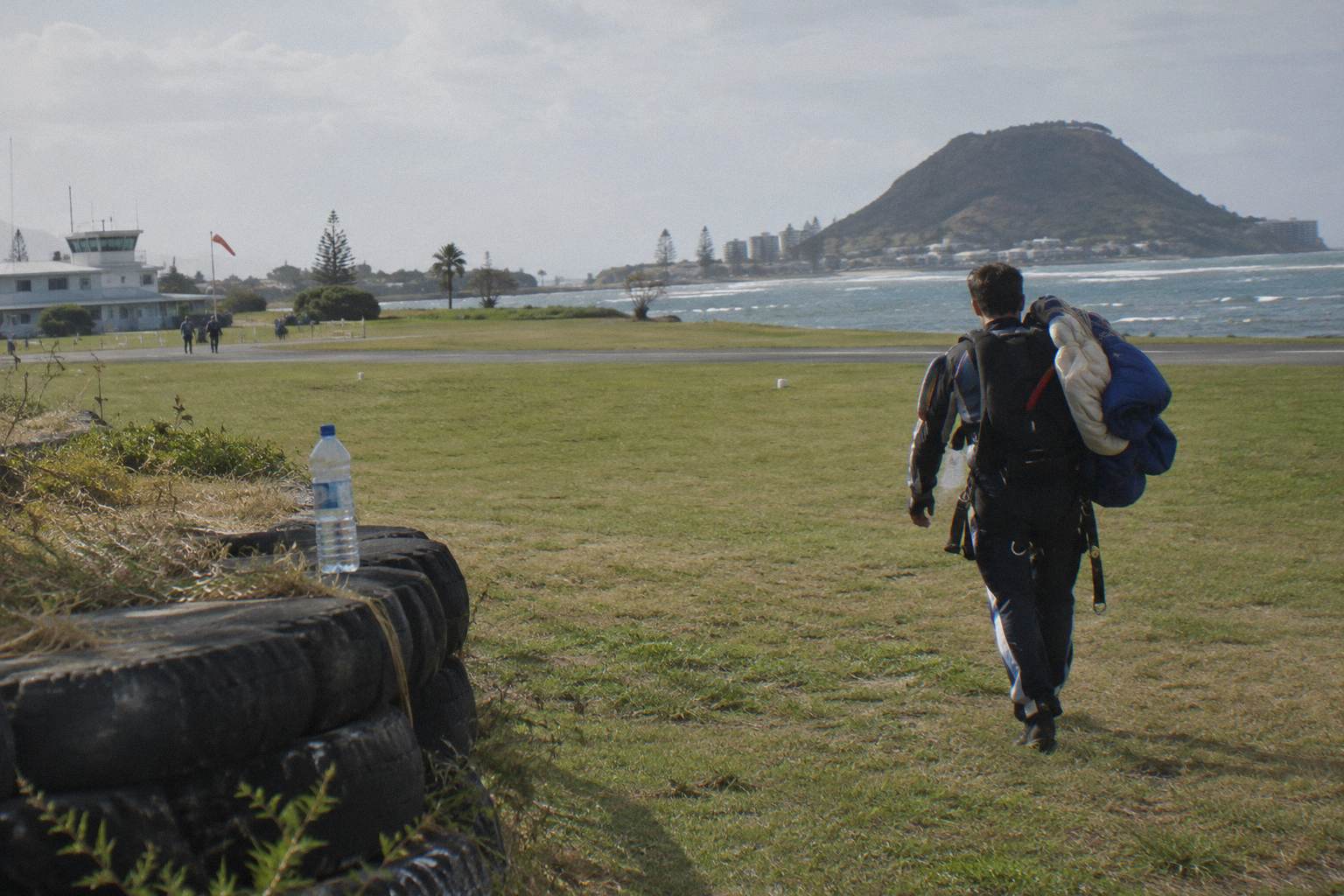
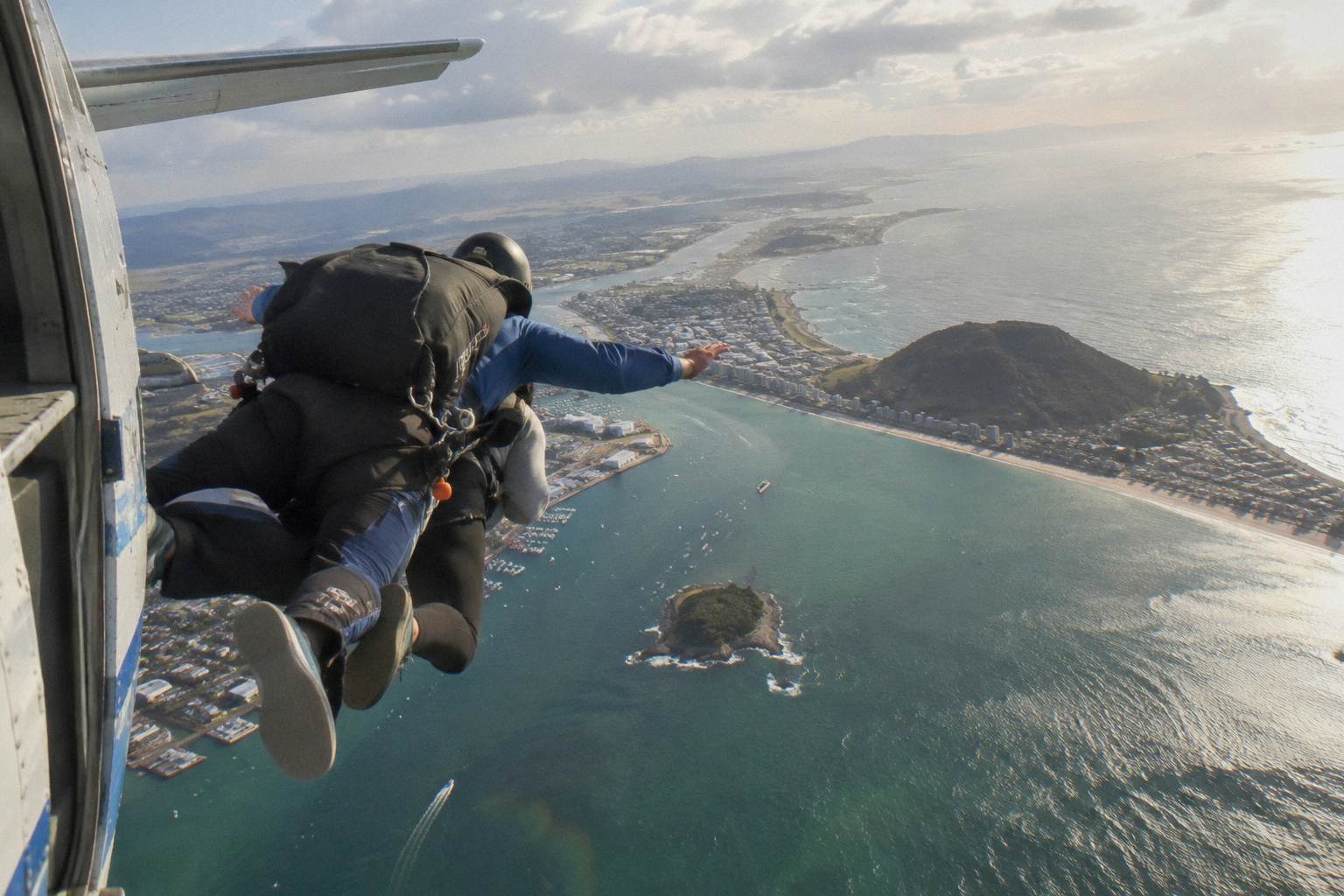
Landing is back at the same spot you took off from, on the airport, not on the beach. The beach at Mount Maunganui is a view from altitude, and the operator is explicit that the landing area is small and governed by airport rules. For a first-time jumper that is good news in one specific way: the landing zone is controlled ground beside the dropzone, with spectators nearby, rather than an exposed strip of public sand.
Your own contributions on the day are small but real: closed shoes that cannot fall off are mandatory, comfortable weather-appropriate clothing is the recommendation, goggles that fit over glasses are supplied, and the instructor handles the rest. The operator's what-to-know page sets out the arrival, clothing and timing expectations in their own words, and it is the page to re-read the night before a jump.
If you want the fuller walkthrough of the sequence, from briefing to landing, what happens on a tandem jump step by step traces the whole experience. And if the answer to the safety question is leaning toward yes, the From Tauranga: Skydive over Mount Maunganui listing, rated 5.0 from 66 reviews on its booking page, is the natural first check: Check availability.
How Does Tauranga Compare With Other North Island Options?
The safety frame is national, so the rules do not change between drop zones: Part 115 and Part 105 apply whether you jump at Tauranga Airport or over Lake Taupo. What differs is the operator, the aircraft, the pickup terms and the scenery. A Taupo jump adds roughly 2 hours of driving each way, and the Taupo listings run different age and weight rules, with age 10 and a 100 kg maximum on the 12,000 ft listing there.
That per-product difference trips up a lot of comparisons. The Tauranga thresholds of age 7 and 110 kg belong to the Tauranga operator; the Taupo Tandem Skydiving product sets its own. If your group includes a keen 8 year old or a jumper over 100 kg, the eligibility screen, not the scenery, may decide the destination, and it is worth checking the specific product before assuming rules transfer. The Tauranga versus Taupo comparison lays the two drop zones side by side.
From a pure safety-picture standpoint, none of this changes the analysis above. The regulator is the same, the rig architecture is the same, and the accident reporting is national. The Lake Taupo 12,000-Foot Tandem Skydiving listing carries a 5.0 rating from 457 reviews and includes hotel transport, which matters for the Taupo day-trip logistics rather than for the jump's oversight. If a Bay of Plenty base is the plan, the Bay Of Plenty 15,000ft Skydive runs through the same Tauranga Airport operation with the same eligibility screen and the same 24 hour free cancellation on its booking page.
What Trips People Up Before You Book?
The recurring mistakes are assuming safety terms transfer between products, reading marketing reassurance as regulation, ignoring the weight and health screens until arrival day, and confusing the operator's direct cancellation terms with the booking-page terms. People also assume a beach landing and are surprised by the airport landing zone, and expect to bring their own camera, which the rules forbid. Each of these is checkable in advance, in minutes.
The biggest one is the transfer assumption. Age floors, weight thresholds and inclusions are set per product and per operator, so the number you read for one listing does not travel. The second is treating a marketing page as a regulator: the only oversight claim worth anything is the certificate requirement in Part 115, which you can read on the regulator's own site, and no content page should be your evidence that a specific operator is certificated, audited or insured. Ask the operator, or check with the regulator.
The third is leaving the health declaration to the dropzone counter. Conditions are declared on the waiver, and the operator can refuse a jump on the day, which is a far worse outcome than a phone call a week earlier. The fourth is the cancellation mismatch: free cancellation up to 24 hours before start applies on the booking page, while direct bookings with the operator carry the 50 percent day-before and full-price day-of charges. Know which track you are on before the forecast turns.
Finally, two expectation errors. The jump lands at the airport where it took off; the beach is a view. And no tandem passenger may carry their own phone or camera in freefall under the civil aviation rule the operator cites, so photo and video decisions belong to the camera packages, decided when you book rather than improvised on the plane. Get these right and the day itself is short: arrive 30 minutes early, allow 1.5 to 2 hours, and let the operator make the weather call. The full picture of Tauranga Skydive listings and safety planning is covered in the linked guides if you want to keep reading.
Common Questions About Jump Safety
Is Skydiving In Tauranga Safe?
Tandem skydiving carries real risk, but the risk is structured. New Zealand tandem operations run under Civil Aviation Authority rules Part 115 and Part 105, the rig carries a main parachute, a reserve and an automatic activation device, and the regulator's 2024 to 2025 report recorded one tandem accident with broken bones and no fatalities. Nothing here is a promise about any single jump.
Who Regulates Skydiving In New Zealand?
The Civil Aviation Authority, under Part 115 for adventure aviation operators and Part 105 for parachuting. A commercial tandem operation requires an adventure aviation operator certificate, and tandem procedures must comply with Part 105. WorkSafe's own guidance lists skydiving as adventure aviation outside its adventure activity regulations.
What Safety Equipment Does A Tandem Rig Have?
Two parachutes and an automatic activation device. The main is the intended canopy, the reserve is an independent backup repacked on a fixed 180 day cycle, and the device deploys the reserve automatically if the pair descends too fast at low altitude. A tandem master must open the main at not less than 5,000 feet.
What Are The Fatality Statistics For Skydiving?
In the US, 16 fatalities from about 3.47 million jumps in 2025, a rate of 0.46 per 100,000, and 9 from about 3.88 million in 2024, or 0.23 per 100,000. The FAI 2024 report recorded 27 fatalities internationally from over 7.28 million jumps. New Zealand's regulator reported one tandem accident, broken bones and no fatalities, for 2024 to 2025.
Can The Operator Refuse To Take Me Jumping?
Yes. The waiver reserves the operator's right to withdraw anyone likely to endanger themselves or others, and to cancel a skydive if they are concerned for any person's safety. Health conditions are declared in advance, and the weight and age screens, 30 kg minimum, 110 kg booking threshold and age 7 floor at Tauranga, are checked on the day.
Does Weather Make Skydiving More Dangerous?
Weather decides whether a jump runs, not how it runs. Strong or gusty wind, low cloud and rain ground operations, and the operator calls you on the day to rearrange. If the conditions are outside limits you do not fly at all, and the booking-page terms allow free cancellation up to 24 hours before the start for a full refund.