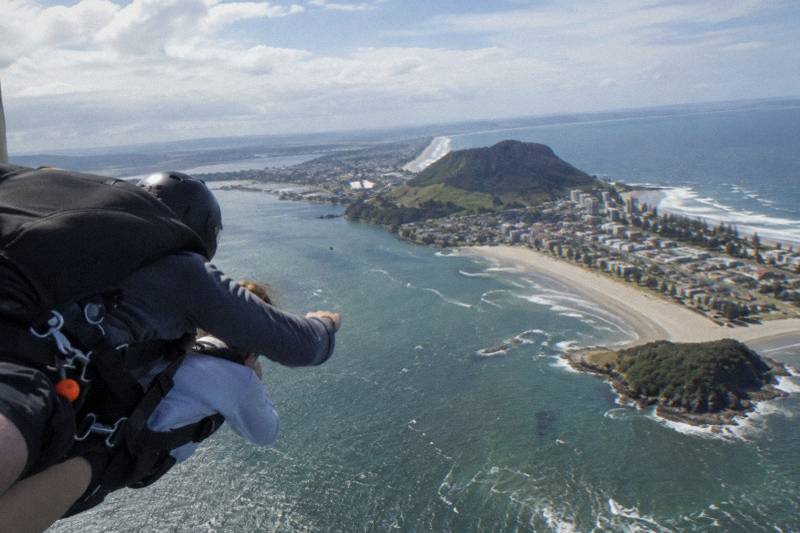
Fitness For A Tandem Skydive At Tauranga Airport: What Shape You Need To Be In
"Tandem skydiving has no gym-membership entry bar. The checks that matter are age, weight, harness fit and a truthful medical declaration, and this page walks through each one.
Short answer
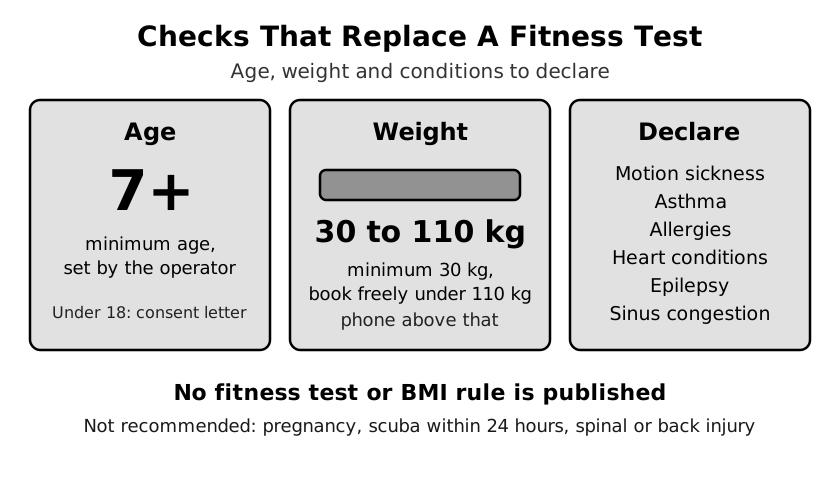
There is no published fitness test or BMI rule for a tandem jump at Tauranga Airport. The operator checks age 7 or over, weight 30 to 110 kg, safe harness fit, and asks you to declare conditions such as asthma, epilepsy or heart problems on the waiver. Allow 1.5 to 2 hours on site; the physical demands are modest.
Doubting whether your body can handle a tandem jump is one of the most common reasons people pause before booking, and the straight answer is reassuring: the bar is lower than almost anyone expects. This page works through every check that actually applies at the Bay Of Plenty 15,000ft Skydive and its sibling jump listings, from the weight and age rules to the medical declaration on the waiver, and explains what the 1.5 to 2 hours on site genuinely ask of you.
| Fact | Detail |
|---|---|
| Published fitness test | None; the operator publishes no fitness standard or BMI rule |
| Minimum age | 7, set by the operator, not by law |
| Weight range | 30 kg minimum; book freely under 110 kg, phone above it |
| Under 18 | Needs a parent or guardian consent letter; under 12 visits the dropzone first |
| Conditions to declare | Motion sickness, asthma, allergies, heart conditions, epilepsy, sinus congestion |
| Not recommended | Pregnancy, scuba diving within 24 hours, spinal or back injury |
| Time on site | 1.5 to 2 hours; arrive 30 minutes before takeoff |
| Aircraft | Cessna 182 carrying two tandems at a time, 15 to 20 minute climb |
Do You Need To Be Fit To Do A Tandem Skydive?
No published fitness test, fitness standard or BMI rule exists for a tandem jump at Tauranga Airport, so general gym fitness is not the gate. The instructor carries the responsibilities that matter in the air, from exit through opening the parachute to the landing, while your job is to lift your legs at touchdown. What the operator regulates is specific: age 7 or over, weight 30 to 110 kg, safe harness fit, and a truthful medical declaration.
The reason the bar sits so low is structural. On a tandem jump you are a passenger, harnessed to an instructor who has trained for exactly this role. You do not steer, you do not deploy, and you do not need to know anything about the equipment. The instructor activates the main parachute, manages the descent, and flares for landing. Your physical tasks amount to holding the body position you are shown, and lifting your legs at the end so the instructor's feet touch down first.
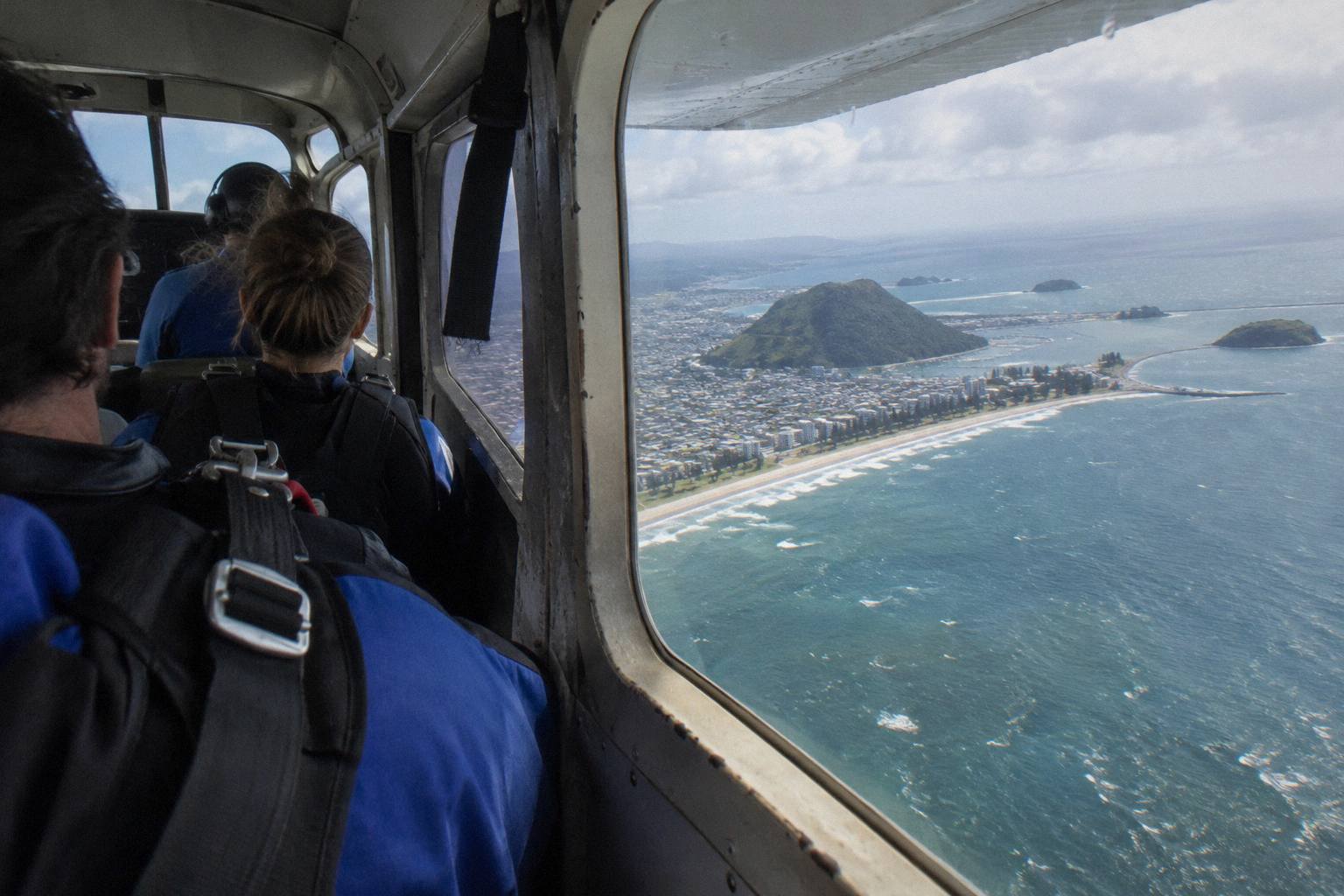
That does not mean the day is nothing. You will be on site for 1.5 to 2 hours, wearing a harness, and you will spend 15 to 20 minutes in a Cessna 182 climbing to altitude alongside one other tandem pair. None of that requires training, but it does require a body that can be secured correctly in the harness, which is why the weight range and the fit matter more than any cardio measure. The operator's own minimum weight of 30 kg exists for the same reason: the harness must hold you safely, at both ends of the scale.
What actually keeps people out is medical, not muscular. The waiver asks you to declare conditions such as severe motion sickness, asthma, heart conditions or epilepsy, and it reserves the operator's right to withdraw anyone whose condition, in their judgement, could endanger themselves or others. That is a conversation with the operator, not a fitness scorecard, and it is far more likely to be the deciding factor than anything you could fix with eight weeks of training. If you are weighing up the two jump heights on offer, the fitness question is identical for both; the differences between them are covered in the 12,000 versus 15,000 ft comparison.
One practical point follows from all this: prepare fully rather than hard. You cannot train your way past a weight limit or a heart condition declaration, and you do not need to. Decide your altitude, read the weight and age rules, fill in the waiver truthfully, and let the operator make the call it is equipped to make.
What The Operator Actually Checks: Age, Weight And Harness Fit
Three concrete checks replace any fitness assessment: you must be 7 or older, weigh at least 30 kg, and book freely only under 110 kg, phoning the operator above that weight, where a small surcharge paid to the tandem instructor applies. Harness fit is the quiet fourth check, and the reason the weight range exists at all. Under 18s need a consent letter, and children under 12 visit the dropzone first for a fitting.
The age rule is the operator's own, not a legal one; New Zealand law sets no age limit for tandem skydiving, and the operator says plainly that it wants the jump to be the child's own decision. Anyone under 18 needs a letter of consent from a parent or guardian, and the child must also meet the 30 kg minimum and fit safely into the harness. There is no upper age limit anywhere in the rules, and no maximum legal age exists for tandem skydiving in New Zealand.
Weight works on a simple threshold. If you are under 110 kg you book without asking anyone. Above 110 kg, the operator asks you to call and talk it through based on your weight and size, because the deciding factor is whether the harness fits safely rather than the number on the scale alone. A small surcharge applies above the threshold, which goes to the tandem instructor for the added strain. The operator's pages show slightly different maximum figures, so treat 110 kg, phone above it, as the working rule; the fuller picture is in the weight limit guide.
Crucially, there is no BMI rule. Nothing on the operator's waiver, FAQ or what-to-know page measures height against weight, and the what-to-know page lists a minimum height of 1 m alongside its weight figures only as separate practical limits. Body shape enters the process once, informally, in the harness fitting, and the phone call above 110 kg is where shape gets discussed. The 15,000ft Tandem Skydive and its sibling listings carry a maximum of two travellers per booking with the 110 kg limit, so a pair of jumpers over the threshold is a conversation to have early, not at the hangar.
| Check | Rule | Where It Comes From |
|---|---|---|
| Minimum age | 7, operator's own limit; no legal age limit in New Zealand | The operator's FAQ |
| Under 18 | Parent or guardian consent letter required | The operator's FAQ |
| Under 12 | Visit the dropzone first for a harness fit and to meet staff | The operator's FAQ |
| Minimum weight | 30 kg, linked to safe harness fit | The operator's FAQ |
| Booking threshold | Book freely under 110 kg; phone above it | The operator's booking form |
| Above 110 kg | Small surcharge paid to the tandem instructor | The operator's FAQ |
| BMI rule | None published on any operator page | The operator's pages |
Note that these are the Tauranga rules, and they do not travel. The Taupo listings run under a different operator with a minimum age of 10 and a 100 kg maximum on its 12,000 and 15,000 ft jump, so if you are comparing drop zones for a heavier or younger jumper, check each booking page rather than assuming the Tauranga thresholds apply elsewhere.
Medical Conditions You Must Declare Before You Jump
The waiver asks you to list any medical conditions the operator needs to know to include you safely, naming severe motion sickness, asthma, allergies, heart conditions, epilepsy, and nasal or sinus congestion as examples. It also advises against jumping if you are pregnant, have scuba dived within 24 hours, or suffer a spinal or back injury. Declaring a condition starts a conversation rather than an automatic exclusion, and the operator can refuse a jump on safety grounds.
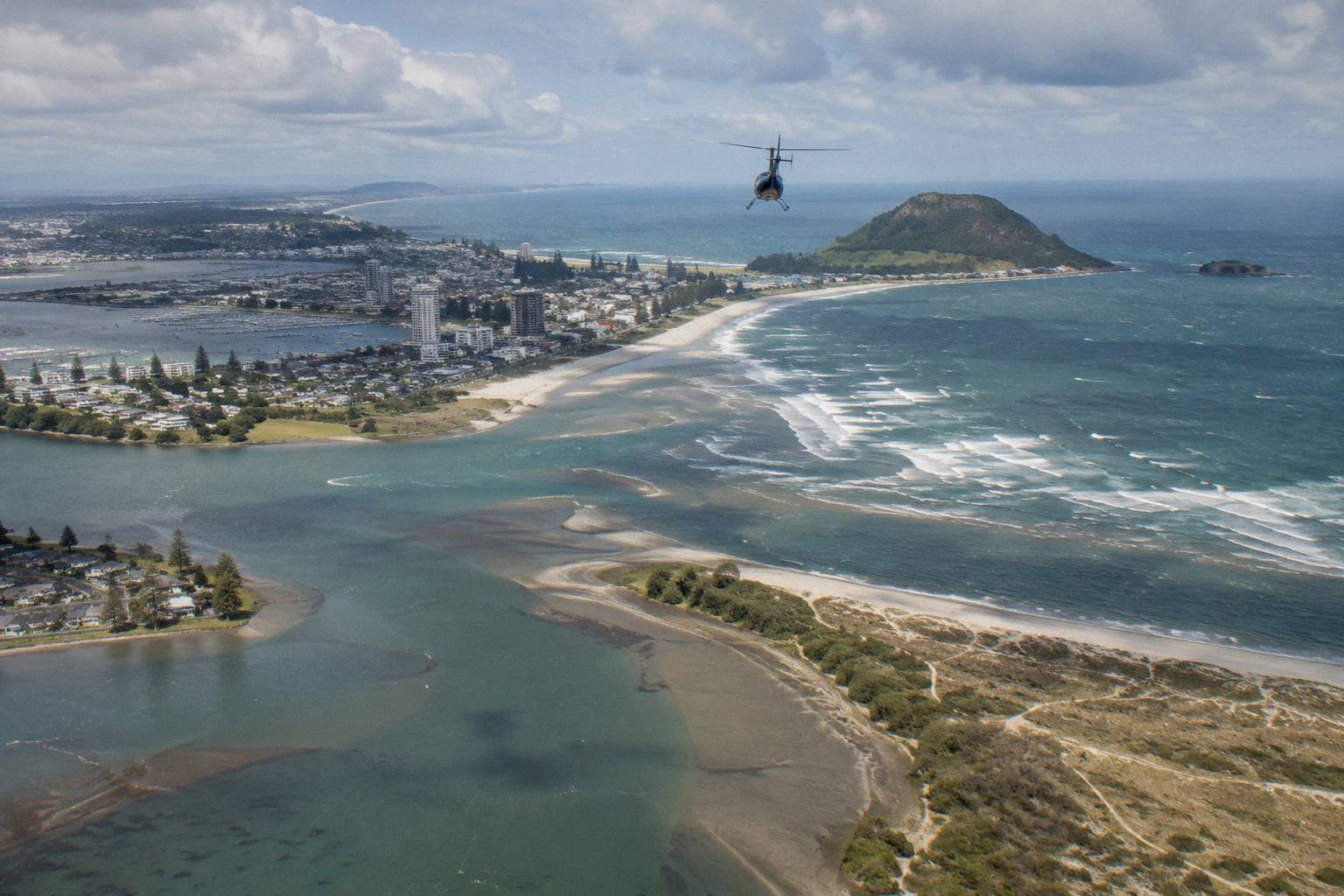
The exact wording on the waiver is a request, not a ban. It asks you to list conditions so the operator can include you safely, and guidance aligned with international skydiving bodies takes the same view of many managed conditions: well-controlled diabetes, asthma and heart conditions are often compatible with tandem skydiving once a physician has cleared them. The practical step for anyone with a managed condition is to have that clearance conversation before booking, then declare the condition on the form regardless. The waiver reserves the operator's right to cancel a skydive if it becomes concerned for your safety or anyone else's, which is the accurate description of how a refusal happens: case by case, on the day, by people who assess this for a living.
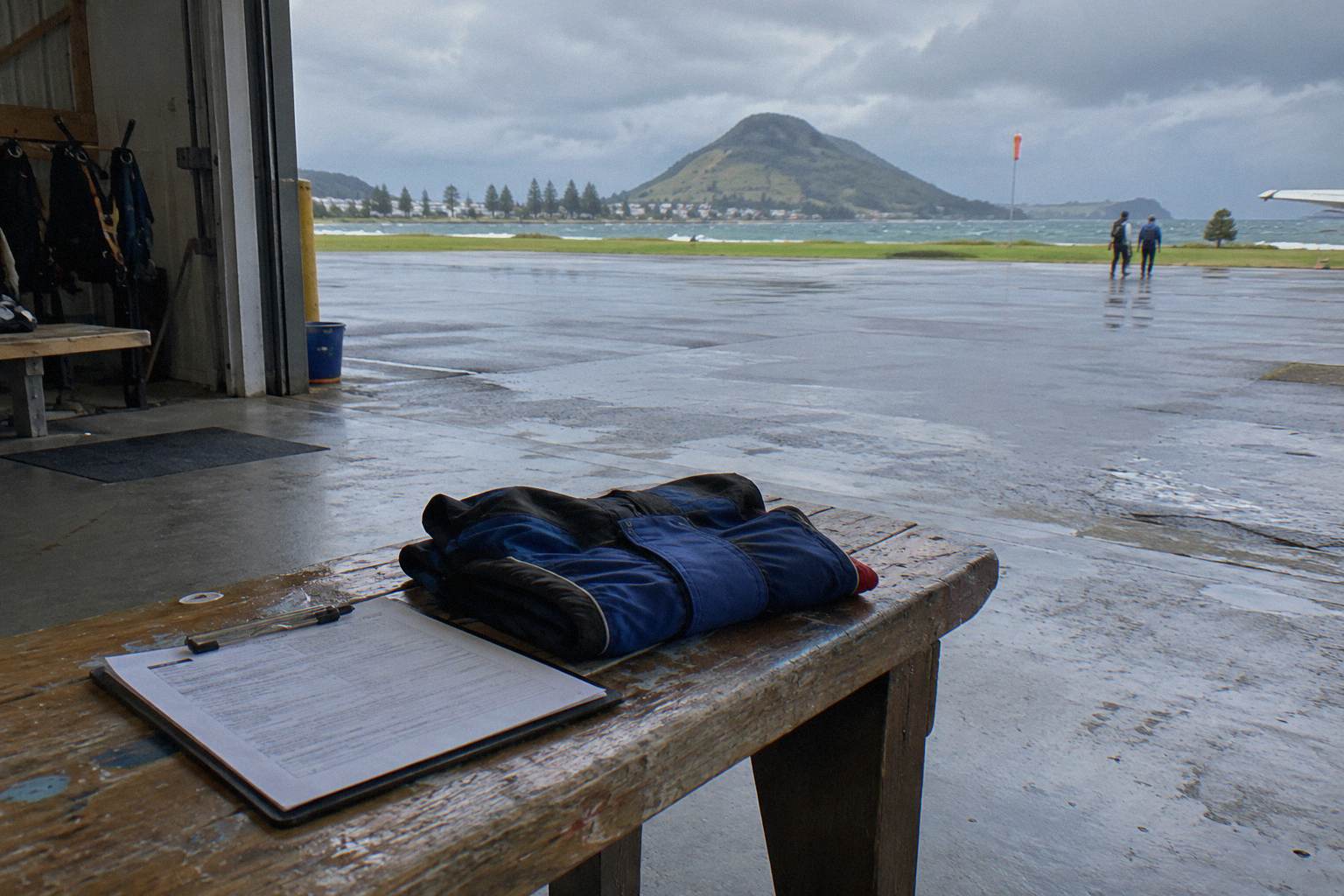
The three named cautions deserve plain treatment. Pregnancy is listed as not recommended, in line with international guidance that rules out tandem jumping during pregnancy because of harness pressure and the physical stress of deceleration. Scuba diving within 24 hours is listed for the same reason diving and flying do not mix: residual nitrogen in the body. Spinal or back injury is the third, because the harness loads the spine and the landing, however gentle the instructor makes it, is still a landing.
None of the other common worries appear in the rules at all. Poor eyesight is a non-issue: the operator supplies goggles that fit over glasses, and advises contact lenses where possible, so tell the instructor if you wear them so the goggles can be secured. Hearing, old knee injuries, mild asthma carried in a pocket: all of these are declaration items at most, not obstacles. The detailed condition-by-condition walk-through, including what a physician clearance looks like in practice, sits in the medical conditions guide.
If you are unsure where you stand, the fastest route is the operator's own pages: read the operator's waiver{: rel="noopener"} before you book, because the declaration wording there is the one that counts on the day.
What The Day Asks Of Your Body
Plan on 1.5 to 2 hours on site, arriving 30 minutes before your scheduled takeoff, with the physical peak being 15 to 20 minutes seated in a climbing Cessna 182 followed by freefall at over 200 km/h and a few minutes under canopy. None of it needs training. The two things your body genuinely has to do are hold the arch position you are shown in freefall and lift your legs for landing.
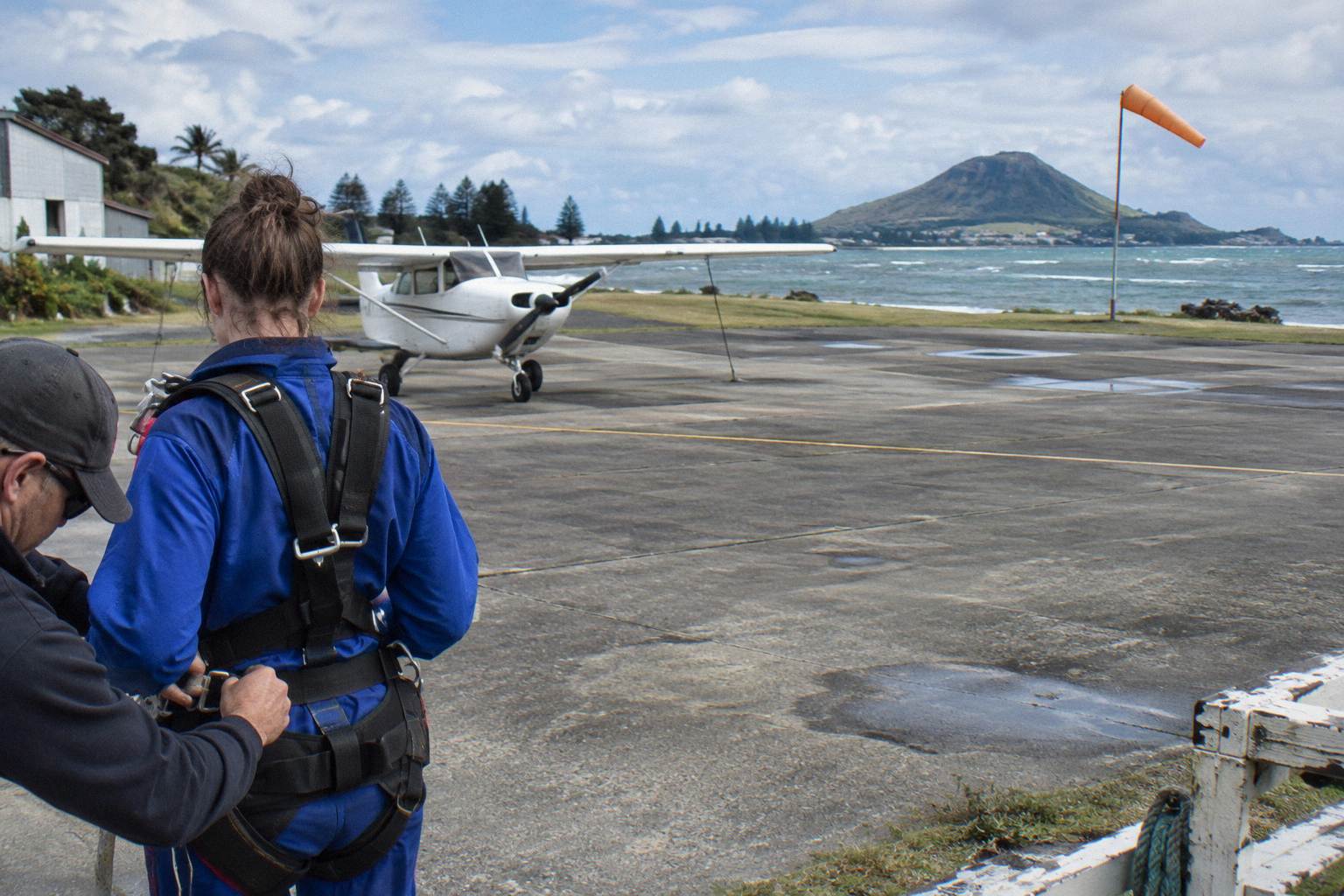
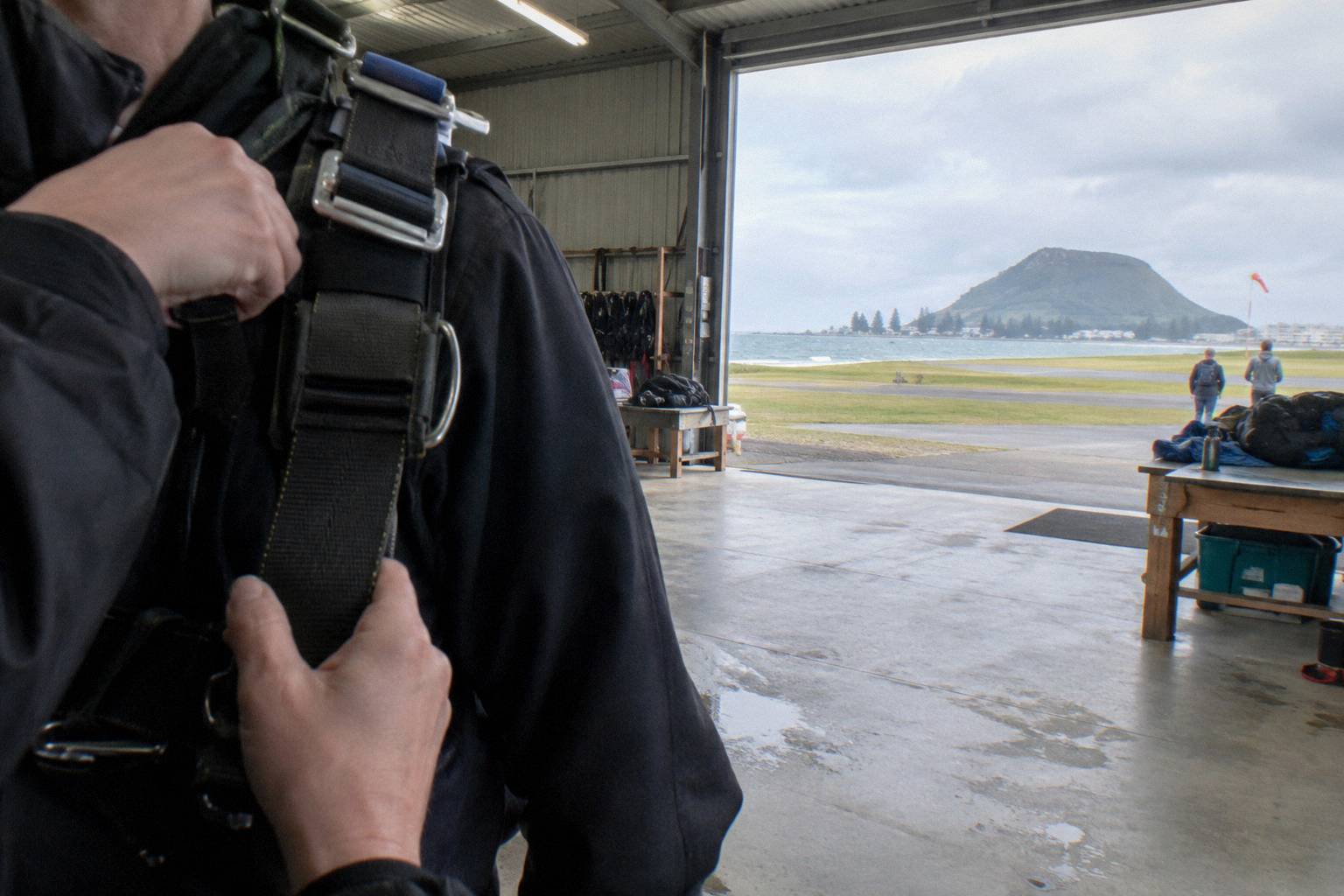
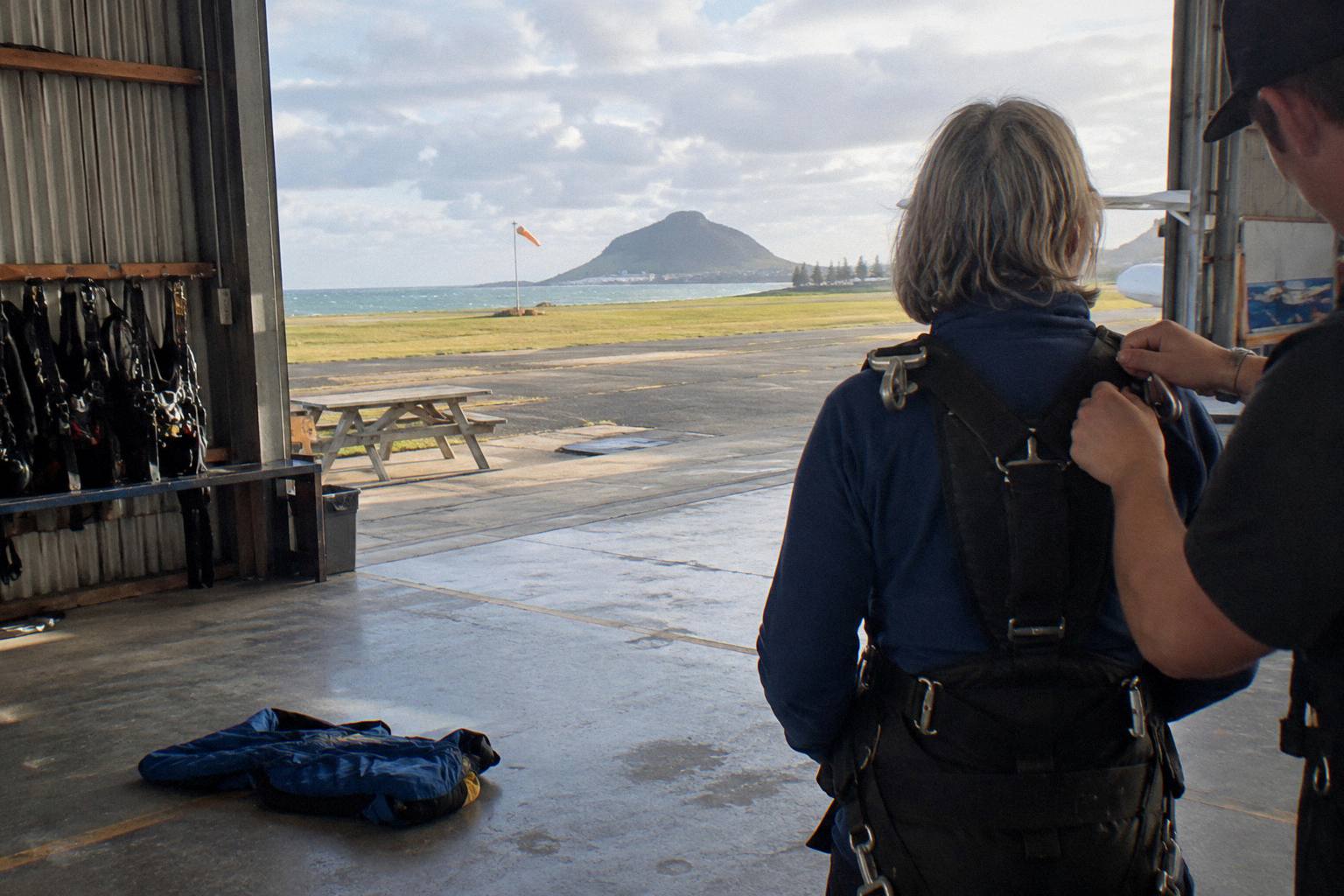
Walking through the timeline makes the physical load concrete. You arrive, check in, and get geared up: a harness, goggles, and a hat supplied under civil aviation rules, with a jumpsuit and gloves available in colder months. The fitting is the first real physical moment, because the harness has to sit correctly over your own clothes; this is why the operator asks for comfy clothes and closed shoes that cannot fall off, and closed footwear is mandatory for everyone, not a suggestion.
| Stage Of The Day | What Your Body Does | Time Involved |
|---|---|---|
| Check in and gearing up | Stand for a harness fit over your own clothes | Part of the 30 minute early arrival |
| Boarding and climb | Sit harnessed in a Cessna 182 beside one other tandem pair | 15 to 20 minutes |
| Freefall | Hold the arch position shown, with the instructor in control | 40 seconds at 12,000 ft, about 1 minute at 15,000 ft |
| Under canopy | Sit in the harness and take in the view | 3 to 5 minutes |
| Landing | Lift your legs while the instructor flares and touches down | Moments |
| Total on site | Arrival to landing, including paperwork and waiting | 1.5 to 2 hours |
The climb is the longest single block. The Cessna 182 takes two tandems at a time and reaches altitude in 15 to 20 minutes, so you are seated, harnessed, and strapped to your instructor for that stretch. People with stiff knees or a sore back sometimes find the bench seating the least comfortable part of the entire experience, which is worth knowing in advance rather than discovering mid-climb. It is also why the waiver flags spinal injury: nothing about the climb is extreme, but it is a long sit in a small aircraft.
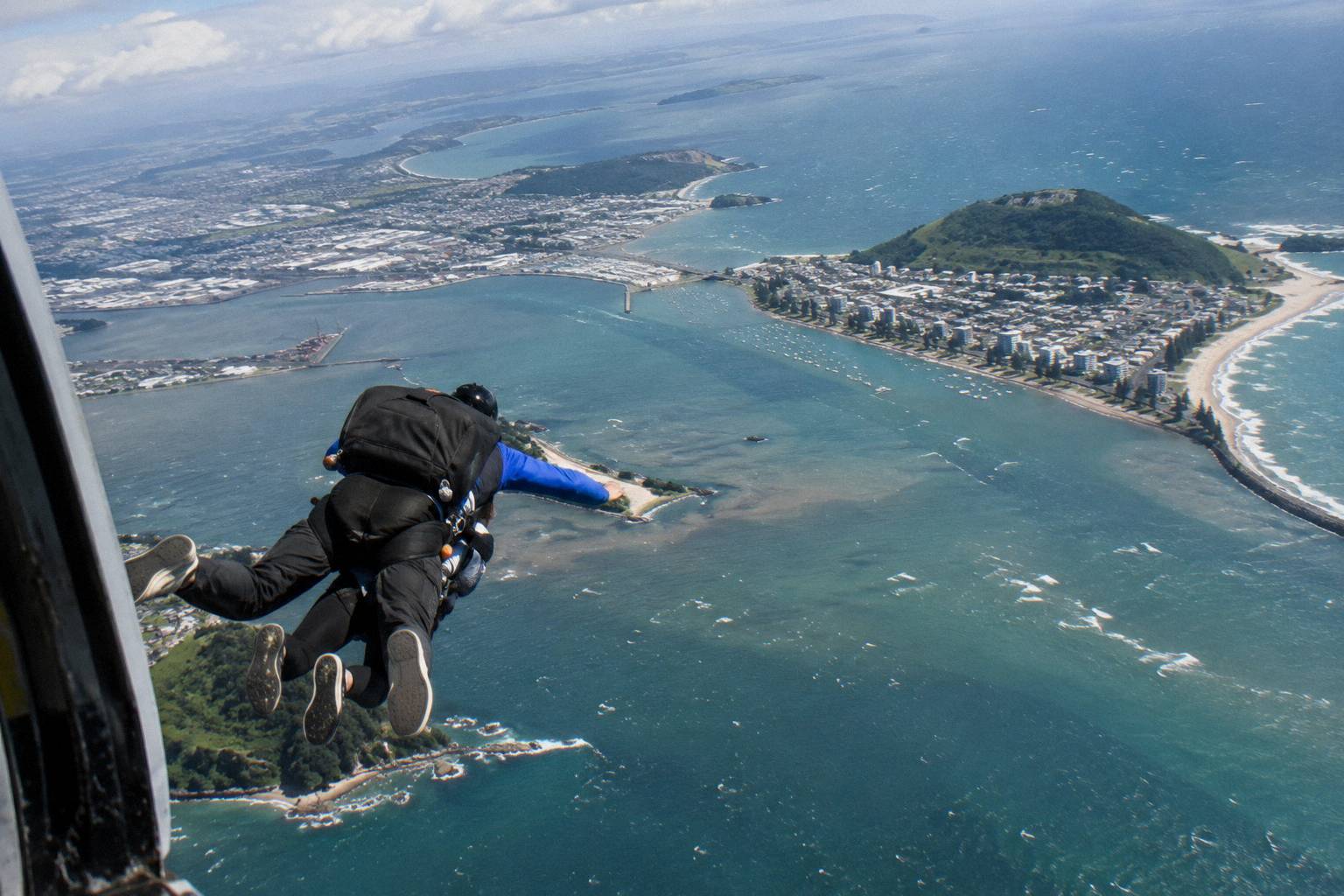
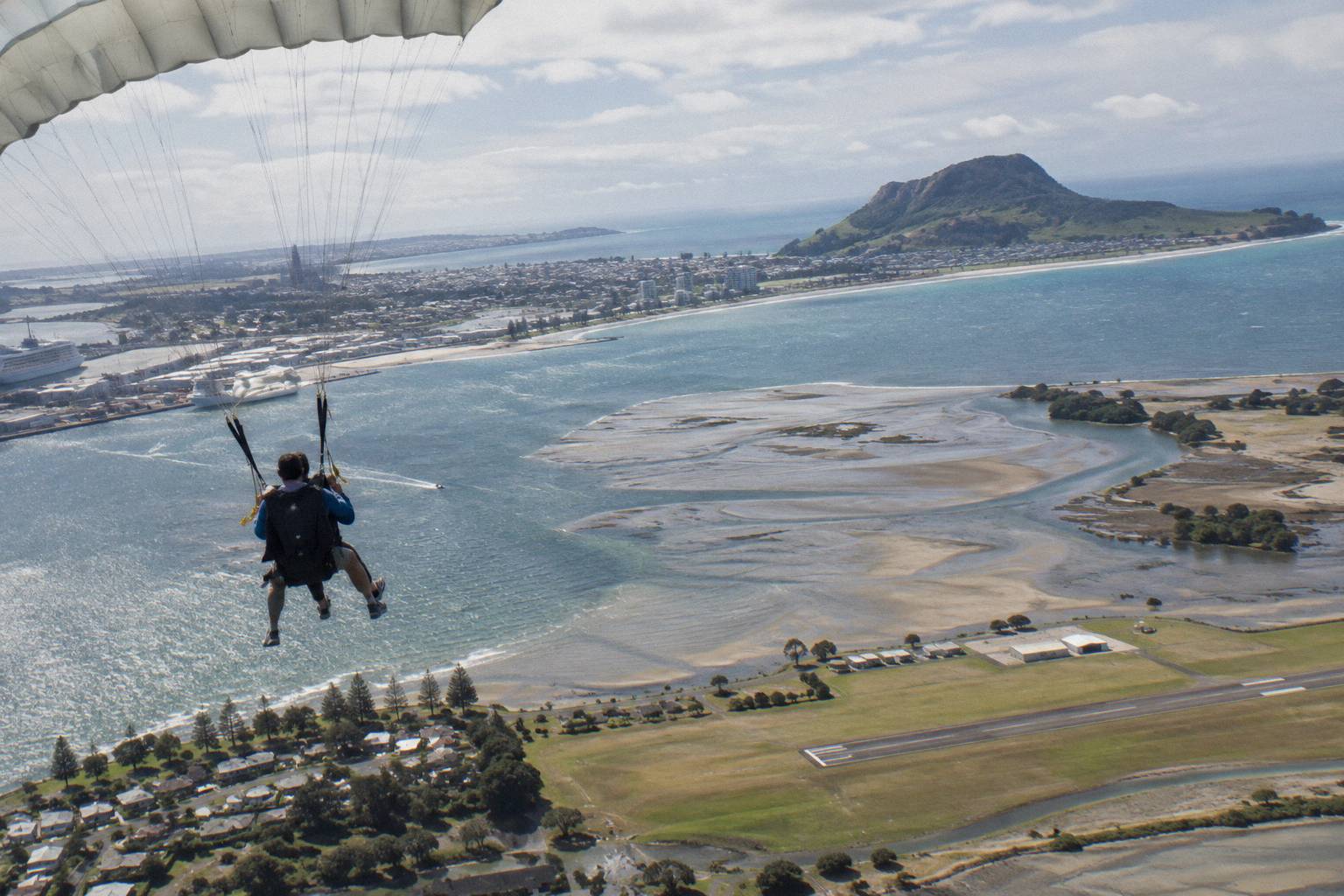
Then the jump itself. Exit, the body position you were shown, and freefall: 40 seconds from 12,000 ft or about a minute from 15,000 ft, with the operator noting that freefall times are an indication only and vary with weather and body shape. You reach speeds over 200 km/h. The instructor opens the parachute, and you descend under canopy for a few minutes, with the operator's own pages describing the canopy ride as between 3 and 5 minutes. The landing is the last physical task: the instructor flares, you lift your legs, and the pair touches down at the same airport you took off from, in front of the spectator viewing area.
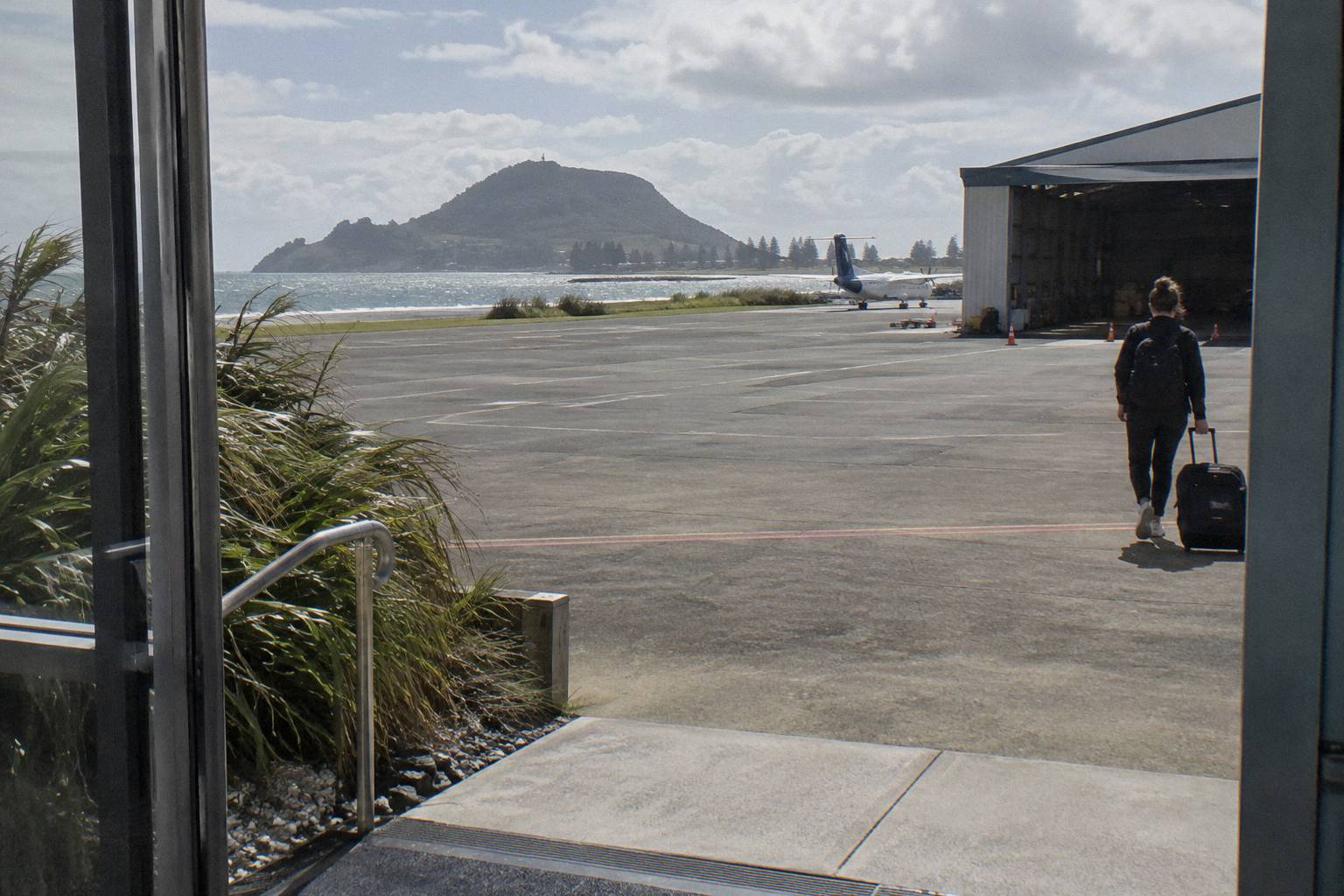
Two day-of facts complete the picture. Takeoff and landing are both at Tauranga Airport, Mount Maunganui, so there is no shuttle, no beach landing and no long walk; the landing area sits beside where you geared up. And because the aircraft carries two tandems at a time, the pacing on site is steady rather than rushed, which is exactly why the operator tells you to allow the full 1.5 to 2 hours even though the airborne portion is well under half an hour of that.
How Age, Not Fitness, Sets The Real Boundaries
Age brackets, not fitness levels, are where the actual rules live: 7 is the operator's floor, under 12 means a pre-visit for a harness fit, under 18 means a consent letter, and at the top end there is no maximum age, because New Zealand law sets none and the operator imposes none. The only age-related questions an older jumper faces are the same two everyone faces: harness fit and the medical declaration.
Starting at the bottom end, the operator's reasoning for the under-12 visit rule is worth understanding. A child that young must meet the 30 kg minimum and fit safely into the harness, and the operator wants the jump to be the child's own decision rather than a parent's. The pre-visit lets staff fit the harness, let the child see the plane and the dropzone, and settle the question before any money or altitude is involved. For a teenager, the rule is administrative rather than physical: a consent letter from a parent or guardian, then the same weight and declaration checks as any adult.
At the top end, the absence of a maximum age is not a loophole; it is the norm across the sport in New Zealand, where operators report taking passengers well into their nineties. What an older jumper faces is not an age test but the same two practical gates as everyone else: harness fit and the medical declaration. Someone managing a heart condition, for example, follows the same path as a 30-year-old with the same condition, which is to say a physician clearance conversation and a plain line on the waiver. The age limit guide covers the bracket rules in full.
What this means for a reader doubting their fitness is a useful reframing. The question is never "am I fit enough?" but three narrower ones: am I inside 30 to 110 kg, or have I phoned about being over? Does anything on the declaration list apply to me, and if so, what does my doctor say? And can I sit in a small aircraft for 20 minutes and lift my legs at the end? Answer those three and you have completed every check that exists. Fitness, in the gym sense, simply is not on the form.
Eyesight, Ears, Motion Sickness And Other Day-Of Concerns
Glasses and contact lenses are both fine on a tandem jump: the operator supplies goggles that fit over spectacle frames, and asks you to tell the instructor about lenses so they can be secured. Motion sickness and ear pressure can occur during the descent, according to operator guidance, and are managed with pre-jump advice rather than exclusion. None of these everyday issues appears on the list of things that stop a jump.
Eyesight first, because it worries people most and matters least. The whole jump is not a vision test; the instructor handles the exit, the freefall and the landing regardless of what you can read at distance, and the goggles are the only optical equipment involved. The operator's FAQ puts it plainly: contacts are advised where possible, and special goggles fit over glasses for those who need them. The one genuine rule in this space is about your own camera: under New Zealand civil aviation rules no tandem passenger may carry their own phone or camera during the jump, which is why the operator sells camera packages flown by the instructor instead.
Ears and stomach sit together in the guidance as manageable discomforts rather than disqualifiers. Changes in pressure during the climb and descent can bother anyone, and sinus or nasal congestion is on the declaration list for that reason, not as a ban but as something the instructor should know about on the day. Motion sickness follows the same pattern: severe motion sickness belongs on the waiver, ordinary queasiness does not, and the practical mitigations are unglamorous. Eat a normal light meal an hour or two beforehand rather than arriving either starved or stuffed, drink water through the morning, go easy on caffeine if you are not a regular drinker of it, and skip alcohol entirely well before a jump; guidance followed by skydiving operators rules out alcohol within at least eight hours of a jump.
The pattern across all of these is that the operator wants information, not perfection. Declared severe motion sickness starts a conversation about positioning and timing; undeclared motion sickness becomes a problem mid-jump. The same logic applies to eating and drinking decisions generally, which get their own treatment in what to eat and drink before a Tauranga jump.
One last practical item belongs here rather than anywhere else: make a final restroom stop before gearing up. Once the harness is on and the aircraft is boarding, it stays on, and the operator's schedule does not pause for wardrobe adjustments. It is the single most useful thing nobody thinks to mention, and it costs nothing.
What Trips People Up Before You Book
The recurring mistakes are assuming a fitness test exists, guessing at the weight rule instead of phoning above 110 kg, staying quiet about a condition out of fear it means an automatic no, and treating the two hour window as optional. Each is avoidable with a phone call, a fully accurate waiver and a calendar slot with margin. None is a training problem, and all get harder to fix the closer you are to the aircraft door.
The first mistake is the one this whole page answers: people postpone booking for months while getting "ready", when the only gates are weight, harness fit and the declaration. If you are inside the thresholds, you are as ready as the rules require. The second is guessing near the weight line. The operator's own pages carry slightly different maximum figures, and the booking form is the strict one; the clean move is the phone call, which settles fit, surcharge and aircraft logistics in one conversation, and is explicitly what the operator asks for above 110 kg.
The third mistake is under-declaring. The waiver's list, severe motion sickness, asthma, allergies, heart conditions, epilepsy, sinus congestion, reads as examples of what to disclose, and hiding an item does not make it irrelevant; it removes the operator's chance to manage it. Refusals are rare and case by case, and the operator's stated concern is safety, not screening out customers. A physician clearance letter for a managed condition turns most of these conversations into a signature. The fourth mistake is scheduling. The operator says the whole experience takes 1.5 to 2 hours and asks you to arrive 30 minutes early, and the aircraft itself can run late on weather or airport traffic. Booking a jump immediately before a rigid commitment, a cruise departure, a flight, a wedding, stacks avoidable pressure on a day that runs on aviation time. The weather variables and what happens when a jump gets rescheduled are covered separately in the weather and cancellations guide.
A fifth, quieter trap is buying fitness you do not need: training programmes, crash diets, or a month of stair climbing aimed at a test that does not exist. If a jump motivates a fitness push, that is a fine private reason, but nothing about the Tauranga Skydive checks rewards it. Spend the preparation time instead on the two documents that matter, the waiver and the weight rule, and the jump day becomes what it is designed to be: a 15 to 20 minute climb, a minute of freefall, and a lift of the legs.
For context on where these rules come from, tandem operations in New Zealand sit under the Civil Aviation Authority's adventure aviation framework, and the Civil Aviation Authority Part 105 rule{: rel="noopener"} is the operating rule for parachuting, including the requirement that a tandem master activates the main parachute at not less than 5,000 ft. Knowing the instructor's obligations are rule-bound tends to settle more nerves than any fitness statistic.
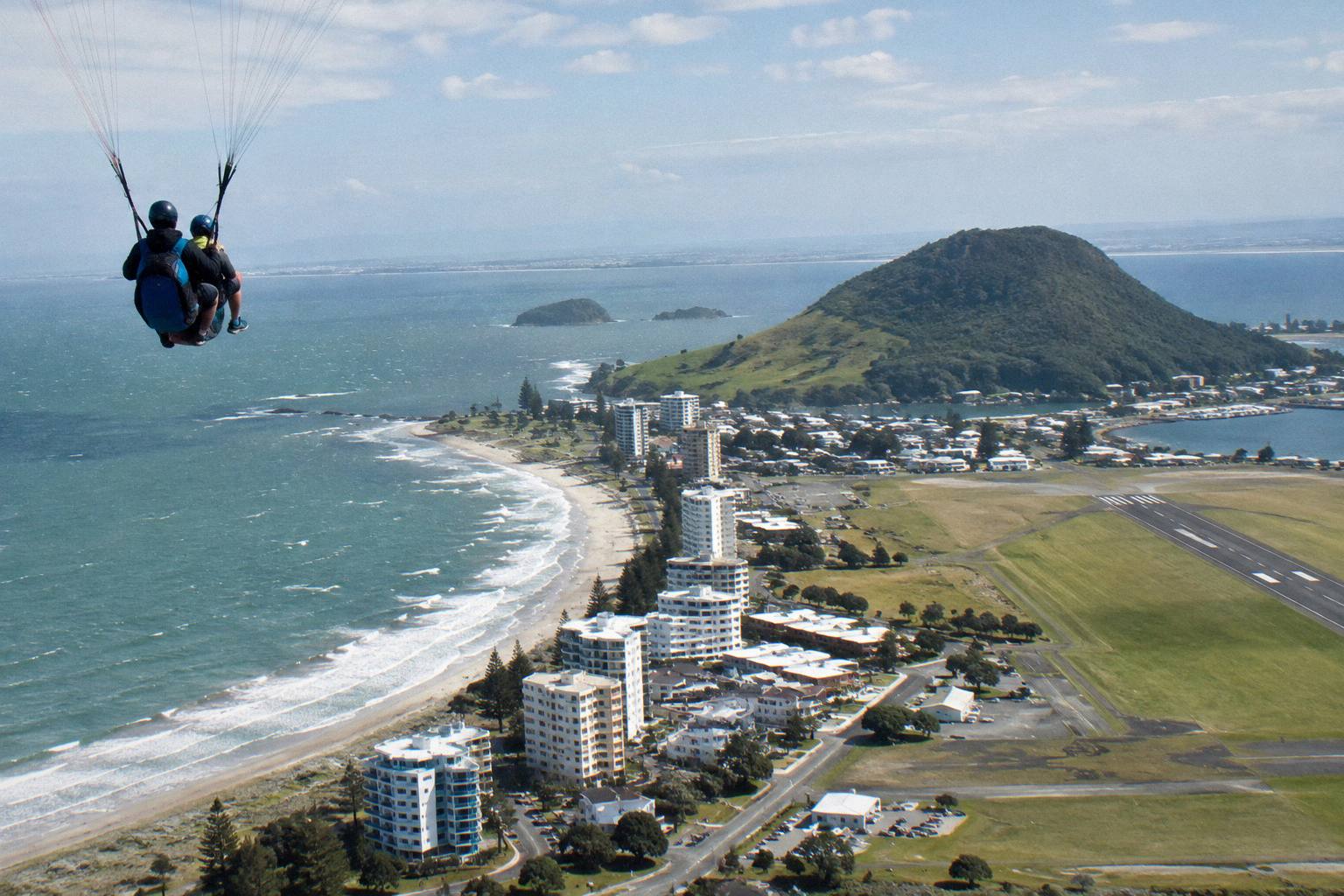
A final decision note for readers comparing options: the Taupo jump above is a different operator with different thresholds, age 10 minimum and 100 kg maximum, so if weight or age is the binding constraint in your group, the Tauranga listings are the more permissive of the two. Where the Tauranga rules fit you, the Skydive Over Mount Maunganui listing carries a 5.0 rating from 66 reviews and lets you choose 12,000 or 15,000 ft on the booking calendar; Check availability to see dates, or read the operator's own preparation notes on the what-to-know page{: rel="noopener"} first.
Common Questions About Fitness And Health
Do You Need To Be Fit To Do A Tandem Skydive?
No published fitness test, fitness standard or BMI rule exists for the Tauranga jump. The operator checks age, weight, harness fit and a medical declaration. Your physical jobs are holding the body position shown in freefall and lifting your legs for landing.
Is There A Weight Limit For Skydiving At Tauranga?
Yes. The minimum weight is 30 kg and you can book freely under 110 kg. Above 110 kg the operator asks you to phone, and a small surcharge paid to the tandem instructor applies. Harness fit, not the number alone, decides the outcome.
Can You Skydive With Asthma, Diabetes Or A Heart Condition?
They must be declared on the waiver, which names asthma, allergies and heart conditions as examples. Declaring a condition is not an automatic exclusion; guidance aligned with international skydiving bodies says well-controlled conditions are often compatible once a physician has cleared them.
Can You Skydive If You Are Pregnant?
No. The operator's waiver lists pregnancy among the situations in which a skydive is not recommended, in line with international guidance on harness pressure and physical stress during tandem jumps.
Is There An Age Limit For Tandem Skydiving?
The minimum is 7, set by the operator. Under 18 needs a parent or guardian consent letter, and under 12 means a pre-visit to the dropzone for a harness fit. There is no maximum age; New Zealand law sets none.
How Physically Demanding Is The Jump Day?
Allow 1.5 to 2 hours on site, arriving 30 minutes early. The longest physical block is the 15 to 20 minute seated climb in a Cessna 182, followed by freefall at over 200 km/h and a few minutes under canopy. No training is required.