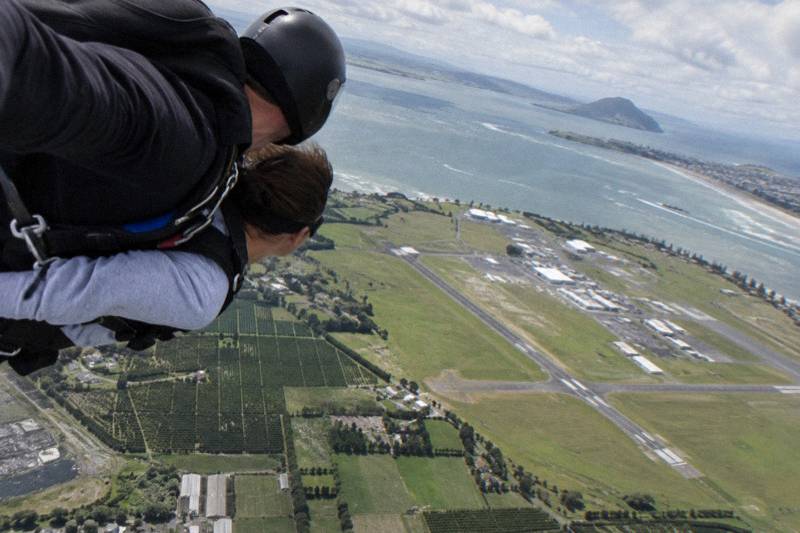
12,000 Vs 15,000 Ft Tandem Skydive Over Mount Maunganui: Which Height To Pick
The jump from Tauranga Airport comes in two heights, 12,000 ft and 15,000 ft, and the difference between them comes down to seconds of freefall, minutes in the aircraft and NZ$100 on the operator's own pricing.
Short answer
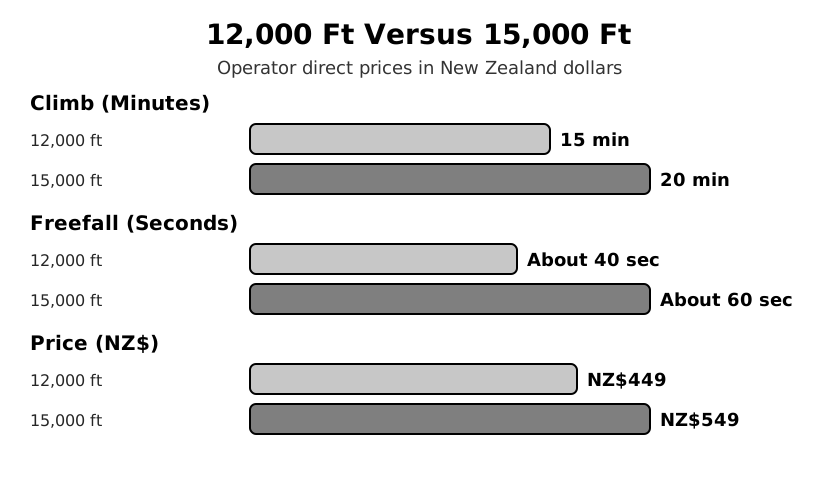
The 12,000 ft jump gives about 40 seconds of freefall after a 15 minute climb, and costs NZ$449 booked direct with the operator. The 15,000 ft jump gives about 1 minute of freefall after a 20 minute climb, and costs NZ$549. Both take off and land at Tauranga Airport, Mount Maunganui. Freefall times are an indication only.
The two heights both launch from the same aircraft at the same airport, so the choice is narrower than it first looks. Start from the From Tauranga skydive over Mount Maunganui tour page to see the jump options side by side, then use the comparison below to settle the height question.
| Fact | Detail |
|---|---|
| Drop zone | Tauranga Airport, Mount Maunganui |
| Heights offered | 12,000 ft and 15,000 ft |
| 12,000 ft freefall | About 40 seconds (indication only) |
| 15,000 ft freefall | About 1 minute (indication only) |
| Climb to 12,000 ft | 15 minute scenic flight |
| Climb to 15,000 ft | 20 minute scenic flight |
| Operator direct price, 12,000 ft | NZ$449 |
| Operator direct price, 15,000 ft | NZ$549 |
| Canopy ride | 3 to 5 minutes |
| Total time on site | 1.5 to 2 hours |
What Actually Changes Between 12,000 And 15,000 Feet
Three things change, and only three: the length of the climb, the length of the freefall, and the price. The aircraft is the same Cessna 182 carrying two tandems at a time, the takeoff and landing point is the same spot at Tauranga Airport, and the canopy ride back down is a few minutes either way. The 15,000 ft option buys roughly twenty extra seconds of freefall and five more minutes of scenic flying on the way up.
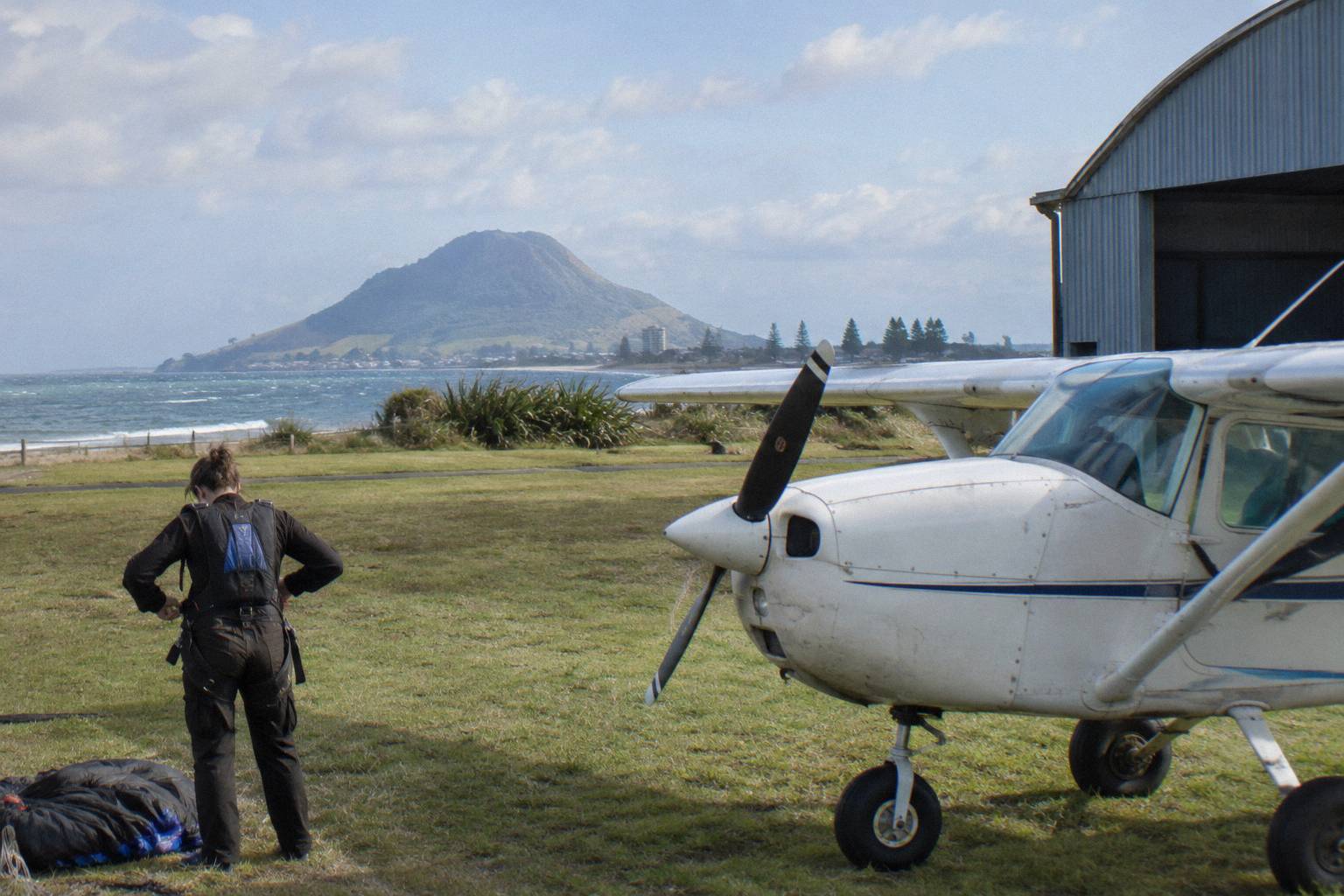
Everything else a first time jumper worries about, the harness, the briefing, the instructor on your back, the landing, is identical between the two heights. The Tauranga Skydive operator runs both from the same hangar, with the same arrival rule of 30 minutes before your scheduled takeoff and the same allowance of 1.5 to 2 hours for the whole visit.
The extra 3,000 ft of altitude is spent in two places. Part of it becomes those additional seconds of freefall, since a tandem pair falling at terminal velocity covers the extra distance quickly. The rest becomes a longer ride up, because the Cessna needs more time to climb the additional height. The operator's homepage describes the 12,000 ft jump as a 15 minute scenic flight with 40 seconds of freefall, and the 15,000 ft jump as a 20 minute scenic flight with about 1 minute of freefall.
One point the operator is explicit about: the freefall times are an indication only. The waiver wording says they can vary from customer to customer based on variables such as weather conditions and body shape. A heavier or lighter pairing, or a different day, shifts the seconds in either direction, so treat 40 seconds and 1 minute as centre points rather than promises. The physics behind the fall speed is explained plainly at the terminal velocity reference page, which shows why the paired descent settles at a steady speed rather than accelerating all the way down.
If the freefall seconds matter more to you than the climb minutes, the higher option earns its extra cost. If you would rather keep the visit shorter and the spend lower, the 12,000 ft jump delivers the same exit, the same view and the same landing for NZ$100 less on the operator's own pricing.
How The Climb And The Freefall Differ Minute By Minute
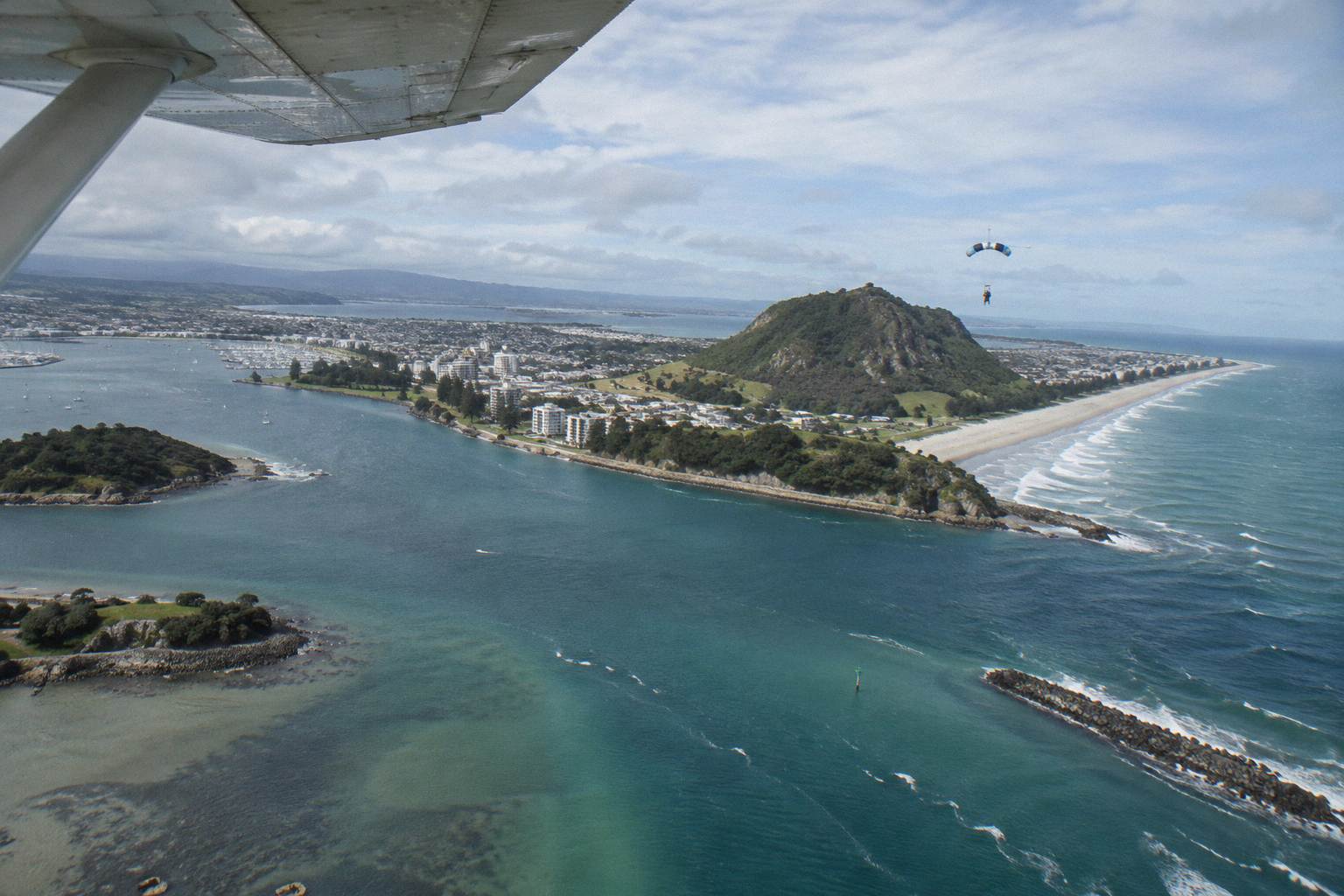
Expect a 15 minute flight to 12,000 ft and a 20 minute flight to 15,000 ft, then 40 seconds or about 1 minute of freefall respectively, followed by 3 to 5 minutes under canopy. The scenic climb is part of the product, not dead time: the aircraft routes over the harbour and coastline, so the longer 15,000 ft climb means roughly five more minutes of viewing before the door opens. Neither option rushes you.
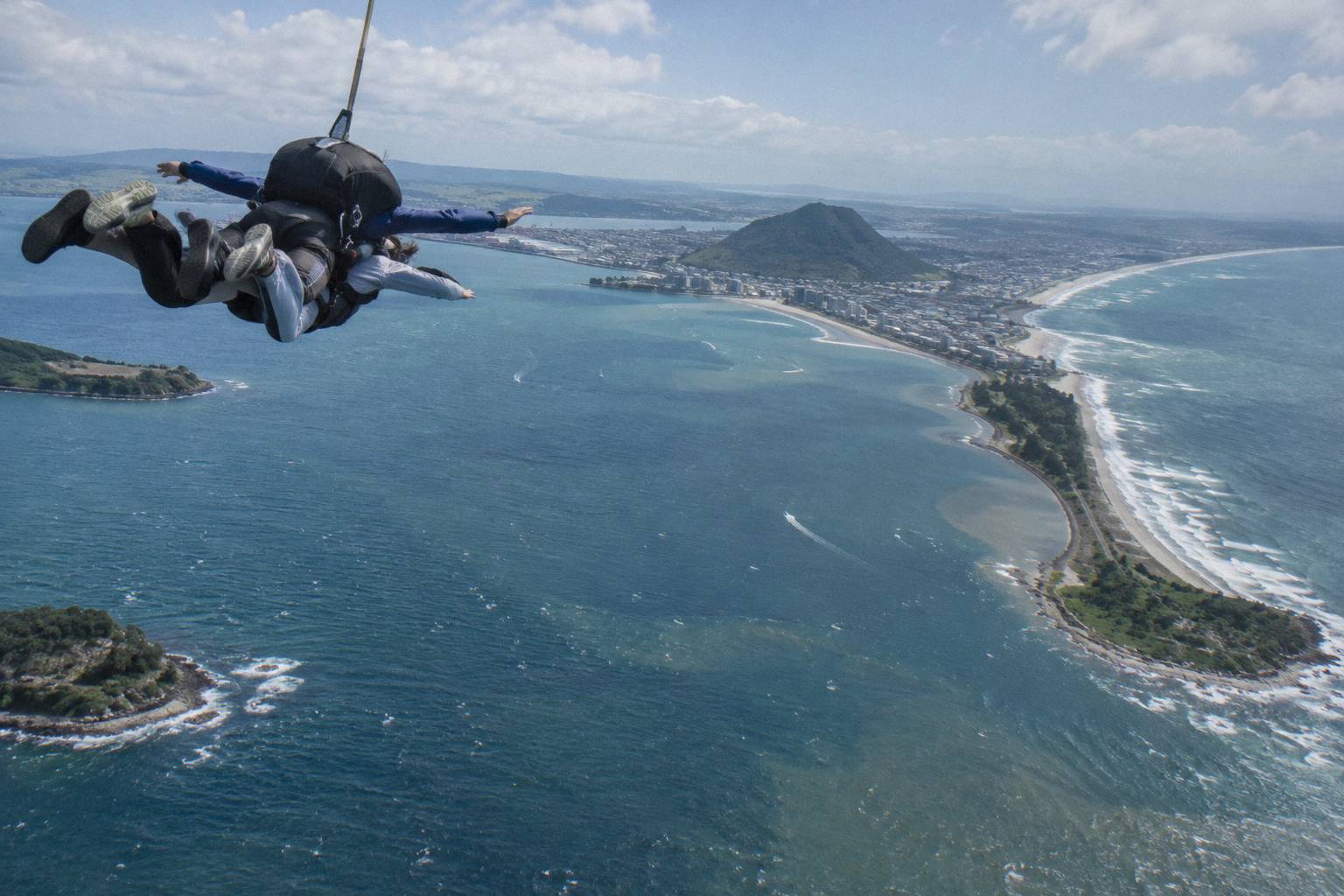
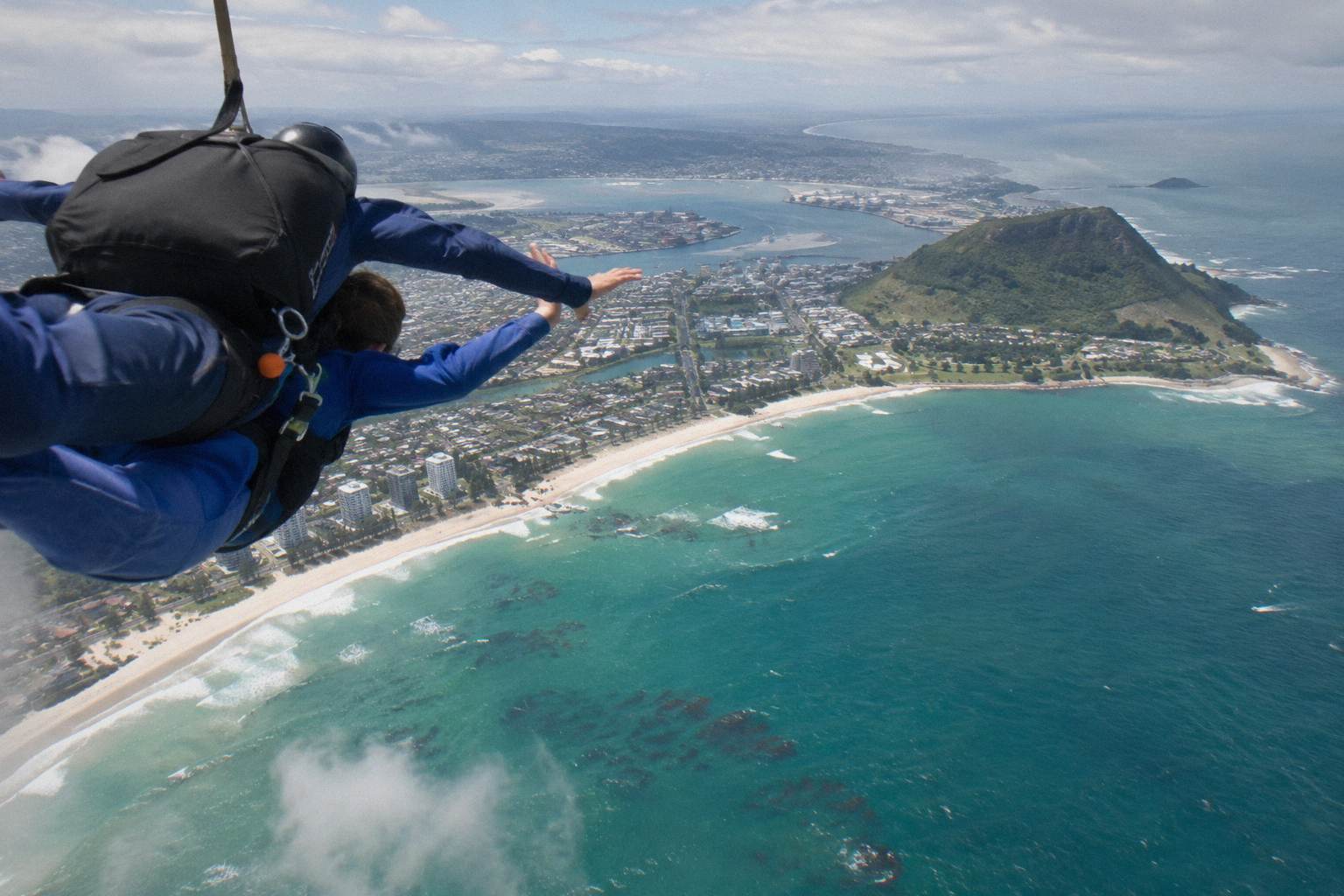
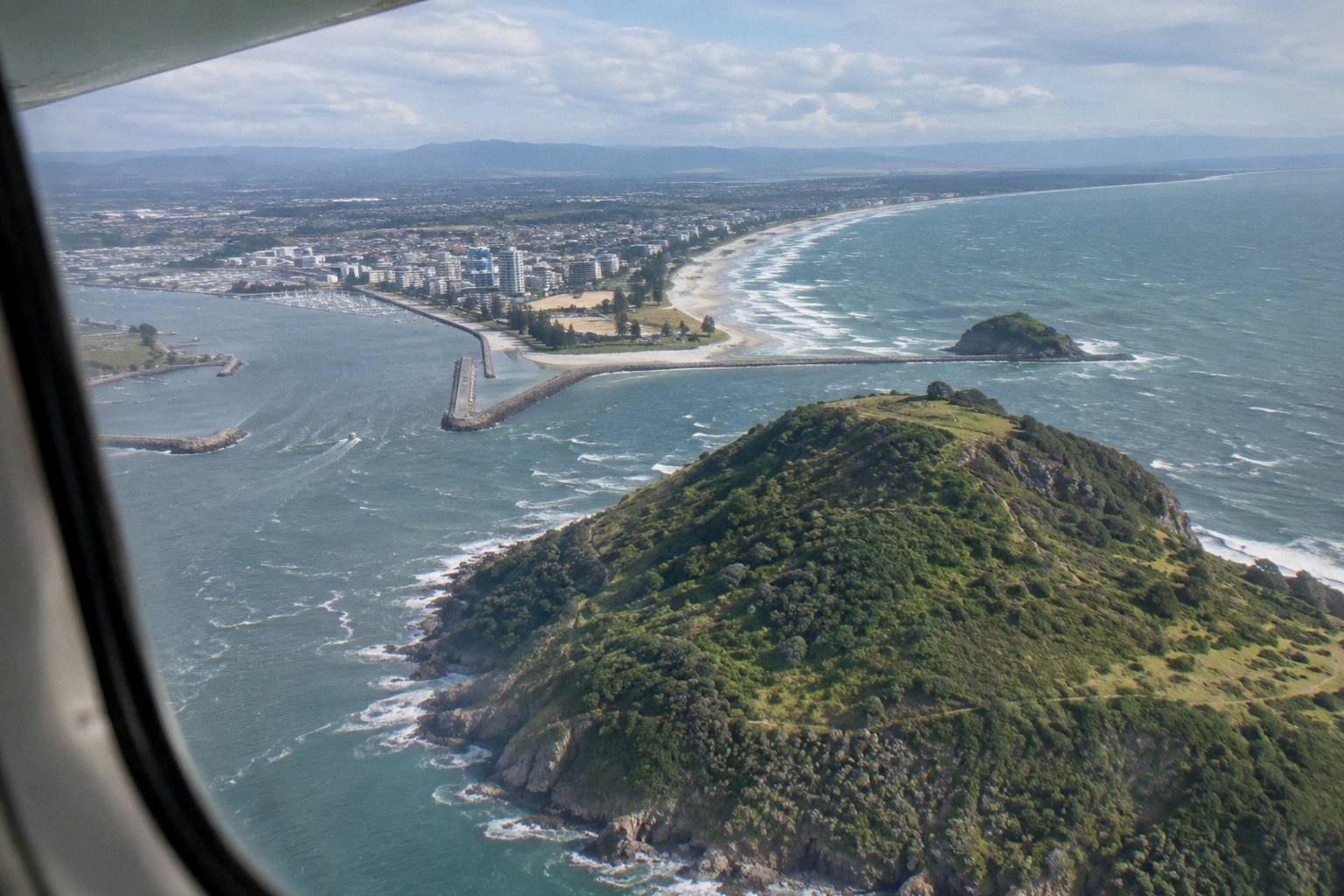
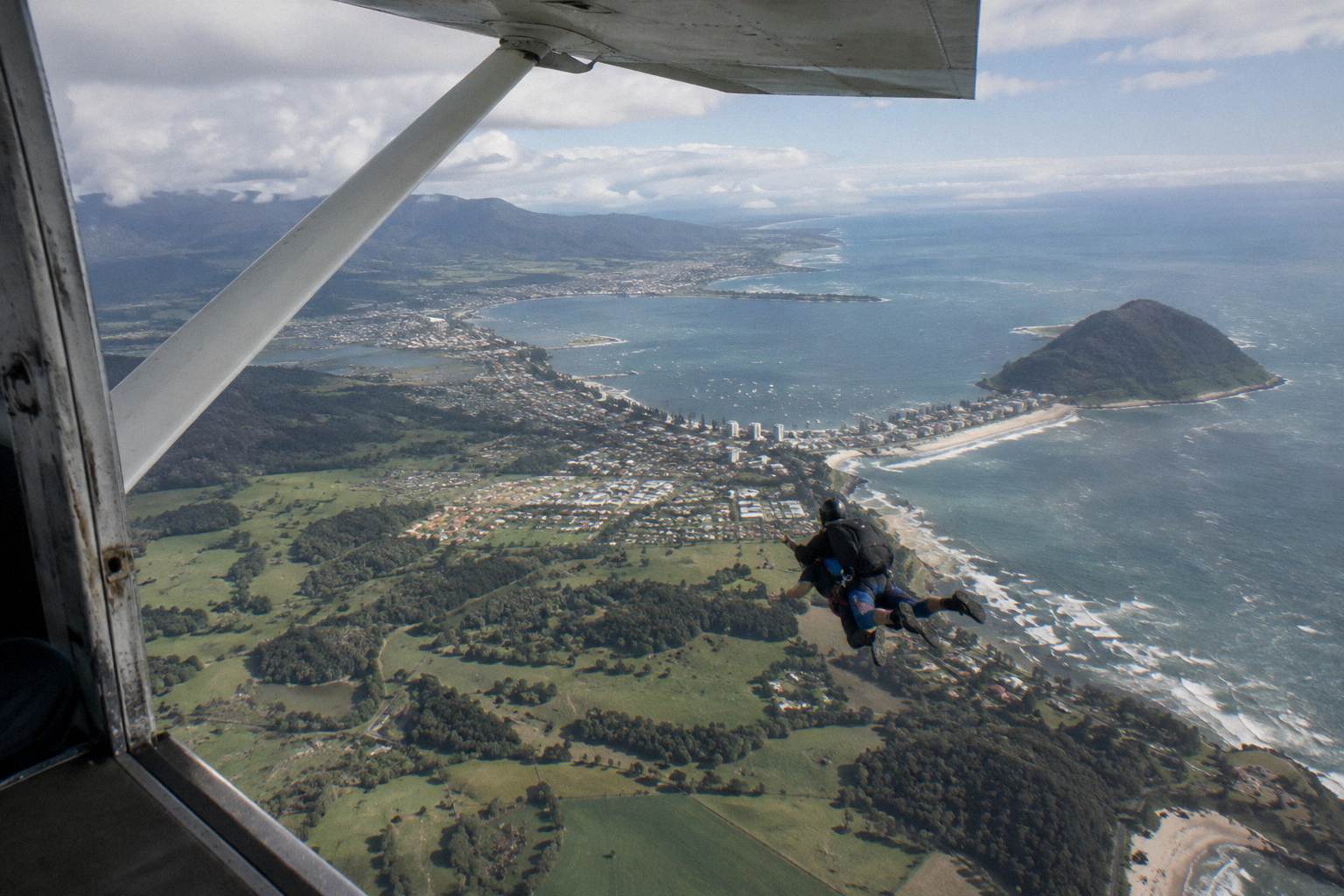
The climb is where the two experiences genuinely diverge. On the way to altitude the aircraft passes over the harbour entrance and the long sand of the coast, with Matakana Island stretching 20 kilometres along the horizon and the 232 metre dome of Mauao below. Choosing 15,000 ft extends that sightseeing stage by about five minutes and lifts the view higher, which changes the scale of the panorama rather than the things in it.
The freefall difference is real but easy to overestimate. Twenty extra seconds sounds small; in freefall it is a third again on top of the 12,000 ft figure, which is why some jumpers treat the higher option as the one worth stretching for. Others find 40 seconds plenty for a first jump and would rather put the money toward a camera package, which the operator sells as a paid extra from NZ$149 and which works identically at either height. The camera options are laid out on the operator's camera packages page, and no jump height includes photos or video.
Under canopy the two heights converge again. The operator's own pages describe the parachute ride as 3 to 4 minutes, 4 to 5 minutes, or around 5 minutes depending on the page, so the accurate framing is a few minutes of floating descent in every case. The instructor opens the main parachute at a height set by New Zealand's parachuting rules, and the descent to the grass at Tauranga Airport takes the same few minutes whichever exit height you chose.
For a fuller walk through the whole sequence, from arrival to landing, read what happens on a Bay of Plenty tandem skydive, which covers the briefing and ground handling common to both heights.
What The Two Heights Cost Side By Side
Booked direct with the operator, the 12,000 ft jump is NZ$449 and the 15,000 ft jump is NZ$549, amounts in New Zealand dollars. That NZ$100 gap is the entire price difference between the heights. Camera packages cost extra at either altitude: photos NZ$149, video NZ$159, both NZ$189, the 360 package NZ$229, and the outside camera flyer NZ$349, with the outside package needing prebooking.
The pricing logic is simple enough to state in one line: you pay NZ$100 for about twenty more seconds of freefall and five more minutes of climbing. Whether that is a good trade is a personal call, and no answer here tries to make it for everyone. A useful exercise is to price the combinations. A 12,000 ft jump with the combined photo and video package at NZ$189 comes to less than a bare 15,000 ft jump, and many first timers prefer the evidence over the extra seconds.
On the booking page, prices vary by date and group, and the page shows the price for the date you select. Every jump listing carries free cancellation up to 24 hours before the start for a full refund, which makes an early booking low risk while you finish deciding on height. If you book direct with the operator instead, the card is held to reserve the slot and you pay on the day, and the direct cancellation terms are stricter: free before the day before, 50 percent the day before, full price on the day.
For the wider picture of what a jump here costs once cameras and travel are counted, see how much a Tauranga skydive costs.
Which Booking Page Listing Offers Which Height
The "From Tauranga: Skydive over Mount Maunganui" listing offers 12,000 or 15,000 ft as a selectable option, with a 20 to 25 minute scenic flight and freefall of 30 to 45 seconds at 12,000 ft or about 1 minute at 15,000 ft. The other two jump listings state 15,000 ft. All three are run by the same operator from the same airport meeting point, so the height menu, not the operator, is what separates them.
This matters because shoppers often compare the listings as if they were different products. They are not. The Skydive Over Mount Maunganui listing, rated 5.0 from 66 reviews, is the one to open if you have not settled the height question, because the 12,000 or 15,000 ft choice is made as an option on its calendar. Check availability on it once and you can price both heights for your date before committing.
The 15,000ft Tandem Skydive in Tauranga listing and the 15,000ft Tandem Skydive in Bay of Plenty listing both state 15,000 ft, an experience of about 1.5 hours, up to 40 seconds or about 1 minute of freefall depending on wording, and about 5 minutes under canopy. Both carry the same eligibility rules as every jump here: minimum age 7, minimum weight 30 kg, book freely under 110 kg and phone the operator above that. The weight rules are covered in detail in the Tauranga skydive weight limit guide.
One trap from the wider market is worth naming: some older page addresses for these products carry numbers like 10,000 or 12,000 in the link itself. When in doubt, read the altitude line in the description, not the web address.
How To Choose By Budget, Time And Nerves
Choose 12,000 ft if the budget is fixed, if 40 seconds of freefall sounds like enough, or if anyone in your group is hesitant and would value a shorter day. Choose 15,000 ft if the freefall is the point of the trip and the extra NZ$100 and five climb minutes do not bite. A nervous first timer loses nothing meaningful at 12,000 ft; a jumper chasing maximum freefall will not get it back later by wishing.
Budget is the cleanest axis. If the choice is between 15,000 ft bare or 12,000 ft with a NZ$189 photo and video package for a similar total, many people take the package, because the footage outlives the seconds. If money is not the constraint, the higher jump simply contains more of the thing you came for.
Time on the ground barely moves. The operator says the whole experience takes between 1.5 and 2 hours either way, and to allow around 1.5 hours on a quiet day. The five extra climb minutes at 15,000 ft are absorbed inside that window. If you are fitting the jump around a cruise stop, the airport is a 5 to 10 minute drive from the cruise dock per the operator's FAQ, and the planning detail is in skydiving on a Tauranga cruise stop.
| Decision factor | Points to 12,000 ft | Points to 15,000 ft |
|---|---|---|
| Price (operator direct) | NZ$449 | NZ$549 |
| Freefall | About 40 seconds | About 1 minute |
| Climb | 15 minute flight | 20 minute flight |
| First timer, hesitant | Same exit, same landing, shorter climb | More time to build anticipation |
| Camera budget | Leaves NZ$100 spare toward a package | Package comes on top |
| Repeat jumper | Already done the higher jump | Fresh altitude ceiling |
Nerves cut both ways, and no one can promise how a first jump will feel. What can be said is that the exit, the arch position, the sensation of the wind and the instructor's control are the same at both heights, and the extra 3,000 ft does not change the training. The operator's own preparation notes are on the operator's what-to-know page, which covers clothing, arrival and what to expect minute by minute.
Does The Extra 3,000 Feet Change The Scenery
Partly. From 15,000 ft the view is higher and wider: Matakana Island, the Kaimai Range inland and the Bay of Plenty coastline all sit further inside one frame, and the horizon sits visibly farther away. From 12,000 ft the same features are all present but closer and steeper below you. The scenery does not change category between heights, it changes scale, so pick the height for the freefall and treat the view as excellent either way.
The landmarks are fixed. Mauao, the 232 metre mountain at the harbour mouth, sits directly under the flight path. Matakana Island runs 20 kilometres of sandbar along the horizon. To the west the Kaimai Range rises toward Mount Te Aroha at 953 metres, and on a clear day the sweep of the Bay of Plenty opens to the north east. The drop zone context is described in Mount Maunganui skydive views.
The plain truth on weather: cloud, wind and rain decide whether a jump runs at all, and the operator calls you on the day and works something out if conditions look poor. No height choice protects against a weather hold, and no season or daily schedule is published by the operator, so booking a date and keeping a backup morning is better planning than picking a height and hoping. The mechanics are unpacked in Tauranga skydive weather and cancellations.
If your interest is the view rather than the fall, note that the same operator also flies pure scenic flights with no jump, and the trade-off between the two products is compared in Tauranga skydive versus a scenic flight.
Would A Different Drop Zone Change The Maths
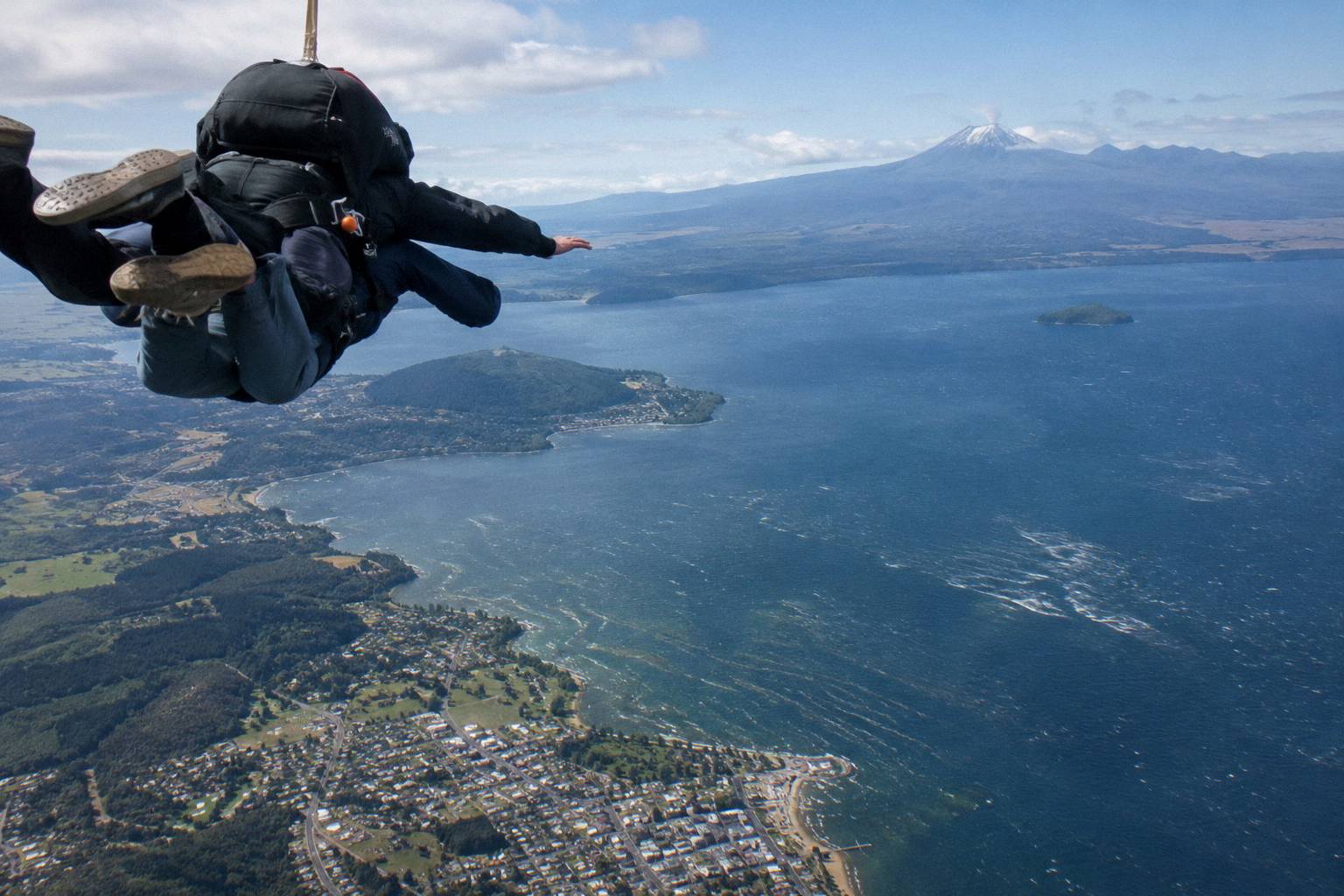
It can, if you are flexible about where in the central North Island you jump. In Taupo, listings reach 15,000 ft with strong review pools behind them: one holds 5.0 from 457 reviews at 12,000 ft, another 4.9 from 376 reviews at up to 15,000 ft. The scenery there is New Zealand's largest lake rather than a coast. Tauranga wins on convenience if you are staying in the Bay of Plenty.
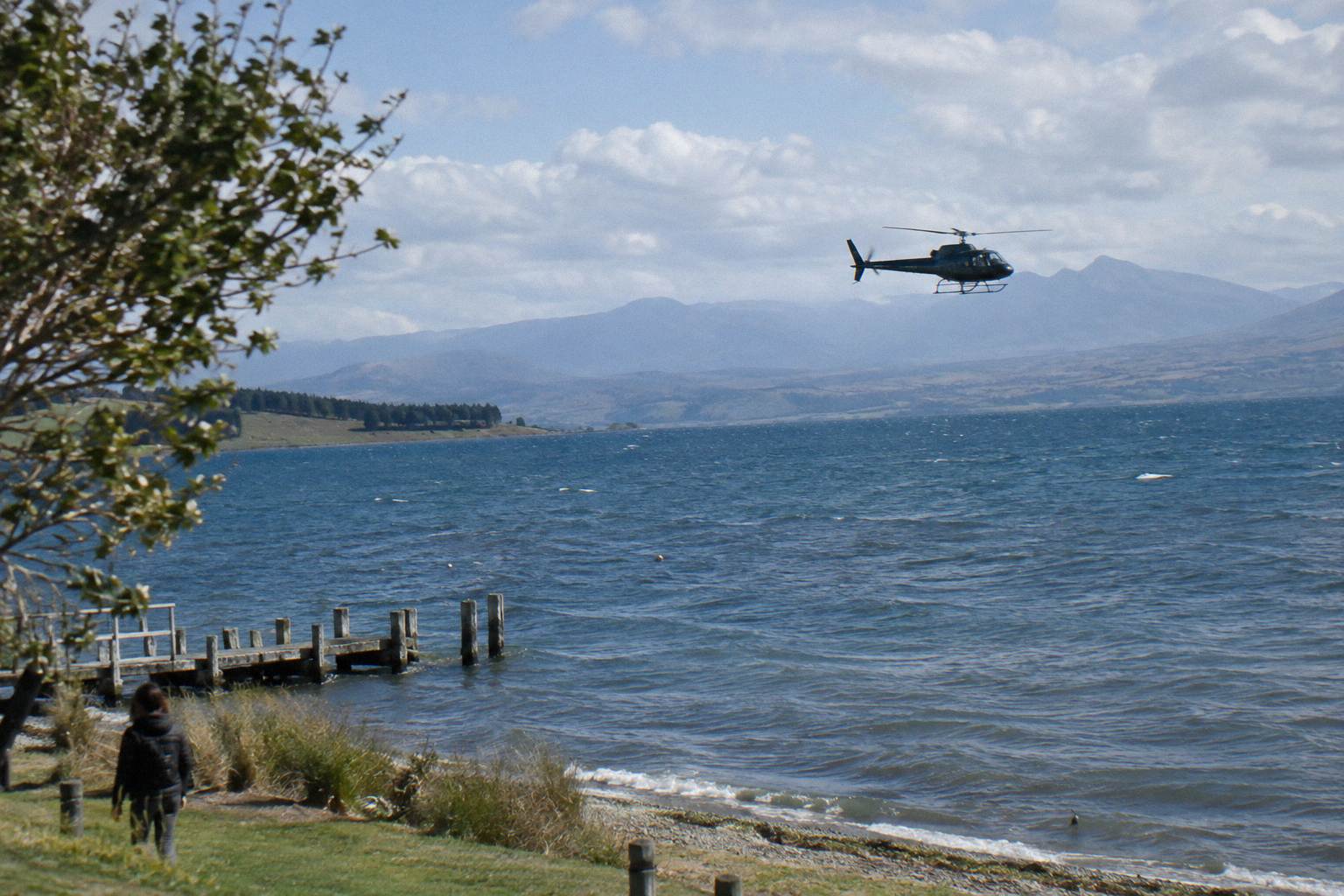
The height question is the same everywhere: more feet means more freefall seconds and a longer climb. What changes by drop zone is the backdrop and the logistics. The Taupo listings are separate operators with their own rules, and their age and weight limits differ from the Tauranga ones, so check each product's own terms rather than carrying rules across. The full comparison is in Tauranga versus Taupo skydiving.
| Comparison point | Tauranga Airport jumps | Taupo jumps |
|---|---|---|
| Heights on offer | 12,000 or 15,000 ft | 12,000 or up to 15,000 ft |
| Backdrop | Coast, harbour and Matakana Island | New Zealand's largest lake |
| Drive from Tauranga | At the airport, Mount Maunganui | About 143 km, roughly 2 hours |
| Sample review pool | 5.0 from 66 reviews (Mount Maunganui listing) | 5.0 from 457 reviews; 4.9 from 376 reviews |
| Rules to check | Age 7, book under 110 kg | Separate operator rules, check each listing |
For most readers, though, the question is local: one airport, one operator, two heights. Settling it is a five minute exercise once the numbers are on the table, the booking page for the Mount Maunganui skydive shows both height options on one calendar, or check availability for your date and price both in one pass.
What Trips People Up Before You Book
The common mistakes are picking a listing by its web address instead of its stated height, assuming photos are included, reading 115 kg somewhere and treating it as the limit, and underestimating the ground time. The two jump listings that state 15,000 ft are not a different product from the option listing at that height. Photos and video always cost extra, and the booking threshold is 110 kg, phone above it.
The weight confusion deserves a plain statement: the operator's booking form and FAQ say 110 kg, with a phone call and a small surcharge above that, while one operator page mentions a higher figure including clothes. The safe rule to plan on is 110 kg, and to call if anyone is near it. The age rule is 7, with a consent letter for under 18 and a pre visit for under 12, per the operator's FAQ.
The camera rule catches people too. Under New Zealand civil aviation rules no tandem passenger may carry their own phone or camera during the jump, so the packages are the only route to footage, and the outside camera flyer package must be prebooked. Footage arrives by a Dropbox link by the end of the day. The details are in photo and video packages for a Tauranga skydive.
Finally, do not book the height you think you should want. Book the date first, with free cancellation up to 24 hours before the start, then price both heights on the calendar and choose with the numbers in front of you. That order removes nearly all the second guessing. Plan 1.5 to 2 hours on site, not the freefall length, and the day stops feeling rushed.
Common Questions About Picking Your Jump Height
12,000 Or 15,000 Ft Tandem Skydive Over Mount Maunganui: Which Height To Pick?
Pick by freefall appetite and budget. The 15,000 ft jump gives about 1 minute of freefall after a 20 minute climb at NZ$549 direct; the 12,000 ft jump gives about 40 seconds after a 15 minute climb at NZ$449. Everything else, the aircraft, the drop zone, the landing, the canopy ride, is the same.
How Much More Freefall Does 15,000 Ft Give?
About twenty seconds on the operator's indicative figures: 40 seconds at 12,000 ft versus about 1 minute at 15,000 ft. The operator states these are an indication only and vary with conditions and body shape.
Which Listing Lets Me Choose The Height?
The From Tauranga: Skydive over Mount Maunganui listing offers 12,000 or 15,000 ft as a selectable option on its booking calendar. The other two jump listings state 15,000 ft.
Is The 15,000 Ft Jump Better Value?
That is a personal call, not a fact. You pay NZ$100 more for roughly twenty extra freefall seconds and five more climb minutes. Some prefer to spend that NZ$100 on a camera package instead, since photos and video are never included in the jump price.
Does The Higher Jump Take Longer On The Day?
Barely. The operator says the whole experience takes 1.5 to 2 hours at either height, and to arrive at least 30 minutes before your scheduled takeoff.
Do The Weight And Age Rules Differ By Height?
No. All the jump listings carry the same rules: minimum age 7, minimum weight 30 kg, book freely under 110 kg and phone the operator above that.