What Happens On A Bay Of Plenty Tandem Skydive, Step By Step
From the 30 minute early arrival to the landing back on the same grass at Tauranga Airport, here is what a tandem skydive in the Bay of Plenty actually involves, minute by minute, using the operator's published timings.
Short answer
Allow 1.5 to 2 hours on site. Arrive 30 minutes before your slot, get briefed and harnessed, climb for 15 to 20 minutes in a Cessna 182 carrying two tandems, freefall for about 40 seconds from 12,000 ft or up to a minute from 15,000 ft, then fly the canopy for 3 to 5 minutes and land where you took off.
Tandem jumps here all run through one place at Tauranga Airport, and if you want to see the 15,000 ft Bay of Plenty listing first, start at the Bay of Plenty 15,000 ft skydive tour page before settling on a slot. This page walks the day itself, start to finish, in the order it happens.
| Fact | Detail |
|---|---|
| Where you meet | Tauranga Airport, Mount Maunganui |
| When to arrive | At least 30 minutes before your scheduled takeoff |
| Total time on site | 1.5 to 2 hours |
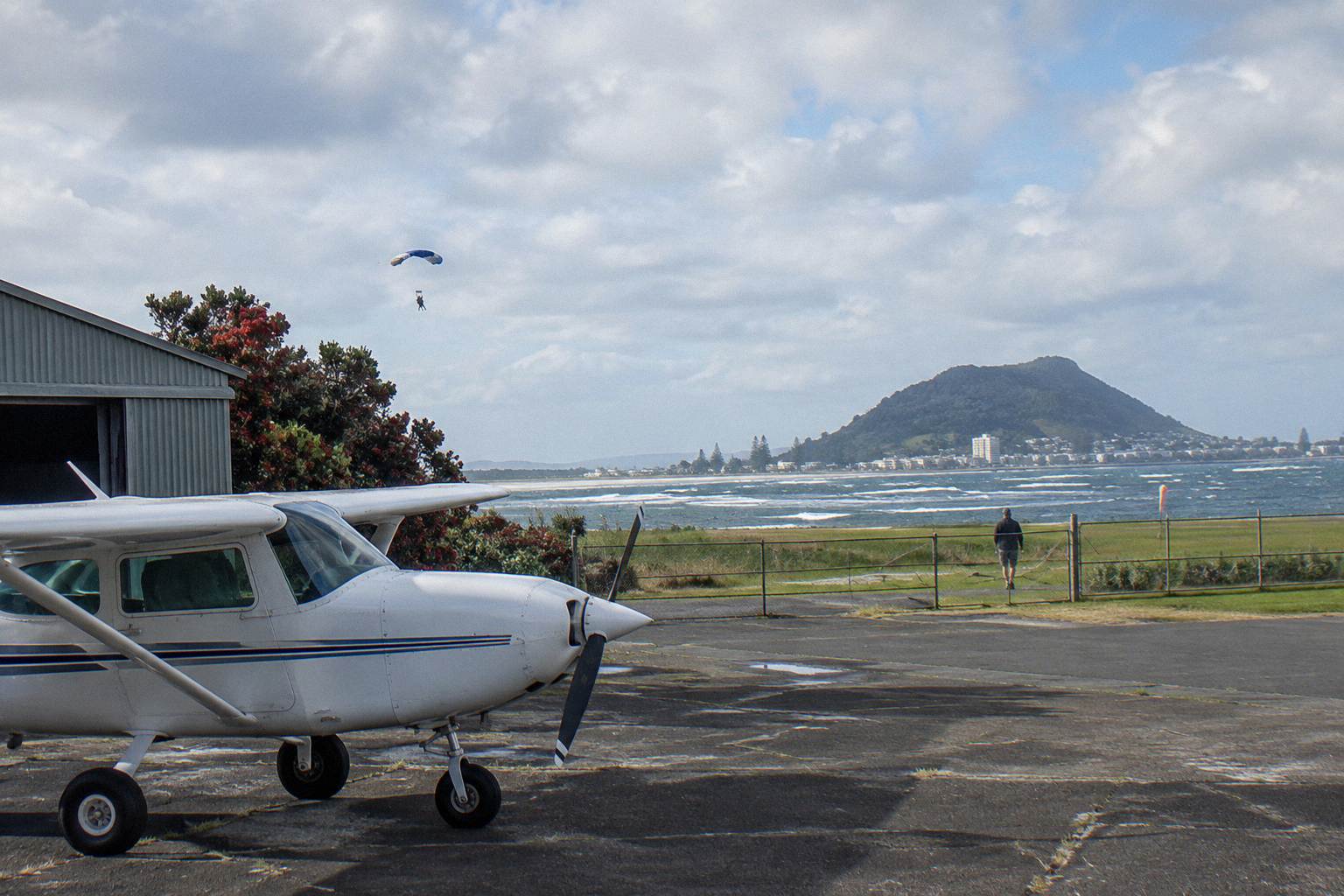
| Aircraft | Cessna 182, two tandems at a time |
| Climb to altitude | 15 minutes to 12,000 ft, 20 minutes to 15,000 ft |
| Freefall | About 40 seconds from 12,000 ft, up to about 1 minute from 15,000 ft |
| Canopy ride | 3 to 5 minutes |
| Landing | Same spot as takeoff, at the airport |
What Happens From Arrival To Landing?
From arrival to landing, a tandem skydive in the Bay of Plenty follows five clear phases: paperwork at the airfield, a safety briefing and harness fitting, a 15 to 20 minute scenic climb to altitude, a freefall measured in seconds, and a 3 to 5 minute canopy ride ending on the same grass you left. Operators ask you to allow 1.5 to 2 hours for the whole experience, though quiet days can run quicker.
The drop zone sits at Tauranga Airport in the Mount Maunganui suburb, about 3 km northeast of Tauranga's centre and a short drive from the coast, per the airport's Wikipedia page. Because the operation shares an active regional airfield with scheduled Air New Zealand services, the rhythm of the day is set by aviation procedure rather than by a theme park queue. You are a passenger on an aircraft operation, and every stage reflects that.
Laid out against the clock, the sourced timings look like this:
| Stage | Time | Source |
|---|---|---|
| Arrival before takeoff | At least 30 minutes | Operator what-to-know page |
| Briefing, declaration, harness fit | Within the arrival window | Operator what-to-know page |
| Climb to 12,000 ft | 15 minutes | Operator homepage |
| Climb to 15,000 ft | 20 minutes | Operator homepage |
| Freefall from 12,000 ft | About 40 seconds | Operator homepage |
| Freefall from 15,000 ft | Up to about 1 minute | Operator homepage |
| Canopy ride | 3 to 5 minutes | Operator homepage and what-to-know page |
| Whole experience on site | 1.5 to 2 hours | Operator FAQ |
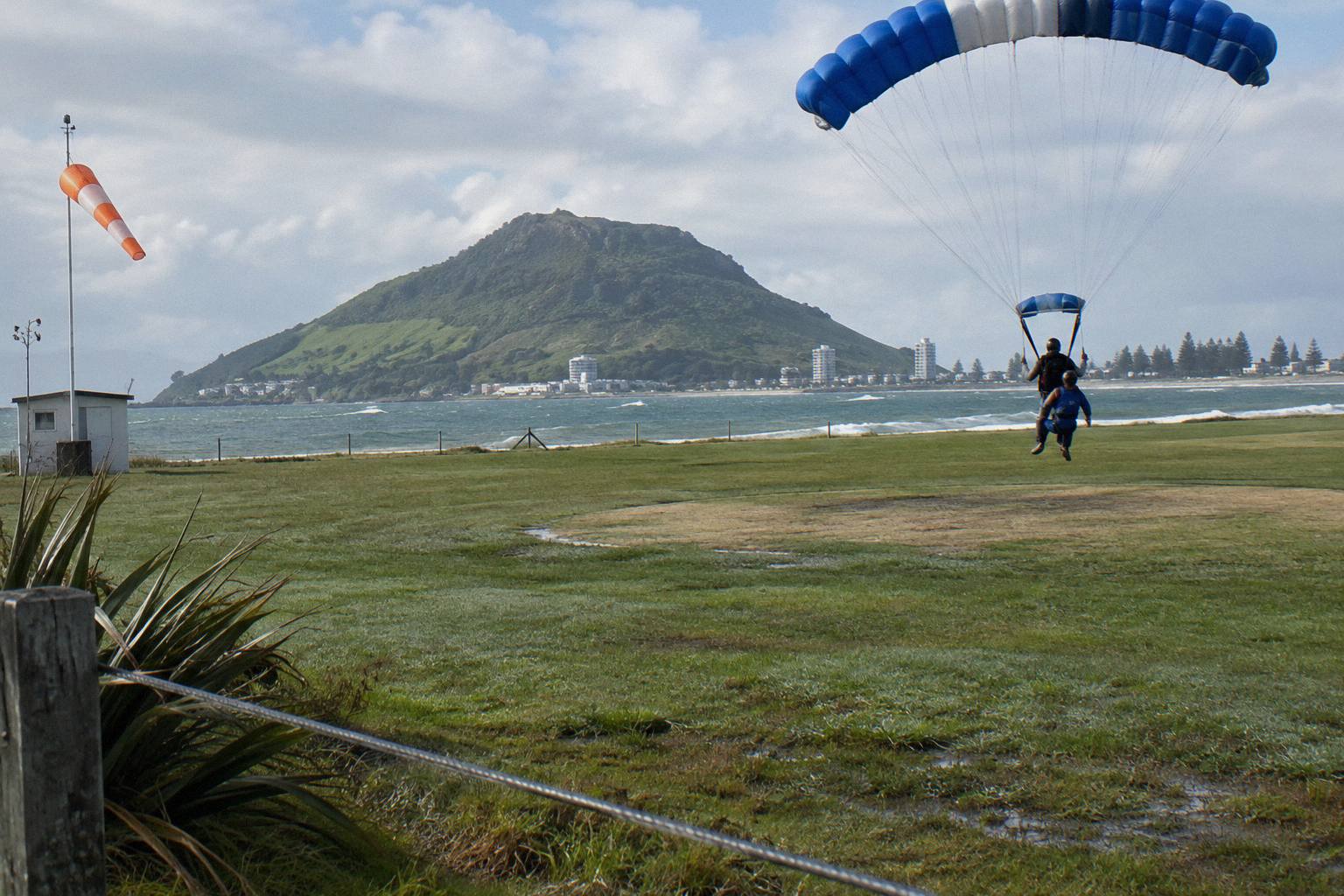
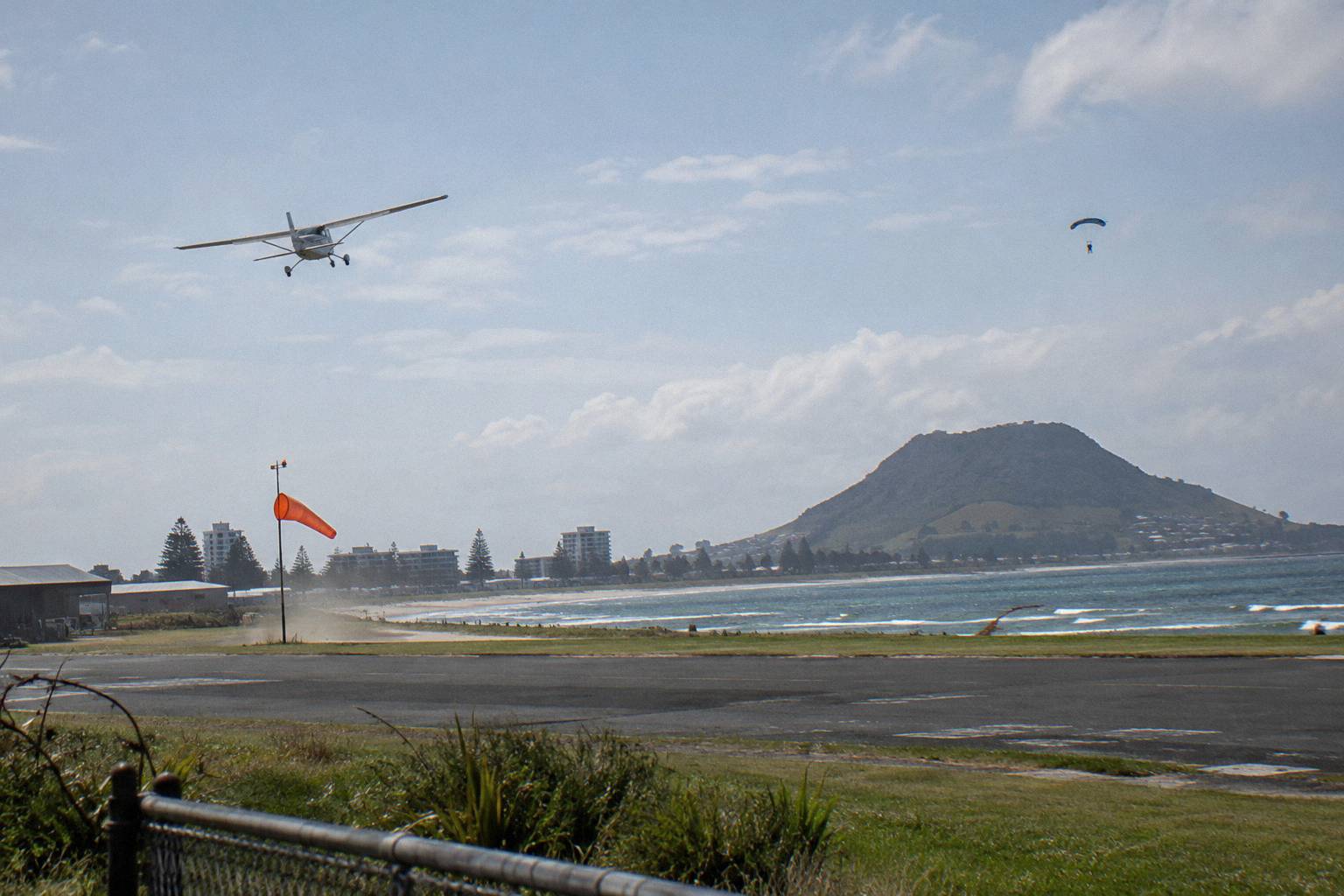
One point that surprises first timers: you take off and land in the same place. There is no beach landing and no transfer to a remote drop zone. The operator's what-to-know page notes a spectator viewing area and that the plane lands where it departs, so family and friends can watch the whole cycle from one spot.
The aircraft itself is a Cessna 182 that carries two tandems at a time, per the operator's about page. That small capacity is why the operator asks for a 1.5 to 2 hour window rather than a precise appointment: with two jumpers per load, a group of four means two climbing cycles, and airport traffic or weather can add minutes the operator cannot control.
If you are still choosing between the jump and a flight where nobody leaves the aircraft, the comparison in skydive versus scenic flight over the Mount covers the trade-offs in detail. For most first timers the decision is simpler than it looks from outside.
When Should You Arrive, And What Happens First?
Arrive at least 30 minutes before your scheduled takeoff. That buffer covers check-in, the medical declaration, harness fitting and the briefing, none of which can be compressed. If you are running late, call ahead, because the aircraft loads on a schedule and a missed slot can push your jump behind other loads. Once the paperwork is done, the rest of the morning moves quickly.
The 30 minute rule comes from the operator's what-to-know page, which also asks you to allow around 1.5 hours overall. Booking slots are chosen on the calendar; where no booking exists, the operator's booking form defaults to a 10am first jump and a 12pm afternoon start, with earlier or later times assigned by availability. Treat any confirmation time as the takeoff slot, not the arrival time.
Two pieces of admin matter before anything else. First, the declaration form: the operator asks you to list conditions such as severe motion sickness, asthma, allergies, heart conditions, epilepsy, or sinus congestion, and reserves the right to withdraw anyone whose safety is in question. Second, the camera decision, because photo and video packages are extras booked before you gear up, and the outside camera flyer package must be prebooked.
Jumpers under 18 need a consent letter from a parent or guardian, and the operator asks that children under 12 visit the dropzone first to be fitted and to meet staff. Those rules are the operator's own, and they are worth settling before the day rather than at the check-in desk.
Make a final restroom stop before getting geared up, as the harness stays on through the climb. The advice is standard at tandem operations and saves an awkward last minute dash.
What Happens During The Briefing And Harness Fit?
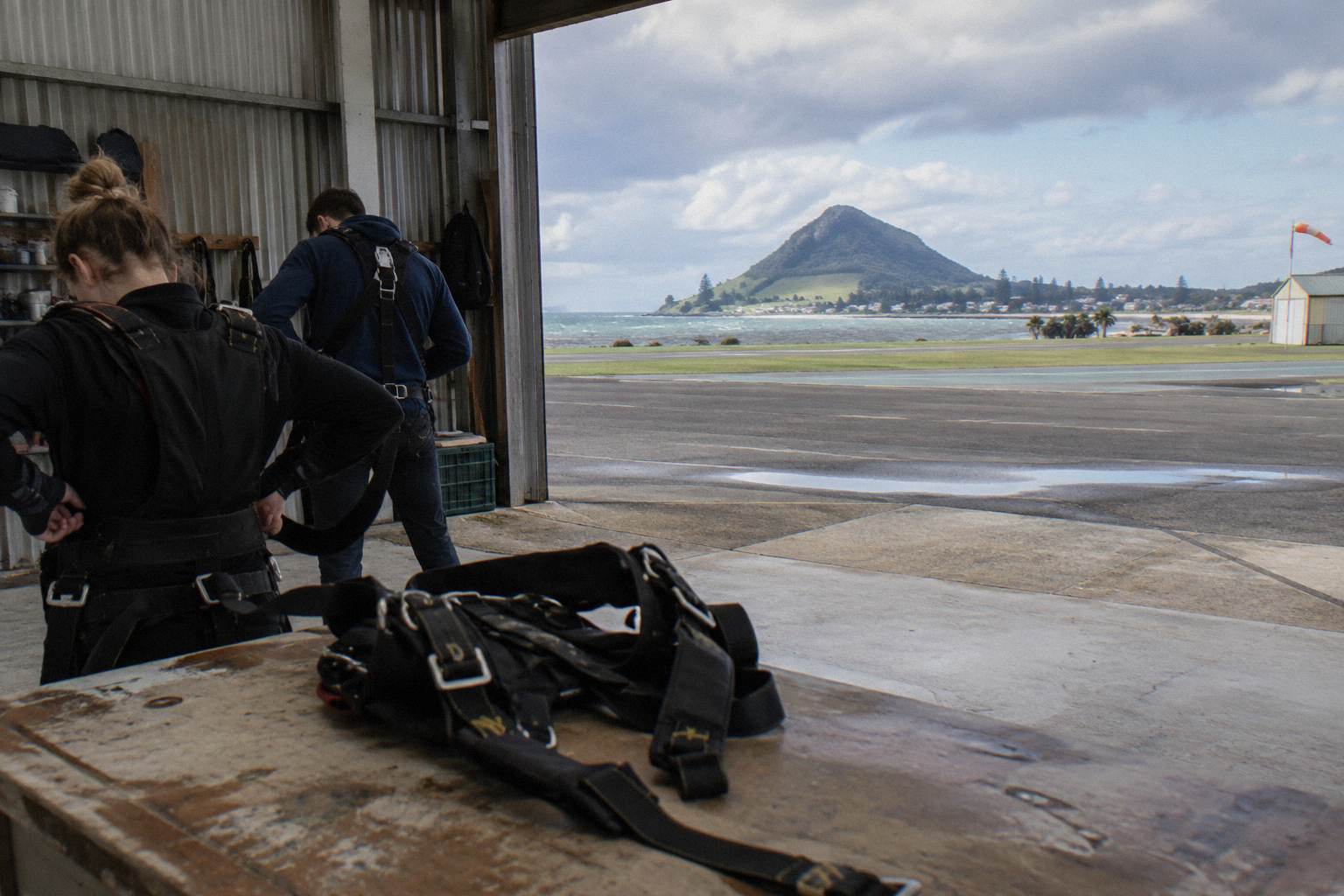
The briefing is short and practical: how to position your body on exit, the freefall posture, and lifting your legs for landing, each demonstrated on the ground before you board. The harness is fitted to you and adjusted by staff, over your own clothes, with a jumpsuit optional in warm months. Closed shoes are mandatory for everyone, no exceptions on the airfield.
The operator supplies the jumpsuit when wanted, a hat under New Zealand civil aviation requirements, and goggles; the goggles fit over glasses, and the FAQ suggests contacts if you have them. What you wear underneath is covered in more depth in what to wear for a Mount Maunganui skydive, but the short version is comfortable, weather appropriate clothing and closed shoes that cannot fall off during freefall.
Weight rules are checked at this stage too. Book freely under 110 kg, and phone the operator above that, where a small surcharge paid to the tandem instructor applies; the minimum weight is 30 kg and the real test is fitting safely into the harness. The full picture is in the Tauranga skydive weight limit guide.
One rule that catches people: no personal cameras. Under New Zealand civil aviation rules stated on the operator's booking form, no tandem passenger may carry a phone or camera during the jump, so if you want footage it has to be one of the instructor mounted packages, which are extras on every Tauranga jump listing. Camera options and prices, from NZ$149 for photos to NZ$349 for an outside camera flyer, are laid out on the operator's camera packages page, and amounts are New Zealand dollars.
The From Tauranga skydive over Mount Maunganui listing covers both jump heights as options, carries a 5.0 rating from 66 reviews, and runs with free cancellation up to 24 hours before the start, so the commitment at booking is small while the slot is held.
What Is The Climb To Altitude Like?
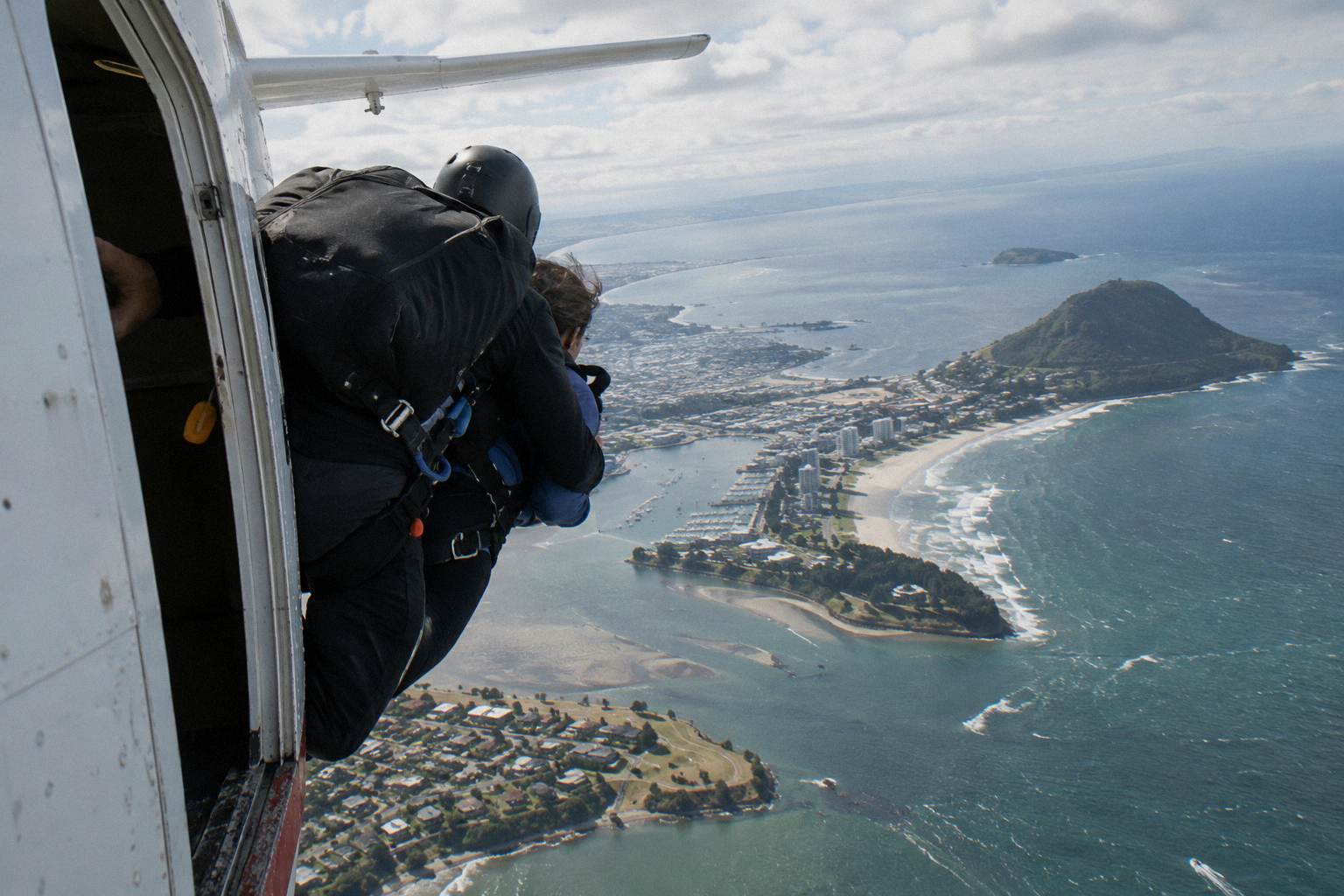
The climb is 15 minutes to 12,000 ft or 20 minutes to 15,000 ft in a Cessna 182, and the operator describes it as a scenic flight in its own right. Two tandems ride per load, seated in harness beside their instructors. The aircraft tracks out over the harbour and coast toward the exit point, and the noise and confinement are the parts first timers underestimate most.
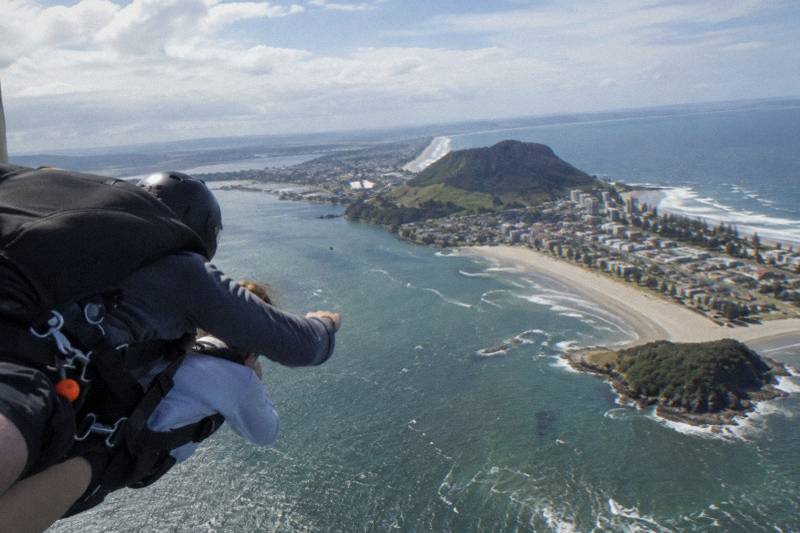
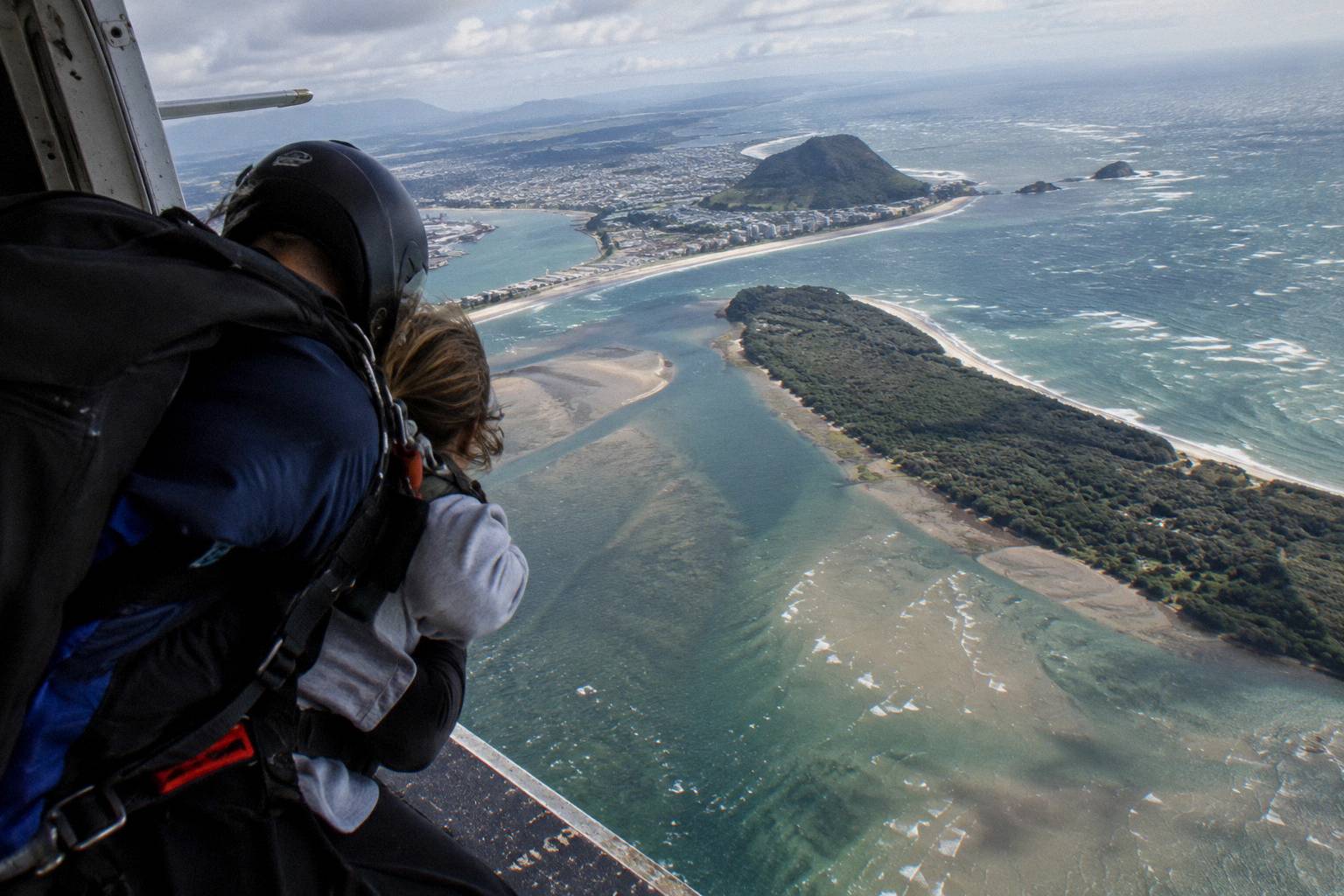
The operator's own framing is that the flight is part of the product: the homepage calls it a 15 or 20 minute scenic flight, and the about page notes the Cessna reaches altitude in 15 to 20 minutes. What you see from the windows depends on cloud and route on the day, and no view is promised. The geography below is genuinely distinctive when it is clear: Mauao, the 232 metre headland at the harbour entrance, the 20 km sandbar of Matakana Island, and the coast curving away toward the Bay of Plenty.
Because the plane carries two tandems, the exit order matters. The first pair out goes on the call of their instructor; the second waits a beat. If you are second, the door open and the first pair gone is the loudest thirty seconds of the day. None of this requires anything from you except sitting still, breathing, and listening to your instructor.
The altitude you booked determines the climb, and nothing about the day lets you upgrade in the air. Choose the height when you book, on the operator's calendar or through a listing such as the 15,000ft Tandem Skydive, and check dates for the 15,000 ft Tauranga jump if the longer freefall is the one you want.
How Long Is The Freefall At Each Height?
Freefall is about 40 seconds from 12,000 ft and up to about 1 minute from 15,000 ft. The operator states those times on its homepage, and its waiver is equally clear that they are an indication only, varying with weather conditions and body shape. A tandem pair reaches speeds of over 200 km/h in freefall, the what-to-know page says. The only decision you make here is the altitude, made at booking.
That is the whole difference between the two products, and it is worth seeing side by side:
| 12,000 ft | 15,000 ft | |
|---|---|---|
| Climb time | 15 minutes | 20 minutes |
| Freefall | About 40 seconds | Up to about 1 minute |
| Canopy ride | 3 to 5 minutes | 3 to 5 minutes |
| Direct operator price | NZ$449 | NZ$549 |
| Time on site | 1.5 to 2 hours | 1.5 to 2 hours |
Prices above are the operator's own direct booking prices for a jump, in New Zealand dollars, and vary by date and group; the booking page shows the price for your date. The physics behind the times is straightforward: a tandem pair falls at roughly a steady speed once the drogue is out, so the extra 3,000 ft of the taller jump converts almost entirely into extra seconds of freefall, not extra speed. Terminal velocity for a stable tandem pair is around 120 mph, which matches the operator's over 200 km/h figure.
If the seconds themselves are what you are weighing, the deeper math is in 12,000 versus 15,000 ft from Tauranga, and the freefall question is unpacked in the blog piece on how long you freefall on a 15,000 ft skydive.
Freefall ends when the instructor deploys. Under Civil Aviation Rule Part 105, a tandem master must activate the main parachute at a height of not less than 5,000 feet, per the Civil Aviation Authority Part 105 rule. The tandem system also carries a reserve parachute and an automatic activation device that deploys the reserve if needed, which is standard tandem equipment worldwide.
What Happens Under The Canopy And At Landing?
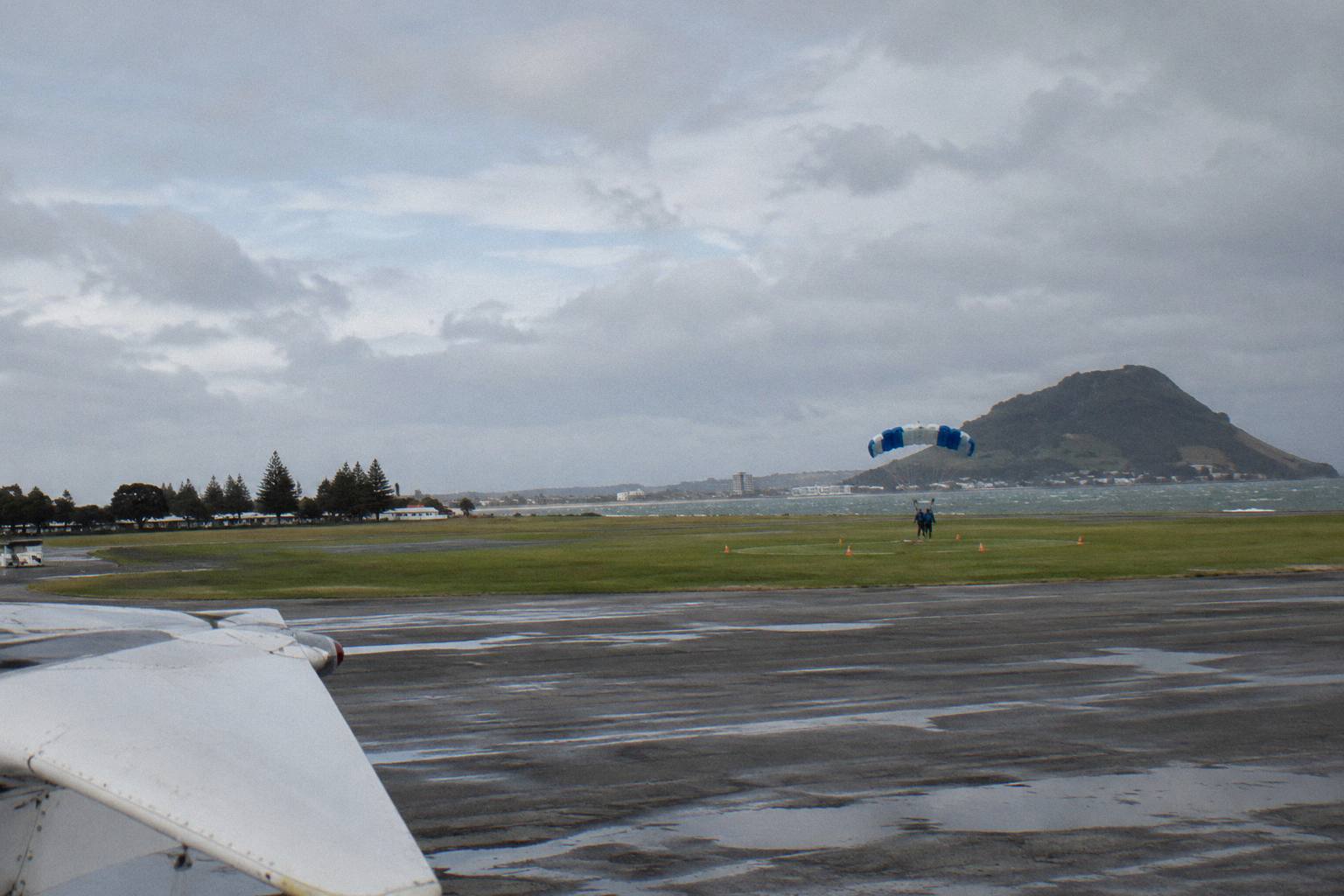
After deployment the pair slows to a controlled descent lasting 3 to 5 minutes, with the instructor steering. Landing is back on the airport grass where you took off, and you are told to lift your legs so the instructor's feet touch first. The canopy phase is quiet, slow and steering heavy, nothing like freefall, and it is the part most jumpers remember as the view time.
The operator's pages give slightly different canopy spans, from 3 to 4 minutes on the homepage to 4 to 5 minutes on what-to-know, so 3 to 5 minutes is the true range to plan around. During that time the instructor can hand you the steering toggles if conditions allow, though that is their call on the day, not a promised feature.
Landing technique matters more than landing force. Tandem landings are typically gentle because the instructor controls the parachute, and most tandem injuries anywhere are minor ankle or leg issues from poor landing posture, which is exactly why the ground briefing drills the legs up position. If you took a camera package, the files arrive by email with a download link at the latest by the end of the day, per the operator's what-to-know page.
Weather still owns the schedule. The operator calls you on the day if conditions look poor and works out a reschedule that fits your plans; what a weather cancellation means for your money is covered properly in Tauranga skydive weather and cancellations.
What About Non Jumpers, Kids And Cruise Timings?
Spectators watch from a viewing area and see the plane land where it took off, so nobody needs to travel elsewhere to meet you. Jumpers must be at least 7 years old, with a consent letter under 18 and a dropzone visit first for under 12s. Cruise passengers are close: the operator says the airport is a 5 to 10 minute drive from the cruise dock, and the 1.5 to 2 hour experience fits most port days.
The cruise question matters because the port call is short. A morning slot with a 30 minute early arrival leaves margin, but the operator notes jumps can run late due to weather or airport traffic, so leave the buffer on the back end of your plan too. The full port day walkthrough is in skydiving on a Tauranga cruise stop.
For families, the age rules are the operator's own: 7 is the floor, the child must also meet the 30 kg minimum and fit the harness, and the operator wants the decision to be the child's. If the jump is off the table for part of the family, sightseeing flights run from the same airport area; the 30 minute Mount Maunganui scenic flight is the short option, and the trade-offs are compared in helicopter flight versus skydive at the Mount.
Non jumping partners sometimes ask whether they can ride along in the Cessna. The aircraft takes two tandems at a time and no ride along arrangement appears in the operator's published facts, so ask the operator before promising anyone a seat.
What Trips People Up Before You Book?
The recurring mistakes are arriving with no 30 minute buffer, wearing shoes that cannot stay on, expecting to fly a personal camera, booking the wrong altitude in a hurry, and assuming the jump price includes photos. Each one is avoidable in under a minute of planning, and each one has cost a real jumper a slot, a fee or their footage. None of them is the operator being difficult, they are fixed rules of an aviation operation.
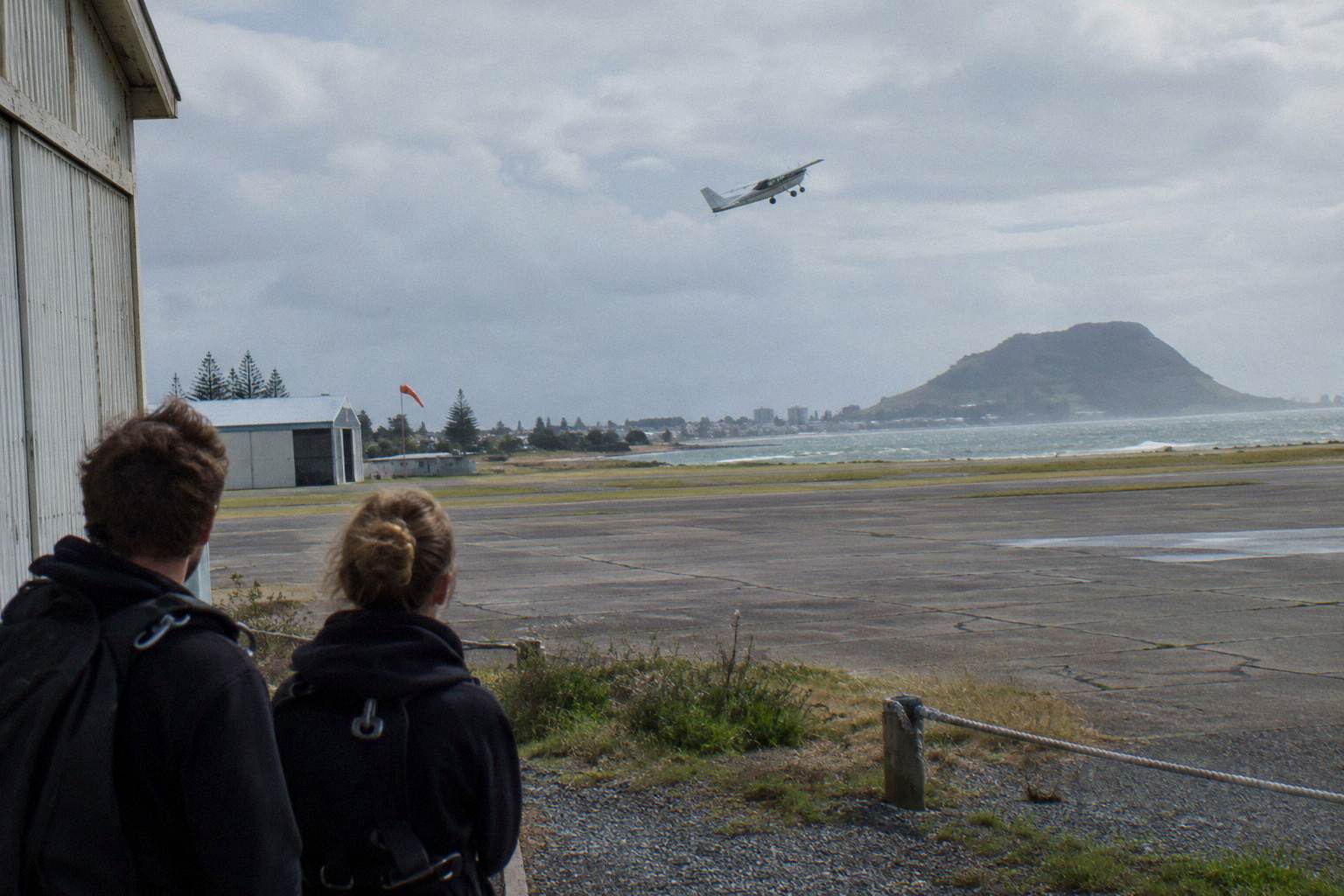
The shoe rule is absolute: closed footwear for everyone, for safety reasons, on the operator's FAQ. Jandals and slip ons fail at the gate. The camera rule is regulatory rather than a house preference, so there is no negotiating a phone into the plane; decide on a package when you book, and remember the outside camera flyer option needs prebooking while the wrist mounted options can usually be added on the day.
Height choice deserves a deliberate minute rather than a default. The two products differ by five minutes of climbing and roughly twenty seconds of freefall, at NZ$100 apart direct with the operator. If twenty seconds matters to you, take the taller jump; if it does not, the shorter one is the same aircraft, the same day and the same canopy ride. And if you are weighing the whole purchase, is skydiving worth the money works through the value question straight.
Weather patience is the last one. The operator calls on the day when conditions look poor and works something out, so keep your phone on and your afternoon loose. Bookings carry free cancellation up to 24 hours before the start on the booking page, and jumping on a day you can bend is the cheapest insurance available.
For the featured jump, Check availability before locking the rest of your day around it. At Tauranga Skydive the day is short by design, but the slot you want is not guaranteed to be there tomorrow.
Common Questions About The Jump Day
What Happens On A Bay Of Plenty Tandem Skydive, Step By Step?
You arrive at least 30 minutes early at Tauranga Airport, complete a declaration and harness fitting, board a Cessna 182 carrying two tandems, climb for 15 or 20 minutes to 12,000 or 15,000 ft, freefall for about 40 seconds or up to a minute, fly the canopy for 3 to 5 minutes, and land on the same airfield where you took off. Allow 1.5 to 2 hours total.
How Early Do I Need To Arrive For My Skydive?
At least 30 minutes before your scheduled takeoff, per the operator's what-to-know page. That window covers check-in, the declaration form, harness fitting and the briefing. If no booking exists on a slot, the operator's booking form defaults to a 10am first morning jump and a 12pm afternoon start, with earlier or later times set by availability.
Can I Bring My Own Camera On The Jump?
No. Under New Zealand civil aviation rules as stated on the operator's booking form, no tandem passenger may carry a phone or camera during the jump. Footage comes from instructor mounted packages, priced from NZ$149 for photos to NZ$349 for an outside camera flyer, and the outside package must be prebooked.
Do You Land On The Beach After The Jump?
No. Takeoff and landing both happen at Tauranga Airport, and the operator's what-to-know page confirms the plane lands in the same place it departs. Mount Maunganui beach is a view from the air, not a landing zone.
How Many People Jump Per Flight?
The Cessna 182 takes two tandems at a time, per the operator's about page. A pair of friends usually flies together; a group of four is split across two loads, which is part of why the operator asks for a 1.5 to 2 hour window.
What If The Weather Is Bad On The Day?
The operator calls you on the day if the weather looks poor and works something out to fit your schedule. Bookings carry free cancellation up to 24 hours before the start on the booking page; direct operator bookings follow the operator's own terms, with 50 percent charged for a cancellation the day before and full price on the day.