How Much Does A Tandem Skydive At Tauranga Airport Cost, And What Is Extra?
A tandem jump from Tauranga Airport is priced at two altitudes by the operator itself, NZ$449 and NZ$549, with camera packages layered on top as paid extras. Here is the full bill, line by line.
Short answer
The operator's own direct prices are NZ$449 for a 12,000 ft tandem jump and NZ$549 for 15,000 ft, amounts in New Zealand dollars. Photos and video are never included: packages run NZ$149 to NZ$349. Passengers over 110 kg pay a small unpublished surcharge. Every listing on the booking page carries free cancellation up to 24 hours before the start.
A tandem skydive from Tauranga Airport is sold at two altitudes, and the operator's own booking shows NZ$449 for 12,000 ft and NZ$549 for 15,000 ft. Those are the jump prices and nothing more. Everything that records the jump, from wrist-camera photos to a second skydiver filming you from outside, is a separate paid extra, and there is one other charge that can appear for passengers over 110 kg. If you are comparing what a jump actually costs end to end, this page sets out every line of the bill in one place.
| Fact | Detail |
|---|---|
| 12,000 ft jump, operator direct | NZ$449 |
| 15,000 ft jump, operator direct | NZ$549 |
| Camera packages | NZ$149 to NZ$349, paid extras |
| Photos or video included | No, never included in the jump |
| Minimum age | 7, operator rule |
| Weight for booking freely | Under 110 kg; phone above it, small surcharge |
| Time on site | Allow 1.5 to 2 hours, arrive 30 minutes early |
| Cancellation, booking page | Free up to 24 hours before the start |
What The Jump Itself Costs At Each Altitude
The operator's own booking shows two jump prices: NZ$449 for the 12,000 ft tandem and NZ$549 for the 15,000 ft tandem, in New Zealand dollars. That hundred-dollar step is the only price difference between the two altitudes on the operator's site. The higher jump buys a longer scenic flight and roughly a minute of freefall instead of about 40 seconds. Nothing else on the bill changes between them.
Those two figures come from the operator's own homepage, where the jump and the altitude are sold together as a single product. The 12,000 ft jump pairs its NZ$449 price with a 15 minute scenic flight and 40 seconds of freefall; the 15,000 ft jump pairs its NZ$549 price with a 20 minute flight and about a minute of freefall. The operator describes both flights as scenic, because the climb out of Tauranga Airport carries you over the harbour and the coast before anyone leaves the aircraft, and the parachute ride back down is counted separately, at a few minutes under canopy. How the two altitudes compare in full is covered in the guide to 12,000 versus 15,000 ft from Tauranga.
Prices move with date and group size, and the booking page shows the exact figure for the day you select rather than a fixed year-round rate. The operator's own figures above are its direct prices; treat them as the anchor, and check the price for your specific date before you commit. If you are weighing the jump against a flight where nobody leaves the aircraft, the cost logic is quite different, and the piece on a skydive versus a scenic flight from Tauranga works through that choice.
| Altitude | Operator direct price | Scenic flight to altitude | Freefall |
|---|---|---|---|
| 12,000 ft | NZ$449 | 15 minutes | 40 seconds |
| 15,000 ft | NZ$549 | 20 minutes | About 1 minute |
The freefall times are an indication only, as the operator's waiver states plainly: they vary from customer to customer with conditions and body shape. The price, by contrast, is fixed at the point of booking for the altitude you choose.
Why The 15,000 Ft Jump Costs More, And When It Is Worth It
The extra NZ$100 buys time: about five more minutes in the aircraft climbing, and roughly twenty more seconds of freefall, which is close to a doubling of the part most jumpers remember. Whether that is worth it depends on how you weigh a single minute of falling against a bigger bill. The view from the door is the same harbour and coastline at both altitudes, so the money buys duration, not different scenery.
The physics is straightforward. Freefall time scales with altitude, and the extra three thousand feet translates to roughly twenty additional seconds before the parachute opens. For a first jump, forty seconds is already a substantial experience; for a jumper who wants the longest possible ride, the minute-long freefall of the 15,000 ft option is the operator's ceiling at this drop zone. The trade-off question is really about what a hundred dollars is worth to you against roughly a third more freefall, plus the slower, higher climb.
One more cost angle matters: the higher listing, "15,000ft Tandem Skydive in Tauranga - Bay of Plenty", carries a maximum of two travellers per booking and the same 110 kg weight ceiling. If you are a group of three or more, that cap shapes how you split the booking and therefore how the bill stacks up. See the price for your own date before deciding, because a jump that looks expensive in the abstract often looks different next to a real calendar.
Among the three, "From Tauranga: Skydive over Mount Maunganui" is the listing that lets you choose 12,000 or 15,000 ft at the point of booking, which makes it the natural one for a buyer still deciding between the two price points. It carries a 5.0 rating from 66 reviews, and every option within it runs to the same airport, the same aircraft and the same operator team.
Camera Packages: The Extras That Double The Decision
Photos and video are never included in the jump price at this drop zone; every package is a paid extra, and the ladder runs NZ$149, NZ$159, NZ$189, NZ$229 and NZ$349. The first three are instructor-worn cameras, the NZ$229 option is a 360 camera with a hand-edited film, and NZ$349 puts a second skydiver beside you with a helmet camera. That last one must be prebooked.
The detail is on the operator's camera packages page, which prices each option separately. Photos alone are NZ$149, captured on a camera attached to the instructor's wrist. Video alone is NZ$159. Photos and video together are NZ$189, which is the value point of the ladder if you want both. The 360 package at NZ$229 films the whole experience on a 360 camera and hand-edits the best angles into a film of three to four minutes. The outside camera flyer at NZ$349 is a different product altogether: another skydiver jumps with you and films from outside, and the operator asks for this one to be prebooked.
| Package | Price | What films you |
|---|---|---|
| Photos only | NZ$149 | Instructor's wrist camera |
| Video only | NZ$159 | Instructor's wrist camera |
| Photos and video | NZ$189 | Instructor's wrist camera |
| 360 video | NZ$229 | Instructor's 360 camera, hand-edited film |
| Outside camera flyer | NZ$349 | A second skydiver with a helmet camera |
Two practical notes sit beside the prices. Passengers cannot carry their own phone or camera on the jump, which the operator states as a civil aviation rule, so the packages are the only route to footage. And if you take one, the files arrive by email through a link at the latest by the end of the day. Choosing between the packages is its own decision, and the guide to photo and video packages for a Tauranga jump compares the angles each one produces.
The way to think about the total is per line, not as one number: pick an altitude, then pick a camera tier or none. A 12,000 ft jump with photos and video together is a 449-plus-189 decision; a 15,000 ft jump with the 360 package is 549 plus 229. Whether either stack suits you depends on how much the record of the jump matters against the jump itself.
What Your Money Includes, And What It Does Not
The jump price covers the tandem jump itself: the gear, the instructor, the scenic flight to altitude, the freefall, the parachute ride and the landing back at Tauranga Airport. It does not cover photos or video in any form, it does not cover transport, and it does not cover a surcharge that applies above 110 kg. Everything you wear of the operator's, the jumpsuit, hat and goggles, is part of the jump rather than a rental fee.
That last point is worth spelling out because many drop zones itemise differently. Here the supplied equipment list is included: a jumpsuit, optional in warm weather, a hat, which the operator notes is required under civil aviation regulations, and goggles, including a type that fits over glasses. In the colder months gloves are supplied too. None of that appears as an extra charge. What you bring yourself is ordinary comfortable clothing and closed shoes, which are mandatory, and the guide on what to wear for a Mount Maunganui skydive covers that in detail.
| Included in the jump price | Paid extra or separate |
|---|---|
| Tandem instructor and all jump equipment | Photos, any package from NZ$149 |
| Scenic flight to 12,000 or 15,000 ft | Video, any package from NZ$159 |
| Freefall and parachute ride | Outside camera flyer, NZ$349, prebooked |
| Jumpsuit, hat, goggles, winter gloves | Surcharge above 110 kg, amount on request |
| Landing back at the airport | Voucher resale is possible but vouchers are non refundable |
The surcharge is the one line without a printed figure. The operator's position is simple: under 110 kg, book freely without asking; over 110 kg, phone first, because a small surcharge applies and goes to the tandem instructor for the added physical load. No dollar amount is published for it, so ask when you call. The fuller weight rules, including the 30 kg minimum and the harness-fit question, are in the guide to the Tauranga skydive weight limit.
The "15,000ft Tandem Skydive in Tauranga - Bay of Plenty" listing follows the same structure: jump on one line, camera extras on another. Its free cancellation runs to 24 hours before the start, its weight ceiling is the same 110 kg, and its photos and video are paid extras like everywhere else at this airport. Check availability for your date once you know which altitude you want, since the price shown is the one for that day.
Paying: Direct With The Operator Or Through The Booking Page
Book direct and the mechanics are unusual: your card holds the slot but is not charged for the jump, and you pay on the day unless a third party has already paid. Cancellation is on you to track: free before the day before, 50 percent the day before, full price on the day. Book through the booking page instead and every listing carries free cancellation up to 24 hours before the start.
The direct route is described on the operator's what-to-know page: the online booking takes a card to reserve the spot, the jump itself is paid on the day, and the cancellation schedule tightens as the date approaches. That 50 percent and full-price schedule is the direct booking's sharpest edge, and it is the reason last-minute planners often prefer the booking page route, where the 24 hour free cancellation window is stated on every jump listing. Neither route changes the jump: same airport, same aircraft, same instructors.
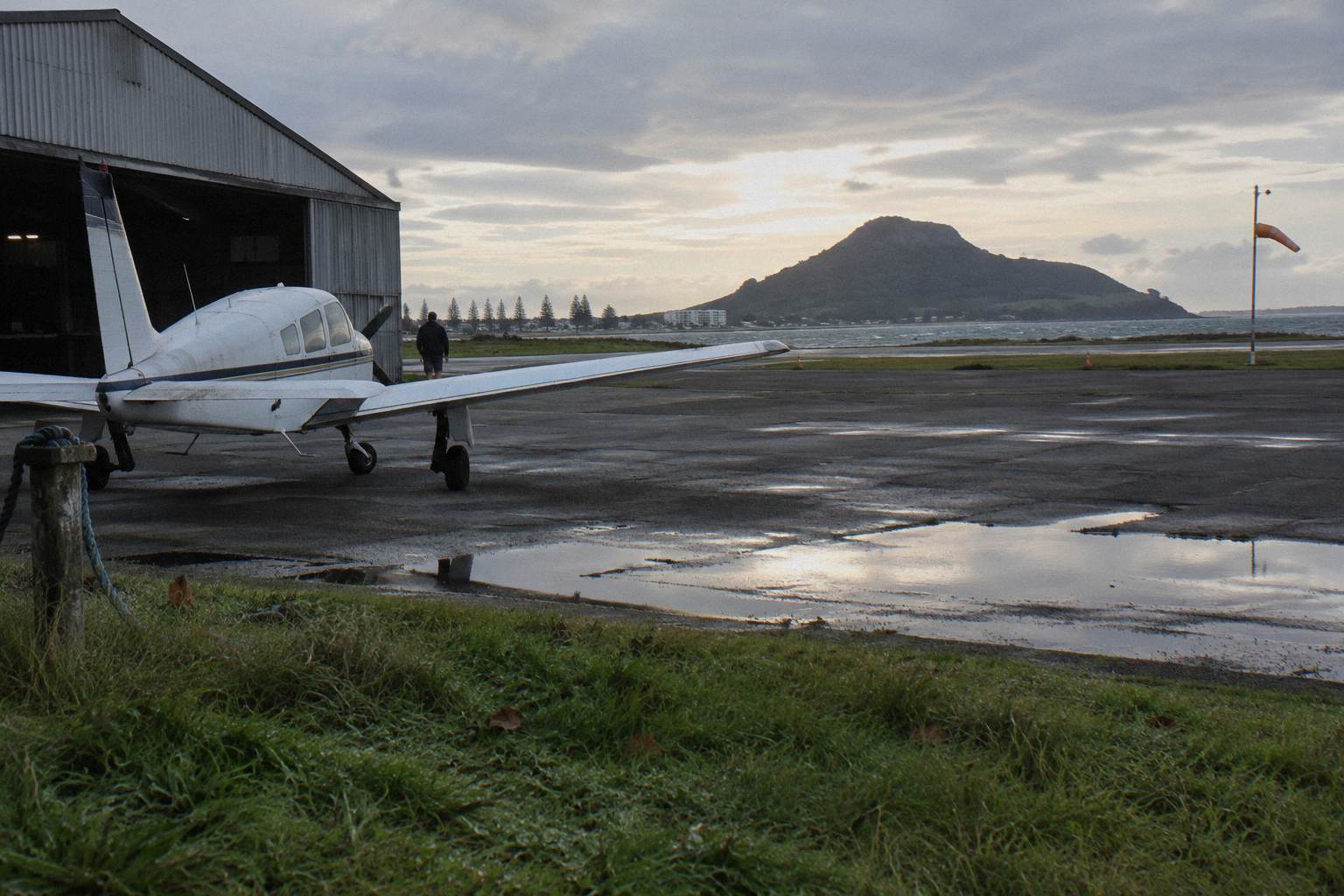
One weather note belongs here because it affects money. The operator calls you on the day if conditions look poor and works something out to fit your schedule; the operator's own pages do not state a refund wording for weather calls, so ask when you book if that matters to you. Practical scheduling around wind and cloud, month by month, is covered in the guide to skydive weather and cancellations in Tauranga.
For a buyer at the commercial stage, the "Bay Of Plenty 15,000ft Skydive" listing is the cleanest single-altitude option on the booking page: 15,000 ft, about 1.5 hours all up, the same meeting point at Tauranga Airport in Mount Maunganui, minimum age 7, and free cancellation up to 24 hours before the start. See dates and the price for your day on its booking page before comparing it against the operator's direct NZ$549.
Vouchers, Groups And How The Bill Splits
Gift vouchers are valid for a year from issue, are non refundable but can be transferred or resold, and a NZ$500 cash-value certificate can be put against a jump or a camera package. For groups, the practical constraint is capacity: the aircraft takes two tandems at a time, so a group of four becomes two loads and a longer visit rather than four simultaneous jumps. Budget time as well as money.
The voucher terms are the operator's own: a year of validity, printable by email after payment, transferable to someone else. The NZ$500 certificate is deliberately flexible, since it redeems against either a jump or a camera package, which covers the gap between the NZ$449 jump and a jump-plus-photos total without needing to predict the recipient's choice. Group planning has its own page of detail in the guide on skydiving in Tauranga for couples and groups, and the voucher angles, including the shop's own jump voucher at a different figure from the homepage price, are picked apart in the piece on gift vouchers and deals.
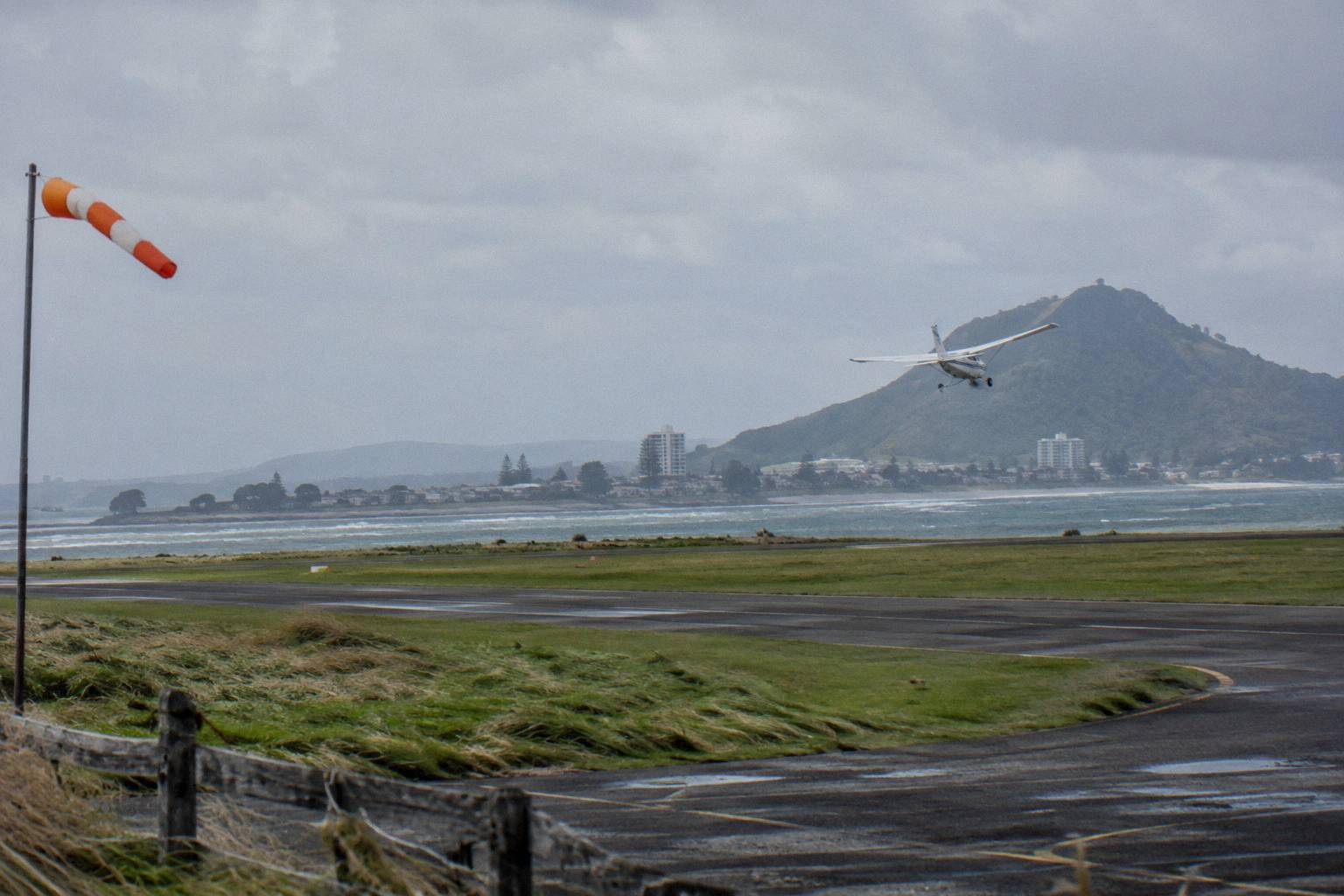
How The Tauranga Price Compares With A Taupo Jump Day
A Taupo tandem is a different product with different numbers attached: the Lake Taupo 12,000 ft listing is rated 5.0 from 457 reviews and includes hotel pickup, while the up-to-15,000 ft listing, 4.9 from 376 reviews, adds free pickup and drop-off from your Taupo accommodation. Neither Taupo price is printable here, but the decision is rarely the ticket alone: it is the two-hour drive versus jumping twenty minutes from town.
The Lake Taupo listing is the strongest-reviewed jump within reach of a Tauranga stay, and its 5.0 from 457 reviews reflects a large pool of jumpers. It is a 12,000 ft tandem with about two hours on site, run by Taupo Tandem Skydiving from Anzac Memorial Drive in Wharewaka. The up-to-15,000 ft listing from the same operator lets you choose the altitude at booking, mirroring the choice the Mount Maunganui listing gives you at Tauranga. The comparison of the two drop zones, altitude for altitude, is worked through in the guide on Tauranga versus Taupo skydives.
Cost-wise the plain framing is this: a Taupo day adds fuel or a bus fare and most of a day, and its listings fold in pickup where the Tauranga jumps do not offer transport. A Tauranga jump keeps the whole visit inside 1.5 to 2 hours, including the 30 minute early arrival, which is why cruise passengers and short-stay visitors lean toward the airport drop zone, a pattern the guide on skydiving on a Tauranga cruise stop explores. The Tauranga Skydive site's own booking pages show the live price for whichever date you are weighing.
What Trips People Up Before You Book
The recurring mistakes are all on the extras and the edges: assuming photos are included when they never are, budgeting only the jump price and forgetting the camera ladder entirely, booking direct without clocking the 50 percent day-before cancellation charge, arriving in shoes that are not closed in, and assuming the 110 kg threshold is a hard no when it is actually a phone call and a small surcharge. Each one is avoidable with a minute of planning.
Start with the camera decision before you pay for anything. Jumpers who decide on the day often find the outside camera flyer is off the table, because that package must be prebooked, and it is the one that produces the most cinematic result. The wrist-camera tiers, NZ$149 to NZ$189, are simpler, but even those deserve a moment of thought at booking rather than a rushed yes in the hangar. The operator's FAQ page is where the practical rules live: closed shoes are mandatory for everyone, arrive at least 30 minutes before takeoff, and the whole visit runs 1.5 to 2 hours.
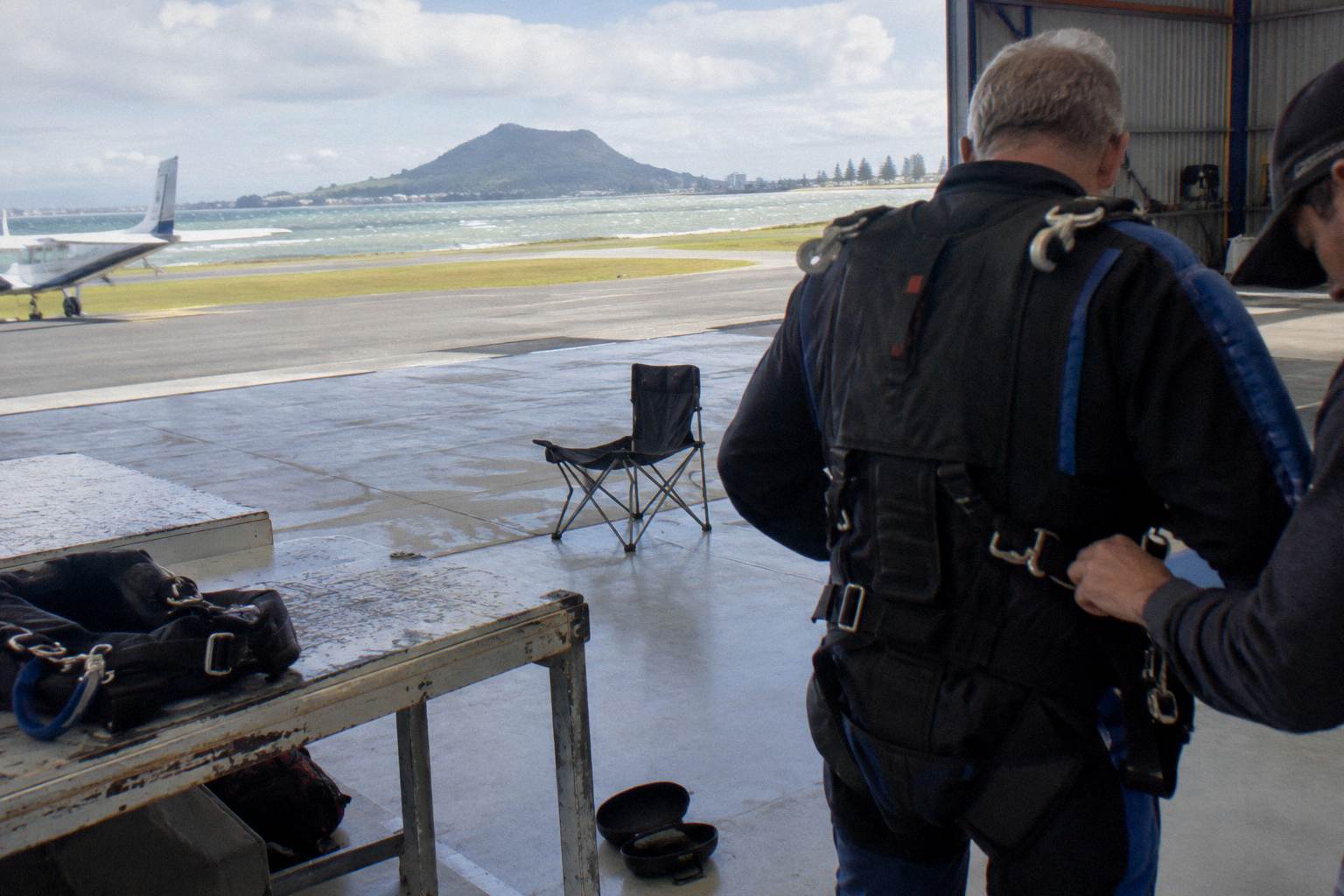
Then check the cancellation route against your plans. Direct bookings tighten to 50 percent the day before and full price on the day; the booking page route holds free cancellation up to 24 hours before the start. If your itinerary has any flex in it, or you are jumping during a season where weather calls are more likely, that difference is worth real money. Under 18s need a consent letter from a parent or guardian, children under 12 are asked to visit the dropzone first to be fitted in a harness, and the minimum weight is 30 kg, so a family booking has a few more moving parts than a solo one. None of it is onerous; all of it is cheaper to know now than to discover at the airport.
Common Questions About Booking A Jump
How Much Does A Tandem Skydive At Tauranga Airport Cost?
The operator's own direct prices are NZ$449 for a 12,000 ft tandem and NZ$549 for a 15,000 ft tandem, in New Zealand dollars. Prices vary by date and group, and the booking page shows the price for the date you select.
Are Photos And Video Included In The Jump Price?
No. Photos and video are paid extras at this drop zone, never included in the jump. Packages run from NZ$149 for photos to NZ$349 for an outside camera flyer, and the outside package must be prebooked.
Is There A Weight Surcharge?
Yes, above 110 kg. Under 110 kg you book freely; over it, the operator asks you to phone first, and a small surcharge applies that goes to the tandem instructor. No dollar figure is published, so ask when you call.
When Do I Actually Pay For The Jump?
Booked direct with the operator, your card holds the slot and you pay on the day, unless a third party has already paid. Booked through the booking page, the listing's own payment terms apply at checkout.
What Is The Cancellation Policy?
Every jump listing on the booking page carries free cancellation up to 24 hours before the start for a full refund. Direct bookings are different if you cancel yourself: free before the day before, 50 percent the day before, full price on the day.
How Long Does The Whole Visit Take?
Allow 1.5 to 2 hours from arrival to landing, and arrive at least 30 minutes before your scheduled takeoff. The climb to altitude takes 15 minutes for 12,000 ft and about 20 minutes for 15,000 ft, and the parachute ride lasts a few minutes.