Skydiving In New Zealand: Where A Tauranga Jump Fits
New Zealand runs tandem skydiving under its own aviation rules, offers jumps from 9,000 to 18,000 ft depending on the drop zone, and splits its skydive scenery between coastal, lake and alpine country. A jump from Tauranga Airport puts you over the Bay of Plenty coast at 12,000 or 15,000 ft, minutes from Mount Maunganui and the cruise terminal.
Short answer
A New Zealand tandem skydive is regulated by the Civil Aviation Authority under Part 115 and Part 105, with typical altitudes from 9,000 to 15,000 ft and freefall from about 25 seconds to a minute. Tauranga Airport offers 12,000 and 15,000 ft jumps over the Bay of Plenty coast, with takeoff and landing at the same airfield.
Planning a New Zealand trip usually means choosing between regions, and skydiving is no different: the country has coastal, lake and alpine drop zones, each with its own altitudes and logistics. This page places the Bay of Plenty option in that bigger picture, covering the tandem skydives that leave from Tauranga Airport at 12,000 and 15,000 ft, and everything below builds on those listings.
| Fact | Detail |
|---|---|
| Typical New Zealand tandem altitudes | 9,000 ft to 15,000 ft, with 18,000 ft as the highest commercial option |
| Freefall at 12,000 ft | About 40 seconds |
| Freefall at 15,000 ft | About one minute |
| Tauranga jump heights | 12,000 ft and 15,000 ft |
| Takeoff and landing point | Tauranga Airport, Mount Maunganui |
| Aircraft | Cessna 182 carrying two tandems at a time |
| Minimum age at Tauranga | 7, with parent or guardian consent under 18 |
| Weight rules at Tauranga | Book freely under 110 kg, phone the operator above that |
How High Do New Zealand Skydives Go, And Where Does 15,000 Ft Sit?
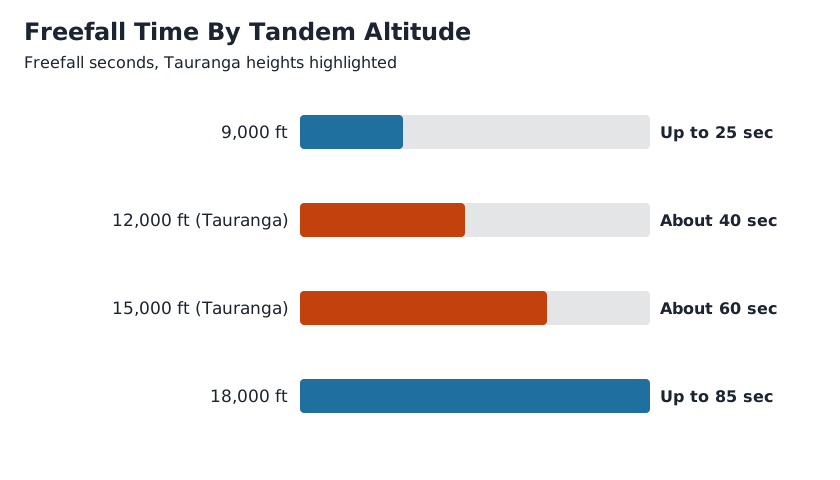
New Zealand commercial tandem altitudes run from about 9,000 ft up to 18,000 ft, with 9,000, 12,000 and 15,000 ft the common steps. Freefall scales with height: roughly 25 seconds at 9,000 ft, about 40 seconds at 12,000 ft, and around a minute at 15,000 ft. Tauranga Airport operates at 12,000 and 15,000 ft, the mainstream of the national range rather than either extreme.
The numbers behind those seconds come from physics as much as marketing. A tandem pair in a stable freefall position reaches a terminal velocity of roughly 200 km/h, as the operator's what-to-know page puts it, and the pair then falls at a steady speed until the instructor opens the parachute. What changes with altitude is simply how long that steady fall lasts. The extra 3,000 ft between a 12,000 and a 15,000 ft jump buys roughly twenty more seconds of freefall, plus a longer scenic climb in the aircraft: fifteen minutes to 12,000 ft, twenty minutes to 15,000 ft, per the operator's own figures.
Two caveats matter when comparing heights across the country. First, freefall times are an indication only. The waiver states plainly that they vary from customer to customer with weather conditions and body shape. Second, the highest option in New Zealand, 18,000 ft with up to 85 seconds of freefall, exists at some drop zones but not all, and altitude is only one part of the decision. The view below the exit door matters at least as much as the seconds counted on the way down.
A longer discussion of how those two heights compare in practice, including what the twenty extra seconds feel like in decision terms, is in the 12,000 vs 15,000 ft comparison. For trip planning, the short version is that 15,000 ft is the ceiling at this airport, and it matches the top standard height offered anywhere in the country.
| Altitude | Typical freefall | Climb time | Where it is offered |
|---|---|---|---|
| 9,000 ft | Up to 25 seconds | Shorter climb | Some New Zealand drop zones |
| 12,000 ft | Up to 40 seconds | 15 minutes at Tauranga | Tauranga, Taupo and others |
| 15,000 ft | About 60 seconds | 20 minutes at Tauranga | Tauranga, Taupo and others |
| 18,000 ft | Up to 85 seconds | Longer climb | The highest commercial option in New Zealand |
Which Part Of The Country Should You Jump Over?
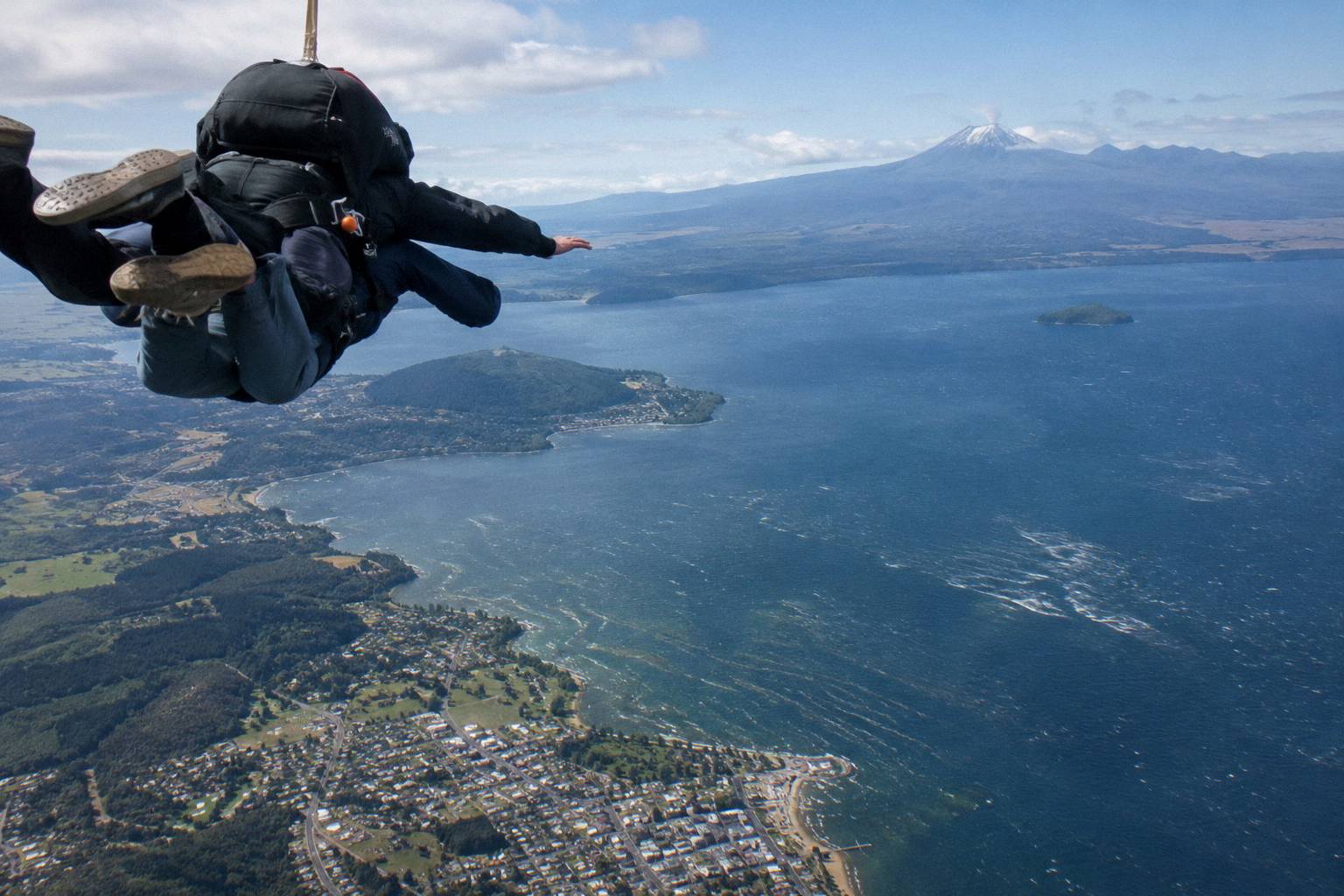
New Zealand splits its skydive scenery three ways. The Bay of Plenty gives you a coastal jump over a harbour, a 232 metre volcano and a 20 kilometre sandbar island, minutes from a major port town. Taupo gives you the country's largest lake, a 616 square kilometre caldera. Alpine drop zones give you snow and peaks. The right choice depends on where your itinerary already takes you and whether you want sea, lake or mountains in the frame.
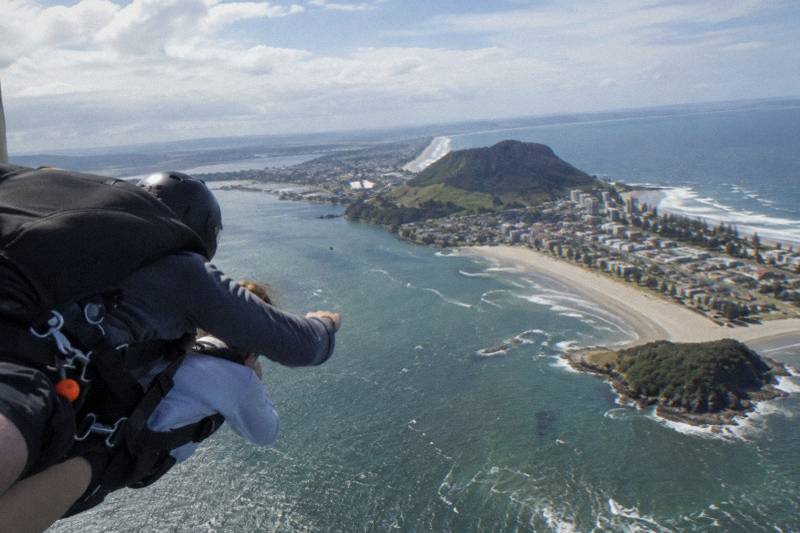
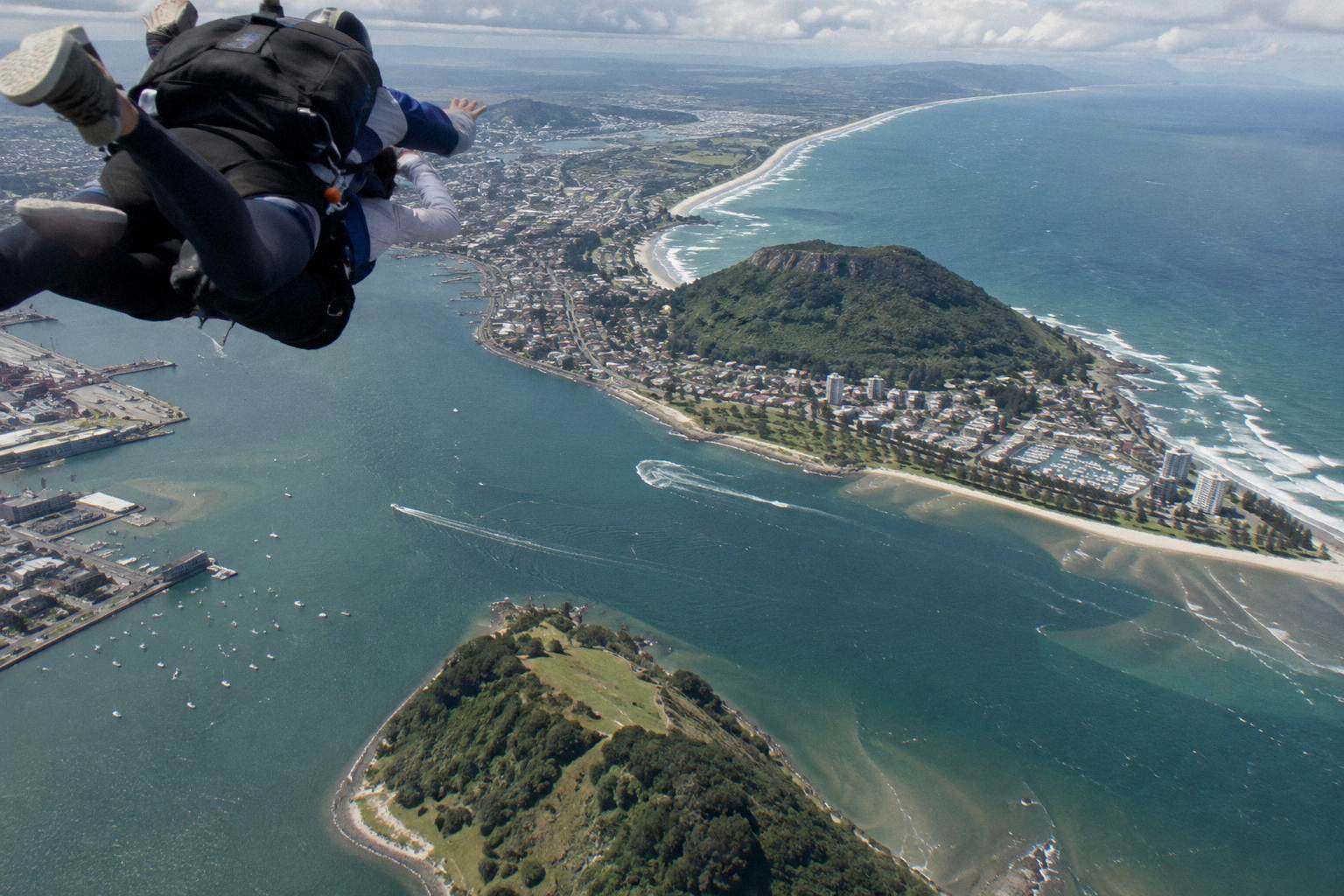
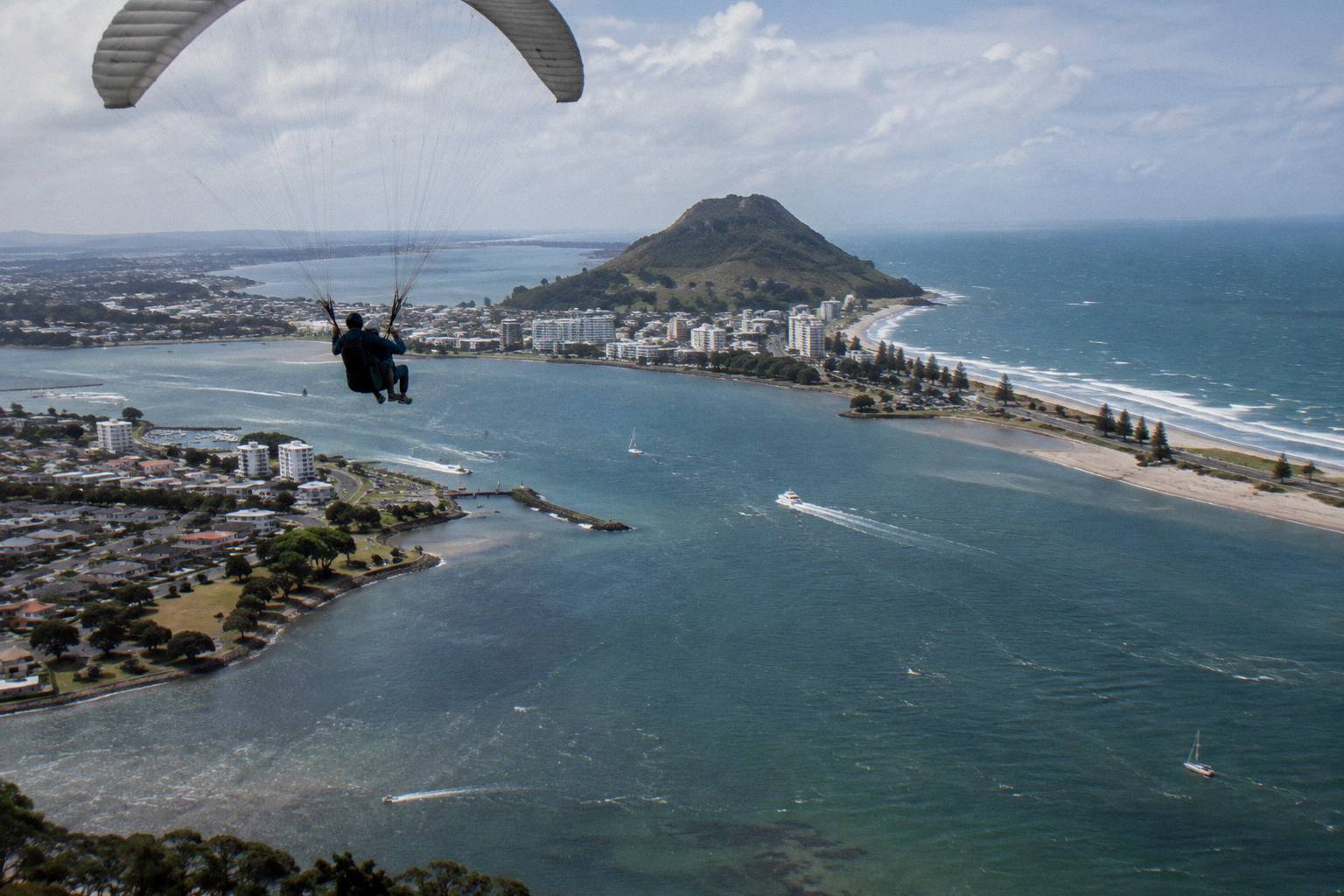
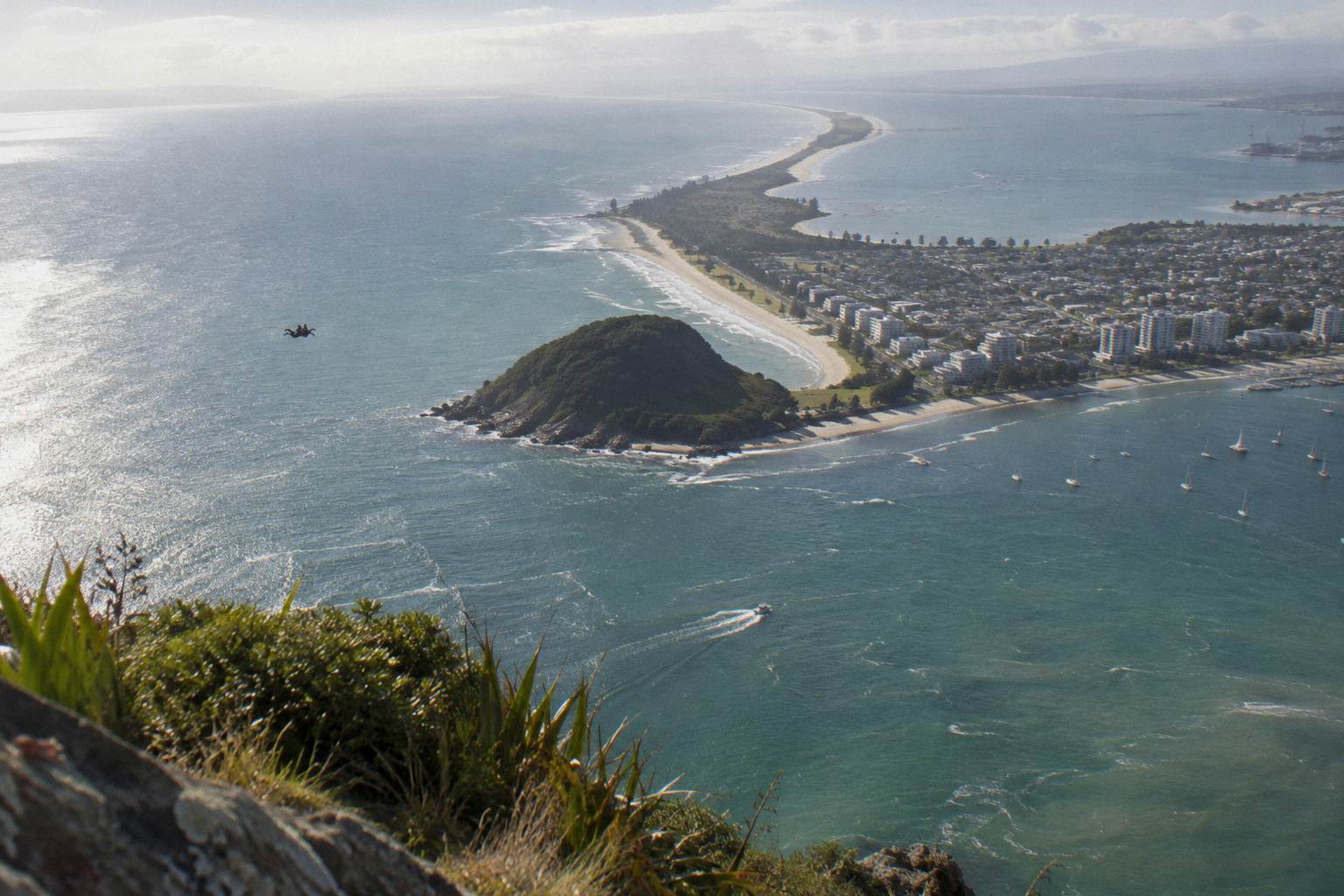
The Tauranga option earns its place on geography alone. The aircraft leaves Tauranga Airport in the Mount Maunganui suburb, about 3 km northeast of the Tauranga central business district, and the view from the door takes in Mauao, the 232 metre mountain at the entrance to Tauranga Harbour, according to the Wikipedia page for the Mount Maunganui mountain. Beyond it lies Matakana Island, the 20 kilometre sandbar that shelters the harbour, described on the Matakana Island Wikipedia page, and inland the Kaimai Range, whose highest point, Mount Te Aroha, reaches 953 metres. Few drop zones anywhere in the country pack a volcano, a harbour, a barrier island and a mountain range into one climb.
The Skydive Over Mount Maunganui option at the tour page for the Mount Maunganui skydive carries a 5.0 rating from 66 reviews and offers both jump heights, with freefall of 30 to 45 seconds at 12,000 ft or about a minute at 15,000 ft. The 15,000ft Tandem Skydive in Tauranga and the Bay Of Plenty 15,000ft Skydive cover the same height from the same airfield, so the choice between listings comes down to date, price on the day and the options each booking page shows.
Taupo is the other main candidate for a Bay of Plenty based traveller. The drive from Taupo to Tauranga runs about 143 km and takes roughly two hours, so a Taupo jump is a full day trip from the Bay of Plenty rather than a spontaneous morning. In exchange you jump over Lake Taupo, New Zealand's largest lake by surface area at 616 square kilometres, per the Lake Taupo Wikipedia page. The Lake Taupo 12,000-Foot Tandem Skydiving option holds a 5.0 rating from 457 reviews and includes transport; the Up To 15,000ft Over Lake Taupo option, rated 4.9 from 376 reviews, adds free pickup and drop-off from Taupo accommodation and offers both heights. The trade is real: hours of driving against a caldera lake instead of a coastline.
The true framing for a New Zealand itinerary is sequencing. If your route already includes Taupo or the central North Island, the lake jump fits without detour. If you are based in Tauranga, arriving by cruise ship or staying in the Bay of Plenty, the airport at Mount Maunganui puts a 15,000 ft jump twenty minutes from the town centre, and the country's altitude ceiling is not something you sacrifice by staying put. A deeper side by side is in the Tauranga versus Taupo skydive comparison.
What Does New Zealand Law Require Of A Tandem Operator?
The rule structure is straightforward. Part 115, the adventure aviation rule, states that a person must not perform an adventure aviation operation except under the authority of an adventure aviation operator certificate, and tandem parachute operations sit inside that definition, per the Civil Aviation Authority Part 115 rule. Part 105 is the operating rule for parachuting: equipment, maintenance and procedures. One of its specific requirements, rule 105.11(c), is that a tandem master must activate the main parachute at a height of not less than 5,000 feet, per the Civil Aviation Authority Part 105 rule.
Why skydiving sits with the aviation regulator and not with WorkSafe is a question of legal definition. New Zealand's adventure activities regulations cover land based and water based commercial activities, and aviation is neither. WorkSafe's own guidance lists adventure aviation, including skydiving, among activities nearly certain not to be subject to those regulations, with the Civil Aviation Authority as the regulator. The industry also maintains its own standards body, the New Zealand Parachute Industry Association, which runs education, training and certification programmes aligned with the civil aviation rules, per the NZPIA website.
For you as a jumper, the practical effects are visible rather than buried in law. The tandem master's parachute opens no lower than 5,000 feet, giving a canopy ride of a few minutes over the Bay of Plenty. The operator supplies a hat because civil aviation rules require one, and goggles because they work in an open door airflow. And the ban on passengers carrying their own camera in freefall is not a house rule: it rests on New Zealand civil aviation law. What the rules do not do is rank operators; a certificate authorises an operation, and your own checks still matter, a thread picked up in the is skydiving in Tauranga safe guide.
What Does A Bay Of Plenty Jump Actually Involve On The Day?
Allow 1.5 to 2 hours on site, arriving at least 30 minutes before your slot. The minimum age is 7 with a parent or guardian consent letter under 18, the minimum weight is 30 kg, and you book freely under 110 kg, phoning the operator above that. Wear comfortable clothes and closed shoes, the latter mandatory, and expect photos and video to be paid extras rather than part of the jump. Takeoff and landing are both at Tauranga Airport.
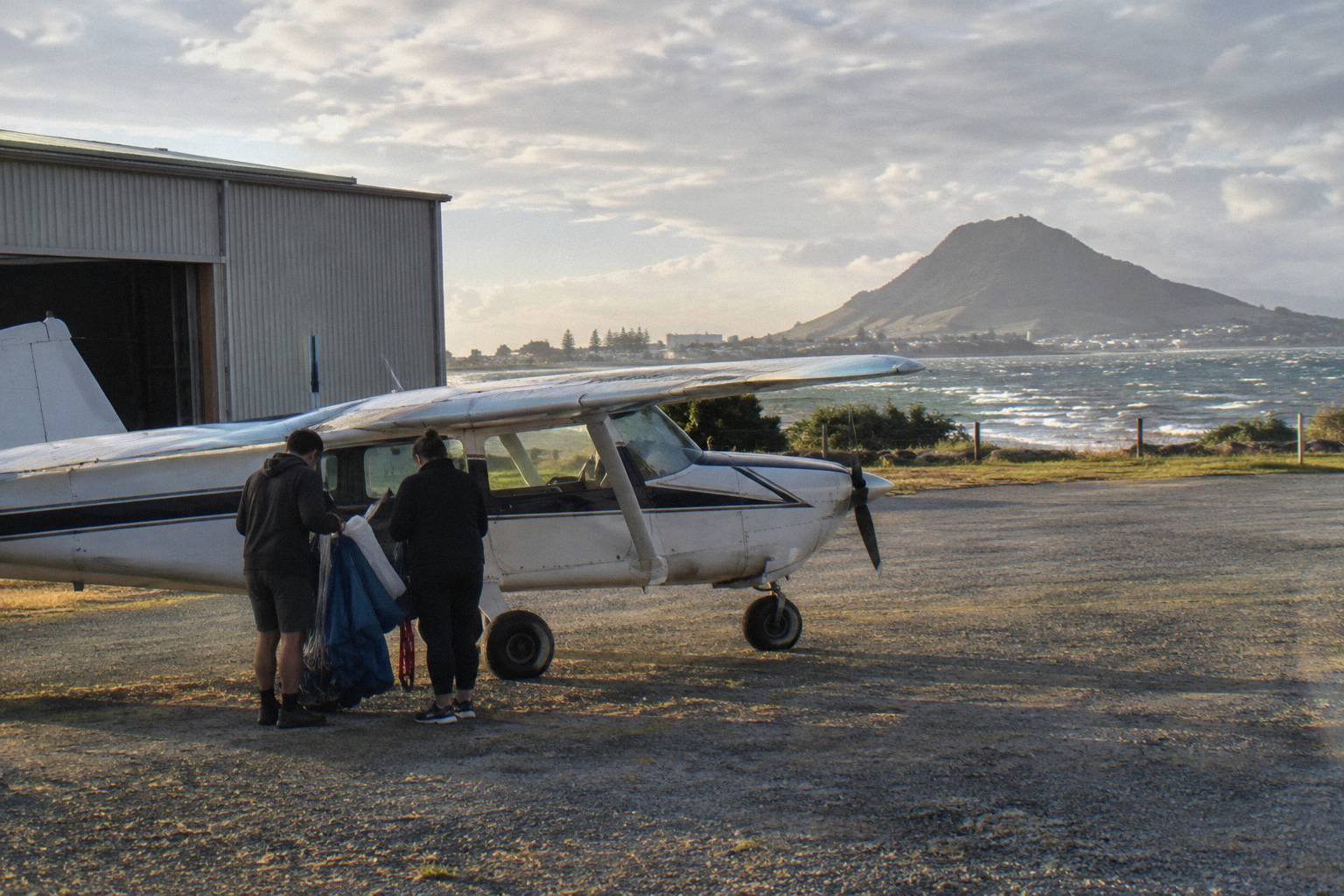
The shape of the visit is set by the aircraft. A Cessna 182 takes two tandems at a time and reaches altitude in 15 to 20 minutes, which is why the whole experience fits inside two hours but not inside one. After a briefing and gearing up, you climb with the doors on, take in the harbour and the coast on the way up, and exit over the Bay. The instructor handles the jump, the freefall and the parachute; your job is the arch position, listening on the climb, and lifting your legs for landing. The landing happens on airport grass beside the spectator viewing area, back where you started.
Age and weight rules are the operator's own, within a legal framework that sets no age limit. Seven is the operator's minimum, chosen so the decision is the child's own, and children under 12 are asked to visit the drop zone first for a harness fitting. Under 18 needs a consent letter. On weight, the operator's pages vary between 110 kg and 115 kg including clothes, so the safe planning number is 110 kg, with a phone call above it; a small surcharge applies, paid to the tandem instructor, with no dollar figure published. Fitness and health questions, including conditions you must declare, are covered in full in the medical conditions guide.
Clothing is simpler than most people expect. Comfortable, weather appropriate clothes, closed shoes that cannot fall off, and in cold months a supplied jumpsuit and gloves; in warm months you can jump in your own clothes. Goggles fit over glasses, and contacts are fine with a word to the instructor. Photos and video are extra on every Tauranga jump listing, shot from the instructor's wrist camera, a 360 camera or an outside camera flyer who jumps alongside you, and the outside camera package must be prebooked. Passenger-carried cameras are not permitted, per the operator's camera packages page.
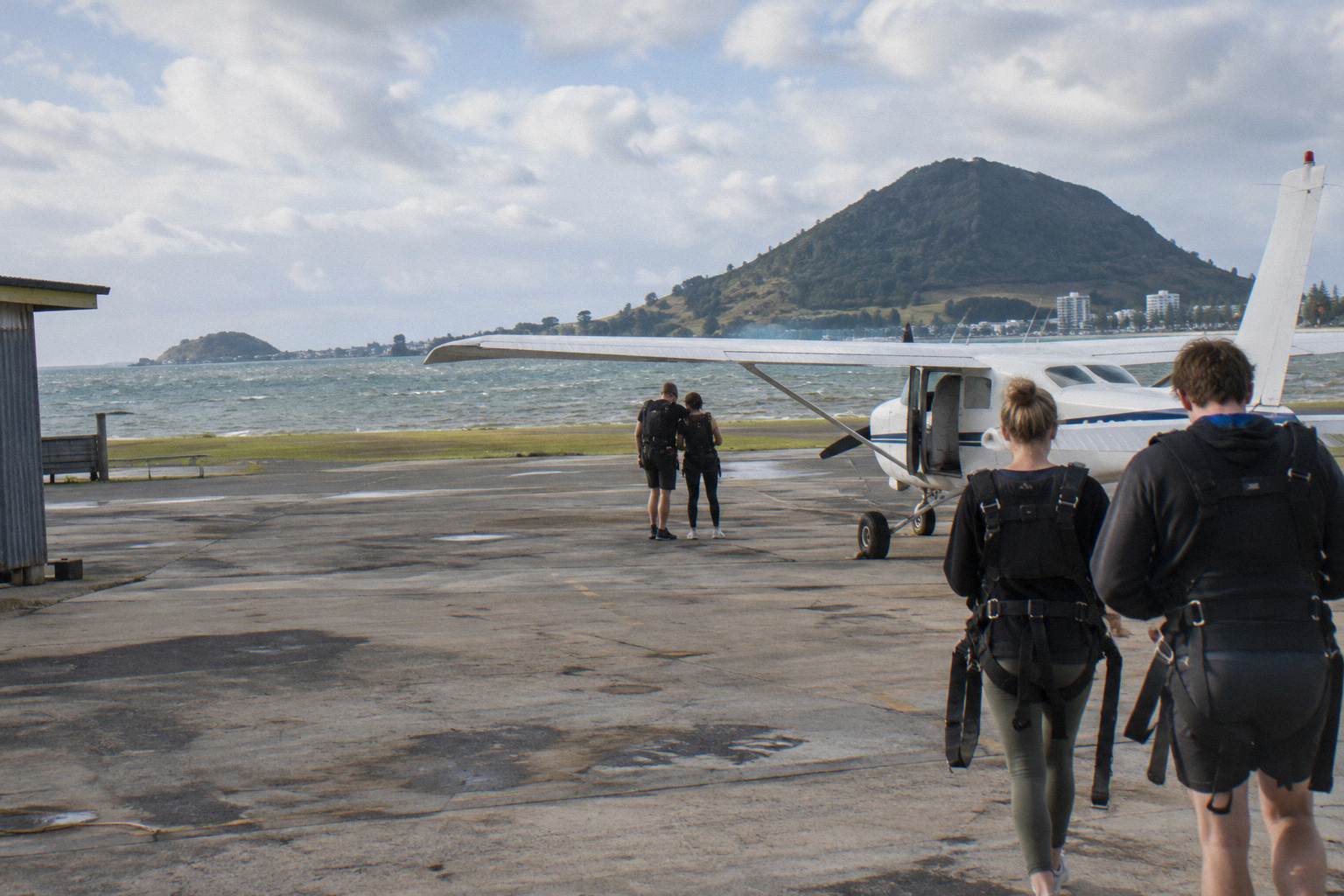
If the height choice still feels open, the booking calendar is the natural decision point: both heights run from the same airfield, and check availability on the Mount Maunganui listing shows both options with the price for your date. The how long a jump takes guide breaks the two hours down minute by minute if you are fitting the jump around a cruise stop or a tight itinerary.
What If You Would Rather Not Jump?
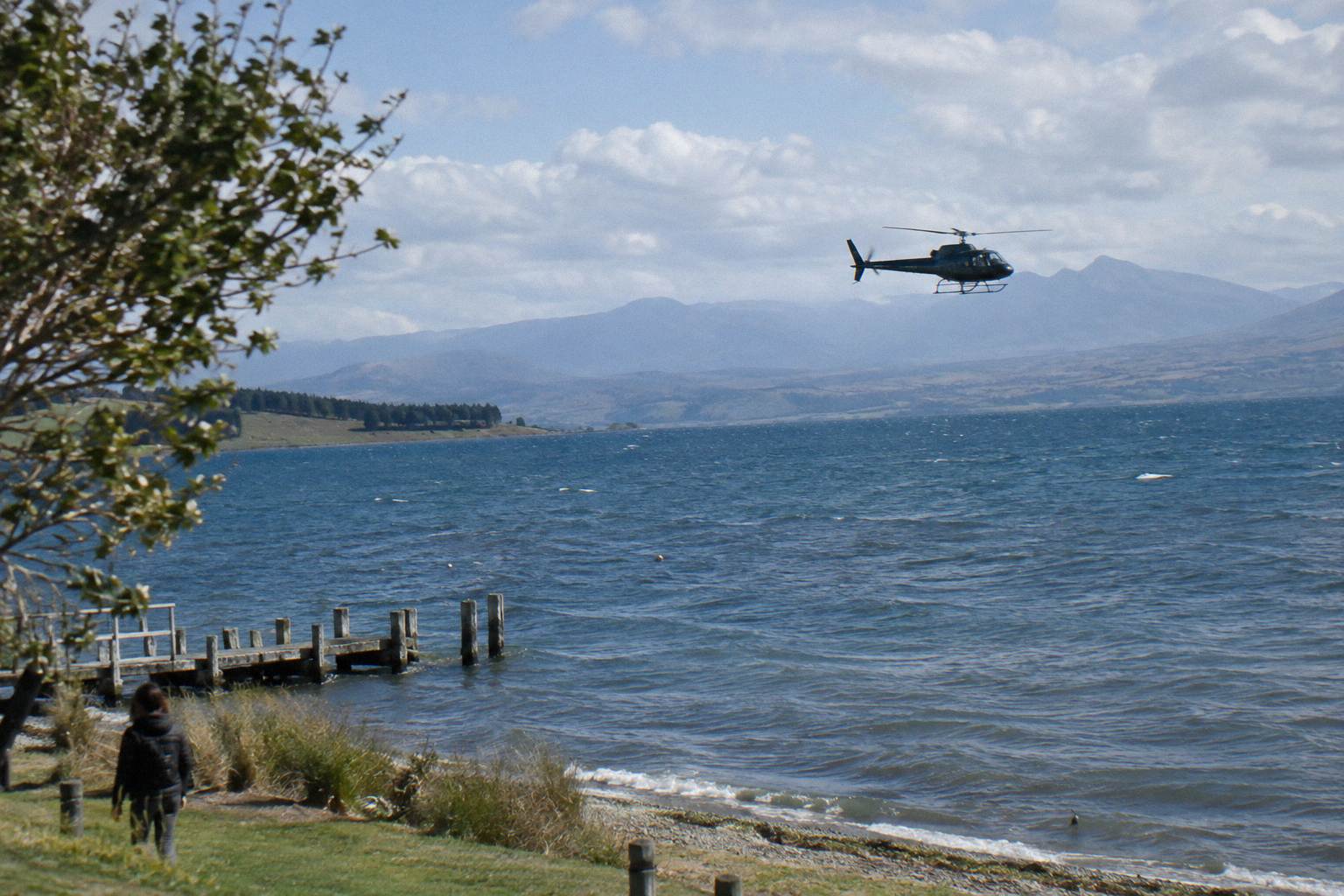
Not everyone in a travel group wants to exit an aircraft, and the same airport ecosystem serves both camps. Fixed wing scenic flights from Tauranga Airport run from 30 minutes to two hours, including a Mount Maunganui circuit, a Coromandel and Cathedral Cove coastal run, and a long flight toward Mount Ruapehu. The one helicopter tour on the Tauranga roster is a half-day Cathedral Cove coastal flight, with a Taupo helicopter-and-skydive combo also on the books.
The fixed wing options come from the same operator as the jumps, meeting at Tauranga Airport. The 30-Minute Mount Scenic Flight circles the coast at jump altitude without the exit. The Two-Hour Ruapehu Scenic Flight is the outlier: two hours in the air climbing to 10,000 ft toward the central North Island volcanoes, the closest thing to alpine scenery available from the Bay of Plenty without driving to it. The Coromandel And Cathedral Cove Flight spends 1.5 hours over the Coromandel Peninsula coast to the north-west.
Helicopters widen the choice further. Adventure Helicopters runs a 2.5-hour Cathedral Cove coastal tour with about 1.5 hours of flying time, while Heli Adventure Flights pairs a scenic helicopter ride with a 15,000ft tandem skydive over Lake Taupo. Fixed-wing options from Skydive Tauranga cover the shorter end: a 30-minute Mount Maunganui flight, a 1.5-hour Coromandel and Cathedral Cove run, and a 2-hour Mount Ruapehu trip. The trade between rotor and wing, and between flying and jumping, is worked through in the skydive versus scenic flight and the helicopter flight versus skydive comparisons.
The planning value of all this is flexibility. A cruise passenger with a half day ashore can jump; a traveller with a spare hour can fly; a family with a nervous parent can split the group across two activities at one location. Spectators also have a role on jump days: the operator runs a viewing area at the airfield, and landings happen in the same place as takeoffs, so family can watch the canopy come in.
Does ACC Cover Visitors, And Do You Still Need Travel Insurance?
Yes to both questions, in different ways. New Zealand's Accident Compensation Corporation provides no-fault cover for accidental injuries to overseas visitors, including from adventure activities such as skydiving, paying treatment costs inside New Zealand. It does not cover illness, repatriation home, or care after you leave the country. Travel insurance remains necessary for everything ACC does not touch, and the operator's waiver asks you to declare medical conditions before you jump.
The ACC scheme is unusual by world standards: it is no-fault, which means cover does not depend on blame, and it extends to visitors injured in accidents while in New Zealand. For a skydive, that means treatment costs for an accidental injury sustained in New Zealand are covered by ACC. What the scheme does not do is pay for illness, fly you home, or fund ongoing care in your own country after departure. Those gaps are exactly what travel insurance exists to fill, and an adventure activity as defined by your insurer should be checked against your policy wording before you book.
| Coverage question | ACC for visitors | Typical travel insurance |
|---|---|---|
| Accidental injury during a skydive, treated in New Zealand | Covered, no-fault | Covered, subject to policy terms |
| Illness unrelated to an accident | Not covered | Covered, subject to policy terms |
| Repatriation to your home country | Not covered | Covered, subject to policy terms |
| Care after leaving New Zealand | Not covered | Covered, subject to policy terms |
| Declared medical conditions and the jump itself | Declare on the operator's waiver | Check adventure activity wording first |
The waiver step belongs in the same breath. Before jumping you complete a form listing conditions the operator needs to know about, with severe motion sickness, asthma, allergies, heart conditions, epilepsy and sinus congestion given as examples. The operator does not recommend a skydive during pregnancy, within 24 hours of scuba diving, or with a spinal or back injury, and reserves the right to withdraw anyone whose safety is in question. Declaring fully and truthfully is what keeps the medical, insurance and regulatory layers working together.
Where Does A Tauranga Jump Fit In A New Zealand Trip Plan?
For a Bay of Plenty itinerary, a cruise stop or an East Coast road trip, the Tauranga jump fits almost anywhere: the airport sits about 3 km from Tauranga's centre and a 5 to 10 minute drive from the cruise dock, the experience fits inside two hours, and the heights on offer, 12,000 and 15,000 ft, match the national mainstream. It only stops fitting if your trip never comes near the Bay of Plenty.
Consider the common routes. Arriving from Auckland, the drive to Tauranga is 204 km, about two and a half hours. From Rotorua it is roughly 57 km and 50 minutes; from Hamilton about 105 km and one hour 25 minutes. A cruise passenger has the shortest leg of all, with the 2026 to 2027 Tauranga cruise season running October to April and 79 ship calls expected to bring over 200,000 passengers and crew, many of them within a 5 to 10 minute drive of the airfield. The cruise stop skydive guide works through the timing maths for a ship day.
Weather is the one variable no plan controls. The operator phones on the day if conditions look poor and works out a reschedule that fits your plans; no season, operating days or wind limits are published, so flexibility on dates is the practical hedge. Tauranga averages around 2,400 sunshine hours a year, with January the sunniest month at roughly 269 hours and July typically the wettest, which is a reason to lean toward the warmer half of the year but not a promise. The weather and cancellations guide covers what happens when a jump cannot run.
Within a longer New Zealand trip, the sequencing question from earlier returns. A classic route runs Auckland to Rotorua to Taupo to Wellington, or Auckland to the Bay of Plenty to the East Cape. If Tauranga or Rotorua is on your route, the coastal jump adds itself to the plan; if Taupo is your overnight stop, the lake jump does the same. There is no need to jump twice unless you want to. The New Zealand trip day plan shows a worked Bay of Plenty day around the two-hour slot.
What Trips People Up Before You Book
The recurring mistakes are treating the beach as the landing site, assuming the experience fits in one hour, arriving in shoes that cannot stay on, expecting photos in the price, and reading the two 15,000 ft Tauranga listings as different jumps. The landing is at the airport, the visit needs 1.5 to 2 hours with arrival 30 minutes early, closed shoes are mandatory, and camera packages are paid extras on every jump listing.
Weight assumptions cause the most avoidable friction. Travellers over 110 kg who book without calling can arrive to a conversation that should have happened by phone, since the booking form caps at 110 kg and a small surcharge above it goes to the instructor. Parents of keen children under 12 similarly miss the drop zone visit the operator asks for, to fit the harness and let the child decide with the staff present. Neither rule is hidden; both simply sit further down the FAQ than most people read.
The other trap is comparison shopping across regions on altitude alone. An 18,000 ft jump exists in New Zealand but costs a day of travel from the Bay of Plenty; a 12,000 ft jump over the harbour you are already beside costs twenty minutes of driving. Height is a line item in the decision, not the decision. The view out the door, the drive to the airfield, the time in your itinerary and the people jumping with you carry more trip weight than twenty seconds of freefall either way, and Tauranga Skydive exists precisely because for a Bay of Plenty traveller the coastal option usually wins that calculation.
Common Questions About Planning A New Zealand Skydive
How High Are Tandem Skydives In New Zealand?
Typical heights are 9,000, 12,000 and 15,000 ft, with 18,000 ft the highest commercial option in the country. Tauranga Airport offers 12,000 and 15,000 ft, with freefall of about 40 seconds or about one minute respectively.
Who Regulates Skydiving In New Zealand?
The Civil Aviation Authority, under Part 115 for adventure aviation operator certificates and Part 105 for parachuting operations. Part 105 requires a tandem master to open the main parachute no lower than 5,000 feet.
Where Does A Tauranga Skydive Take Off And Land?
Both takeoff and landing happen at Tauranga Airport in Mount Maunganui, in a landing area beside the spectator viewing zone. The aircraft is a Cessna 182 carrying two tandems at a time.
Is A Tauranga Jump As High As Elsewhere In New Zealand?
At 15,000 ft it matches the top standard height offered commercially in the country; only an 18,000 ft option, available at some drop zones, goes higher. The Bay of Plenty view below is coastal rather than lake or alpine.
Does ACC Cover Overseas Visitors Who Skydive In New Zealand?
ACC provides no-fault cover for accidental injuries to visitors, including from adventure activities, paying treatment costs inside New Zealand. It does not cover illness, repatriation or care after you leave, so travel insurance is still needed.
Can I Jump At Tauranga And At Taupo On The Same Trip?
Yes, but they are separate operators at separate airfields. The drive from Taupo to Tauranga is about 143 km, roughly two hours, so most travellers choose one region: the Bay of Plenty coast from Tauranga Airport, or Lake Taupo, New Zealand's largest lake, from the Taupo drop zone.