North Island Skydive Drop Zones: Tauranga, Rotorua, Hamilton And Auckland
Choosing where to skydive in New Zealand's North Island comes down to where you are staying, how far you will drive, and which set of jump rules fits your group. Two drop zones carry the sourced facts: Tauranga Airport at Mount Maunganui, and Taupo. Everything else on this page is decision logic built from those two.
Short answer
Jump from Tauranga Airport if you are based in the Bay of Plenty, Mount Maunganui or a Tauranga cruise stop: it is 12,000 or 15,000 ft, minimum age 7, book freely under 110 kg. Drive to Taupo, 143 km away, for lake-volcano scenery from 12,000 or 15,000 ft, minimum age 10, 100 kg maximum. Rotorua is 57 km away, Hamilton 105 km, Auckland 204 km.
New Zealand's North Island asks a simple question of every first-time jumper: where do you get on the plane? Start with the 15,000 ft Tandem Skydive in Tauranga, because the Bay of Plenty drop zone is the one with the fullest sourced detail, then weigh it against the Taupo option. This page compares what each zone offers, who can jump at each, and how the drive times from Rotorua, Hamilton and Auckland shape the decision.
| Fact | Detail |
|---|---|
| Drop zones with sourced facts | Tauranga Airport, Mount Maunganui; Taupo |
| Tauranga jump heights | 12,000 ft or 15,000 ft |
| Tauranga minimum age | 7, with consent letter under 18 |
| Tauranga weight rules | book freely under 110 kg, minimum 30 kg, phone above 110 kg |
| Taupo jump heights | 12,000 ft or 15,000 ft |
| Taupo rules (sourced listing) | minimum age 10, 100 kg maximum |
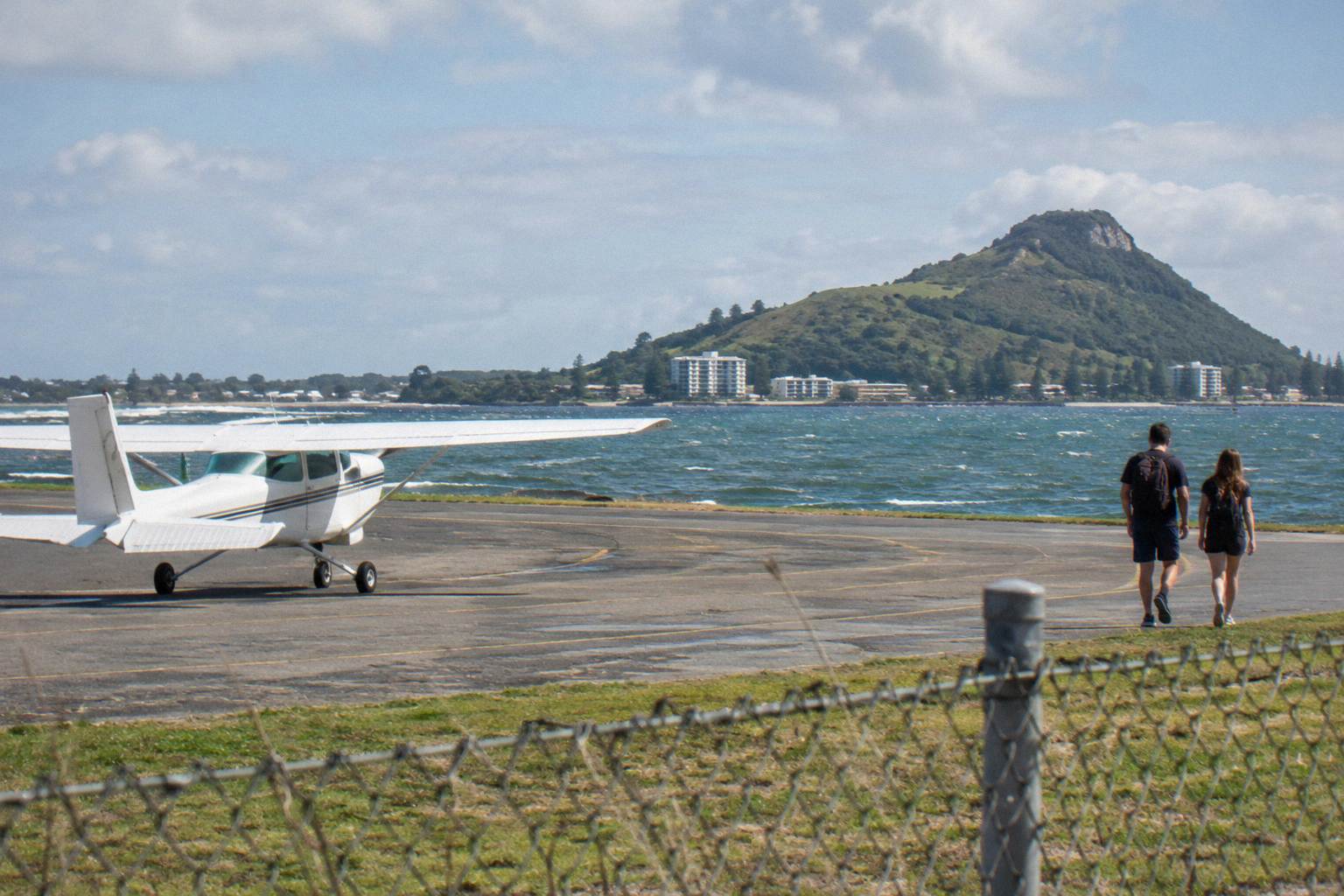
| Tauranga aircraft | Cessna 182, two tandems at a time |
| Time on site at Tauranga | 1.5 to 2 hours, arrive 30 minutes early |
Which North Island Drop Zone Should You Choose?
Choose by base, not by brochure. Staying in Tauranga, Mount Maunganui or the Bay of Plenty puts the airport drop zone minutes away, running 12,000 or 15,000 ft tandems with a minimum age of 7. Staying near Taupo puts a lake-shore drop zone on your doorstep at the same two heights. Rotorua, Hamilton and Auckland appear here only as drive distances, 57, 105 and 204 km from Tauranga respectively.
Both sourced zones run tandem jumps at the same two altitudes, 12,000 and 15,000 ft, so height alone rarely decides it. What decides it is geography and group fit. The Tauranga operation takes off and lands at Tauranga Airport, which sits in the Mount Maunganui suburb beside Tauranga Harbour, about 3 km northeast of the city centre, according to the airport's Wikipedia page. The Taupo operation meets at Anzac Memorial Drive in Wharewaka or at the yellow hangar at Taupo Airport, depending on the listing.
One scope note, stated once: this page holds verified facts only for the Tauranga Airport and Taupo operations. Other places in the North Island appear as drive distances and nothing more, with no operator names, prices, rules or heights attached to them. Depth here comes from decision logic between the two sourced zones, not from guesses about the rest of the island.
The drive-time logic matters because skydiving is weather-dependent. You arrive 30 minutes early, you allow 1.5 to 2 hours on site at Tauranga, and the whole plan can move because of wind or cloud. A drop zone 20 minutes from your accommodation absorbs that flexibility far better than one two hours away.
What The Tauranga Airport Drop Zone Offers?
The Bay of Plenty zone sells one thing done three ways: a tandem jump from Tauranga Airport at 12,000 or 15,000 ft, run by Skydive Tauranga from a Cessna 182 carrying two tandems at a time. Three listings cover it, including "Skydive Over Mount Maunganui" with a 5.0 rating from 66 reviews. Photos and video are paid extras on all three, and every listing carries free cancellation up to 24 hours before the start.
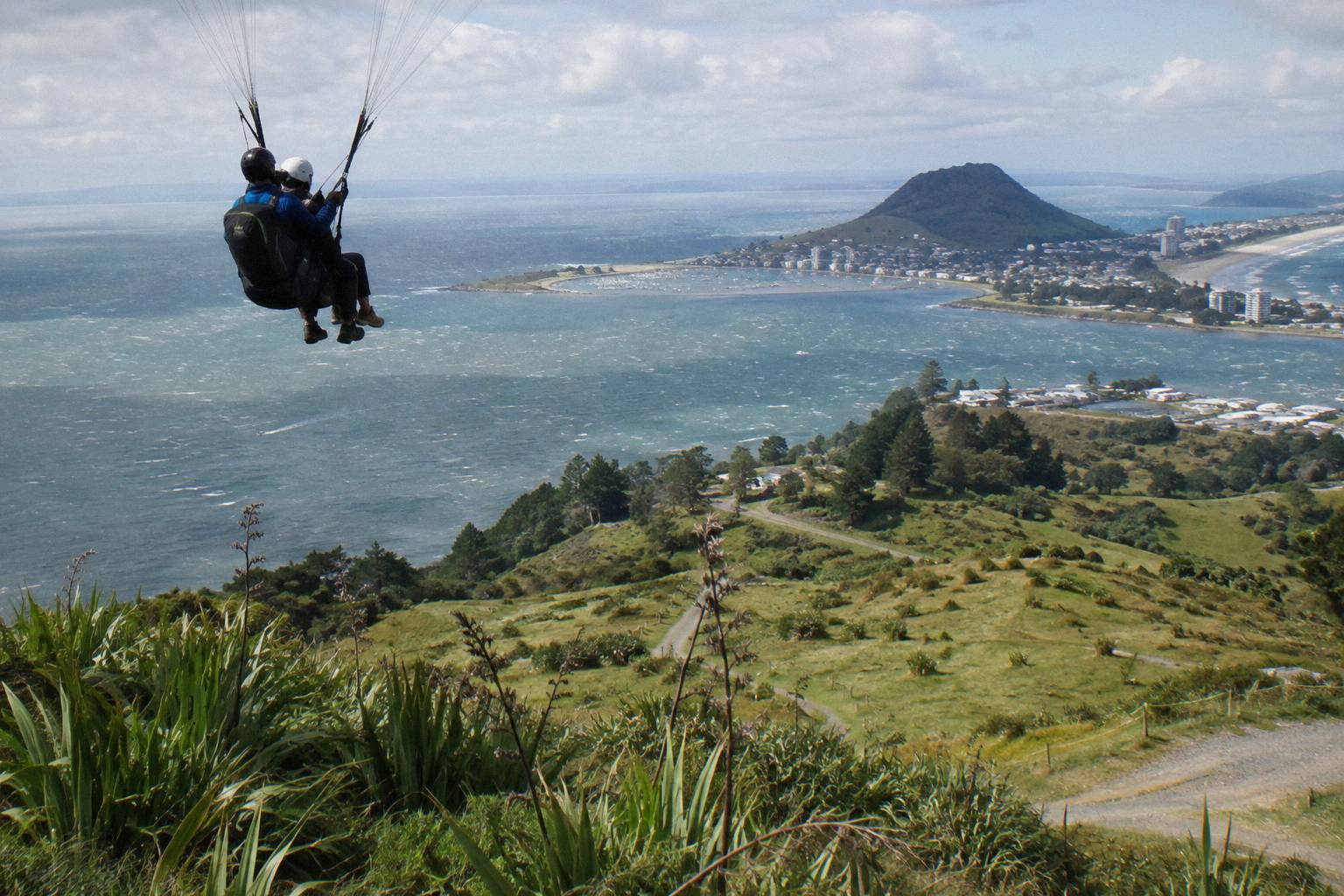
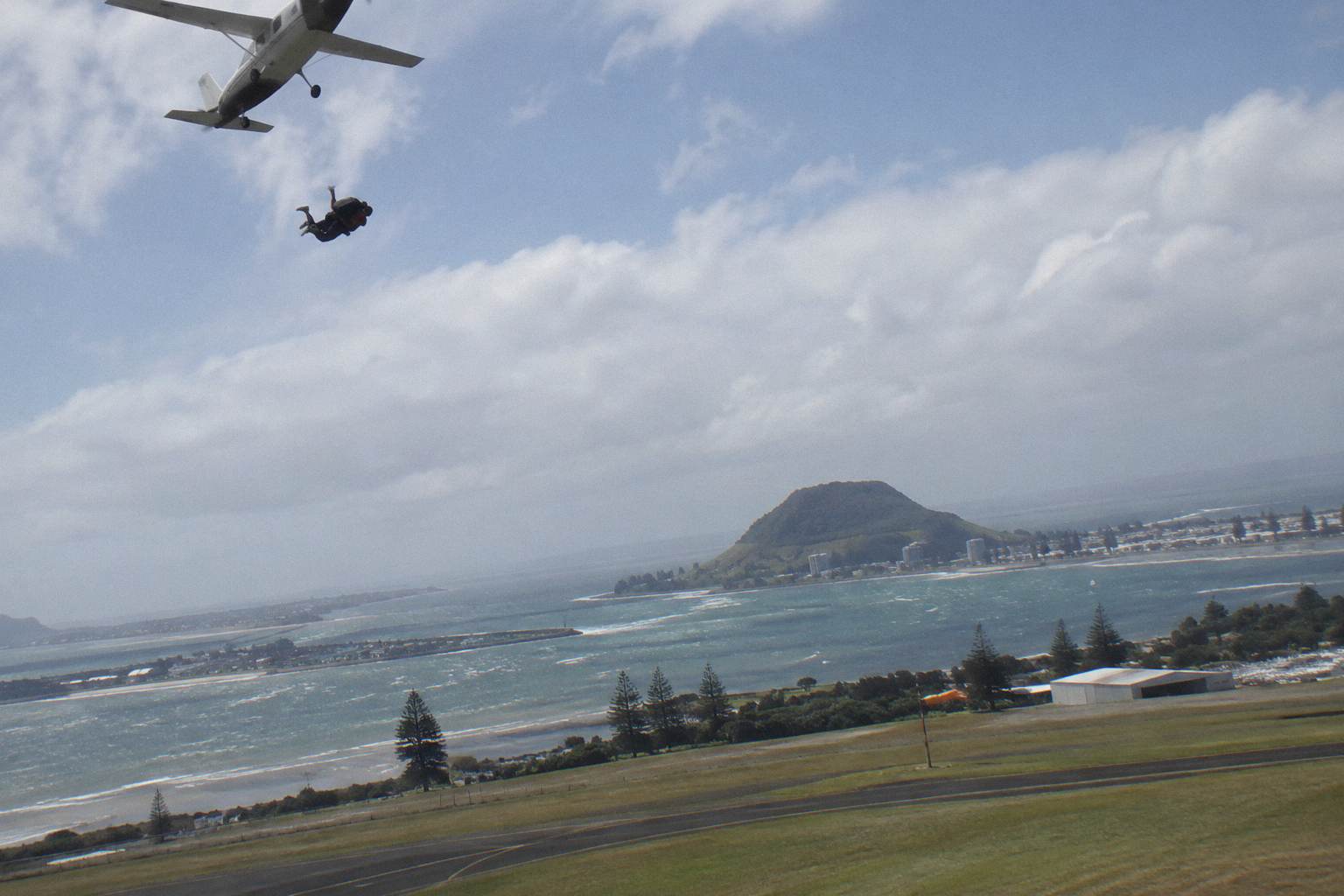
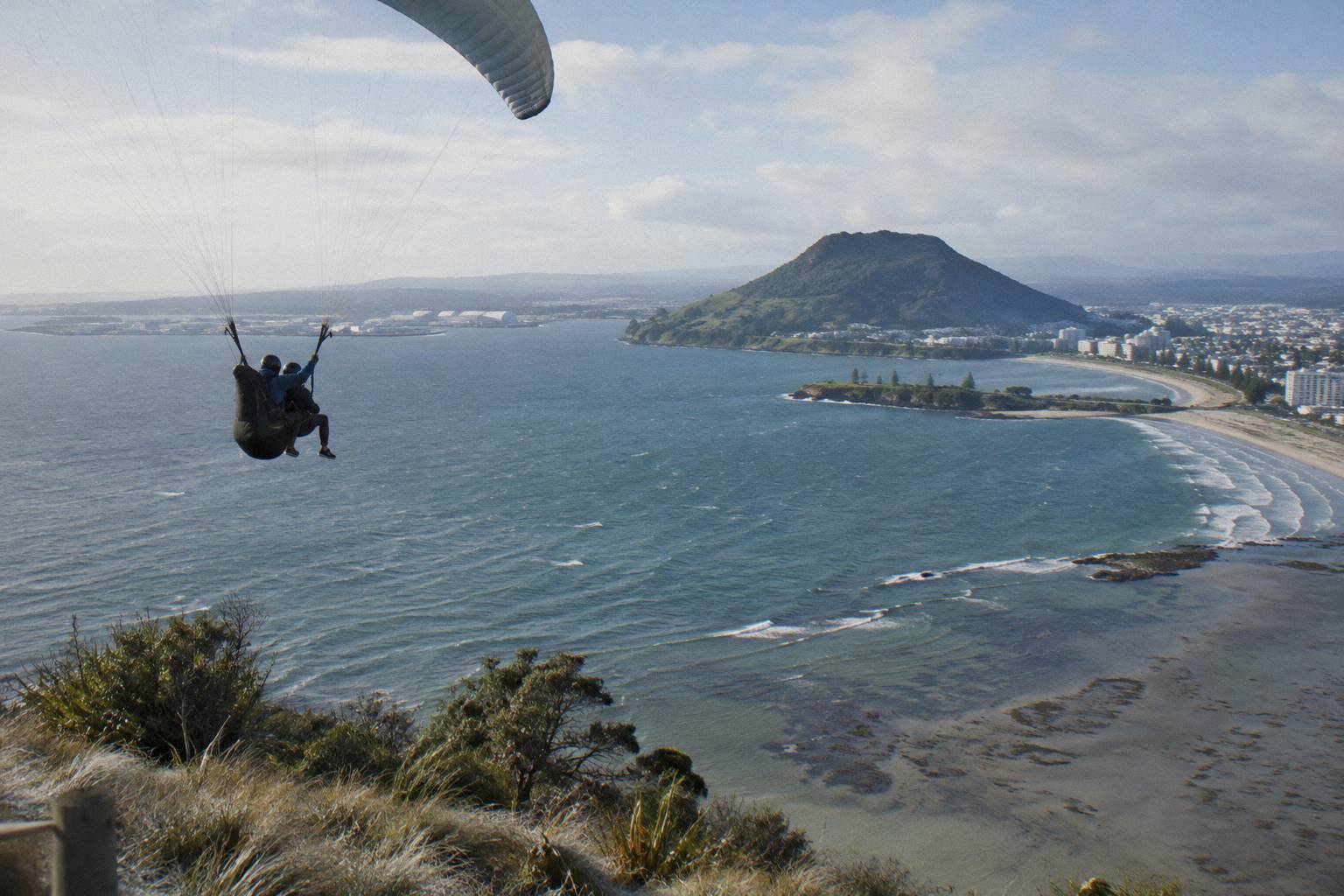
The scenic logic of the Tauranga zone is the climb itself. The aircraft takes 15 to 20 minutes to reach altitude, and the operator calls it a scenic flight for good reason: the views take in Mauao, the 232-metre mountain at Mount Maunganui, the 20-kilometre-long sandbar of Matakana Island, and the harbour entrance. The Kaimai Range, whose highest point is Mount Te Aroha at 953 metres, rises to the west. Freefall runs about 40 seconds from 12,000 ft or about a minute from 15,000 ft, and the operator says those times are an indication only, varying with weather and body shape. Canopy time is 3 to 5 minutes depending on the page you read, so call it a few minutes under the parachute.
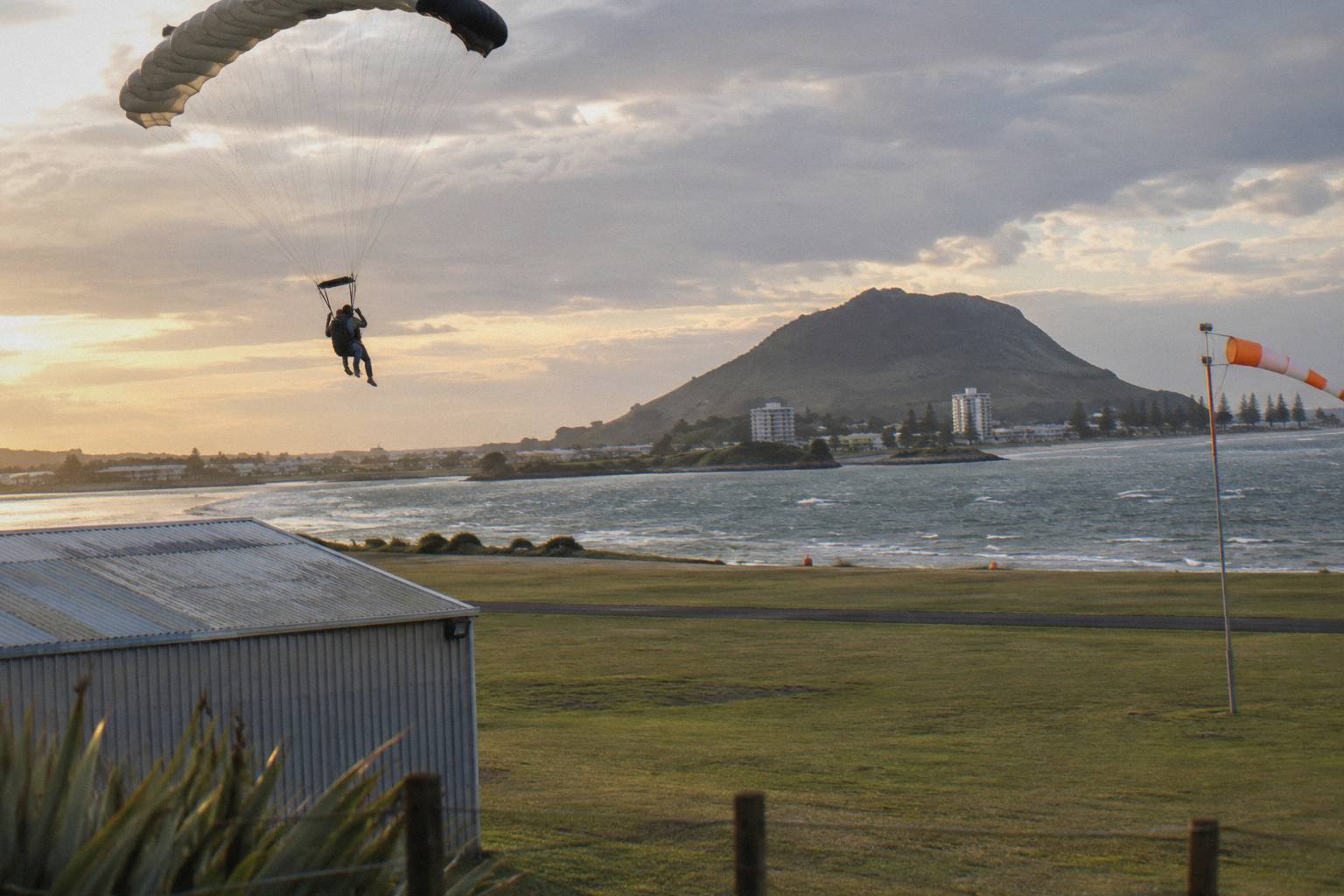
Takeoff and landing happen in the same spot at the airport, with a viewing area for spectators. The landing is not on the beach; the beach is a view from above, which is worth being clear about before anyone books expecting sand under the canopy.
Prices, stated in New Zealand dollars, are NZ$449 for 12,000 ft and NZ$549 for 15,000 ft when you book direct with the operator, and booking-page prices vary by date and group, so the price for your date is on the booking page. Camera packages run NZ$149 for photos, NZ$159 for video, NZ$189 for both, NZ$229 for 360 video and NZ$349 for an outside camera flyer, which needs prebooking.
The full run of what the jump involves is covered in what happens on a Bay of Plenty tandem skydive, and the two heights are compared directly in 12,000 vs 15,000 ft at Tauranga. This Tauranga Skydive guide site carries the detailed pages; this article stays on the drop-zone comparison.
The "Skydive Over Mount Maunganui" listing offers both heights in one product, with a 20 to 25 minute scenic flight and 5.0 from 66 reviews, and the operator says freefall runs 30 to 45 seconds from 12,000 ft or about a minute from 15,000 ft. You can read the Mount Maunganui skydive details on its tour page, or check the live price and dates with the operator: Check availability.
How The Taupo Drop Zone Compares
Taupo offers the same two altitudes, 12,000 or 15,000 ft, over New Zealand's largest lake, run by Taupo Tandem Skydiving from Wharewaka and the Taupo Airport hangar. The sourced 12,000 ft listing holds 5.0 from 457 reviews and includes transport; the up-to-15,000 ft listing includes free pickup from Taupo accommodation. Rules differ from Tauranga: minimum age 10 and a 100 kg maximum on the sourced listings.
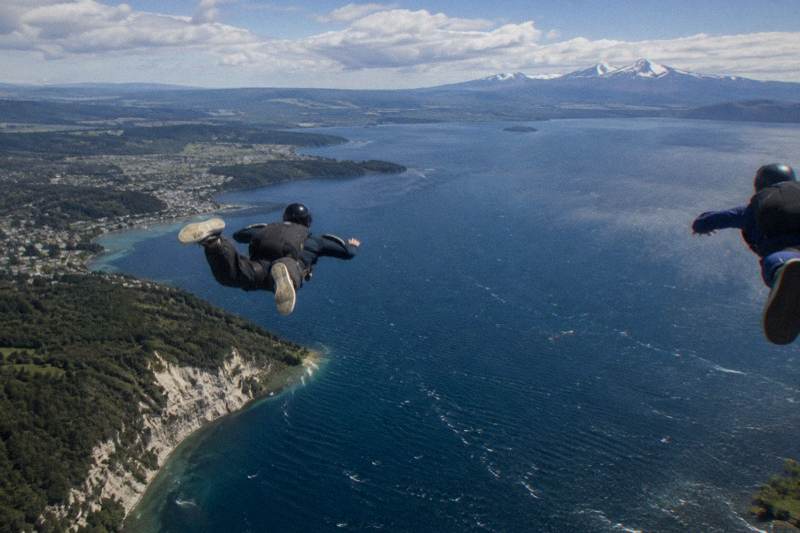
Lake Taupo's surface area of 616 square kilometres, per the lake's Wikipedia page, is the visual argument for the Taupo zone: the lake fills a volcanic caldera, and the jump looks out over water and volcanic country rather than coastline. The "Lake Taupo 12,000ft Skydive" runs about 2 hours all up. A separate Taupo product pairs a 15,000 ft skydive with a 15-minute scenic helicopter flight, operated by Heli Adventure Flights from Huka Falls Road, and that listing includes photos and video, the one product in the roster where camera media is not an extra.
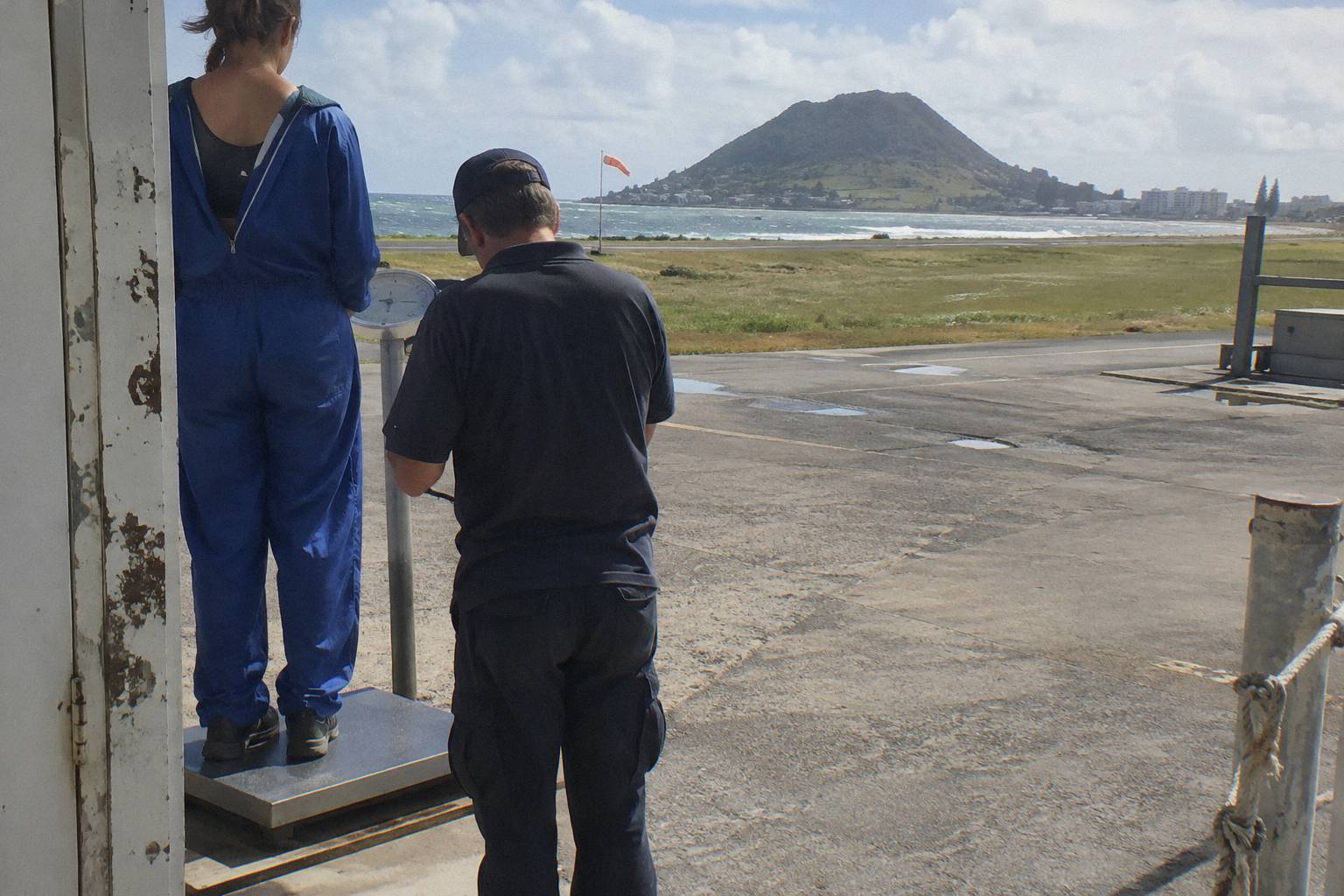
The two zones split cleanly on eligibility. Tauranga takes jumpers from age 7, which makes it the family option; Taupo's sourced listings start at age 10. Tauranga lets you book freely under 110 kg and asks you to phone above that; Taupo's 12,000 or 15,000 ft listing caps at 100 kg. If your group sits between 100 and 110 kg, that band alone can decide the zone before scenery enters the discussion. The Taupo rules are the Taupo rules and the Tauranga rules are the Tauranga rules; neither crosses to the other, and the fuller breakdown is in the weight limit guide and the age limit guide.
For the deeper head-to-head, including heights, media and meeting points, read the Tauranga versus Taupo skydive comparison. The short version: Bay of Plenty base or cruise stop points to Tauranga; a Taupo or Tongariro itinerary points to the lake.
Both Taupo listings carry free cancellation up to 24 hours before the start on the booking page, the same window as the Tauranga listings. If a lake jump fits your route better than a coastal one, see the dates and the price for your day with the operator: Check availability.
How Far Is Each City From The Drop Zones?
Tauranga Airport is 57 km from Rotorua, 105 km from Hamilton, 204 km from Auckland and 143 km from Taupo, per sourced drive distances. That makes the Bay of Plenty zone the natural jump point for anyone based in the western and central North Island corridor, and it makes Taupo its own base rather than a day trip from Tauranga unless you want roughly two hours each way of driving around a weather window.
| From | To Tauranga Airport | Sourced drive time |
|---|---|---|
| Rotorua | 57 km | about 50 minutes |
| Hamilton | 105 km | about 1 hour 25 minutes |
| Auckland | 204 km | about 2 hours 30 to 40 minutes |
| Taupo | 143 km | about 1 hour 50 to 2 hours |
The distances cut two ways. An Auckland group faces a 204 km drive each way, which turns a weather hold into a long day; a Rotorua group can treat the Tauranga zone as a half-day plan, since 50 minutes each way plus 1.5 to 2 hours on site fits inside a morning. The airport is roughly 5 to 6 km from the cruise terminal at Salisbury Wharf, which the operator describes as a 5 to 10 minute drive, so a Tauranga cruise stop works as a jump day, a decision covered in full in skydiving on a Tauranga cruise stop.
Weather is the reason drive time weighs so heavily. The operator calls you on the day if conditions look poor and works something out with your schedule, and the FAQ notes jumps can run late due to weather or airport traffic. A nearby base lets you take the rebooking option without losing a day of the trip.
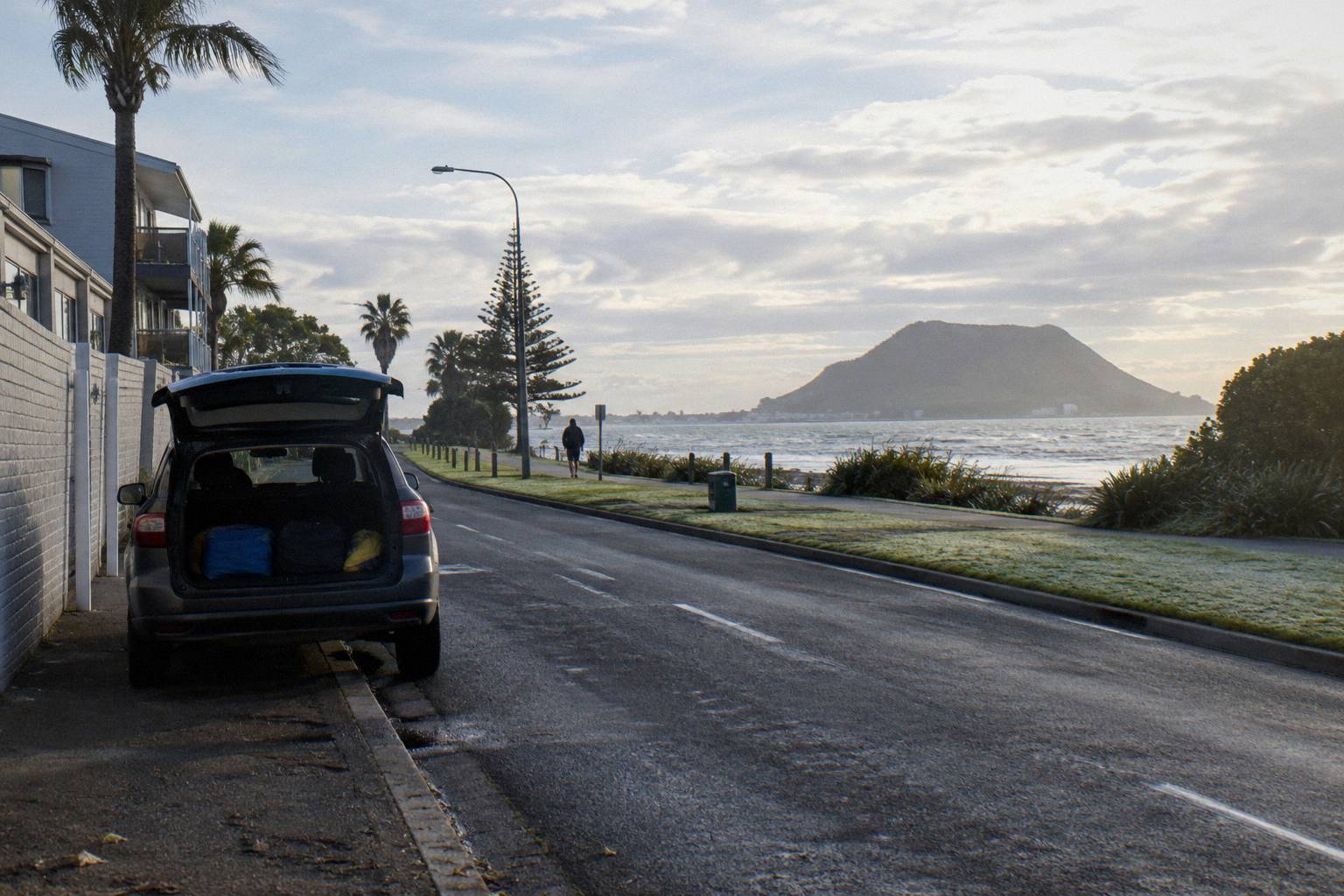
Getting to the airport itself, parking and arrival timing are covered in getting to Tauranga Airport for a skydive; the one number that matters for planning is the operator's instruction to arrive at least 30 minutes before your scheduled takeoff.
Which Zone Fits Your Group?
Split the decision by age, weight and transport. Families with children between 7 and 9 have only the Tauranga zone among the sourced options, since Taupo starts at age 10. Jumpers over 100 kg have only Tauranga, bookable freely up to 110 kg with a phone call above it. Travellers without a car lean Taupo, because the sourced Taupo listings include pickup or hotel transport, while the Tauranga listings expect you at the airport.
| Decision factor | Tauranga Airport zone | Taupo zone |
|---|---|---|
| Minimum age | 7 | 10 |
| Weight rules | 30 kg minimum, book under 110 kg, call above | 100 kg maximum on the sourced listing |
| Heights | 12,000 or 15,000 ft | 12,000 or 15,000 ft |
| Aircraft | Cessna 182, two tandems at a time | plane from Wharewaka or the airport hangar |
| Time on site | 1.5 to 2 hours | about 2 hours on the sourced 12,000 ft listing |
| Transport to the zone | make your own way to the airport | pickup or hotel transport on the sourced listings |
| Camera media | paid extras on every jump listing | included on the helicopter plus skydive listing |
Group size also matters at Tauranga specifically: the 15,000 ft listings there carry a maximum of two travellers per booking, so a group of four books two slots and should expect the Cessna 182's two-tandem loads to split the party across flights anyway. That is a planning detail, not a dealbreaker, but couples and pairs should know it before the day.
The consent rules at Tauranga add one more step for school-age families: under 18 needs a parent or guardian consent letter, and children under 12 are asked to visit the dropzone first to be fitted in a harness and meet the staff. Build that visit into a Bay of Plenty itinerary rather than discovering it on jump morning.
What Skydiving Regulation Means At Any New Zealand Drop Zone
Wherever you jump in New Zealand, tandem parachuting is an adventure aviation activity regulated by the Civil Aviation Authority rather than a WorkSafe adventure activity. Part 115 requires adventure aviation operators, including tandem parachute operations, to hold an operator certificate. Part 105 governs the parachuting itself, and its rule 105.11(c) requires a tandem master to open the main parachute at not less than 5,000 feet.
The wording is explicit in the Civil Aviation Authority Part 115 rule: a person must not perform an adventure aviation operation except under an adventure aviation operator certificate, and tandem parachute operations are named among the authorised activities. This is a rule about the sector, not a claim about any named operator: whether any particular company holds a current certificate is a separate question you can ask directly. The industry body, the New Zealand Parachute Industry Association, sets training and safety standards aligned with the Civil Aviation Rules for operators and participants across the country.
For a planner comparing drop zones, the practical read is that the regulatory floor is national. New Zealand rules do not change by region, so your comparison legitimately turns on logistics, eligibility and scenery rather than on which zone is more tightly governed. The safety question, including the sourced statistics, is treated in is skydiving in Tauranga safe.
Tandem skydiving carries real risk, plainly stated. The United States figures, useful as the largest published dataset, recorded 16 civilian skydiving fatalities from roughly 3.47 million jumps in 2025, per the US Parachute Association safety page, and New Zealand's Civil Aviation Authority reported one tandem parachute accident with broken bones and no fatalities in its adventure aviation sector in 2024/25. Weather calls, weight rules and age rules exist because of that risk, at both zones.
What Trips People Up Before You Book
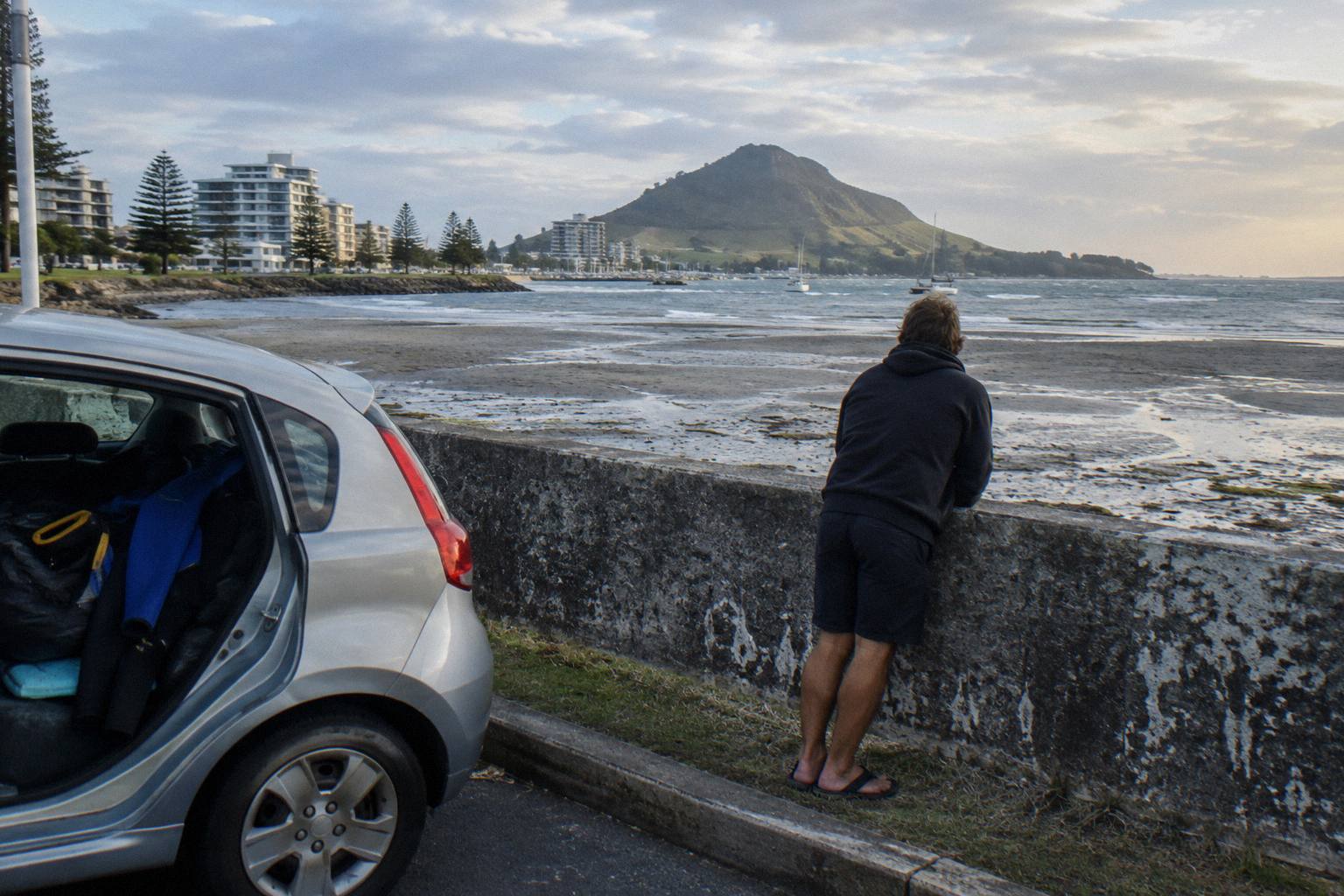
Three mistakes cost people money and jumps. First, booking a zone two hours from your base and losing the day to weather, when the operator calls on the day and works something out. Second, assuming the Tauranga weight and age rules apply everywhere: Taupo's sourced listings cap at 100 kg and age 10, so a heavier jumper or a younger child has one zone, not two. Third, forgetting that photos and video are paid extras on every Tauranga jump listing.
The media point deserves its own sentence: the jump price and the camera budget are separate, so anyone who wants the footage needs to plan for the package on top of the jump. A fourth trap is the calendar. Departure times are chosen on the booking calendar rather than printed, and the operator's booking form defaults to a 10am first morning jump and a 12pm first afternoon jump when no booking exists, with earlier or later slots assigned by availability. Do not plan a flight, a ferry or a tight dinner around an assumed time you never selected.
A fifth is the two-address confusion at Tauranga: the operator's own materials print two different street numbers for the same airport location, so use "Tauranga Airport, Mount Maunganui" as your navigation target and the meeting-point instructions on your confirmation, covered in the meeting point guide. And remember the cancellation split: the booking pages offer free cancellation up to 24 hours before the start, while direct bookings with the operator run different terms, charged at 50 percent if you cancel the day before and full price on the day, if you book direct with the operator.
Finally, do not expect a beach landing at Tauranga. The jump takes off and lands at the airport; Mount Maunganui's beach is what you look at from 12,000 or 15,000 feet, not where the canopy touches down.
Where To Jump Based On Where You Are Staying
Base yourself on the Bay of Plenty coast, a cruise stop or the Rotorua side of the island, and the Tauranga Airport zone is the practical answer: 12,000 or 15,000 ft, age 7 up, bookable under 110 kg, minutes from Mount Maunganui. Stay in Taupo, or on a Tongariro or lake itinerary, and the Taupo zone wins on travel time and includes pickup. Drive between the two, 143 km each way, only when a rule forces it.
Worked example: a family of four staying in Mount Maunganui with a 9 year old and an adult over the Taupo 100 kg cap books Tauranga, full stop. The child clears the age 7 rule with a consent letter and a pre-visit, the adult books freely under 110 kg, and the 5 to 10 minute drive from the cruise-side of the city means a weather reshuffle costs an hour, not a day.
Reverse example: a couple based in Taupo for a week of walking wants the 15,000 ft jump. The up-to-15,000 ft listing at 4.9 from 376 reviews includes free pickup and drop-off from their accommodation, they are 0 km from that drop zone and 143 km from the coast, and the lake caldera fills the view. Driving to Tauranga for the same altitude would buy coastline at the price of four hours in a car.
For everyone between those poles, the drive table above plus the eligibility table is the whole decision. Pick the zone that keeps your weather options open, confirm the weight and age rules against your group, and lock the date on the booking calendar with the 24 hour free cancellation window in mind.
Common Questions About North Island Drop Zones
Skydive North Island: Which Drop Zone Is Closest To Auckland?
Tauranga Airport is 204 km from Auckland, a drive of about 2 hours 30 to 40 minutes. It is the closest of the two sourced drop zones on this page to Auckland. Taupo is roughly 143 km from Tauranga on top of that, so it adds distance rather than saving it.
Can A 9 Year Old Skydive In The North Island?
At the Tauranga Airport zone, yes: the operator sets a minimum age of 7, requires a parent or guardian consent letter under 18, and asks that children under 12 visit the dropzone first for a harness fitting. The sourced Taupo listings start at age 10, so a 9 year old has one zone, not two.
Can I Skydive If I Weigh Over 100 Kg?
At Tauranga you can book freely under 110 kg, and the operator asks you to phone above that weight; there is a small surcharge above 110 kg with no published figure. The sourced Taupo listing caps at 100 kg. Minimum weight at Tauranga is 30 kg.
How Much Does A Tauranga Skydive Cost Direct With The Operator?
Booked direct with the operator, in New Zealand dollars, the jump is NZ$449 from 12,000 ft and NZ$549 from 15,000 ft. Photos and video are paid extras, from NZ$149 for photos to NZ$349 for an outside camera flyer. Booking-page prices vary by date and group, and the page shows the price for your date.
Is Freefall Longer At 15,000 Ft Than 12,000 Ft?
Yes. At Tauranga the operator says about 40 seconds of freefall from 12,000 ft and about a minute from 15,000 ft, and the operator notes these times are an indication only and vary with weather and body shape. The climb takes 15 to 20 minutes either way.
Do Both Drop Zones Offer Free Cancellation?
Every sourced listing at both zones carries free cancellation up to 24 hours before the start on the booking page. Direct bookings with the Tauranga operator run different terms: charged at 50 percent if you cancel the day before and full price on the day.