How To Book A Tauranga Tandem Skydive Without Surprises
Booking a tandem jump at Tauranga Airport comes down to four decisions: which height, which date, who is jumping, and which extras you want on camera. This guide walks each one in the order you will actually meet it, with the operator's own numbers.
Short answer
Pick 12,000 ft (NZ$449 direct) or 15,000 ft (NZ$549 direct), choose your date on the booking calendar, and book freely if every jumper is 7 or older and under 110 kg. Free cancellation runs up to 24 hours before the start. Arrive 30 minutes early and allow 1.5 to 2 hours on site. Camera packages are separate extras.
Booking a tandem jump in the Bay of Plenty is a short process, but the order matters: height first, then date, then the people checks, then the extras. Every step below uses the operator's own published terms, and Tauranga Skydive lists the jump options side by side so you can compare before you commit.
| Fact | Detail |
|---|---|
| Drop zone | Tauranga Airport, Mount Maunganui |
| Heights | 12,000 ft or 15,000 ft |
| Direct operator prices | NZ$449 at 12,000 ft, NZ$549 at 15,000 ft |
| Minimum age | 7, with a consent letter under 18 |
| Weight rules | Minimum 30 kg, book freely under 110 kg, phone above it |
| Time on site | 1.5 to 2 hours, arrive 30 minutes early |
| Cancellation on bookings | Free up to 24 hours before the start |
| Camera extras | From NZ$149, always separate from the jump |
How The Booking Works From First Click To Jump Day
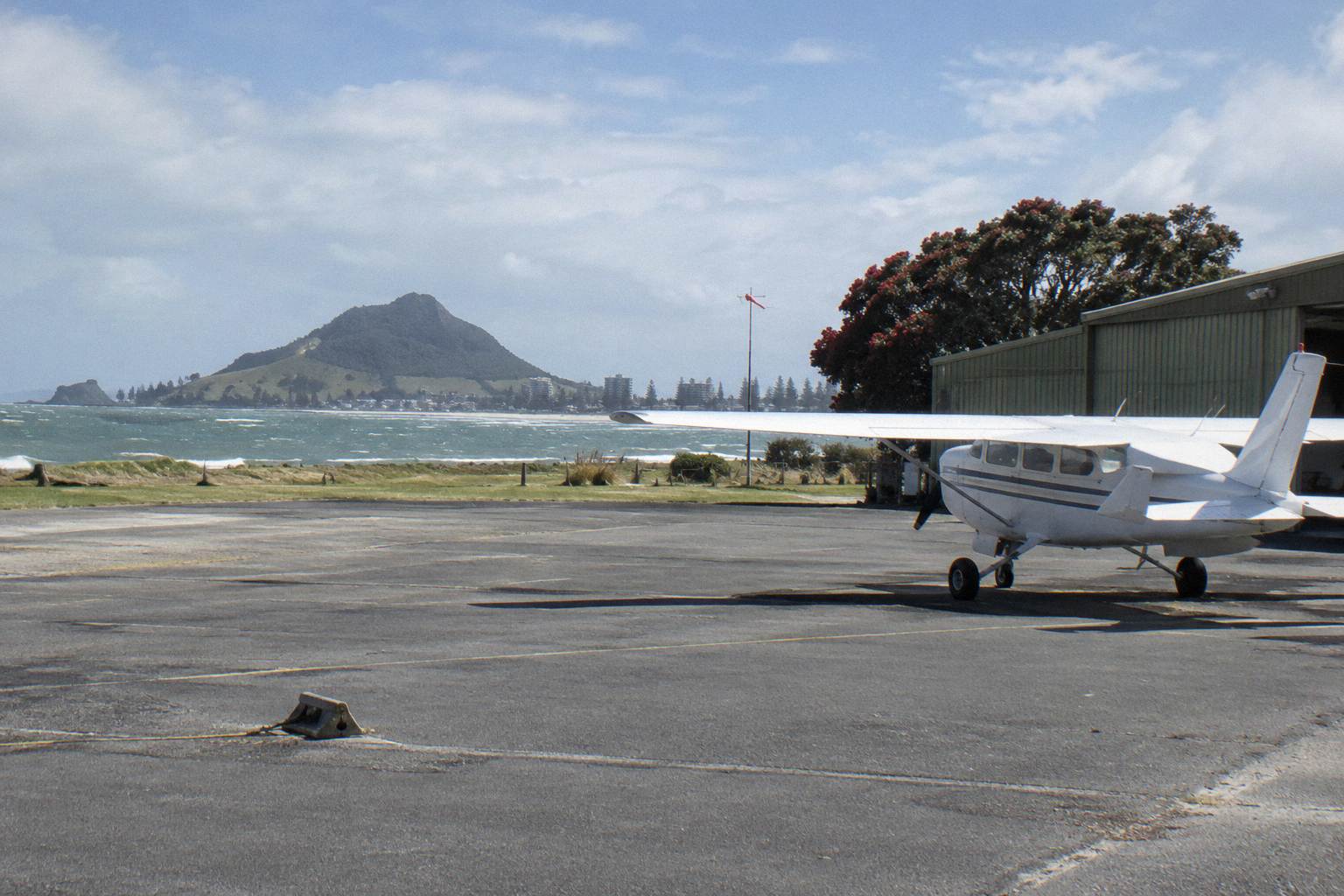
A tandem booking at Tauranga Airport runs in four steps: you choose a height, pick a date and time on the booking calendar, confirm every jumper clears the age and weight rules, then decide on camera extras at booking or on the day. The whole online part takes minutes. The jump day itself needs 1.5 to 2 hours on site, with a 30 minute early arrival, and you take off and land at Tauranga Airport.
The flow is simpler than at larger drop zones because one operator runs everything from one airport. The Cessna 182 takes two tandems at a time and reaches altitude in 15 to 20 minutes, which is why the on-site window is short. When you book online through a booking page, you are reserving a slot; the jump date and time are chosen on the calendar rather than from a fixed timetable, since departure times depend on availability and weather.
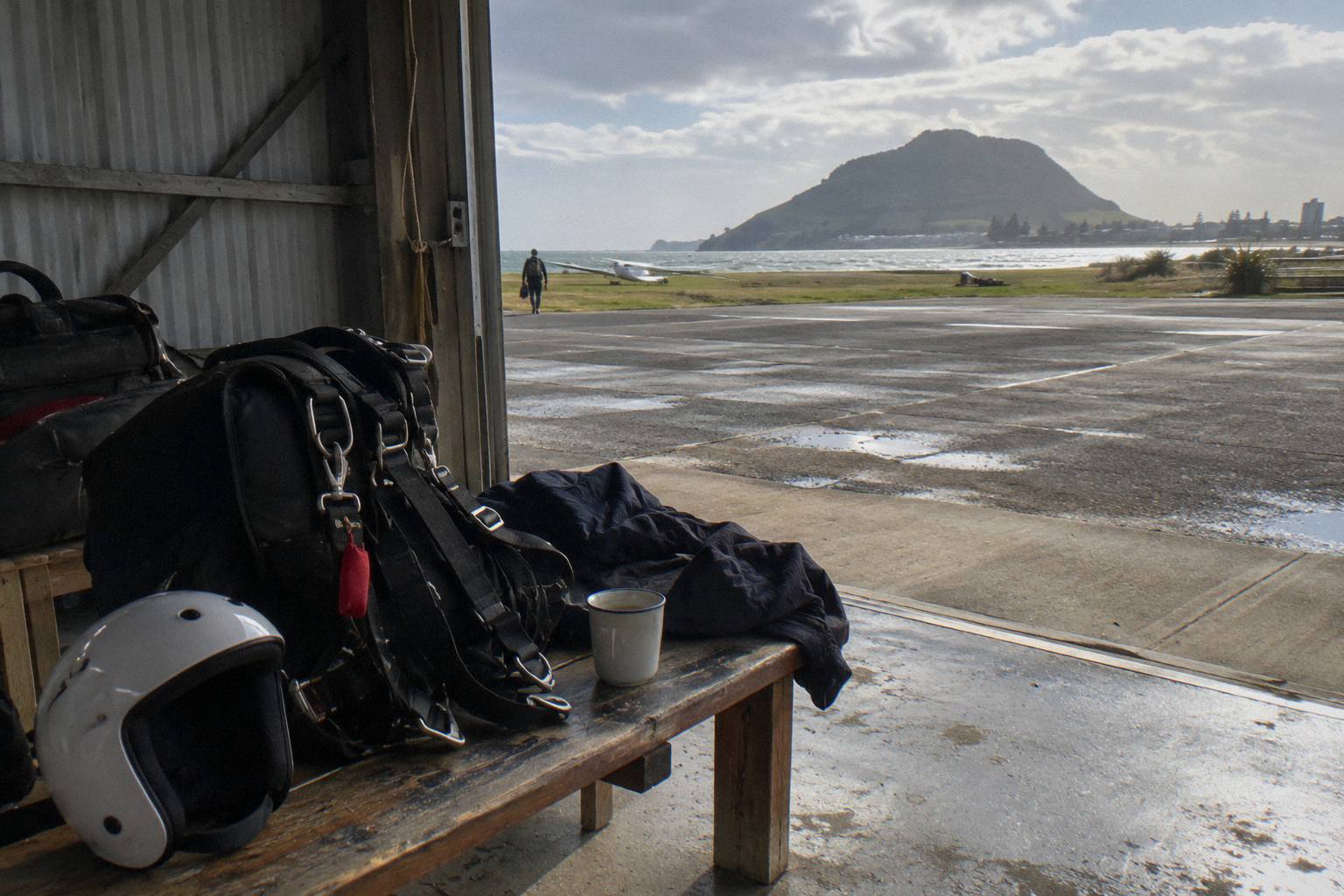
Two practical things shape the day. First, the operator asks jumpers to arrive at least 30 minutes before the scheduled takeoff, because paperwork, harness fitting and the briefing all happen before the flight. Second, the operator says the whole experience takes between 1.5 and 2 hours, and can be quicker on a quiet day, so leave buffer room in your schedule rather than booking a tight connection straight after. If the weather looks doubtful, the operator phones you on the day and works something out with you to fit your schedule; the full weather picture, including what happens to your money, is covered in the weather and cancellations guide.
One more thing worth settling early: who is actually jumping. The age and weight checks in a later section apply to every person on the booking, and a quick check before you pay avoids a phone call later. If you are still weighing Tauranga against a day trip to Taupo, the Tauranga versus Taupo skydive comparison covers the trade-offs.
Choosing Your Height: 12,000 Ft Or 15,000 Ft
The choice is between 12,000 ft with about 40 seconds of freefall and a 15 minute scenic flight, or 15,000 ft with about 1 minute of freefall and a 20 minute flight. Direct with the operator, the jump alone is NZ$449 at 12,000 ft and NZ$549 at 15,000 ft; amounts are New Zealand dollars. Booking pages price by date, so check the price shown for your date before you commit to either height.
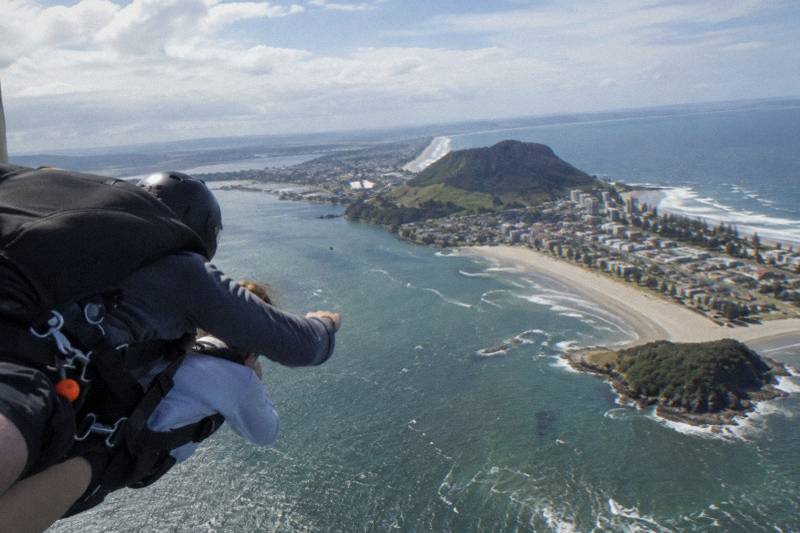
The extra 3,000 ft buys roughly twenty more seconds of freefall and five more minutes of flying over the harbour, Mount Maunganui and Matakana Island on the way up. The climb itself is part of the product: the operator calls both versions a scenic flight to altitude, so even at 12,000 ft you get the full view of the coast and the Kaimai Range to the west. The deeper comparison, including freefall timing and who each height suits, is in the 12,000 versus 15,000 ft guide.
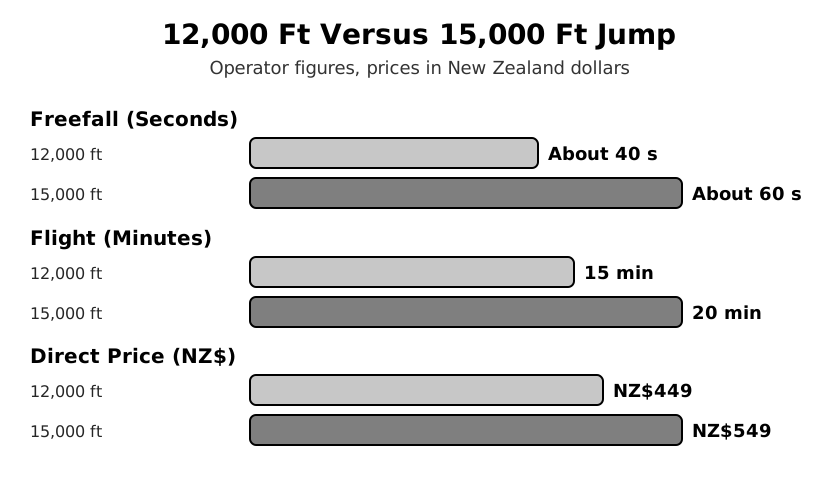
Note that the freefall times are an indication only: the operator's own waiver says they vary from customer to customer with conditions and body shape. Canopy time after the parachute opens runs a few minutes by the operator's own pages, which describe it differently on different pages, so plan on 3 to 5 minutes rather than a fixed figure.
The height choice plays out across the listings too. "Skydive over Mount Maunganui", rated 5.0 from 66 reviews, is sold by option at either 12,000 or 15,000 ft in one product, which suits people who want to decide once and book once. The "15,000ft Tandem Skydive in Tauranga - Bay of Plenty" is fixed at the top height, with about 1 minute of freefall per the operator (the listing text says up to 40 seconds) and about 5 minutes under canopy, meeting at Tauranga Airport like every core jump.
If you already know you want the maximum height and a simple product, the 15,000 ft listings are the direct route: check the 15,000ft Tandem Skydive page for the full spec, or check availability for live dates.
Picking A Date And Time On The Booking Calendar
There is no fixed departure timetable to choose from: you pick your date on the booking calendar, and the assigned slot depends on availability. The operator's booking form defaults to a 10am first morning jump and a 12pm first afternoon jump when no booking exists, and you may be assigned earlier or later. Free cancellation on bookings runs up to 24 hours before the start, so an early date holds your place without locking your money.
The calendar mechanics matter for two kinds of buyer. Cruise passengers get a particular benefit from the flexibility: the operator says the airport is a 5 to 10 minute drive from where the cruise ship docks, and the 2026 to 2027 Tauranga cruise season runs October to April with 79 ship calls expected, so mornings fill first on port days. Booking the earliest available slot leaves the most slack for a weather hold or a delayed tender. The full port-day plan is in the skydiving on a Tauranga cruise stop guide.
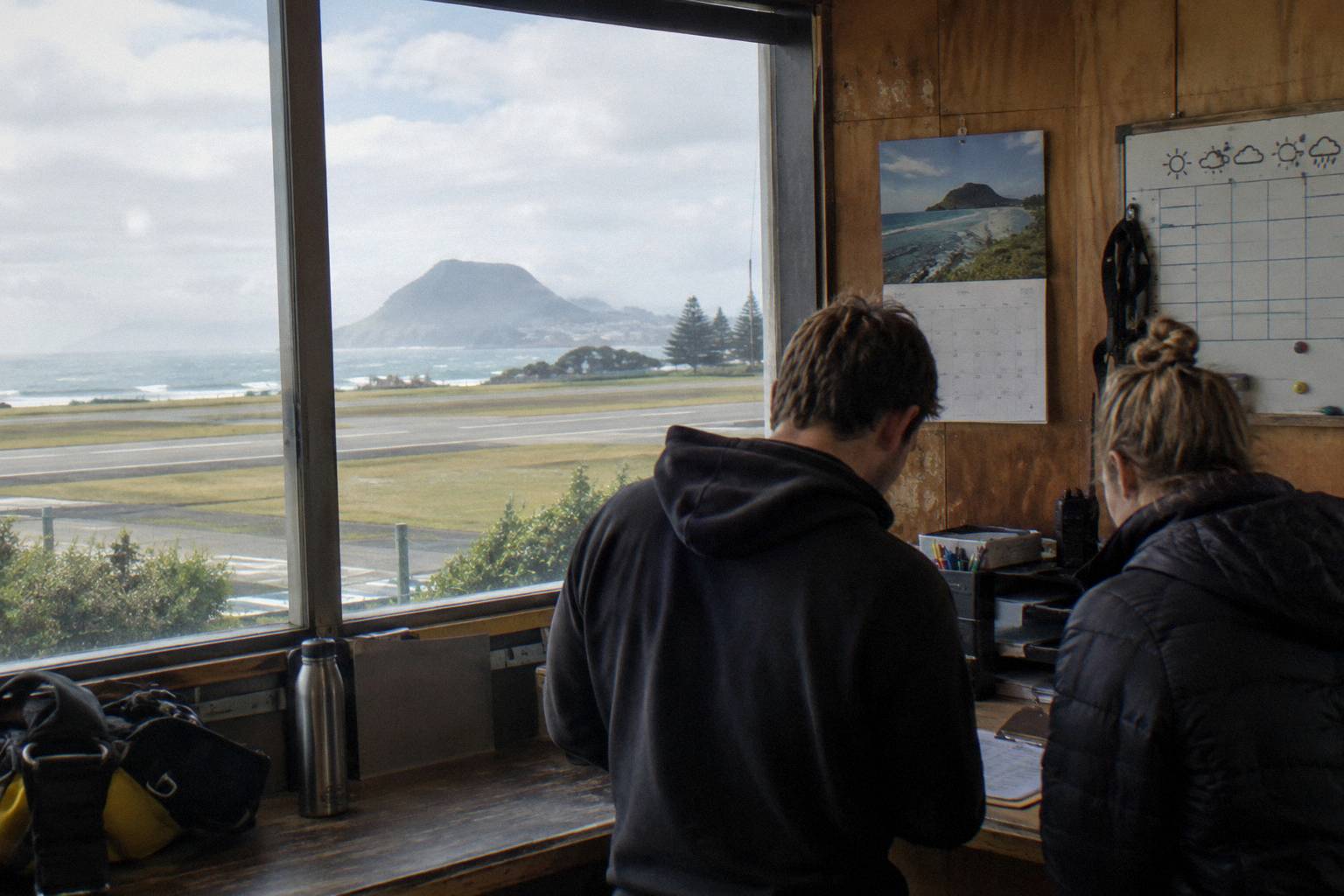
For everyone else, the same logic applies in a smaller way. Weather decides whether a jump runs, and the operator's pages note the plane can run a little late due to weather or airport traffic. A booking with a free cancellation window up to 24 hours before the start gives you a clean exit if your travel plans shift before that point; inside 24 hours, the operator-direct terms in a later section take over if you booked that way.
Practical tips that come straight from the operator's pages: arrive at least 30 minutes before your scheduled takeoff, expect the whole experience to take 1.5 to 2 hours, and make your transport plan for the Mount Maunganui address rather than the Tauranga CBD. The getting to Tauranga Airport guide covers routes and drive times.
The fixed-height "Bay Of Plenty 15,000ft Skydive" covers the same airport, the same 15,000 ft and the same free cancellation window, priced on the booking page for your date.
Who Can Book: Age And Weight Checks Before You Pay
Every jumper needs to be at least 7 years old and at least 30 kg, and anyone under 110 kg can book straight away; above 110 kg, phone the operator first, and a small surcharge applies. Under 18s need a consent letter from a parent or guardian, and children under 12 are asked to visit the drop zone first for a harness fitting. These are operator rules, and the operator can refuse anyone it believes may endanger themselves or others.
The weight threshold is the one that trips bookings most often, because the operator's own pages carry two figures: the booking form and FAQ say 110 kg, while the what-to-know page says 115 kg including shoes and clothes. The safe course is the lower number, which is the one on the FAQ: the operator's FAQ says jumpers under 110 kg can simply book, and anyone heavier should call to talk it through based on weight and size. The minimum weight of 30 kg is really about fitting safely into the harness, in the operator's words.
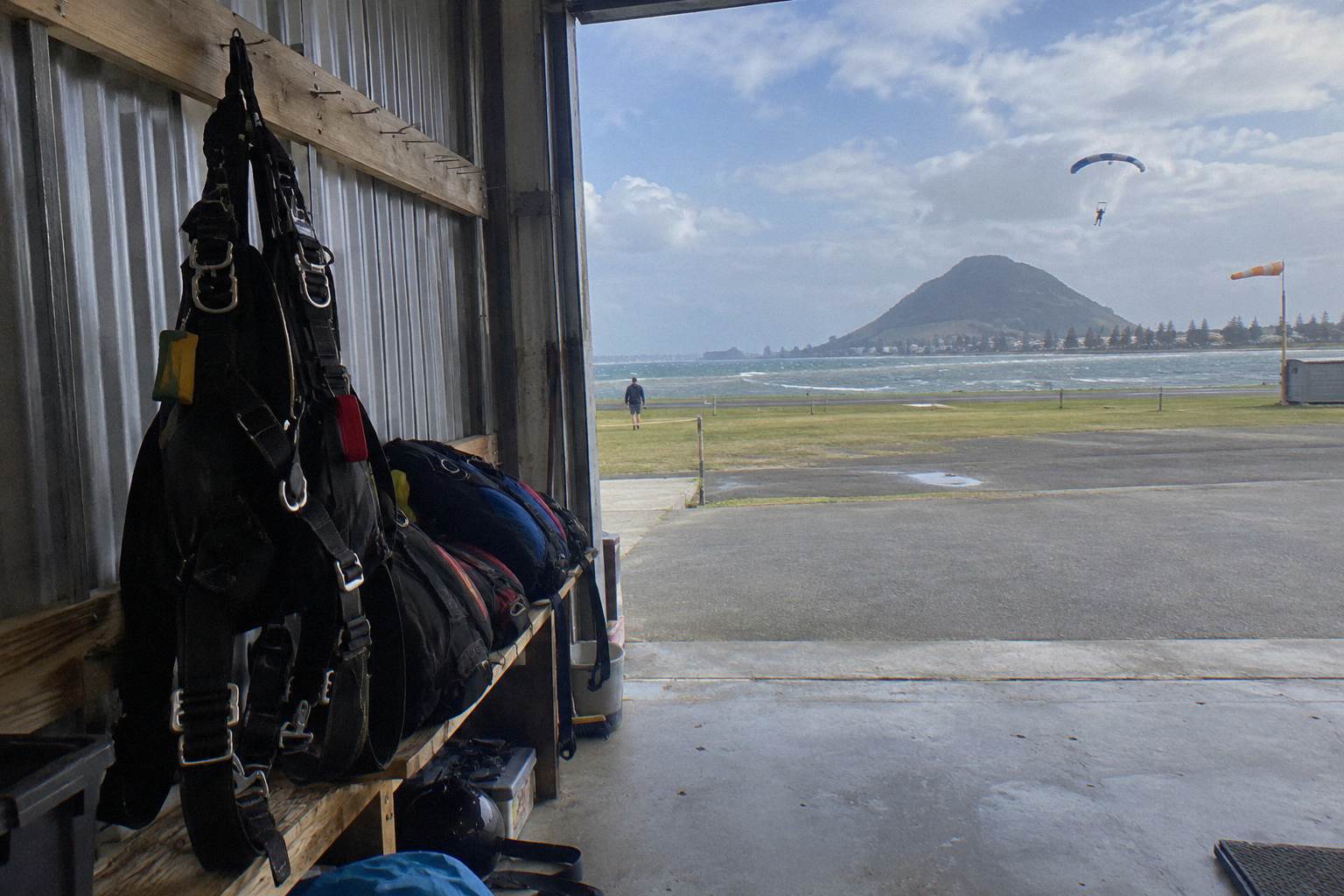
Age works in three bands. Seven is the operator's own minimum, chosen so the decision belongs to the child, and the child must also meet the weight rule. Under 12 means an advance visit to the drop zone to meet staff and be fitted in a harness. Under 18 means a letter of consent from a parent or guardian on the day. New Zealand law sets no age restriction, as the operator's FAQ puts it, so the bands are policy rather than statute. The full breakdown, including the consent letter details, is in the age limit guide, and the weight rules are unpacked in the weight limit guide.
Health declarations sit on the waiver rather than the booking form. The operator's waiver asks you to list conditions such as severe motion sickness, asthma, allergies, heart conditions, epilepsy, or nasal and sinus congestion, and it does not recommend a jump if you are pregnant, have been scuba diving within 24 hours, or suffer a spinal or back injury. None of these automatically block a booking; they are declared, and the operator decides. The medical conditions guide works through each one.
| Check | Rule | Where it bites |
|---|---|---|
| Minimum age | 7, operator rule | Under 12 needs a drop zone visit first |
| Consent | Letter from parent or guardian | Any jumper under 18 |
| Minimum weight | 30 kg | Harness fit, especially for children |
| Booking threshold | Under 110 kg, book freely | Above it, phone before paying |
| Surcharge | Small, above 110 kg, goes to the instructor | Added on the day |
| Health | Declare conditions on the waiver | Operator may refuse on the day |
The weight band applies per person, so a group booking only works if every jumper clears it individually. That is worth a five minute conversation before you pay, not after.
What Extras Cost And When To Add Them
Photos and video are never included in the jump price: they are separate packages, from NZ$149 for photos alone to NZ$349 for an outside camera flyer, on the operator's own camera packages page. The 360 video package at NZ$229 and the outside camera package at NZ$349 need decisions before the day, and the outside camera package must be prebooked. Packages are delivered by email as a download link by the end of the day.
The five options, all in New Zealand dollars, all booked direct with the operator: photos only at NZ$149, taken from a camera on the instructor's wrist; video only at NZ$159; photos plus video together at NZ$189, the value pick; a 360 camera package at NZ$229 that films the whole experience and is hand edited into a 3 to 4 minute video; and an outside camera flyer at NZ$349, where another skydiver jumps with you with a helmet camera. The full breakdown is on the operator's camera packages page and in the photo and video packages guide.
One rule surprises people: under New Zealand civil aviation rules, no tandem passenger may carry their own phone or camera during the jump, so you cannot self-film as a cheap alternative. That is why the wrist and 360 packages exist at all. Spectators can film from the ground viewing area, since you get in the plane and land in the same place.
Timing differs by package. The wrist and 360 options can generally be added on the day, but the outside camera flyer needs another skydiver on the load, so the operator asks that it be prebooked; the operator's what-to-know page is explicit on that point. If you know you want footage, decide before jump day.
| Package | Direct price | What it is | When to book |
|---|---|---|---|
| Photos | NZ$149 | Instructor's wrist camera | On the day |
| Video | NZ$159 | Wrist camera video | On the day |
| Photos and video | NZ$189 | Both from the wrist camera | On the day |
| 360 video | NZ$229 | Whole experience, edited to 3 to 4 minutes | Ahead is safer |
| Outside camera flyer | NZ$349 | A second skydiver films you | Must be prebooked |
If the jump itself is off the table for someone in your group, a scenic flight is the seated alternative from the same airport: the "30-Minute Mount Scenic Flight" run by the same operator gives the aerial view of the mount and harbour without a jump.
Booking Direct Versus The Booking Page
The two routes differ in how and when you pay. Booked direct with the operator, your card is only held to reserve the slot and you pay on the day, with customer cancellations free before the day before, 50 percent the day before, and full price on the day. Booked through a booking page, free cancellation runs up to 24 hours before the start. Know which route you used, because the terms follow the route.
The direct route is spelled out on the operator's own pages: the online booking form takes a card to reserve your spot but does not charge the jump, and you settle up at the drop zone unless a third party already took payment. That makes direct booking attractive when your dates are soft, since nothing is charged up front. The penalty structure is steeper inside the final 48 hours, though: half the jump price if you cancel the day before, the full price if you cancel on the day, and a no-show charges your card.
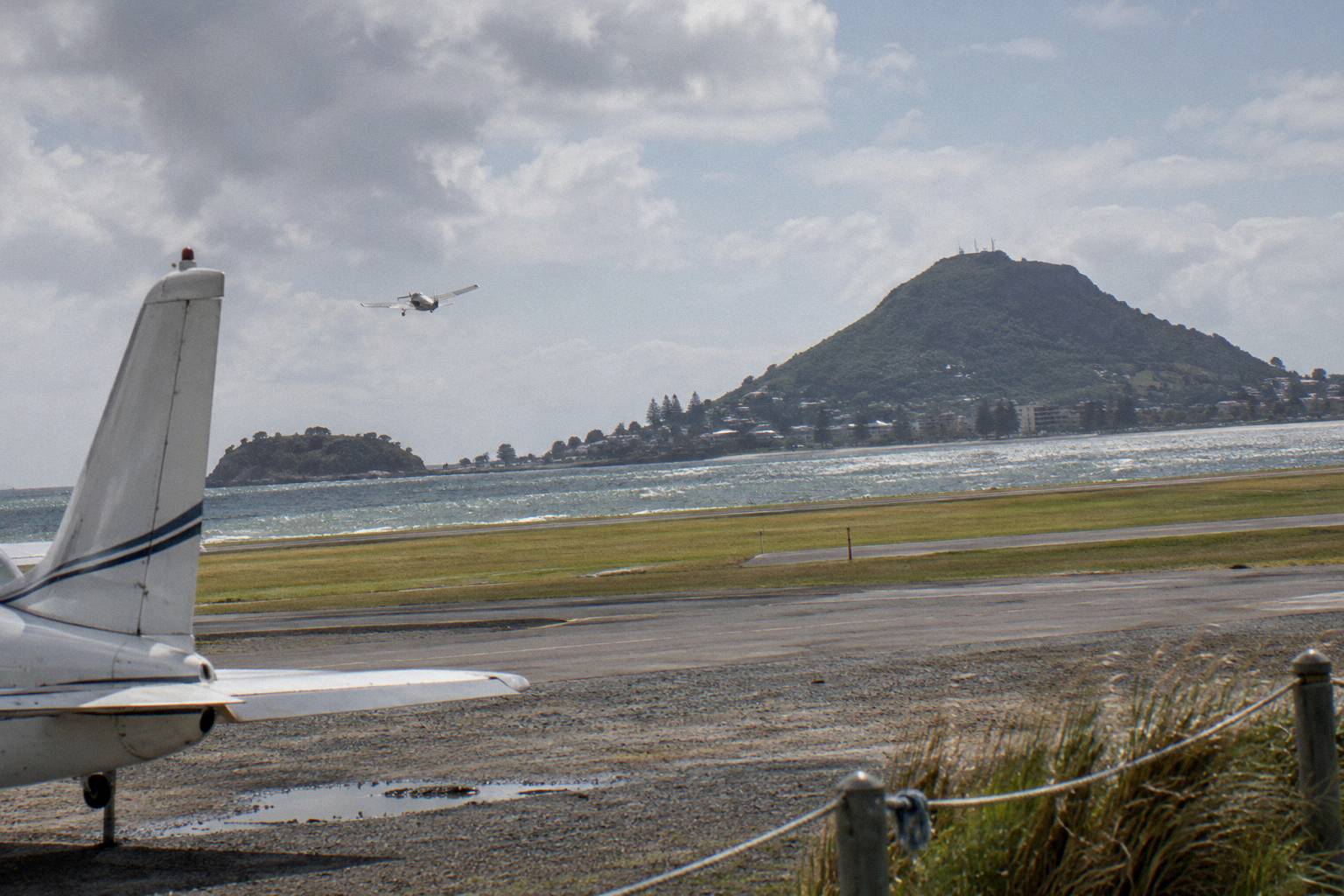
The booking-page route front-loads the payment but gives a cleaner refund window: free cancellation up to 24 hours before the start. For a traveller with a fixed itinerary, that 24 hour line is the more useful guarantee; for a local or someone with flexible dates, the operator's card-held, pay-on-the-day model may suit better. Neither route changes the jump itself: same airport, same aircraft type, same instructor team.
Whichever route you take, the pre-jump routine is identical, and the operator's what-to-know page is the reference for arrival, clothing and the sequence of the day. Wear comfortable clothes and closed shoes that cannot fall off, which are mandatory for everyone; the operator supplies a jumpsuit when wanted, plus a hat and goggles, and the goggles fit over glasses. Winter adds gloves. The what to wear guide has the seasonal detail.
The money question, including how the camera packages stack against the jump price, is worked through in the cost guide.
What Trips People Up Before You Book
The recurring mistakes are booking above 110 kg without phoning first, assuming photos are included, forgetting the consent letter for an under 18, arriving with open shoes, and mixing up the two cancellation policies. Each one is avoidable in under a minute at booking time, and none of them is fixable cheaply on jump day. The 24 hour free cancellation window on booking pages also closes earlier than many travellers expect, so the date you choose deserves real thought.
The weight call is the most common. The threshold appears as 110 kg on the booking form and as 115 kg including clothes on one operator page, and buyers who read only the second figure arrive to a conversation that could have happened weeks earlier. Phone first above 110 kg: the operator explicitly asks for that call, and the surcharge is small but real. The age paperwork is second: a 7 year old can jump, but a parent or guardian letter is needed under 18, and under 12 means a prior harness fitting visit, which cannot happen on the same morning as a first booking.
The extras mistake runs the other direction: buyers assume the wrist camera footage is bundled, then face an on-the-day decision they had not budgeted for. Photos and video are always extra, and the outside camera flyer cannot be added late. Finally, the cancellation mix-up: free up to 24 hours on a booking page, but a sliding scale direct with the operator, where cancelling on the day costs the full price. If you book direct, treat the day before as your real deadline.
| Step | What to settle | Where it is checked |
|---|---|---|
| 1 | Height: 12,000 or 15,000 ft | Operator homepage prices, NZ$449 or NZ$549 direct |
| 2 | Date on the booking calendar | Booking page availability |
| 3 | Every jumper: age 7 plus, under 110 kg | Operator FAQ before paying |
| 4 | Consent letter if under 18 | Parent or guardian, brought on the day |
| 5 | Camera package, outside flyer prebooked | Camera packages page |
| 6 | Transport for 30 minute early arrival | Airport address, Mount Maunganui |
Common Questions About Booking A Jump
How Far In Advance Should I Book A Tandem Skydive In Tauranga?
Book as early as your travel dates allow, because slots are assigned from the booking calendar by availability and the first jumps of the morning and afternoon fill first on busy days. Cruise port days in the October to April season are the most contended. Booking early costs nothing extra, since free cancellation on booking pages runs up to 24 hours before the start.
Can I Book A Skydive If I Weigh Over 110 Kg?
Not straight away. The operator asks anyone over 110 kg to phone before booking, to talk it through based on weight and size, and a small surcharge applies that goes to the tandem instructor. Under 110 kg you can book without asking, and the minimum weight is 30 kg.
Is The Photo And Video Package Included In The Jump Price?
No. Photos and video are always separate extras on the operator's own camera packages page, from NZ$149 for photos to NZ$349 for an outside camera flyer, which must be prebooked. Tandem passengers cannot carry their own camera during the jump under New Zealand civil aviation rules.
What Time Does The Jump Leave?
There is no fixed timetable. You pick a date on the booking calendar and the slot is assigned by availability. When no booking exists, the operator's form defaults to a 10am first morning jump and a 12pm first afternoon jump, and you may be assigned earlier or later. Arrive at least 30 minutes before your takeoff.
Can I Cancel After Booking?
On a booking page, yes, free up to 24 hours before the start. Direct with the operator, your card is only held to reserve the slot and you pay on the day, but cancelling the day before costs 50 percent of the jump price and cancelling on the day costs the full price.
Can Children Book A Tandem Skydive?
From age 7, which is the operator's own minimum rather than a legal one. Under 18 needs a letter of consent from a parent or guardian, and children under 12 are asked to visit the drop zone first to meet staff and be fitted in a harness. The child must also meet the 30 kg minimum weight.