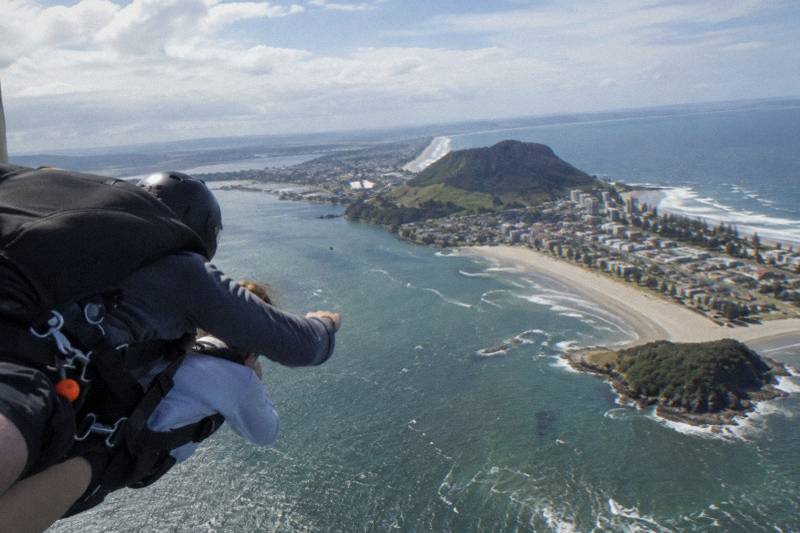
How Long Does A Tandem Skydive At Tauranga Airport Take, Door To Door?
A tandem jump at Tauranga Airport is booked as a 1.5 hour experience, but the operator asks for 30 minutes on top of that, and on busy or windy days the whole visit can stretch much longer. Here is the full timeline, minute by minute, and what makes the difference.
Short answer
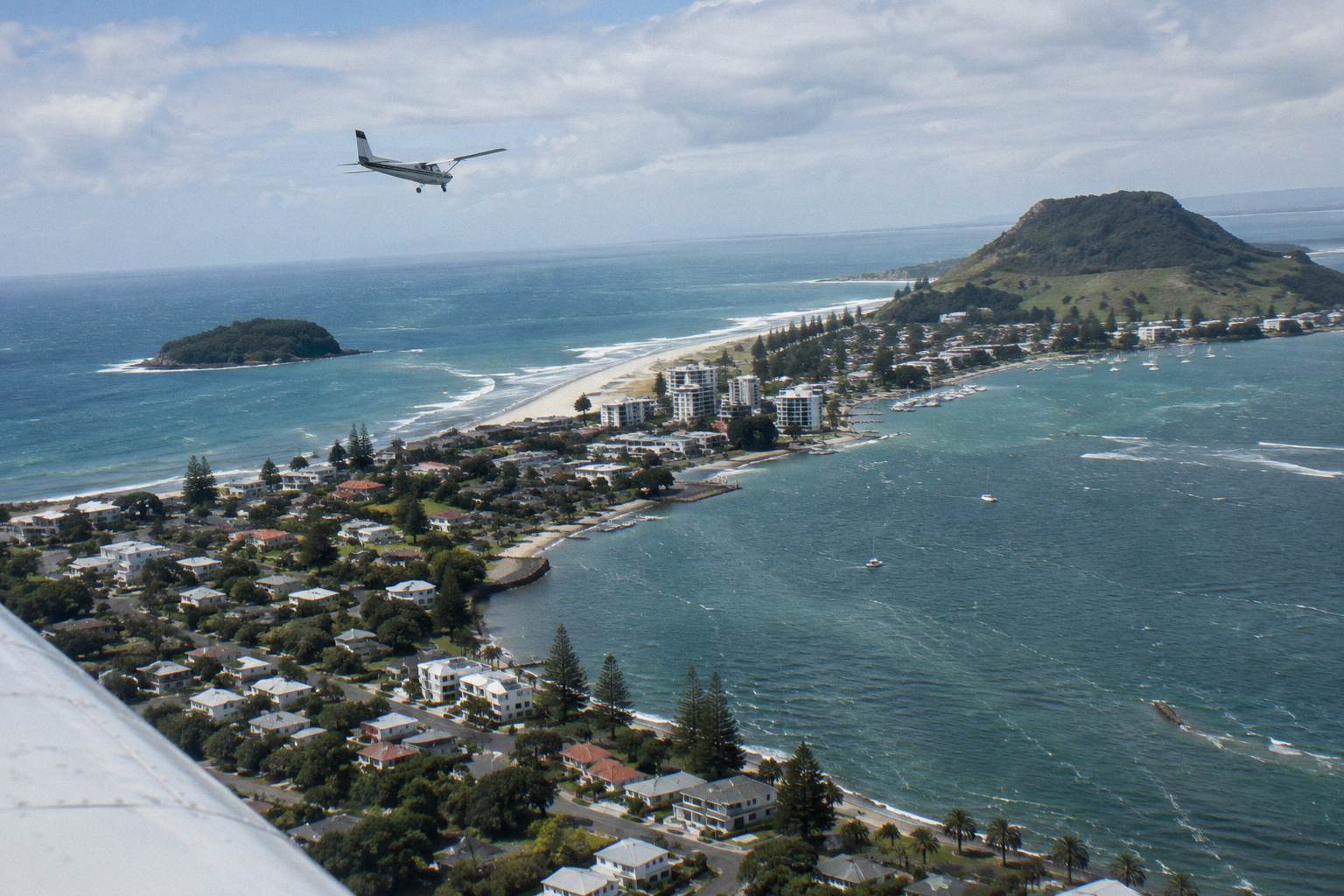
The operator says the whole experience takes between 1.5 and 2 hours, and asks you to arrive at least 30 minutes before your scheduled takeoff. Of that, the climb to altitude is 15 to 20 minutes, freefall is 40 seconds to a minute, and the canopy ride is a few minutes. Busy days, weather holds and airport traffic can push a visit toward four hours.
If you are planning a half day around a jump, the accurate starting point is the operator's own number: the whole experience takes between 1.5 and 2 hours from arrival to landing, and that clock only starts once you walk in the door. Add the 30 minute early arrival the operator asks for, travel to and from Tauranga Airport at Mount Maunganui, and any buffer for weather or a busy manifest, and a one hour adrenaline hit easily becomes a four hour block of your day. This page walks the timeline end to end, minute by minute, using the operator's own published timings plus the jump products you can book from this airport, starting with the tandem jumps available from Tauranga Airport.
| Fact | Detail |
|---|---|
| Total time on site | 1.5 to 2 hours, per the operator |
| Arrival buffer | At least 30 minutes before scheduled takeoff |
| Climb to altitude | 15 minutes to 12,000 ft, 20 minutes to 15,000 ft |
| Freefall | 40 seconds at 12,000 ft, about 1 minute at 15,000 ft |
| Canopy ride | A few minutes, 3 to 5 minutes by source |
| Aircraft | Cessna 182, two tandems at a time |
| Takeoff and landing | Both at Tauranga Airport, Mount Maunganui |
| Booking-page listing duration | About 1.5 hours |
How Long Is The Jump Itself, From Engine Start To Landing?
From engine start to landing, a Tauranga tandem jump takes roughly 25 minutes in the air: the climb lasts about 15 minutes to 12,000 ft or 20 minutes to 15,000 ft, freefall runs 40 seconds or about a minute respectively, and the parachute descent adds another 3 to 5 minutes.
That 25 minute airborne block is the fixed core of the day. Nothing you do on the ground shortens it, and almost nothing lengthens it either: the Cessna 182 climbs at its own pace, the tandem master opens the main parachute at a height New Zealand's parachuting rule sets at not less than 5,000 ft, per the Civil Aviation Authority Part 105 rule, and the descent from there is a steady glide back to the same patch of airport you took off from.
The operator is explicit that you get in the plane and land in the same place, with a viewing area for spectators beside the landing zone. There is no beach landing and no transfer between sites: once the door closes, your airborne time is one continuous flight from Tauranga Airport and back to it. That matters for planning, because it means the jump window itself is predictable in a way the surrounding day sometimes is not.
Freefall is where expectations drift the most. Forty seconds sounds short on paper and is the operator's stated figure for 12,000 ft; the 15,000 ft jump is listed at about a minute. If you want a longer taste of freefall rather than a longer day, altitude is the lever, and the difference between the two heights is covered further down this page.
What Does The Full Door To Door Timeline Look Like In Minutes?
From arriving at the car park to leaving with your camera files, expect a Tauranga jump day to take roughly 2 to 2.5 hours in total, though operators themselves quote 1.5 to 2 hours on site, and listings such as the Skydive Over Mount Maunganui option describe about 1.5 hours.
Here is the timeline as the operator's published timings stack up:
| Stage | Time | Notes |
|---|---|---|
| Arrive at the dropzone | 30 minutes before takeoff | Operator requirement, per the what to know page |
| Check in, waiver, briefing | 15 to 25 minutes | Medical declaration and harness fit |
| Gear up and wait for your lift | 10 to 20 minutes | Two tandems per aircraft load |
| Scenic climb to altitude | 15 minutes (12,000 ft) or 20 minutes (15,000 ft) | Treated as a scenic flight of the bay |
| Freefall | 40 seconds or about 1 minute | An indication only, varies with conditions |
| Canopy ride | 3 to 5 minutes | Sources give 3 to 4, 4 to 5, or about 5 minutes |
| Land, de gear, collect footage | 15 to 30 minutes | Camera files arrive by email by end of day |
Two structural facts shape the gaps. First, the aircraft takes two tandems at a time, so if you are jumping as a pair you share one load, and if you are in a group of four, your group needs at least two lifts. Second, the operator warns that jumps can run a little late due to weather or traffic on the airport, because the dropzone shares the field with scheduled airline traffic.
That is the arithmetic behind the four hour day people describe: it is rarely the jump that takes four hours, it is the queue. A busy manifest, a morning of holds, and a second load for your group multiply the fixed 25 minutes of airtime into a long visit.
The listings you can book from this airport all describe roughly the same shape of day. The "Skydive Over Mount Maunganui" listing gives 1.5 hours with a 20 to 25 minute scenic flight and, at its 15,000 ft option, about a minute of freefall; it carries a 5.0 rating from 66 reviews. The 15,000 ft Tandem Skydive listing also gives about 1.5 hours, and the Bay Of Plenty 15,000ft listing matches it. You can check availability on the 15,000 ft listing once you know which day has room, since slots on busy dates fill the manifest the same way walk ins do.
A quick way to see where the flexibility sits is to sort the timeline into fixed and variable blocks. The fixed blocks are the 30 minute early arrival, the scenic climb at 15 or 20 minutes depending on altitude, the freefall at 40 seconds or about a minute, and the canopy ride at 3 to 5 minutes. Add those up and the jump itself is a small slice of the visit no matter which altitude you pick. The variable blocks are check in at 15 to 25 minutes, gear up and waiting at 10 to 20 minutes, and landing plus footage collection at 15 to 30 minutes. Those three ranges alone span from 40 minutes to 75 minutes before any delays.
The altitude choice also nudges the day more than it first appears. Going from 12,000 ft to 15,000 ft adds 5 minutes to the climb and stretches freefall from 40 seconds toward a full minute, so the higher option buys roughly 20 extra seconds of freefall for a few more minutes on the aircraft. Everything else on the timeline, from waiver to camera files, stays the same.
Planning around the shared airport is the one lever you control. Since scheduled airline traffic can hold jumps, and since a group of four needs at least two lifts while a pair needs one, smaller groups and checking availability ahead rather than walking in both work in your favor on the manifest.
Why Do People Say A Skydive Takes Four Hours?
People say a skydive takes four hours because on a busy day it can. The fixed experience runs 1.5 to 2 hours, but four things stack on top: your load waits behind earlier jumpers when the manifest is full, weather holds pause jumping while clouds or wind clear, the shared airport occasionally delays takeoffs, and the two tandems per load limit splits groups across lifts.
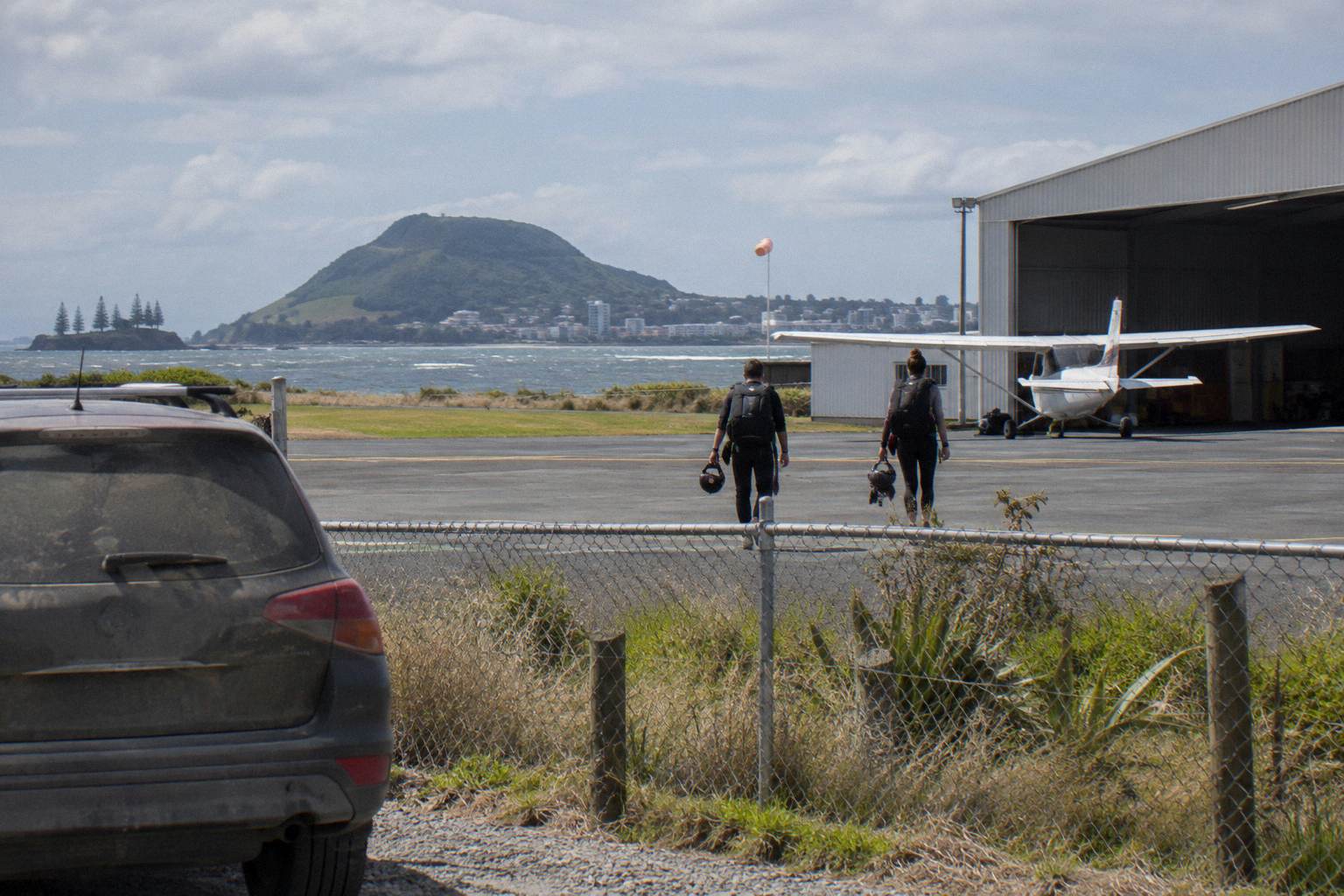
The weather hold is the big variable. The operator's policy, on its own FAQ page, is that if the weather does not look good they phone you on the day and work something out with you to fit your schedule, so at least the call comes early rather than after you have driven in. But a hold that hits mid morning pushes every later slot back, and a jump day that starts late often finishes late.
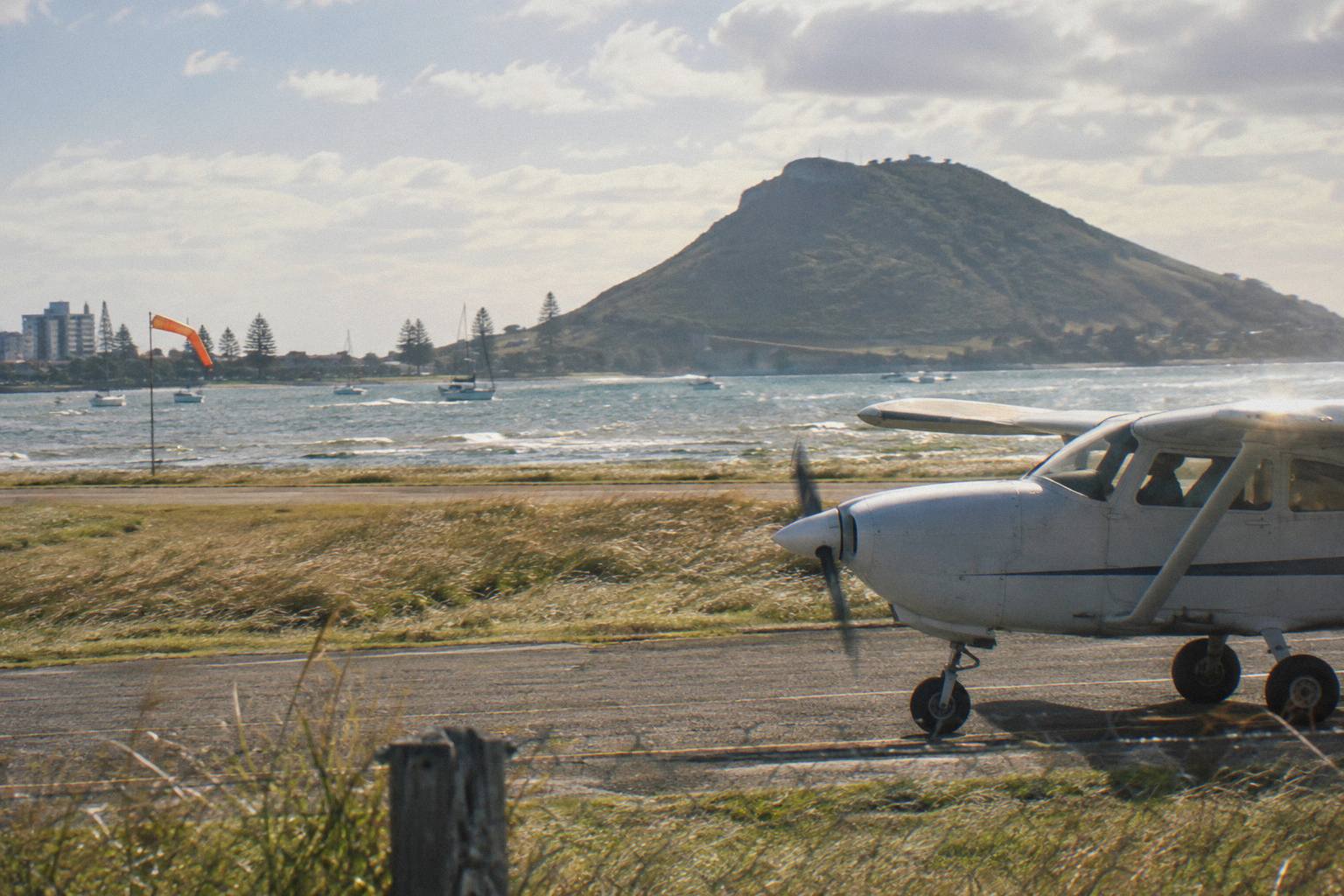
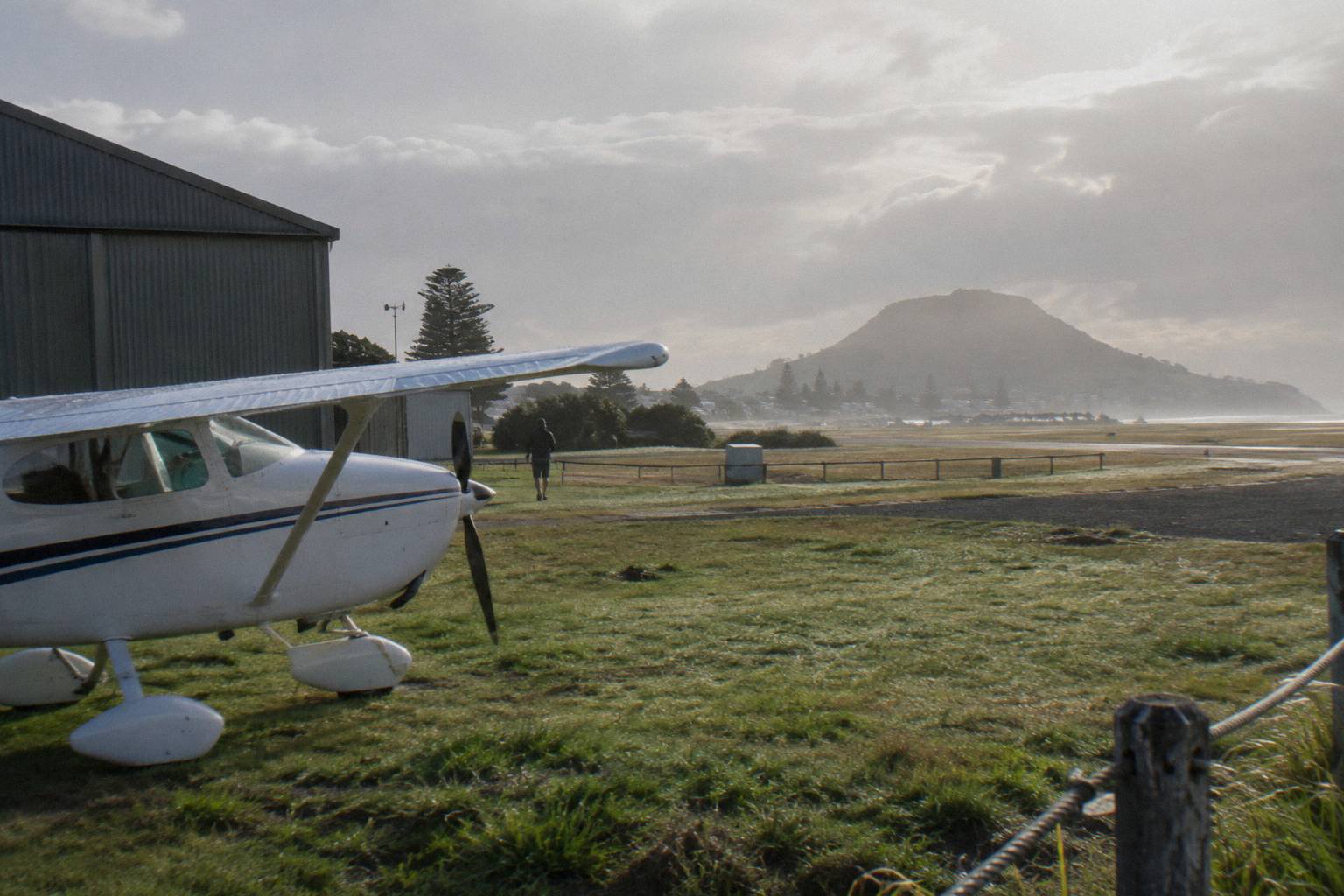
Airport traffic plays a part too. Tauranga Airport sits about 3 km northeast of the city centre, next to the harbour in the Mount Maunganui suburb, and it handles scheduled Air New Zealand services to Auckland, Wellington and Christchurch alongside the dropzone. The operator notes the landing area is small and there are plenty of airport rules to co exist with the airlines, which is why jump flights occasionally wait.
None of this argues against booking. It argues against booking a jump 90 minutes before a non negotiable commitment. The bookers who enjoy the day are the ones who clear the afternoon, treat the scenic climb as part of the product rather than dead time, and let the manifest run its course.
The booking form's own default slots are worth knowing: when no booking exists, the first jump of the morning is 10am and the first jump of the afternoon is 12pm, with earlier or later times assigned by availability. That is a hint about the shape of the day: mid morning and early afternoon are the natural anchor points, and everything queues around them.
How Does 12,000 Ft Vs 15,000 Ft Change The Clock?
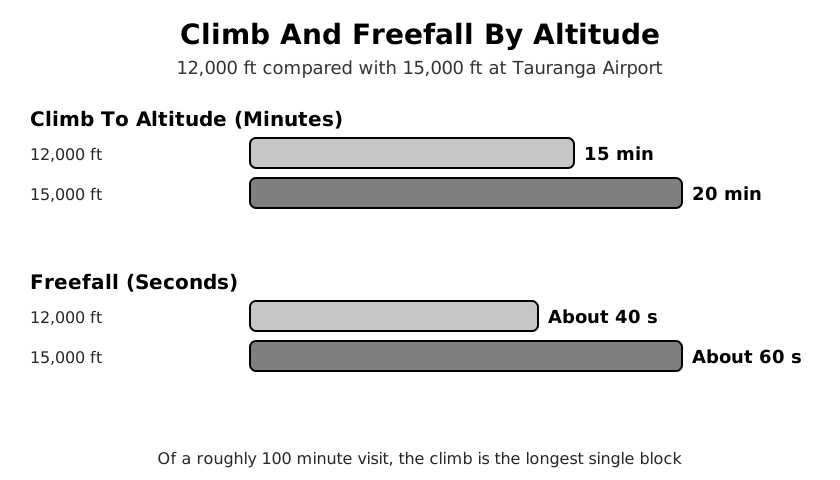
Choosing 15,000 ft over 12,000 ft adds only minutes to your day: roughly 5 extra minutes climbing and about 20 seconds more freefall, with everything else identical. The 12,000 ft jump costs NZ$449 direct with the operator, while the 15,000 ft jump costs NZ$549, so if your schedule is tight, the cheaper option also finishes first.
| Timing | 12,000 ft | 15,000 ft |
|---|---|---|
| Scenic climb | 15 minutes | 20 minutes |
| Freefall | 40 seconds | About 1 minute |
| Canopy ride | A few minutes, 3 to 5 | A few minutes, 3 to 5 |
| Operator direct price | NZ$449 | NZ$549 |
| Total on site | 1.5 to 2 hours | 1.5 to 2 hours |
Notice what does not change: the airborne difference between the two heights is about five and a half minutes, and the ground time is the same. Choosing 15,000 ft does not mean committing to a longer visit, it means committing to a longer freefall inside the same visit. The physics is straightforward, more altitude is more time falling at terminal speed, but the practical effect on your calendar is close to nothing.
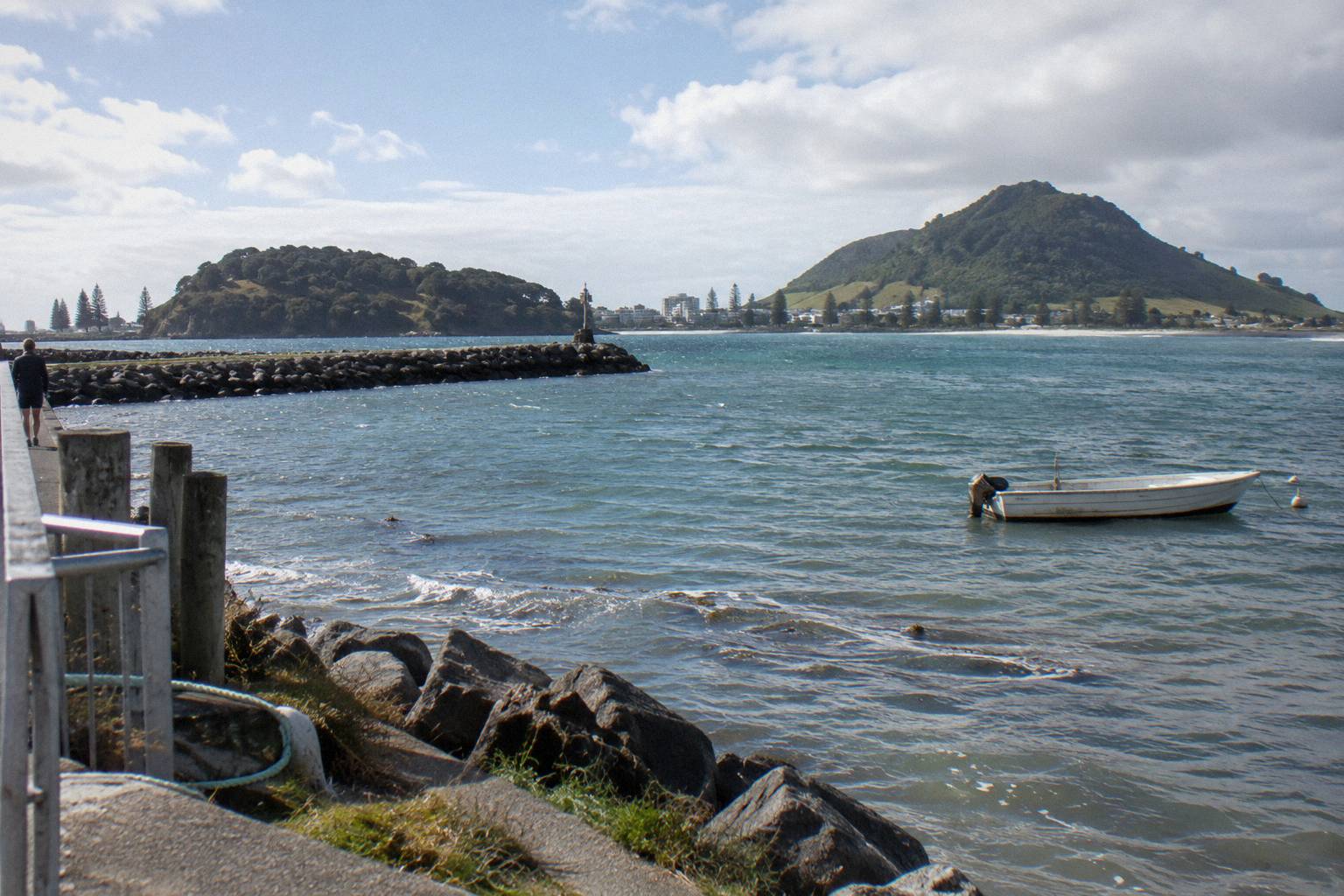
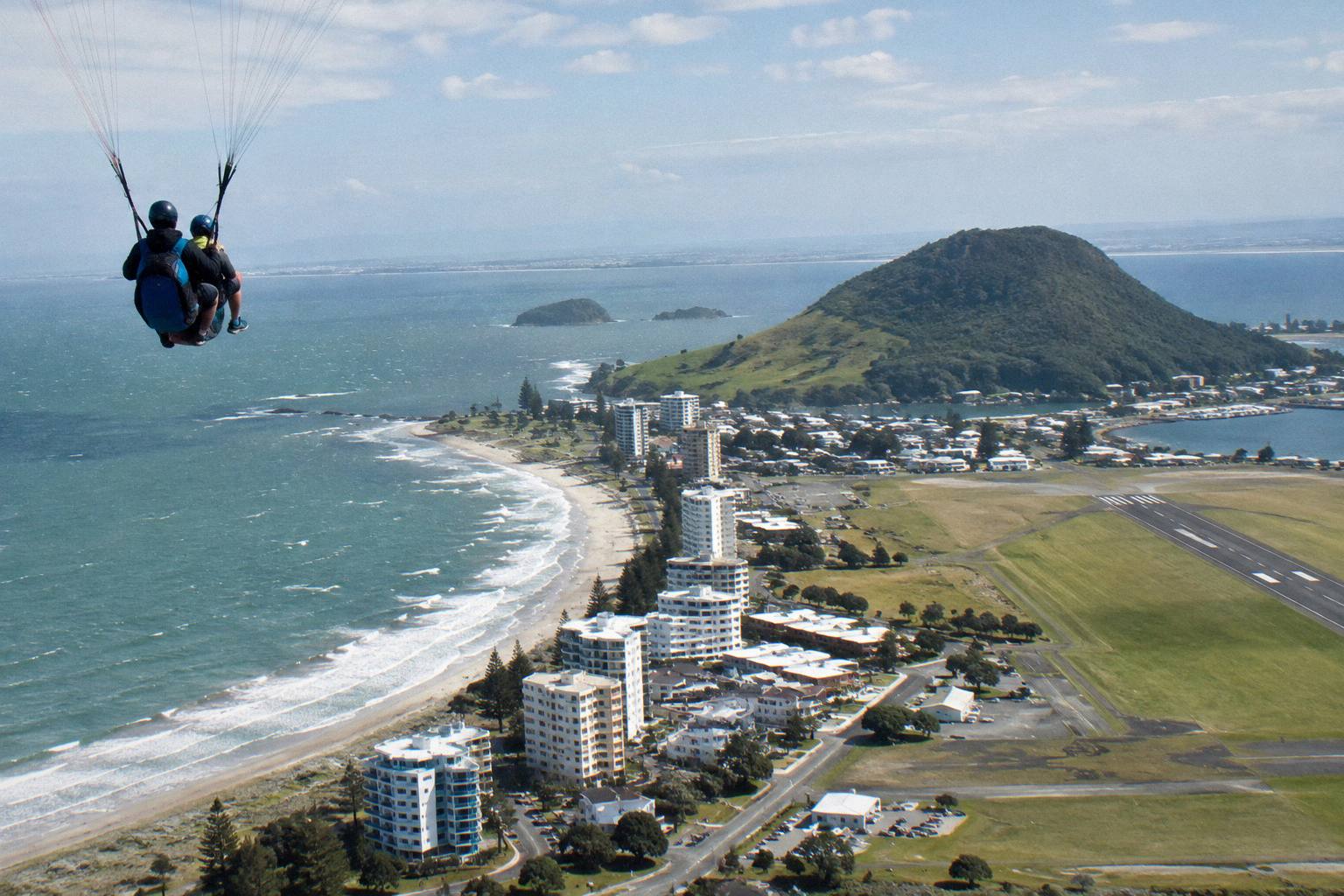
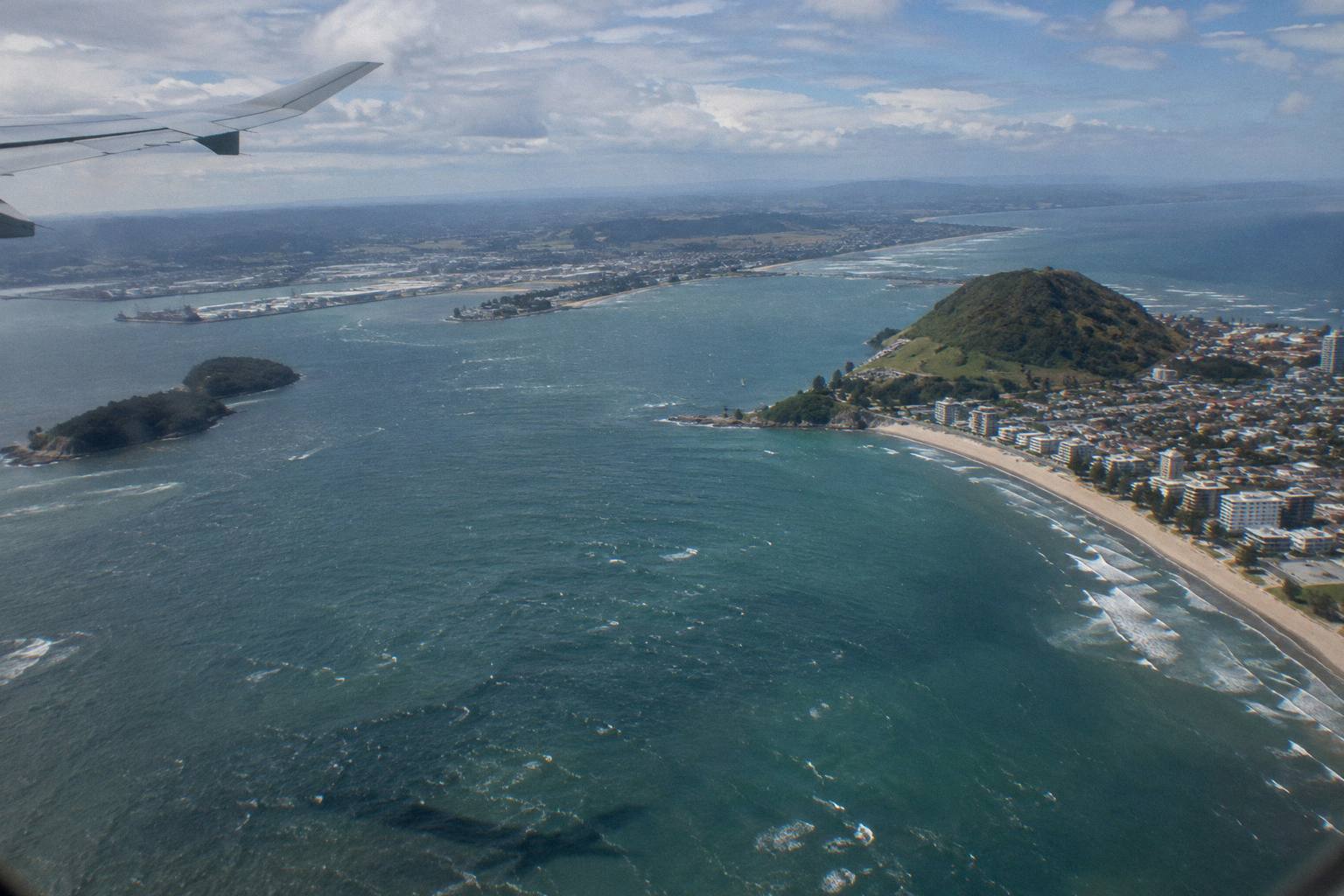
The operator describes the climb itself as a scenic flight, 15 or 20 minutes over the bay with views of the 232 metre headland of Mauao, the 20 kilometre long Matakana Island and the coast beyond. If you are weighing the two heights purely on time, take the higher one: five extra minutes buys you the difference between 40 seconds and a full minute of freefall, which is the part you came for.
What Should You Do With The Waiting Time On The Ground?
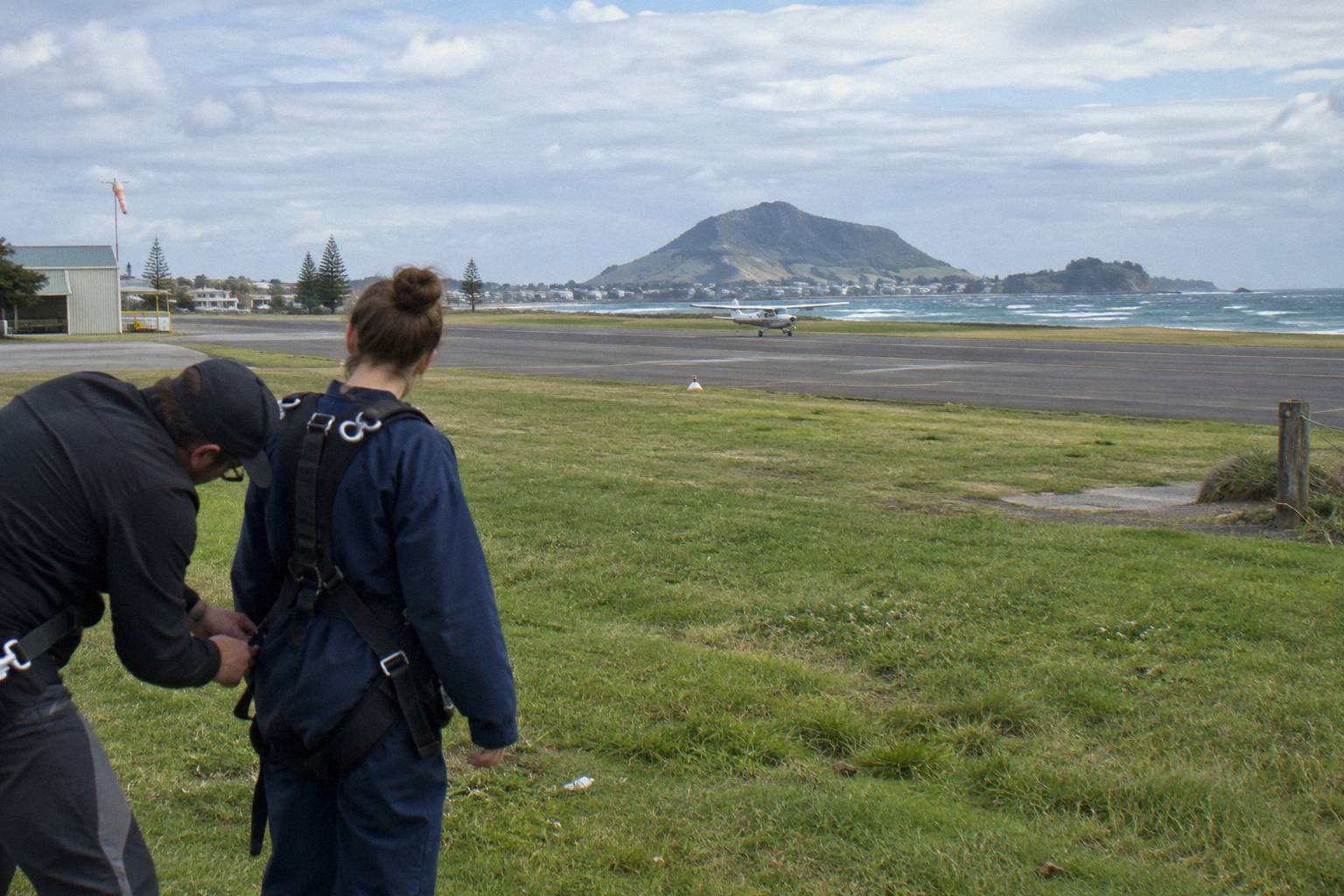
Plan for the wait rather than resent it. Your 30 minute early arrival goes on check in and the waiver, which asks you to declare conditions such as severe motion sickness, asthma, heart conditions, epilepsy or sinus congestion, and the operator can withdraw anyone likely to endanger themselves or others. Spectators get a viewing area beside the landing zone, and camera files arrive by email by day's end.
The waiver is the one piece of paperwork worth pre thinking, because it is where a medical question can pause or end your jump. If a declared condition needs discussion, that conversation is better had before you are standing in a harness with a load waiting. The operator also asks passengers not to scuba dive within 24 hours of a jump and does not recommend skydiving while pregnant or with a spinal or back injury, per the operator's waiver page.
Photos and video are paid extras, never bundled into the jump price. The outside camera flyer package, where another skydiver films your jump from beside you, must be prebooked, so that is a decision to make when you book rather than on the day. The wrist camera and 360 options can be arranged at the dropzone, but pre deciding saves queue time at the counter on a full manifest.
Once you have landed and handed back the gear, you are free to go. Because camera files come by email later, the last 15 to 30 minutes on site is genuinely short, and most jumpers are driving out of the airport within two hours of arriving even on an ordinary day.
How Do You Plan A Half Day Around The Jump?
Plan backwards from a 2 hour on site block, then add travel time plus a margin. From central Tauranga the airport is minutes away; the sourced drives are about 50 minutes from Rotorua, about 1 hour 25 minutes from Hamilton, and about 1 hour 50 minutes to 2 hours from Taupo. Cruise passengers get the simplest version: the airport is a 5 to 10 minute drive from the cruise dock at Mount Maunganui, per the operator.
For most visitors the practical answer is to anchor the jump to the morning. The default first lift of the day is 10am when nothing is prebooked, morning slots are where availability concentrates, and finishing before lunch leaves the afternoon for everything else on your list, covered in the guide to things to do after a jump. If you are deciding between a morning and an afternoon slot, the best time of day guide walks the trade offs without promising any weather outcome.
Drivers from out of town should treat the sourced drive times as best case and add the 30 minute arrival buffer on top. A Taupo based visitor, for example, is committing the better part of a day door to door, and might reasonably weigh the Taupo listings instead, a comparison the Tauranga versus Taupo guide sets out in full. For a deeper background on what the day actually contains minute to minute, the what happens on a jump guide is the companion read.
What About Cruise Passengers On A Tight Clock?
Yes, a Skydive Tauranga jump fits a cruise stop, since the operator says the airport is just a 5 to 10 minute drive from the cruise ship dock and the in port experience runs 1.5 to 2 hours, leaving plenty of room in a standard shore day even with the arrival buffer. The real risk is a weather hold on your single afternoon ashore, so booking an early slot is the safer play.
The 2026 to 2027 Tauranga cruise season runs October to April with 79 ship calls expected, so plenty of passengers face exactly this arithmetic each week. The full planning walkthrough, including what to do if the ship is late, sits in the skydive on a cruise stop guide. The short version: book the earliest slot you can, cancel free up to 24 hours before the start if your plans change, and have a backup activity in mind in case the operator phones about weather.
One structural point protects cruise bookings: every jump listing here carries free cancellation up to 24 hours before the start, which covers the classic shore excursion worry of the ship changing plans. Direct bookings with the operator follow different payment terms, card held to reserve and payment on the day, so read whichever route you book through before assuming the same flexibility.
How Does The Waiting Compare With Other Skydive Products?
Compared with the other jumps you can book in this region, the Tauranga timeline is the short one. Tauranga listings describe about 1.5 hours on site, while Taupo listings describe about 2 hours on site, and Taupo sits roughly 1 hour 50 minutes to 2 hours by road from Tauranga, so choosing the Taupo dropzone roughly triples your day once travel is counted.
This is the comparison that answers the four hour question in reverse. If your constraint is time rather than height or scenery, jumping from Tauranga Airport is the compact choice: the lake country jump is a bigger commitment of your calendar, and the Tauranga Skydive product line puts the aircraft minutes from the city centre. The trade offs between the two dropzones, including the different age and weight rules that apply in Taupo, are laid out in the North Island drop zone comparison.
Scenic flights deserve a mention for anyone travelling with a non jumper. The 30 minute fixed wing Mount Maunganui scenic flight and the helicopter options from the same airport area run on their own schedules with no tandem manifest, so a companion can fly while you wait for your load, effectively folding two experiences into the same airport visit. Nobody jumps on those flights, and their timing has nothing to do with the jump manifest, which is exactly why they slot neatly into waiting time.
What Trips People Up Before You Book
Most bad jump days trace back to three timing mistakes: booking a slot that ends hard against another commitment, forgetting the 30 minute early arrival on top of the 1.5 to 2 hour experience, and assuming the 1.5 hour listing duration means the whole visit when the operator's FAQ says up to 2 hours on site, and weather or a busy manifest can extend it. Build your day around a 3 hour block instead.
A fourth, quieter mistake is weight related logistics: the jump rules are 30 kg minimum, book freely under 110 kg, and phone the operator above that, and a conversation about a surcharge or harness fit belongs at booking time, not in the gear up queue. The weight limit guide covers the details, including why the operator's own pages show two different maximums.
Finally, do not confuse the two cancellation regimes. The booking-page listings carry free cancellation up to 24 hours before the start. Direct bookings with the operator are free if cancelled before the day before, 50 percent the day before, and full price on the day, terms the operator states if you book direct. Whichever you choose, know which set of terms you are holding before your plans wobble, because the difference on the day is real money.
Common Questions About Jump Day Timing
How Long Does A Tauranga Tandem Skydive Take In Total?
The operator says the whole experience takes between 1.5 and 2 hours on site, with the booking-page listings describing about 1.5 hours. Add the 30 minute early arrival the operator asks for, plus travel, and plan a half day.
Why Does Skydiving Take 4 Hours?
On busy days the manifest queues: the aircraft takes two tandems at a time, weather holds pause jumping, and shared airport traffic can delay takeoffs. The jump itself is a fixed 25 minutes airborne, but the waiting around it stretches on full or weather affected days.
How Long Is The Plane Ride Before The Jump?
The climb to 12,000 ft takes about 15 minutes and the climb to 15,000 ft about 20 minutes, per the operator. The operator describes it as a scenic flight over the bay, so it is treated as part of the product rather than transit.
How Far In Advance Should I Arrive At The Dropzone?
At least 30 minutes before your scheduled takeoff, per the operator's what to know page. That window covers check in, the waiver and harness fitting.
Does The 15,000 Ft Jump Take Longer Than 12,000 Ft?
Only by about 5 minutes of climb and about 20 seconds of freefall. The on site time is the same 1.5 to 2 hours for both heights.
Is A Tauranga Skydive Feasible On A Cruise Stop?
Yes. The operator says the airport is a 5 to 10 minute drive from the cruise dock, and the in port experience is 1.5 to 2 hours, so an early slot fits a standard shore day with room to spare.