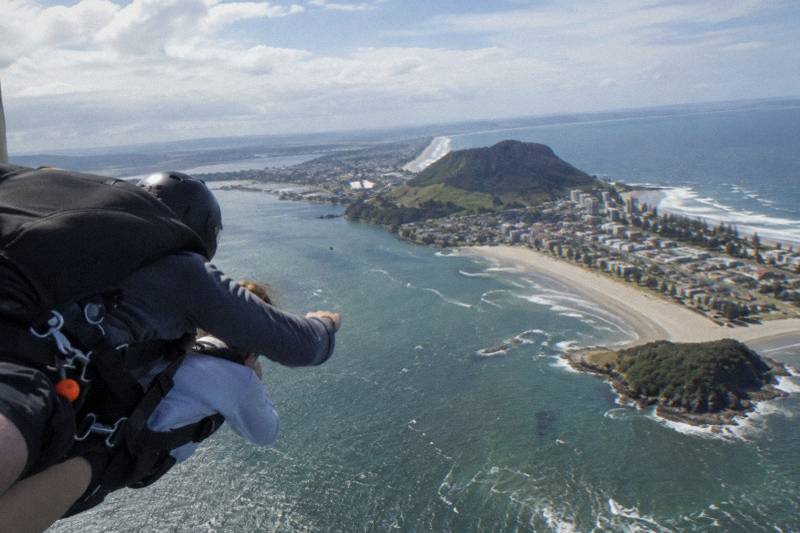
Who Is Not Allowed To Skydive? Rules At Tauranga Airport
The age, weight and health rules that stop someone jumping at Tauranga Airport, and the ones the operator can bend with a phone call or a consent letter.
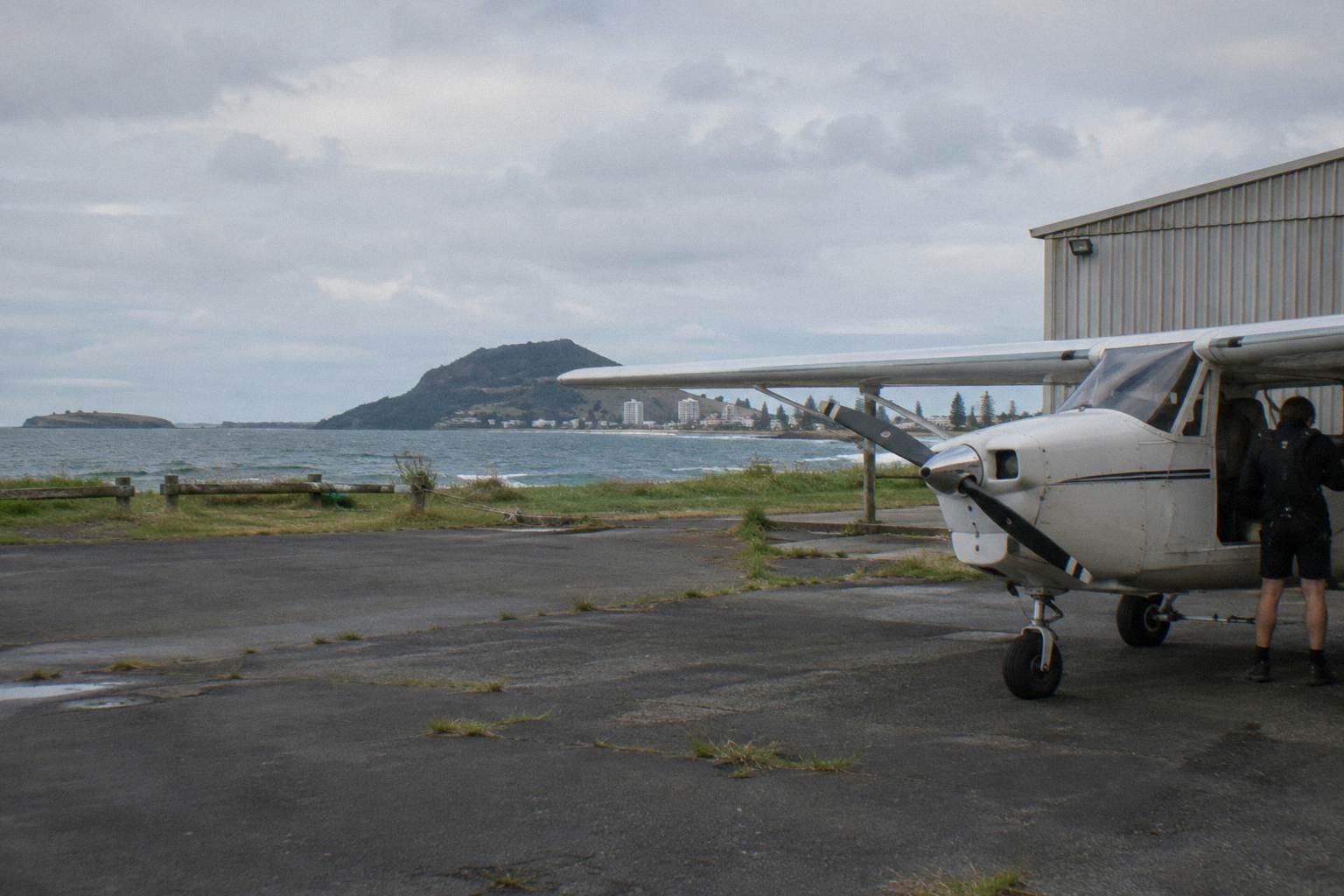
In short: a handful of rules are fixed and a surprising number are conversations. The operator at Tauranga Airport sets minimum age 7, minimum weight 30 kg, and a booking threshold of 110 kg above which you phone ahead. Pregnancy, scuba diving within 24 hours and a spinal or back injury are listed as not recommended, and medical conditions such as asthma, epilepsy or heart conditions must be declared on the waiver. New Zealand law sets no maximum age at all. The operator also reserves the right to withdraw anyone they believe could endanger themselves or others, which is the rule behind every other rule. This page works through each limit in order, including how the Taupo drop zones differ, so you know before you book whether you fit.
If you are weighing a first tandem jump, start with the tandem skydive options from Tauranga Airport hub, which lists every jump that meets these rules from the same drop zone.
| Fact | Detail |
|---|---|
| Minimum age | 7, set by the operator, not by law |
| Under 18 | Needs a consent letter from a parent or guardian |
| Under 12 | Asked to visit the dropzone first for a harness fitting |
| Minimum weight | 30 kg, based on safe harness fit |
| Booking threshold | Under 110 kg, book freely; over 110 kg, phone first |
| Over 110 kg | Small surcharge, paid to the Tandem Instructor |
| Not recommended | Pregnancy, scuba diving within 24 hours, spinal or back injury |
| Declare on the waiver | Asthma, allergies, heart conditions, epilepsy, severe motion sickness, sinus congestion |
| Maximum age | None in New Zealand law |
| Takeoff and landing | Both at Tauranga Airport, Mount Maunganui |
Who Is Not Allowed To Skydive?
At Skydive Tauranga, no one under 7 years old, under 30 kg, or over 110 kg without calling the operator first may jump, and the waiver also lists pregnancy, scuba diving within 24 hours, and a spinal or back injury as not recommended, while the operator can refuse anyone judged likely to endanger themselves or others.
That is the whole list, and it is shorter than most people expect. New Zealand has no legal age restriction for tandem skydiving; the age 7 minimum is the operator's own choice, and their reasoning is that the jump should be the child's own decision, and that the child must also meet the 30 kg weight minimum and fit safely into the harness. The weight band between those bookends is generous, but it is a band, not a ceiling with an exception process baked in above 110 kg. Above that figure the operator asks you to call and talk it through based on your weight and size, and a small surcharge applies which goes to the Tandem Instructor for the added strain.
The health items sit on the waiver rather than the booking form. The operator does not recommend a skydive if you are pregnant, have been scuba diving within 24 hours, or suffer from a spinal or back injury. They ask you to list conditions such as severe motion sickness, asthma, allergies, heart conditions, epilepsy, or nasal or sinus congestion, so they can include you safely, and they reserve the right to cancel the skydive if they become concerned for your safety or anyone else's. Declaring a condition is not the same as being refused; it starts a conversation the instructor needs to have.
If your situation clears those lines, the jump itself is booked on the calendar of your chosen date, and the Skydive Over Mount Maunganui listing is the natural first check: it runs from the same airport, offers a 12,000 or 15,000 ft option, and carries a 5.0 rating from 66 reviews with free cancellation up to 24 hours before the start.
How Young Is Too Young To Jump?
Seven is the floor, and it is the operator's own limit rather than a legal one. Children under 7 cannot jump at Tauranga Airport at any weight. Between 7 and 11, the child must visit the dropzone first to meet staff and be fitted in a harness before a booking goes ahead. Anyone under 18 needs a letter of consent from a parent or guardian. There is no upper age limit in New Zealand law at all.
The consent letter is the piece families most often miss. A 15 year old who meets the weight minimum is welcome to jump, but not without written permission from a parent or guardian, so it needs arranging before the day rather than at the hangar. The pre-visit rule for under 12s exists because the harness fit matters as much as the number on the scale: a child can clear 30 kg and still be too slight for the webbing to sit correctly, and that is something staff judge in person.
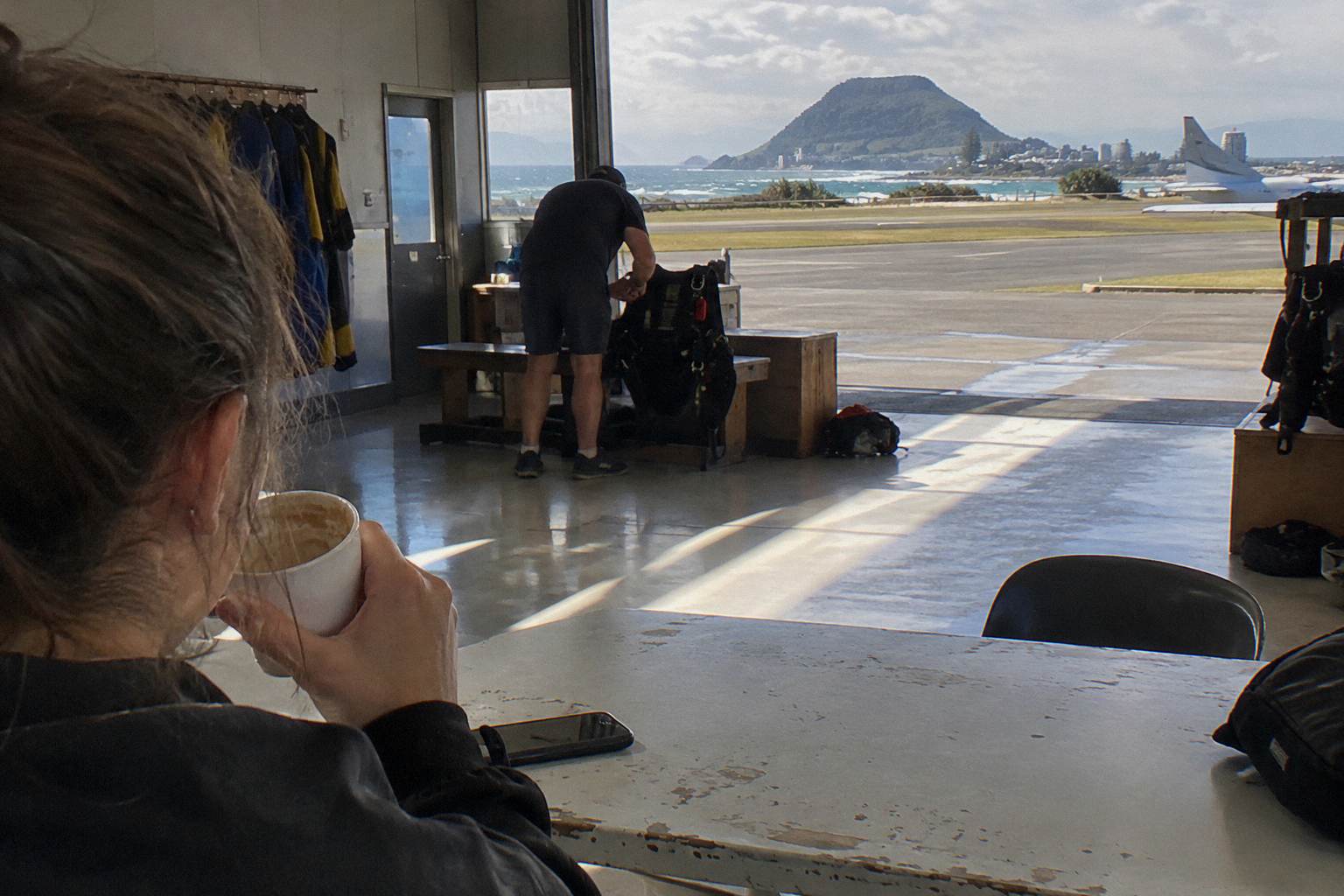
At the other end of life, the ceiling simply does not exist. Operators around the country report taking passengers in their nineties, and the assessment on the day is fitness and harness fit, not birth year. If an older relative is hesitating, the practical question is not age but whether they can lift their legs for landing, a point covered in the site's guide to the age limits for a Tauranga skydive.
What Are The Weight Rules?
The minimum weight is 30 kg and the practical booking threshold is 110 kg: under that figure you book without asking, over it you phone the operator first. The operator's own pages are not perfectly aligned on the ceiling, with one page naming 115 kg including clothes and shoes, so 110 kg with a phone call above it is the safe reading. A small surcharge applies above 110 kg, paid to the instructor.
The operator's FAQ puts it plainly: if you are under 110 kg you do not even need to ask, just book. If you are over 110 kg, it is a little more complicated, and the conversation is about your weight and size together, because harness fit and the physical demands on the Tandem Instructor are what the rule protects. The surcharge above the threshold is described only as small; no dollar figure is published, so ask when you call.
There is no published BMI rule. The 30 kg minimum is likewise about the harness: the operator says it is more about being able to fit safely into the harness than the number itself. For the fuller picture, including what the different pages say and how to handle a booking near the line, read the guide to the weight limit for a Tauranga skydive.
Which Health Conditions Must You Declare?
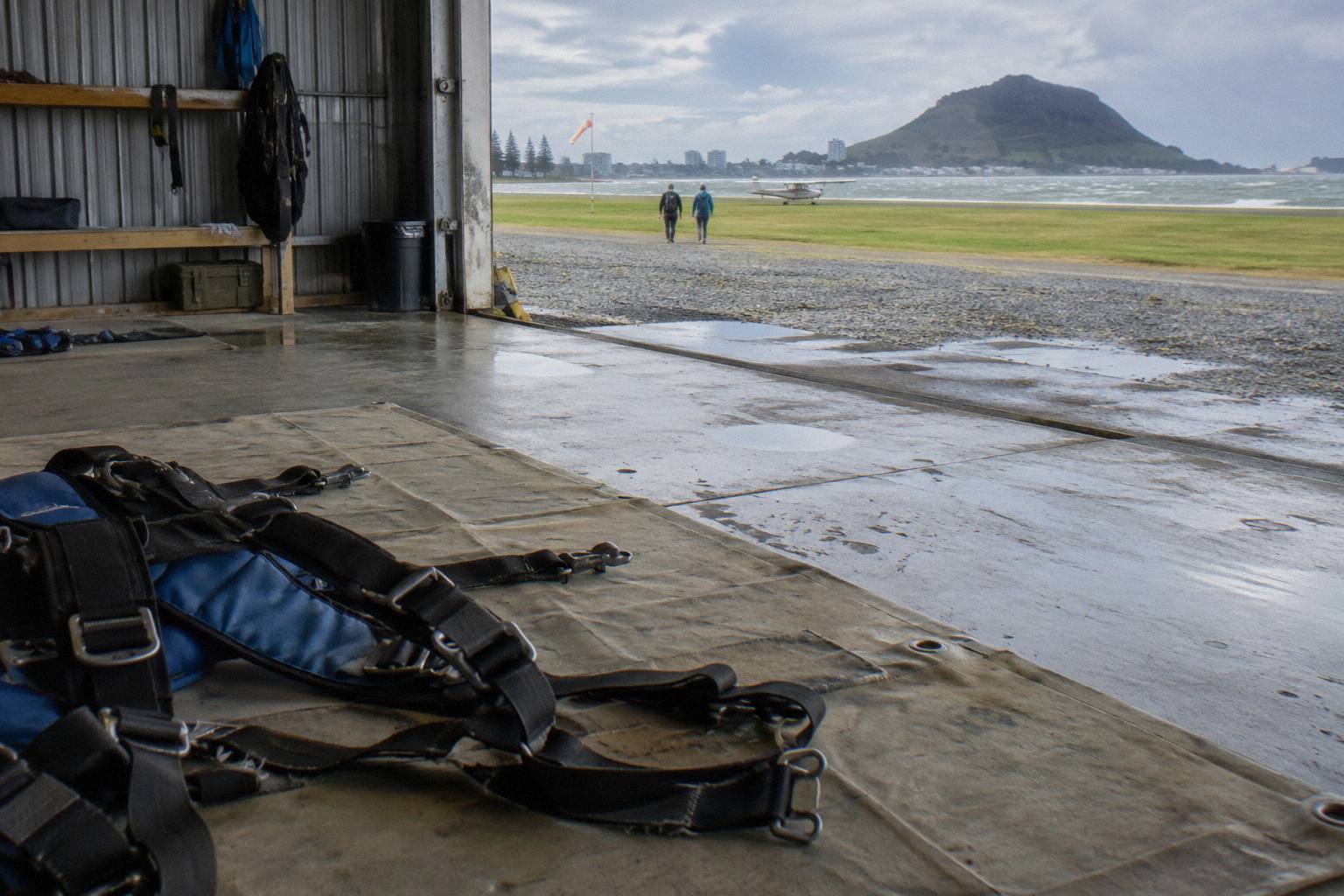
The waiver asks you to list severe motion sickness, asthma, allergies, heart conditions, epilepsy, and nasal or sinus congestion, plus any other condition staff need to know about. Declaring a condition is a safety step, not an automatic bar: the operator uses the information to include you safely, and may refuse only if they believe you could endanger yourself or others. Well-managed conditions are commonly jumped with.
The list sits on the operator's waiver page, and it is deliberately open-ended: any medical conditions or other information needed to include you safely. The reason is practical. Freefall, harness pressure under canopy and the landing all place demands on the body, and the instructor needs to know what they are managing before the aircraft door opens, not after.
Three items get their own sentence on the waiver as not recommended rather than merely declared: pregnancy, scuba diving within 24 hours, and a spinal or back injury. These are the closest things to a health bar the operator publishes. Pregnancy is not permitted in tandem skydiving under guidance the industry follows internationally, because of harness pressure and rapid deceleration. Scuba diving leaves residual nitrogen in the blood, and the rule is the same one the US Parachute Association applies: no skydiving within 24 hours of a dive.
If a named condition applies to you, the site has a fuller walkthrough of medical conditions and a Tauranga skydive, including what to settle with your doctor before booking.
Can The Operator Refuse You On The Day?
Yes, and the waiver says so in two directions: they reserve the right to withdraw any person who, in their opinion, is likely to endanger themselves or others, and to cancel the skydive if they become concerned for safety. In practice this covers intoxication, an undeclared condition that surfaces at the dropzone, a harness that will not fit safely, and weather, which the operator handles by phone on the day and works around your schedule.
That clause sounds stern, but it is the mechanism that keeps every other rule true. It is also rarely used against a cooperative jumper. The person who arrives on time, in closed shoes, having declared their conditions and eaten a light meal, is not the person it is written for. The person it is written for is the one who omitted something material on the form, or whose fitness on the day is visibly not what the booking assumed.
Weather refusals are a separate track entirely. The operator calls you on the day if conditions look poor and works something out to fit your schedule; the booking-page terms on the jump listings carry free cancellation up to 24 hours before the start, which is the window that matters if you decide to pull out yourself. The interplay of weather calls, refunds and rescheduling is unpacked in the guide to weather and cancellations for a Tauranga skydive.
Do The Rules Change At The Taupo Drop Zones?
Yes, and the differences are per product rather than universal. The Taupo listings set minimum age 10 and a 100 kg maximum on the 12,000 and 15,000 ft listing, against Tauranga's age 7 and 110 kg booking threshold. Pickup terms also differ per listing: one Taupo listing includes hotel pickup, another offers free pickup and drop-off from Taupo accommodation, and the Tauranga jumps list none. Check the specific listing, not the country, when you compare.
| Rule | Tauranga Airport jumps | Lake Taupo 12,000ft Skydive | Up To 15,000ft Over Lake Taupo |
|---|---|---|---|
| Minimum age | 7 | 10 | 10 |
| Weight range | 30 to 110 kg | 100 kg maximum | 100 kg maximum |
| Operator | Skydive Tauranga | Taupo Tandem Skydiving | Taupo Tandem Skydiving |
| Pickup | Not listed | Included | Free from Taupo accommodation |
| Free cancellation | Up to 24 hours before start | Up to 24 hours before start | Up to 24 hours before start |
The lesson is not that one drop zone is stricter than the other; it is that eligibility travels with the product. A 9 year old who meets the weight minimum can jump at Tauranga Airport but not at Taupo. A 105 kg passenger phones Tauranga but cannot book the Taupo listing named above at all. The comparison is worked through in full in Tauranga versus Taupo skydiving, including the drive time of roughly two hours each way.
One Taupo listing deserves its own note for eligibility purposes: the Helicopter Plus 15,000ft Skydive product, run by Heli Adventure Flights from Wairakei, includes photos and videos, which the Tauranga jumps sell as paid extras. That is an inclusion difference, not an eligibility one, but it changes the arithmetic for anyone comparing the two experiences.
Who Is Not Allowed To Skydive? The Clear-Cut List
Nobody under 7, nobody under 30 kg, and nobody over 110 kg who has not phoned first: those are the only automatic bars at Tauranga Airport. Alongside them sit three not-recommended cases, pregnancy, scuba diving within 24 hours and a spinal or back injury, and a declare-first list of conditions including asthma, epilepsy, heart conditions and severe motion sickness. Everything else is an assessment the operator makes with you.
Read that way, the answer to the question is reassuringly short. Most people who worry they cannot jump, the 58 year old, the person with managed asthma, the teenager with a consent letter, are inside the rules. The people genuinely outside them are few, and they usually already know who they are.
What Trips People Up Before You Book
The recurring mistakes are booking without reading the weight threshold, arriving without the consent letter for an under 18, treating a declared condition as a disqualification when it usually is not, and forgetting the 24 hour scuba rule after a dive trip. Each one is avoidable in minutes: weigh yourself with clothes on, write the letter the day before, declare everything on the waiver, and count 24 hours from your last dive before you pick a jump time.
The weight mistake is the most expensive because it is the one the booking form catches. The form asks you to note that the maximum weight is 110 kg and to call if any jumper is over it, so a booking made anyway can unravel at the hangar. Weigh yourself in the clothes you will jump in, not gym kit, and if the number is near the line, make the call before paying anything.
The consent letter mistake is the most avoidable. A family books a holiday week, the 16 year old is excited, and the letter requirement surfaces on the day with no parent present to write it. Write it before you leave home, bring the guardian's contact number, and the problem does not exist. For the under 12s, the pre-visit to the dropzone is part of the rule itself, not a suggestion, so fold it into your itinerary.
The declaration mistake runs the other way: people quietly omit a condition, assume it disqualifies them, and lose the jump anyway when it surfaces. Declare it. The waiver exists so the operator can include you safely, and the industry guidance is that well-managed conditions are commonly cleared for tandem jumps. The full health picture, including fitness checks, is in the site's fitness and health checks for a Tauranga skydive.
Finally, if the answer to all of this is that you qualify, Check availability on the Mount Maunganui jump for your dates, or compare it with the 15,000 ft options first. The booking calendar shows the times open on your day.

Whether you are booking for yourself or checking on behalf of a family member, the hub at Tauranga Skydive collects the airport's jump listings alongside the scenic flights that run from the same apron, useful if one member of a group does not clear the rules above but still wants to fly.
Common Questions About Who Can Jump
Who Is Not Allowed To Skydive?
At Tauranga Airport: anyone under 7, anyone under 30 kg, and anyone over 110 kg who has not phoned the operator first. The waiver additionally lists pregnancy, scuba diving within 24 hours and a spinal or back injury as not recommended, and conditions such as asthma, epilepsy or heart conditions must be declared. The operator can withdraw anyone they judge a safety risk.
Can You Skydive If You Are Over 110 Kg?
Not by booking online. The operator asks anyone over 110 kg to call and discuss it based on weight and size, and a small surcharge applies which goes to the Tandem Instructor. Some passengers above the threshold do jump after that conversation; it is an assessment, not a flat refusal.
Can Children Do A Tandem Skydive?
From age 7, if the child weighs at least 30 kg and fits safely in the harness. Children under 12 are asked to visit the dropzone first to meet staff and be fitted, and anyone under 18 needs a consent letter from a parent or guardian.
Is There An Age Limit For Older Jumpers?
No legal maximum age exists for tandem skydiving in New Zealand, and the Tauranga operator publishes no upper limit. Operators around the country report taking passengers in their nineties; the assessment on the day is fitness and harness fit.
Can You Skydive With Asthma Or A Heart Condition?
You must declare it on the waiver. The operator asks for conditions including asthma, allergies, heart conditions, epilepsy, severe motion sickness and sinus congestion so they can include you safely; declaring a condition is not an automatic refusal, and the operator may refuse only if they believe you could endanger yourself or others.
Can You Skydive After Scuba Diving?
Not within 24 hours. The operator's waiver lists scuba diving within 24 hours among the situations where a skydive is not recommended, which matches the standard industry rule about residual nitrogen after a dive.