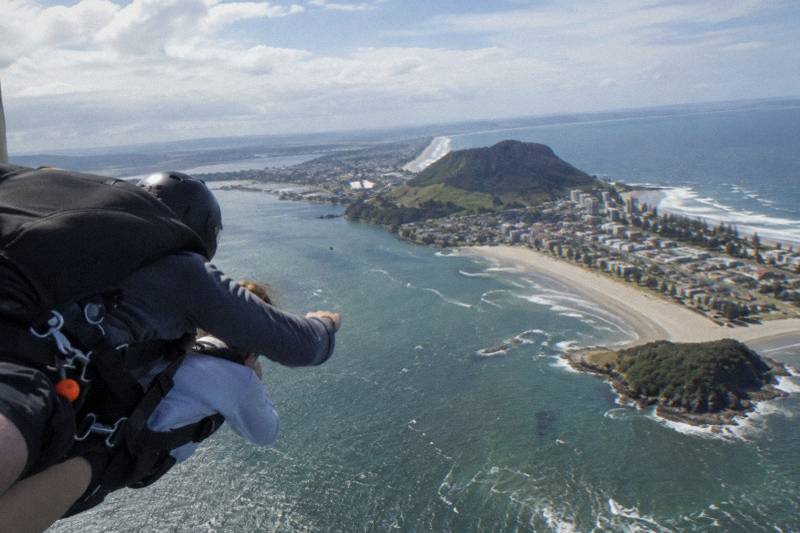
How Scary Is First Time Skydiving? What To Expect At Tauranga Airport
A plain answer to how scary a first tandem skydive really is, with the structure of the day at Tauranga Airport, what the fear actually feels like, and what to settle before you book.
In short: yes, a first tandem jump is scary, and nerves are a normal part of it. The fear peaks in the hour before the jump and again in the few seconds around the exit, then fades fast once the parachute opens. The operator asks you to allow 1.5 to 2 hours for the whole experience, and the frightening part proper, freefall, lasts about 40 seconds at 12,000 ft or about 1 minute at 15,000 ft. Screaming is allowed, and the instructor is clipped to you the whole way down.
If you are weighing a jump from Tauranga, start with the tandem skydive options from Tauranga Airport, which explain the meeting point and the airfield at Mount Maunganui where every core jump listing takes off and lands.
| Fact | Detail |
|---|---|
| Where you jump | Tauranga Airport, Mount Maunganui, takeoff and landing in the same place |
| Minimum age | 7, set by the operator, and it must be the child's own decision to jump |
| Weight rules | Book freely under 110 kg; over 110 kg, phone the operator first |
| Climb to altitude | 15 minutes to 12,000 ft, 20 minutes to 15,000 ft |
| Freefall | About 40 seconds at 12,000 ft, about 1 minute at 15,000 ft, indication only |
| Canopy ride | A few minutes, 3 to 5 minutes by the operator's own pages |
| Time on site | 1.5 to 2 hours, arriving 30 minutes before your takeoff |
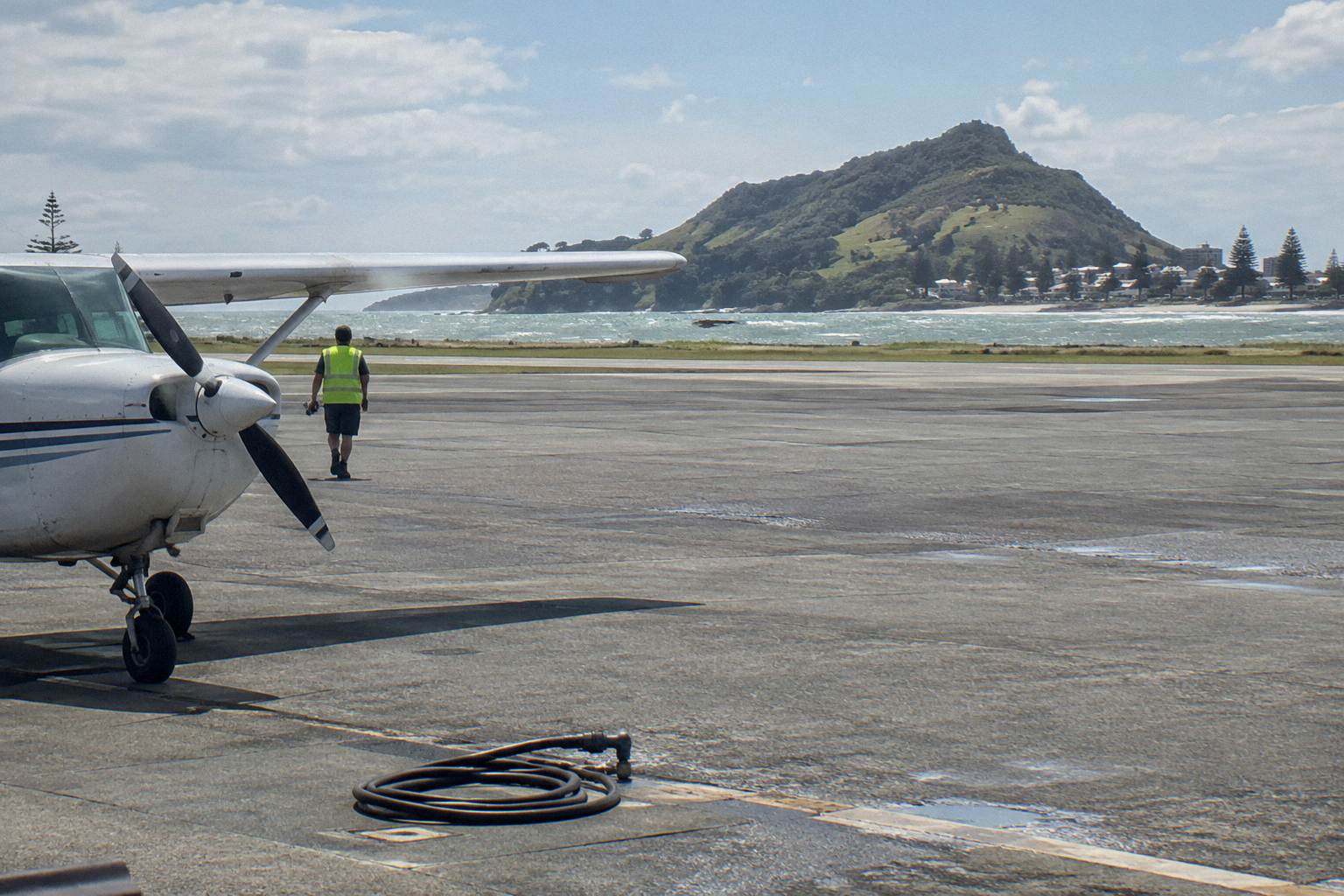
| Aircraft | A Cessna 182 carrying two tandems at a time |
How Scary Is First Time Skydiving?
For most first-time skydivers, the fear peaks before the jump and in the first seconds after exit, then fades quickly once the parachute opens. It feels far more manageable than expected, since the whole experience is designed around beginners, with an instructor attached to you from the plane until landing, and the scariest window is only a small part of a day that lasts 1.5 to 2 hours.
The straight answer, stated plainly: fear is a normal response to stepping out of an aircraft, and the nerves usually build through the morning, peak in the plane, and dissolve within seconds of leaving it. Nothing about being scared disqualifies you. Tandem skydiving exists precisely so that a person with no training can jump while an instructor handles the equipment, the timing, and the landing.
What tends to surprise people is where the fear actually lives. The weeks of anticipation are usually worse than the day. The day itself is mostly logistics: checking in 30 minutes before takeoff, getting fitted into a harness, a briefing, and a wait. The genuinely intense part, the door and the exit, is over in moments. Under canopy, the descent is slow enough that the operator's own what-to-know page tells you to breathe and enjoy the views for the next few minutes.
If a jump over the harbour and the Mount is what you are picturing, the three listings below cover the core tandem options from the airfield.
The Skydive Over Mount Maunganui listing is the one rated 5.0 from 66 reviews, offered at 12,000 or 15,000 ft, with a 20 to 25 minute scenic flight to altitude. Its mix of a longer ride up and a choice of heights makes it a good fit for a nervous first-timer who wants the scenery as part of the deal.
What Actually Happens On The Day
You arrive 30 minutes before takeoff, sign in, get a harness fitted, and receive a short ground briefing on body position and landing. Then comes a 15 or 20 minute climb in a Cessna 182 that carries two tandems at a time, the exit, freefall of about 40 seconds or about 1 minute, a few minutes under canopy, and a landing on the same airfield. Knowing the sequence in advance is one of the simplest ways to shrink the fear.
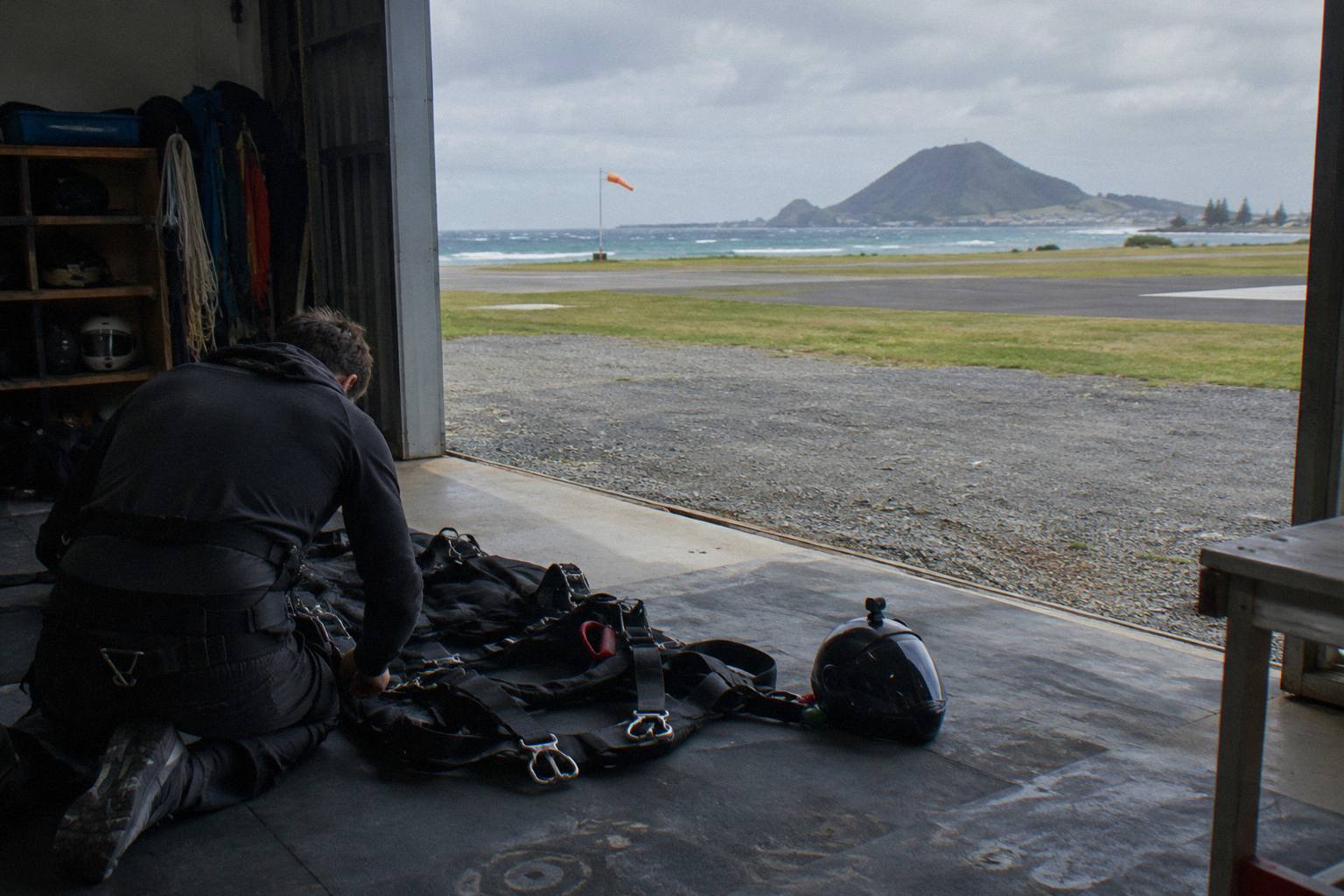
Much of first-jump fear is fear of the unknown, so the sequence matters. The operator asks you to arrive at least 30 minutes before your scheduled takeoff, per the operator's what-to-know page. The ground portion covers paperwork, harness fitting, and the briefing. The waiver asks you to declare conditions such as severe motion sickness, asthma, allergies, heart conditions, or epilepsy, which is routine rather than a warning sign.
The plane is small. A Cessna 182 takes two tandems at a time, so your group is compact and the ride is shared. The climb is 15 minutes to 12,000 ft or 20 minutes to 15,000 ft, and the operator describes it as a scenic flight in its own right, with the Bay of Plenty spread out below. Many first-timers say this stretch, not the jump, is where nerves peak, because it is the last stretch of ordinary sitting still.
Then the sequence runs quickly: door open, exit, freefall, canopy, landing. From door to parachute is measured in seconds to about a minute depending on height. From canopy to grass is a few minutes. The whole experience takes between 1.5 and 2 hours door to door on the ground.
| Stage | What Happens | Rough Time |
|---|---|---|
| Check in | Arrive, paperwork, harness fit | 30 minutes before takeoff |
| Briefing | Body position, exit, landing posture | Part of the ground time |
| Climb | Scenic flight to 12,000 or 15,000 ft | 15 or 20 minutes |
| Freefall | Instructor attached, arched position | About 40 seconds or about 1 minute |
| Canopy | Instructor opens and steers the parachute | 3 to 5 minutes |
| Landing | Legs up, back on the airfield grass | Moments |
Wondering whether the 12,000 or 15,000 ft option suits a nervous first jump? The shorter climb and 40 second freefall of 12,000 ft is the gentler entry; 15,000 ft doubles down with about a minute of freefall and a 20 minute ride up. Free cancellation up to 24 hours before the start applies on the booking page, so you can lock a date and still move it.
The Climb, The Door, And The Exit
The climb is long and the exit is instant, and almost everyone finds the asymmetry reassuring. You get 15 or 20 minutes of sitting, breathing, and looking at the view to adjust, then roughly three seconds of high intensity at the door, then freefall, which most first-timers describe as loud, fast, and oddly manageable rather than like a falling sensation. The instructor, not you, times and controls the exit.
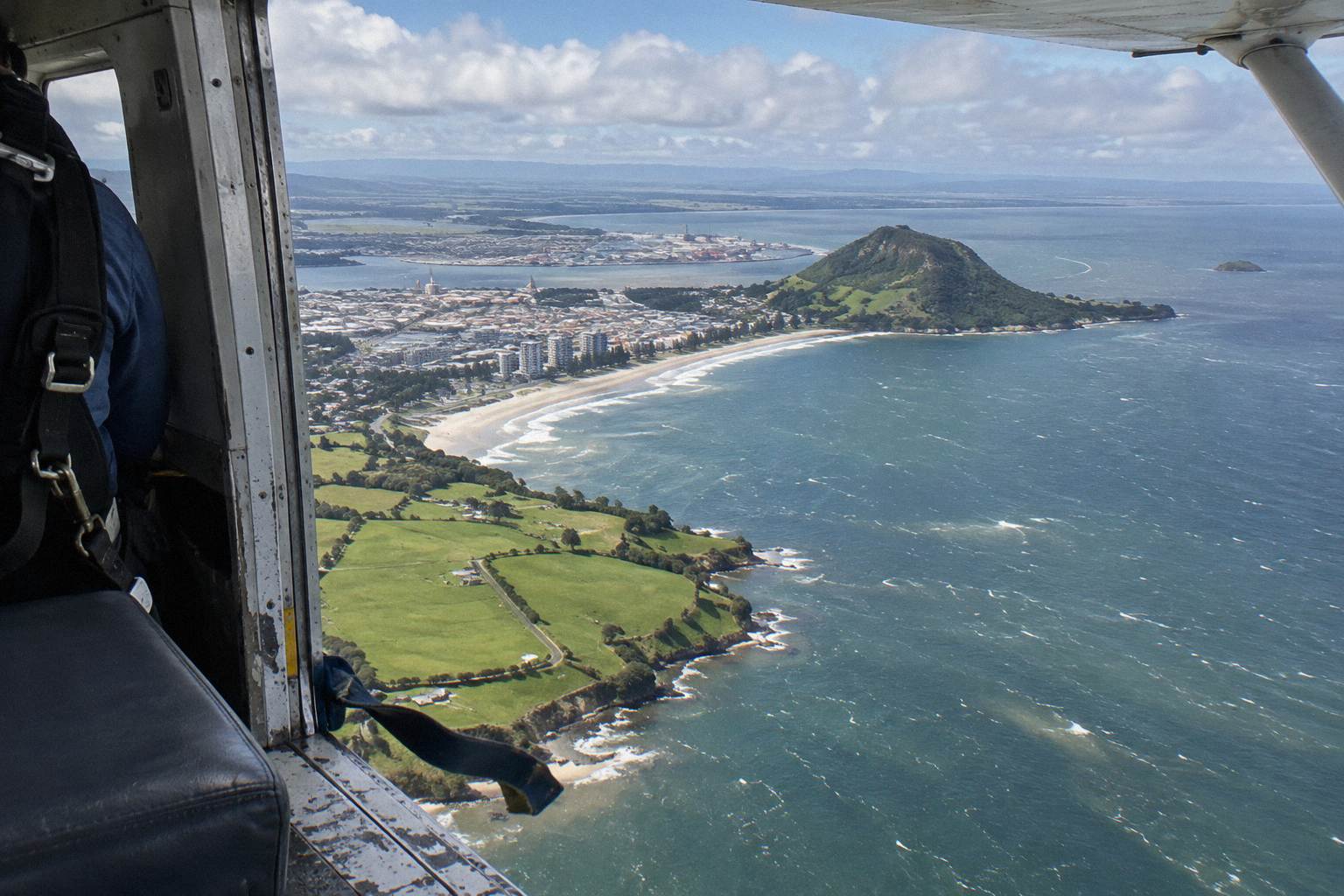
The door moment deserves its own description because it is the part people replay in their heads for weeks. The aircraft slows, the door opens, wind and noise fill the cabin, and your instructor moves the two of you into position. You are told to arch, and then you are simply out. There is no prolonged standing on a step, no time to negotiate with yourself. Tandem exits are built to be quick, and the instructor's weight and harness do most of the work of stabilising you.
Freefall itself is not the stomach-lurch of a rollercoaster drop. Because the aircraft is already moving fast when you exit, you accelerate smoothly to a stable speed rather than dropping from rest; the physics of terminal velocity explains why the sensation is of heavy wind and speed rather than falling. The operator's what-to-know page puts the speed at over 200 km/h.
Screaming is allowed, and it genuinely helps: forcing air out against the wind makes breathing easier, and nobody on the dropzone keeps score. If you are chewing over whether to face that door over the Bay of Plenty, Check availability on the 15,000ft Tandem Skydive listing and see which dates suit, prices vary by date and group and the booking page shows the figure for your date.
The 15,000ft Tandem Skydive in Tauranga gives you the full version: 15,000 ft, freefall up to 40 seconds, and about 5 minutes under canopy, in roughly 1.5 hours on site.
Does Your Stomach Drop On A Skydive?
Most first-timers expect a stomach-drop and are surprised not to get one. The lurch you feel on a rollercoaster comes from a sudden change in speed, and a skydive does not work that way: you leave an aircraft already travelling fast, then accelerate smoothly to a stable speed with no further change. What you feel instead is pressure, wind noise, and cold, which the brain reads as intensity rather than falling.
This is one of the largest gaps between expectation and reality on a first jump, and it is worth understanding before the day so the sensation does not catch you off guard. A rollercoaster drops you from standstill, so your body registers rapid acceleration. In freefall the aircraft has already given you its forward speed at the moment of exit, and the pair of you settles quickly toward a steady descent speed. No ongoing acceleration means no lurch.
The other sensations are real but manageable. The wind is loud enough that conversation stops. Your cheeks and skin take the airflow. The cold at altitude is genuine, which is why the operator supplies a jumpsuit, hat, and gloves in the colder months and lets you jump in your own comfortable clothes when it is warm, with closed shoes mandatory for everyone. Goggles are provided, and special goggles fit over glasses if you wear them.
Under canopy everything changes character again: the noise stops, the descent slows, and the operator's what-to-know page simply tells you to breathe and take in the view for the next few minutes. For many jumpers this quiet glide, not the freefall, is the part they remember most fondly, looking down at the Mount, Matakana Island, and the harbour entrance.
How Dangerous Is It, Really?
Tandem skydiving carries real risk, and any page that tells you otherwise is selling something. The US figures give the clearest scale: in 2025 the US Parachute Association recorded 16 skydiving fatalities from roughly 3.47 million jumps, about 0.46 per 100,000, and tandem passenger fatalities are a small fraction of that total. In New Zealand, tandem operations must run under a Civil Aviation Rule Part 115 adventure aviation operator certificate, with parachuting rules set by Part 105.
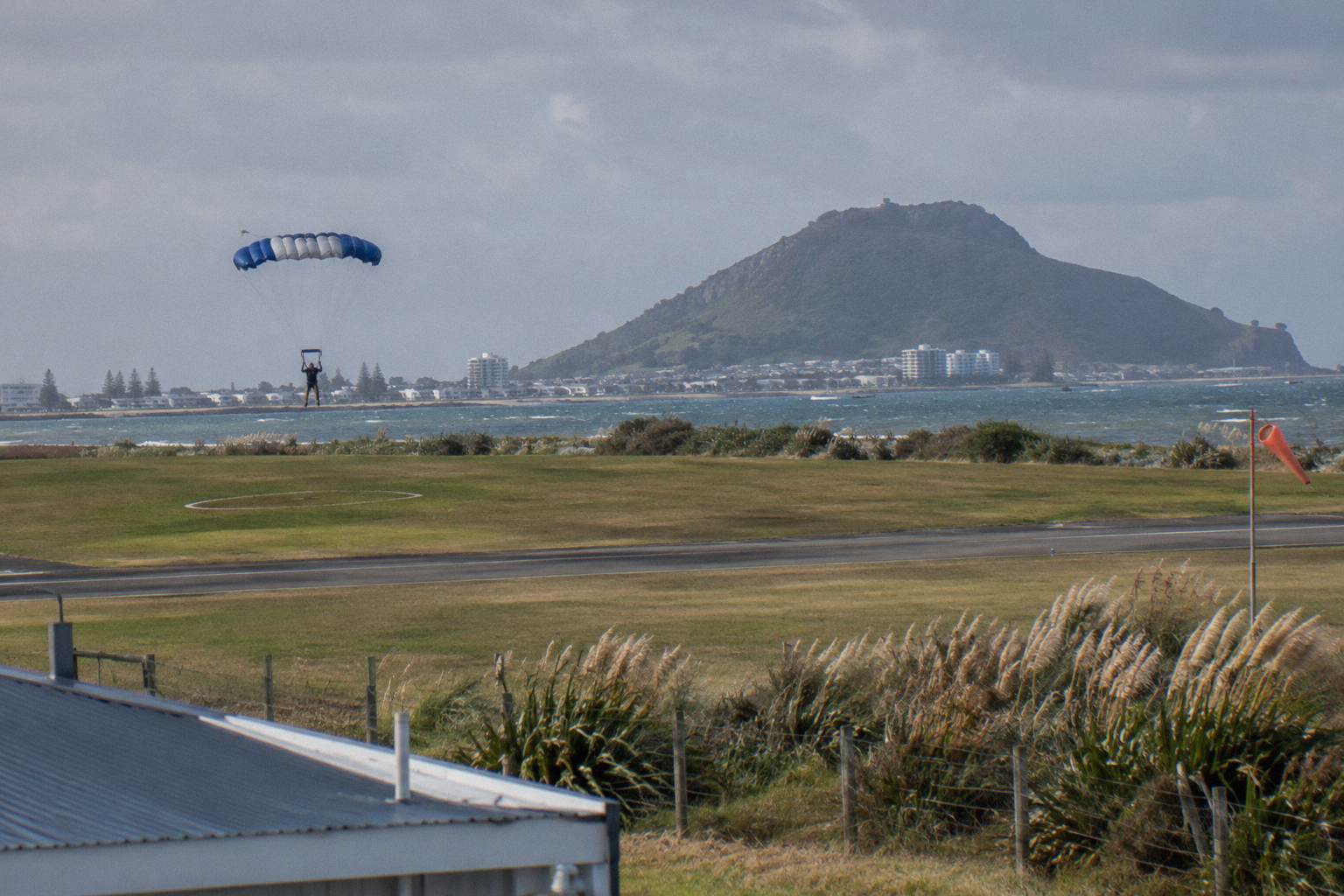
Fear of the jump and fear of death are two different fears, and it helps to separate them. The statistical picture, using only the sourced numbers: the US Parachute Association safety page records 16 fatalities across approximately 3.47 million jumps in 2025, a rate of 0.46 per 100,000 jumps, and landing problems, not mid-air failure, accounted for a quarter of those fatalities in the association's 2025 summary. Tandem students are a small share of the serious-incident total, because the instructor holds the responsibilities.
The equipment side is layered. A tandem rig carries a main parachute and a reserve, with an automatic activation device that monitors altitude and descent rate and can deploy the reserve if needed, and a tandem master in New Zealand must activate the main parachute at not less than 5,000 feet under the Civil Aviation Authority Part 105 rule. The instructor manages the landing, and you will be told to lift your legs for touchdown.
None of this makes the risk zero, and this site will not pretend it does. What it means is that the frightening picture most people carry, silent catastrophic failure, is not the shape the risk actually takes, and that the regulatory structure around the activity is specific rather than vague.
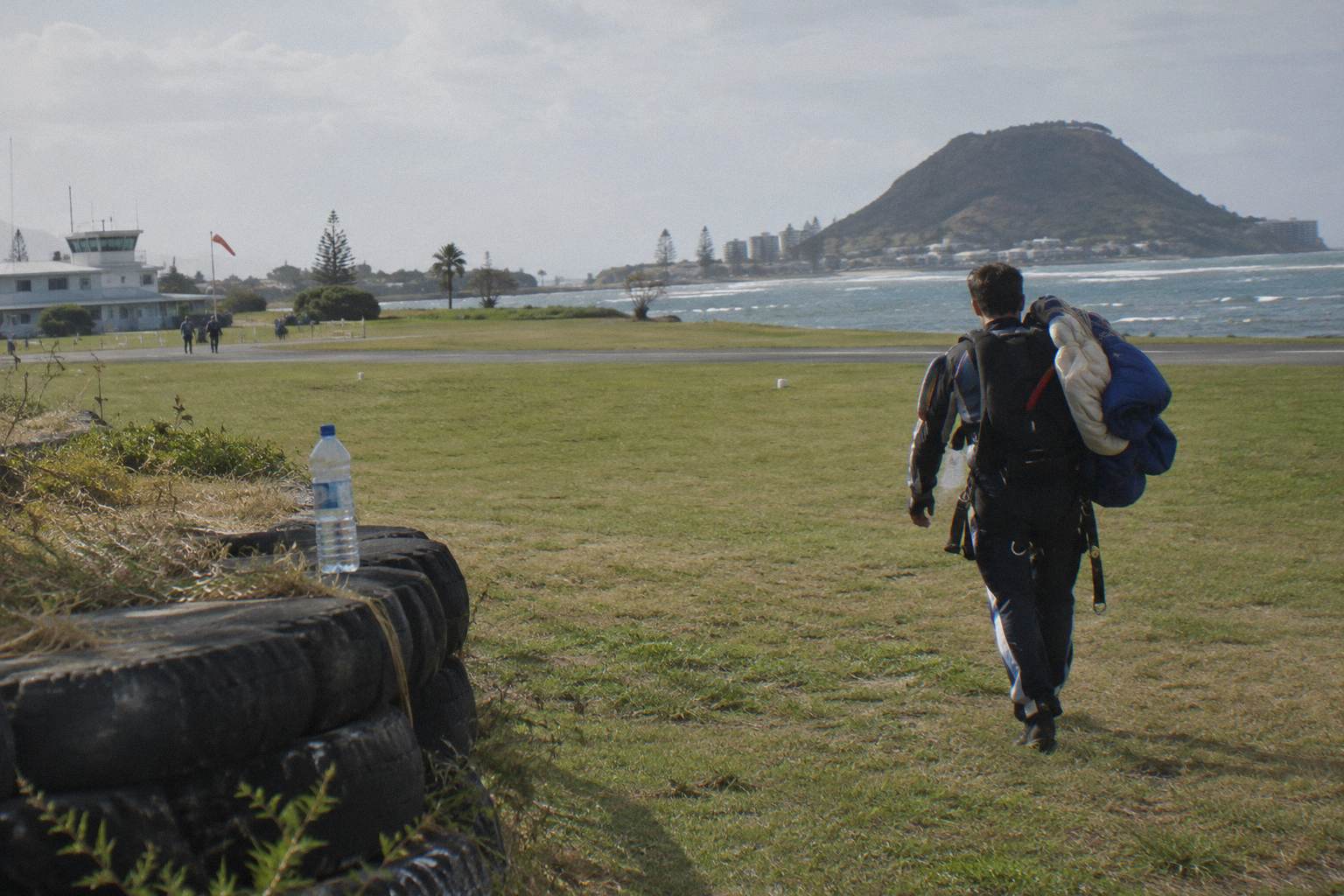
What Makes First-Jump Nerves Worse
Three things reliably inflate the fear: an empty stomach or too much caffeine, alcohol anywhere near the jump, and arriving with unanswered questions about weight, age, or health rules. Each is avoidable. Eat a normal light meal one to two hours before, drink water through the day, treat the operator's health declarations seriously, and settle the eligibility questions days in advance so the morning carries no surprises.
The physiology matters more than people expect. An empty stomach makes lightheadedness more likely during and after the jump, and a heavy greasy meal is no friend either; something like oats, fruit, eggs, or a sandwich an hour or two before sits in the sensible middle. Excess caffeine amplifies a racing heart that fear has already raised. Alcohol is off the table in the hours before a jump, full stop.
Unsettled logistics are the other fear multiplier. If you are near the weight threshold, phone the operator before booking rather than standing at the hangar wondering. The same goes for health questions: the waiver asks you to declare conditions such as severe motion sickness, asthma, heart conditions, or epilepsy, and the operator can decline a jump for safety reasons. Knowing where you stand before the day removes a whole category of anxiety. Our guide to skydive fitness and health checks walks through that declaration in detail.
Finally, do not build the jump up in isolation. Reading the sequence of the day, the climb, the exit, the canopy ride, turns an amorphous dread into a finite checklist, and what to expect on a Bay of Plenty tandem skydive covers each stage in order.
What Trips People Up Before You Jump
The common traps are assuming photos are included when every camera package costs extra, expecting a beach landing when the jump lands on the airfield, wearing shoes that cannot stay on, and misreading the weight rule as a hard cutoff at 110 kg when it is actually a phone-first threshold. Each of these causes more distress on the day than the jump itself, and each is settled with one sentence before you book.
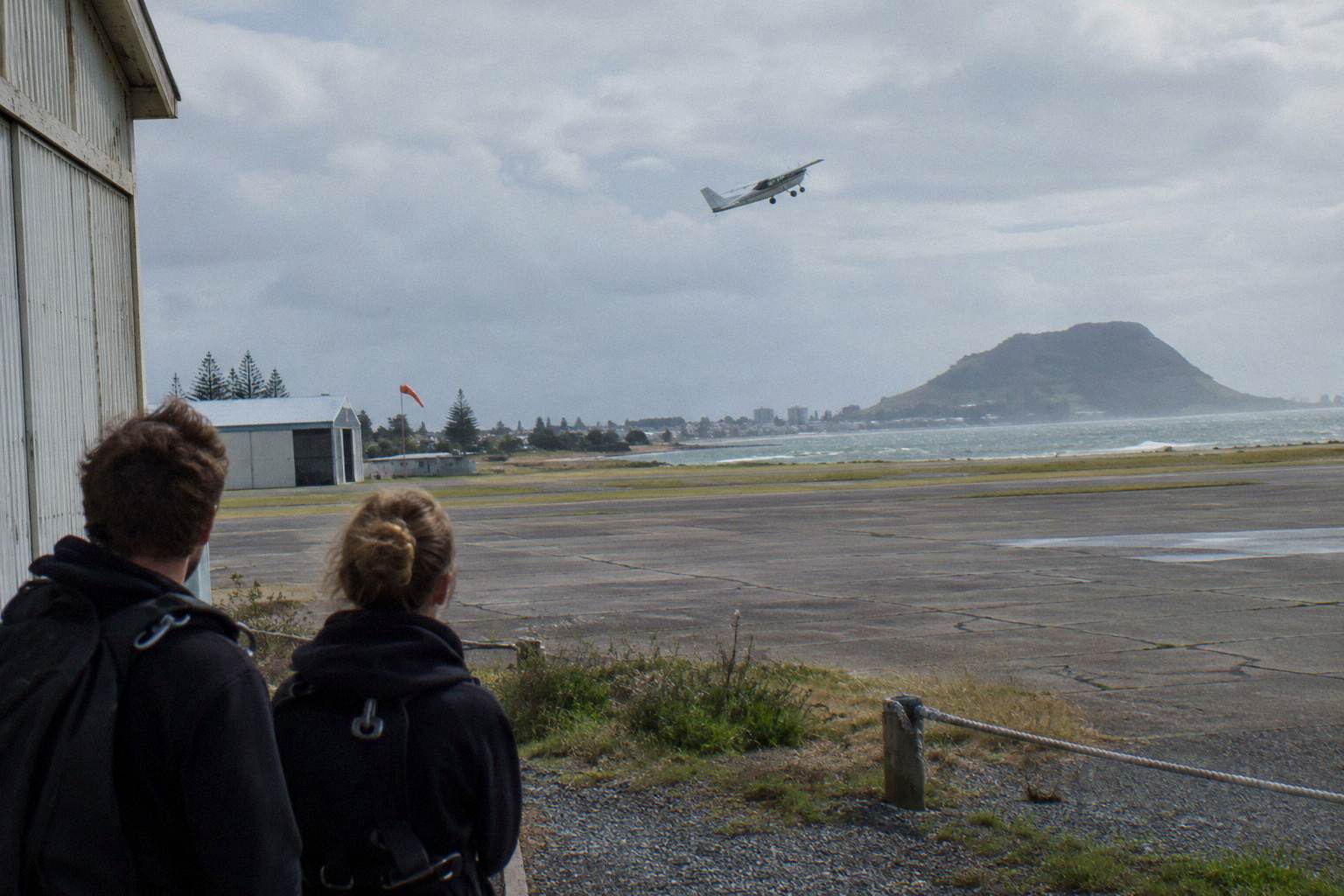
Photos and video are paid extras on the Tauranga listings, never part of the jump, and under New Zealand Civil Aviation rules no tandem passenger may carry their own phone or camera during the jump, so the packages are the only route to footage. If a video matters to you, decide before the day rather than at the hangar.
The landing is on the airfield at Tauranga Airport, the same place you take off from, with a viewing area for spectators. The Mount Maunganui beach is a view from altitude, not a landing site, and no listing promises otherwise.
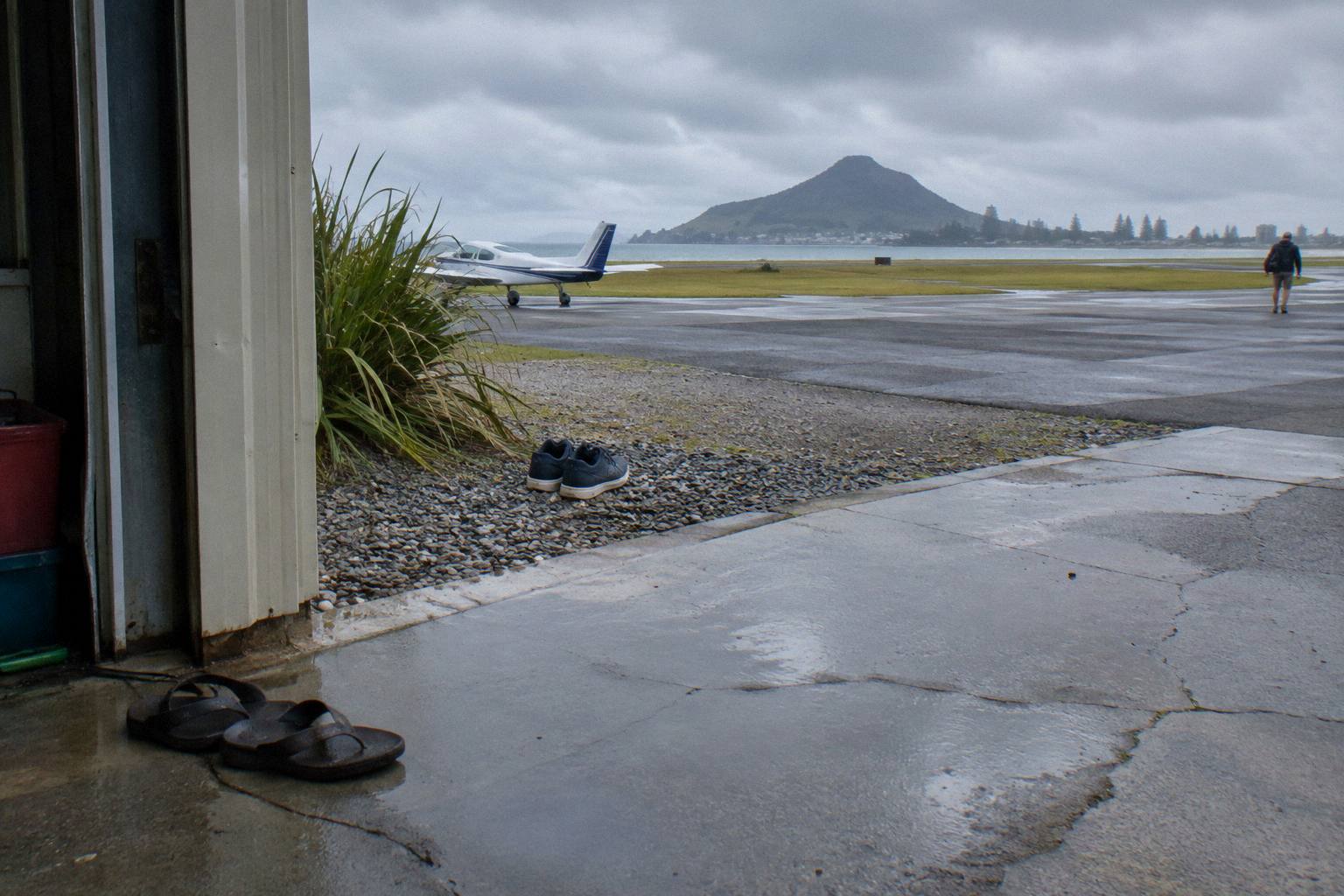
Footwear is a genuine rule: closed shoes that cannot fall off are mandatory, and sandals or loose trainers are the classic day-of problem. Comfortable, weather-appropriate clothes complete the list, with a jumpsuit and gloves offered in the colder months.
On weight: book freely under 110 kg, and above that phone the operator, who talks it through based on weight and size, with a small surcharge that goes to the tandem instructor. The minimum weight is 30 kg, and the harness must fit safely. For a fuller treatment, see the Tauranga weight limit guide.
Age works the same quiet way: 7 is the operator's own minimum, and the operator is explicit that it must be the child's own decision to jump, with a parent or guardian consent letter for anyone under 18, per the operator's FAQ page. Children under 12 are asked to visit the dropzone first to meet staff and be fitted in a harness. That is a thoughtful, fear-reducing rule in its own right.
Before the final word, here again are the three core listings, in case the door question is settling into a date question.
The Bay Of Plenty 15,000ft Skydive covers the same altitude from the same airfield, with about 1.5 hours on site and free cancellation up to 24 hours before the start.
Deciding between jumping and a calmer ride over the same coastline is a fair question, and the skydive versus scenic flight comparison lays out the trade-offs, though plenty of nervous first-timers find that once the day is booked and the sequence is understood, the fear shrinks to a manageable size. That is the pattern Tauranga Skydive sees across the jump listings from the airport: the scariest part of first time skydiving is usually the week before, not the minute of freefall.
Common Questions About First Jump Nerves
How Scary Is First Time Skydiving?
Scary, but in a bounded way: nerves build through the day, peak around the door, and fade within seconds of the exit. Freefall lasts about 40 seconds at 12,000 ft or about 1 minute at 15,000 ft, and the canopy ride is a slow few minutes. Most jumpers report the anticipation was worse than the jump.
Will I Panic At The Door?
Some people feel a strong urge to hesitate, which is normal. The tandem exit is quick and instructor-controlled, so there is no long window in which to negotiate with yourself, and the sequence you were briefed on starts immediately. Telling your instructor in advance that you are nervous helps them pace the climb and the exit with you.
Is It Scarier Than A Rollercoaster?
Most first-timers say it is a different sensation rather than a bigger one. A rollercoaster drop gives you the stomach lurch of sudden acceleration; a skydive does not, because you exit an aircraft already moving fast and accelerate smoothly to a stable speed. Expect loud wind, pressure, and cold rather than a falling feeling.
Can I Scream During Freefall?
Yes, screaming is allowed and even helps. Forcing air out against the wind makes breathing easier during freefall, and no one at the dropzone keeps score. It is one of the most common things first-timers do.
What Is The Scariest Part Of The Day?
For most people it is the last minutes of the climb, sitting in a small aircraft with the door about to open, rather than the freefall itself. Knowing the sequence in advance, arrival 30 minutes early, a 15 or 20 minute climb, a quick exit, and a few quiet minutes under canopy, shrinks that peak considerably.
Can I Back Out On The Day?
The booking-page terms allow free cancellation up to 24 hours before the start for a full refund, so deciding not to jump costs nothing if you make the call the day before. On the day itself, speak to the operator directly about your options, and if you book direct with the operator, its own terms differ, with 50 percent charged for a cancellation the day before and full price on the day.