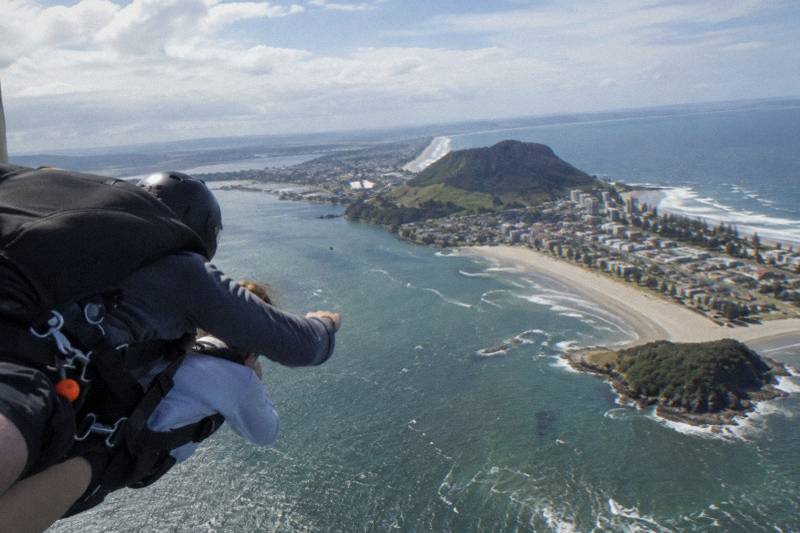
How Painful Is Skydiving? Ears, Harness And Landing On A Tandem Jump
A plain answer to whether a tandem skydive hurts: the landing, the harness, ear pressure and how rare injuries actually are, with the operator rules that affect comfort on the day.

The straight starting point for anyone weighing a first jump: the physics and the equipment are on your side, and the pain question is best answered piece by piece. Skydive Tauranga, the operator behind the tandem listings at Tauranga Airport, Mount Maunganui, publishes its own arrival, weight and harness rules, and those rules decide most of what a jump physically feels like. The rest is equipment design, landing technique and a set of injury statistics that are smaller than most people assume. If you want the full walk-through of a jump before reading further, start with what happens on a tandem skydive.
| Fact | Detail |
|---|---|
| Freefall length | 30 to 45 seconds at 12,000 ft, about 1 minute at 15,000 ft |
| Freefall speed | Over 200 km/h at the Tauranga operation |
| Canopy ride | 3 to 5 minutes back to the landing area at Tauranga Airport |
| Landing method | Instructor controls the parachute, passenger lifts their legs |
| Weight rules | Book freely under 110 kg, phone the operator above that |
| Minimum weight | 30 kg, based on safe harness fit |
| Time on site | 1.5 to 2 hours, arriving 30 minutes before takeoff |
| Camera carriage | Passengers may not carry their own phone or camera on the jump |
How Painful Is Skydiving?
For most people, a tandem skydive is not painful in the way the question imagines. Freefall is a rush of wind rather than a shock, the parachute opening is a firm tug rather than a snap, and the landing is usually gentle because the instructor flies the canopy while the passenger lifts their legs. Discomfort is real but specific: ear pressure, harness pressure and next-day stiffness.
Injury data backs that up. United States figures from the US Parachute Association, published on the US Parachute Association safety page, counted 16 civilian skydiving fatalities in 2025 from roughly 3.47 million jumps, and those numbers cover all skydiving, solo students and experts included, not just tandems. Tandem passengers jump strapped to an instructor who holds the rating, wears the equipment and makes every decision from exit to landing. The passenger's physical jobs are few: a stable body position in freefall, legs up for landing, and a hand on the harness straps during the parachute opening.
That division of labour is the reason the pain question has a short answer. The tandem system is built so the least experienced person in it does the least. The full picture still has three or four places worth understanding before booking, because each one has a technique or a rule attached, and knowing them in advance removes most of the surprise. The sections below take them one at a time: the harness, the ears, the opening, and the landing.
If the goal is a first jump over the Bay of Plenty, From Tauranga: Skydive over Mount Maunganui is the listing that carries both altitude options on one booking, 12,000 or 15,000 ft, with a 5.0 rating from 66 reviews. Check the live price on the tour page for your date, since amounts move with the season and group size.
Where Discomfort Actually Happens: Ears, Harness And Opening
The three real sources of discomfort on a tandem jump are ear pressure, harness pressure and the moment the parachute opens. None of the three is damage. Ears feel changing air pressure, the harness presses where straps cross the body at over 200 km/h, and the opening gives a firm pull into the straps as the canopy takes load. All three pass quickly.
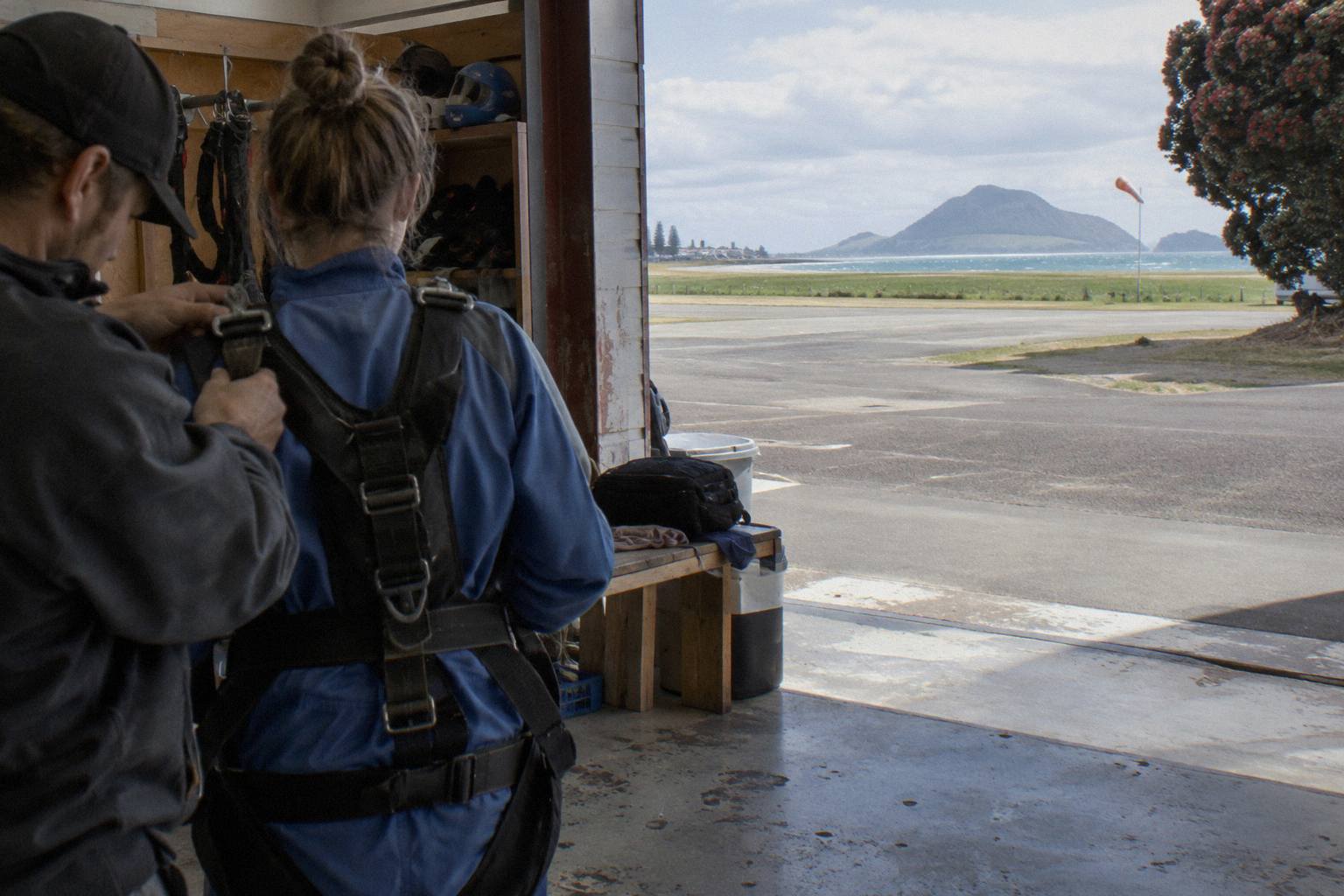
The harness is fitted on the ground, before the flight, and the fitting matters more than the altitude does. The operator's minimum weight of 30 kg exists, in its own words, because the question is "being able to fit safely into the harness". A harness that fits correctly distributes the opening load across the shoulders, chest and legs. One that is loose lets the passenger swing into the straps at opening, which is where bruising stories come from. The 30 minutes the operator asks you to arrive early partly exists for this fitting, and it is worth saying at fitting time if a strap sits on a collarbone or a hip bone.
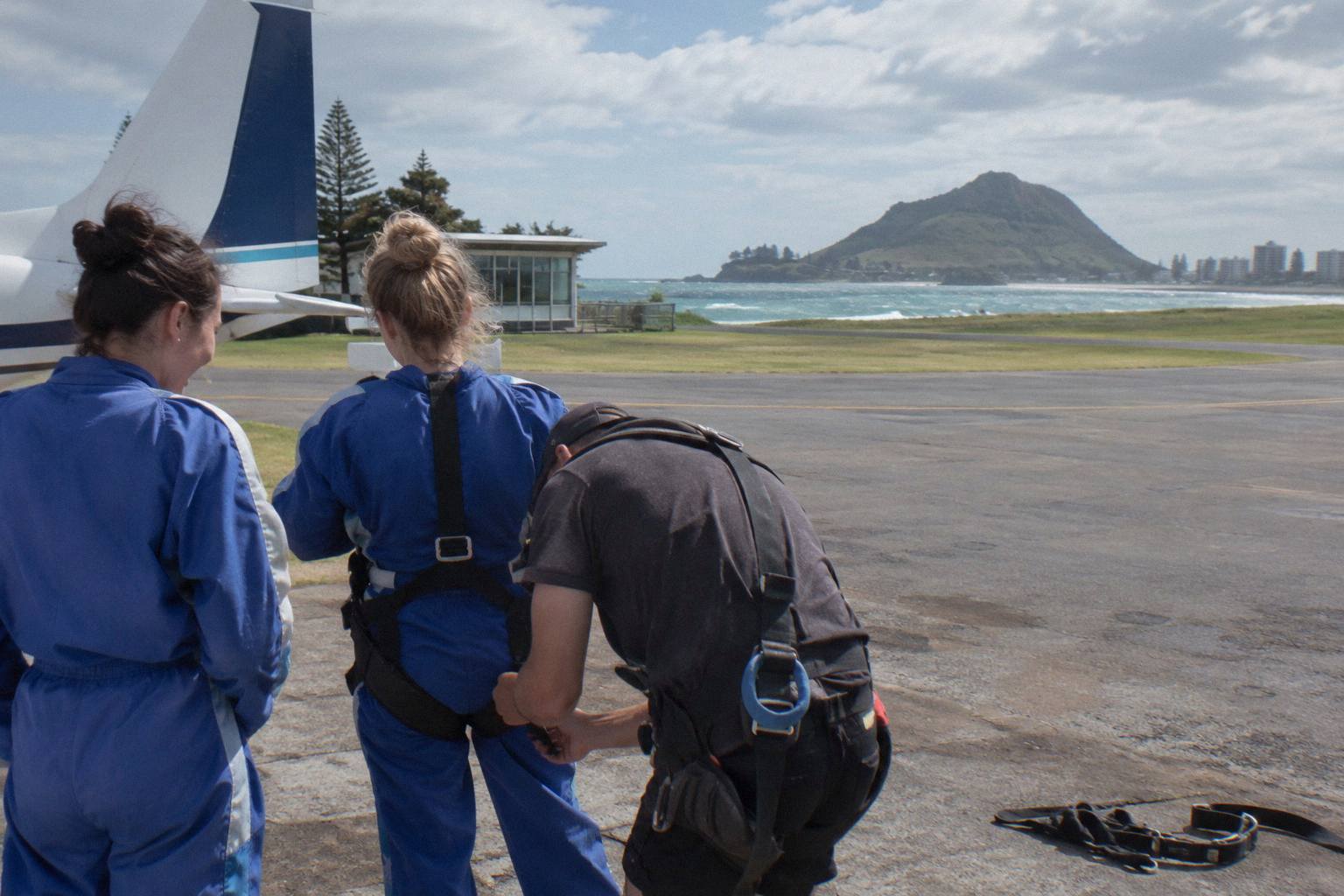
The parachute opening itself is the single hardest physical moment of the jump for most passengers. After 30 to 45 seconds of freefall at 12,000 ft, or about a minute at 15,000 ft, the instructor deploys, the canopy fills, and the pair decelerates hard over roughly two to three seconds. Passengers are told to hold the harness straps and keep their legs back for that moment. The sensation is a strong upward pull, not a blow, and the equipment is designed around it. Under the Civil Aviation Authority Part 105 parachuting rule, a tandem master must activate the main parachute at a height of not less than 5,000 feet, which leaves a wide margin of altitude for a controlled descent and a slow, steered landing.
Ear pressure is the one item on the list that can genuinely hurt, and it is manageable. It is worth reading the operator's what-to-know page before the day, which covers the flight up, the freefall and the canopy ride in sequence. The medical facts are covered in full in the ears section below.
Is The Landing Painful?
Usually not. Tandem landings are typically gentle: the instructor flies the parachute, flares it at the right height to kill forward speed, and the landing ends as a short slide or a step onto the ground with the passenger's legs lifted out of the way. Passengers are briefed to lift their legs before touchdown so the instructor's feet take the contact. Minor ankle or leg injuries are the exception.
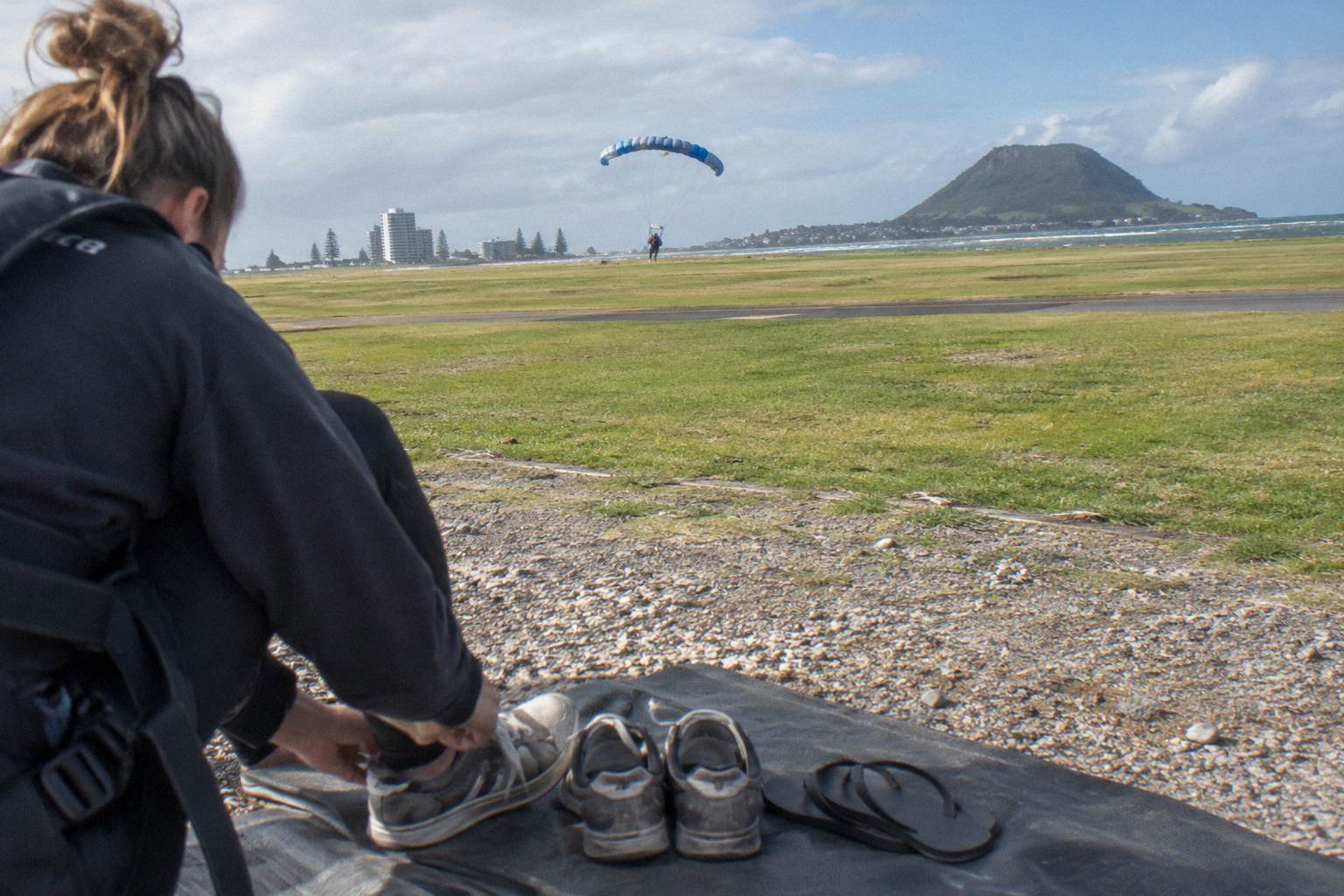
The leg-lift instruction is the single most important thing a passenger controls on the whole jump. Feet down at touchdown is how ankles get rolled, because the passenger cannot see the ground timing the way the instructor can. Legs up, chin up, let the instructor land the pair. At Tauranga the landing happens in the same place as the takeoff, on a landing area at Tauranga Airport, not on the beach, which matters because a groomed grass area next to a runway is a predictable surface to slide onto.
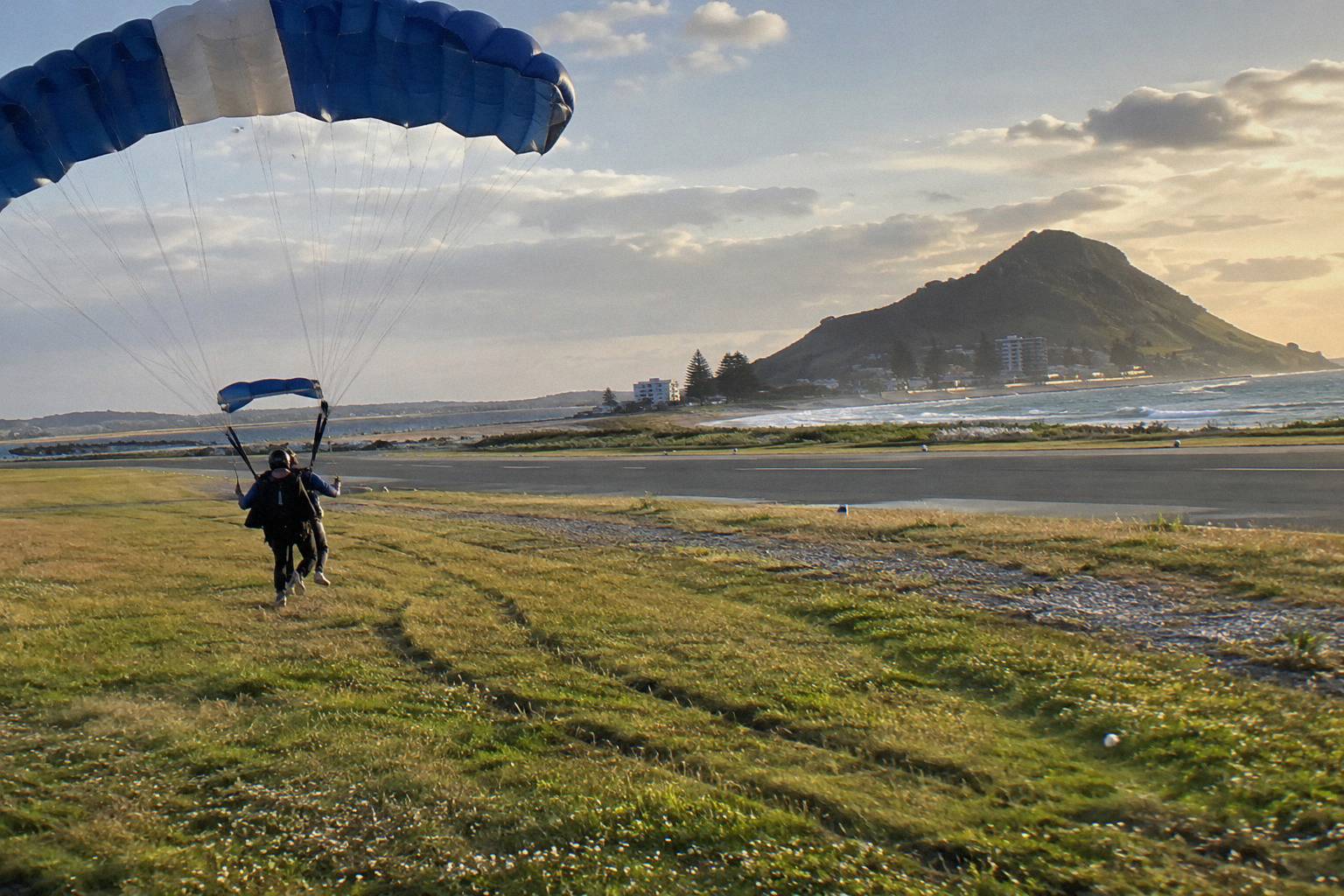
Why landings are gentle is a matter of how a wing flies. A modern student canopy is a large, docile rectangle that flies slowly by design, and a flare, raising both steering toggles at the right moment, converts forward speed into a brief climb and a near-stop touchdown. The numbers support the impression: of the US skydiving fatalities in 2025, landing problems accounted for a quarter, according to the USPA 2025 fatality summary, and that quarter is drawn from the entire sport, including high-performance canopies flown by experts, not from tandems on student equipment. For tandem passengers specifically, guidance across operators describes landings as gentle with legs lifted and the instructor in control.
None of this promises a particular outcome on a particular day. Wind, the flare and the surface all interact, and the instructor makes the calls. What the technique and the data say together is that a briefing-following passenger on a student canopy has a gentle landing as the expected case, and a minor ankle or leg injury as the rare exception rather than the rule. For more on the physical prep side, see what to avoid doing before a jump.
Do Your Ears Hurt On A Skydive?
They can, and ear pressure is the most commonly reported real pain on a tandem jump. The aircraft climbs to 12,000 or 15,000 ft and the middle ear needs to equalise on the way up and again on the fast descent under canopy. Swallowing, yawning or a gentle nose-blow clears most cases. With a cold, sinus congestion or a blocked nose, postpone: the operator's waiver asks you to declare nasal or sinus congestion before jumping.
The mechanism is simple. The middle ear sits behind the eardrum and vents through the Eustachian tube to the throat. On a 15 to 20 minute climb to altitude the outside pressure drops steadily; on the descent it rises again, faster under canopy than the climb was. If the tube does not open, the eardrum takes the pressure difference and hurts. Equalising on purpose, pinch the nose, close the mouth, blow gently, forces the tube open. Instructors prompt this, and motion sickness and ear equalisation issues during descent are known and managed with pre-jump advice across the industry. The full index of guides sits on Tauranga Skydive.
The pre-existing conditions matter more than the jump technique. A blocked ear from a cold simply cannot equalise, and forcing it can bruise the eardrum. The operator's waiver asks passengers to list conditions including nasal or sinus congestion precisely so staff can make that call, and the operator reserves the right to withdraw anyone whose condition is likely to endanger them. That power sits with the operator, not the passenger, and it is a good reason not to fly out to the drop zone with a head cold and hope.
| Discomfort source | Where in the jump | What it feels like, per operator and industry guidance | How it is managed |
|---|---|---|---|
| Ear pressure | Climb and canopy descent | Ache or fullness behind the ears | Swallow, yawn, gentle nose-blow |
| Harness straps | Fitting, opening, canopy | Pressure at shoulders and legs | Correct ground fitting; hold straps at opening |
| Parachute opening | End of freefall | Firm upward pull into the harness | Legs back, hold straps, chin up |
| Landing | Touchdown | Brief slide or standing step | Lift legs, let the instructor land the pair |
| Next-day muscles | Day after | Stiffness across shoulders and core | Normal movement; nothing needed |
Does The Harness Hurt, And What Changes With Body Size?
Harness pressure is real but is a fitting problem, not an inevitability. Straps fitted snugly on the ground spread the opening load wide; straps fitted over heavy clothing or at the edge of the size range concentrate it. The operator books passengers under 110 kg freely, asks anyone heavier to phone ahead, applies a minimum of 30 kg, and fits every passenger before the flight. A surcharge above 110 kg goes to the instructor.
The weight threshold exists for reasons of physics and equipment certification. Tandem parachute systems are certified to a maximum total suspended weight, passenger plus instructor plus gear, which is why operators across New Zealand and the United States place passenger limits in the 100 to 115 kg band rather than choosing numbers freely. Greater body mass also increases the pair's terminal velocity, all else equal, which adds load at opening and work for the instructor. None of that says a heavier passenger is unsafe; it says the drop zone needs to know in advance so the right equipment and instructor are rostered.
The surcharge has a stated purpose on the operator's FAQ: it goes to the tandem instructor "for the added stress to their body". The dollar amount is not published, so ask the operator directly when phoning. For the fitting itself, arrive in the comfortable, weather-appropriate clothing the operator asks for, closed shoes that cannot fall off, and expect a jumpsuit offered in the colder months. Anything bulky under the harness, thick jackets, padded layers, makes an accurate fit harder and the opening less comfortable. The full clothing picture is in the operator's own guidance on the operator's FAQ page.
If the 15,000 ft option is the one under consideration, the 15,000ft Tandem Skydive in Tauranga listing runs the same drop zone with the longest freefall on offer, up to 40 seconds to a minute of freefall depending on conditions, and check availability shows the dates and the current price together.
How Rare Are Injuries On A Tandem Jump?
Rare enough that the sport's own safety reporting counts them annually in small numbers. Across roughly 3.47 million US skydiving jumps in 2025 there were 16 fatalities, 0.46 per 100,000 jumps, and just one of those was a tandem accident. The 2024 FAI international report recorded 27 fatalities across 41 reporting countries from over 7.28 million jumps, including 3 tandem fatalities. The expected tandem experience is no injury at all.
Those figures deserve their labels. The US rates are US numbers from USPA member reporting; the FAI figures are international; and New Zealand's regulator, the Civil Aviation Authority, reported one tandem parachute accident resulting in broken bones and no fatalities in the adventure aviation sector in its 2024 to 2025 annual report. No valid New Zealand per-jump rate can be computed from that, and none is offered here. What the numbers say together is that tandem skydiving sits in the same statistical neighbourhood as other heavily engineered adventure activities, and that tandem passengers are the best-protected people in the sport because every physical decision is made by a rated instructor.
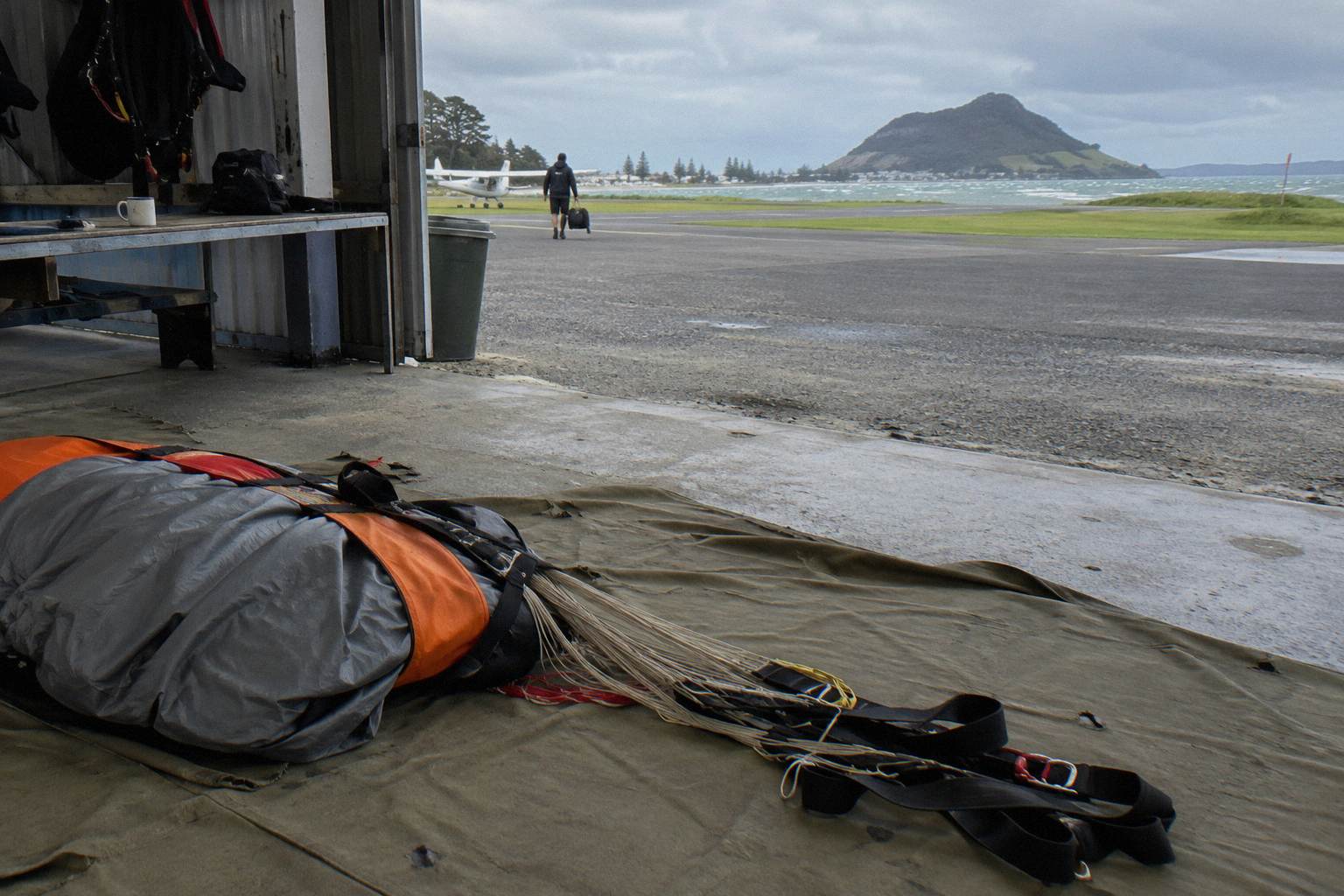
Equipment design does quiet work here. A tandem rig carries a main parachute and a reserve, with an automatic activation device that monitors altitude and descent rate and deploys the reserve automatically if needed. If a passenger were to lose consciousness in freefall, the instructor maintains control of the descent and landing while the device stands as a backup. Loss of consciousness events are rare, and instructors are trained for them; the deeper detail is in whether people pass out while skydiving. None of this makes the activity risk-free, and tandem skydiving carries real risk like any aviation sport. It makes the risk small, engineered and managed by procedure rather than luck.
Regulation sets the frame. In New Zealand, tandem skydiving falls under the Civil Aviation Authority's adventure aviation rules, Part 115 for the operator certificate and Part 105 for the parachuting operation itself, as summarised on the WorkSafe adventure activities page, which lists skydiving among activities regulated by the Aviation Authority rather than registered as WorkSafe adventure activities. The industry body, the New Zealand Parachute Industry Association, sets standards and training programmes aligned with those rules.
What Trips People Up Before You Book
The recurring mistakes are practical ones: jumping with a cold or blocked sinuses and discovering ear pain at altitude, wearing bulky layers that wreck the harness fit, keeping feet down at touchdown instead of lifting the legs, arriving too late for a proper fitting, and assuming a passenger can bring a phone or camera. Each is avoidable, and none requires fitness or training beyond turning up on time in the right clothes.
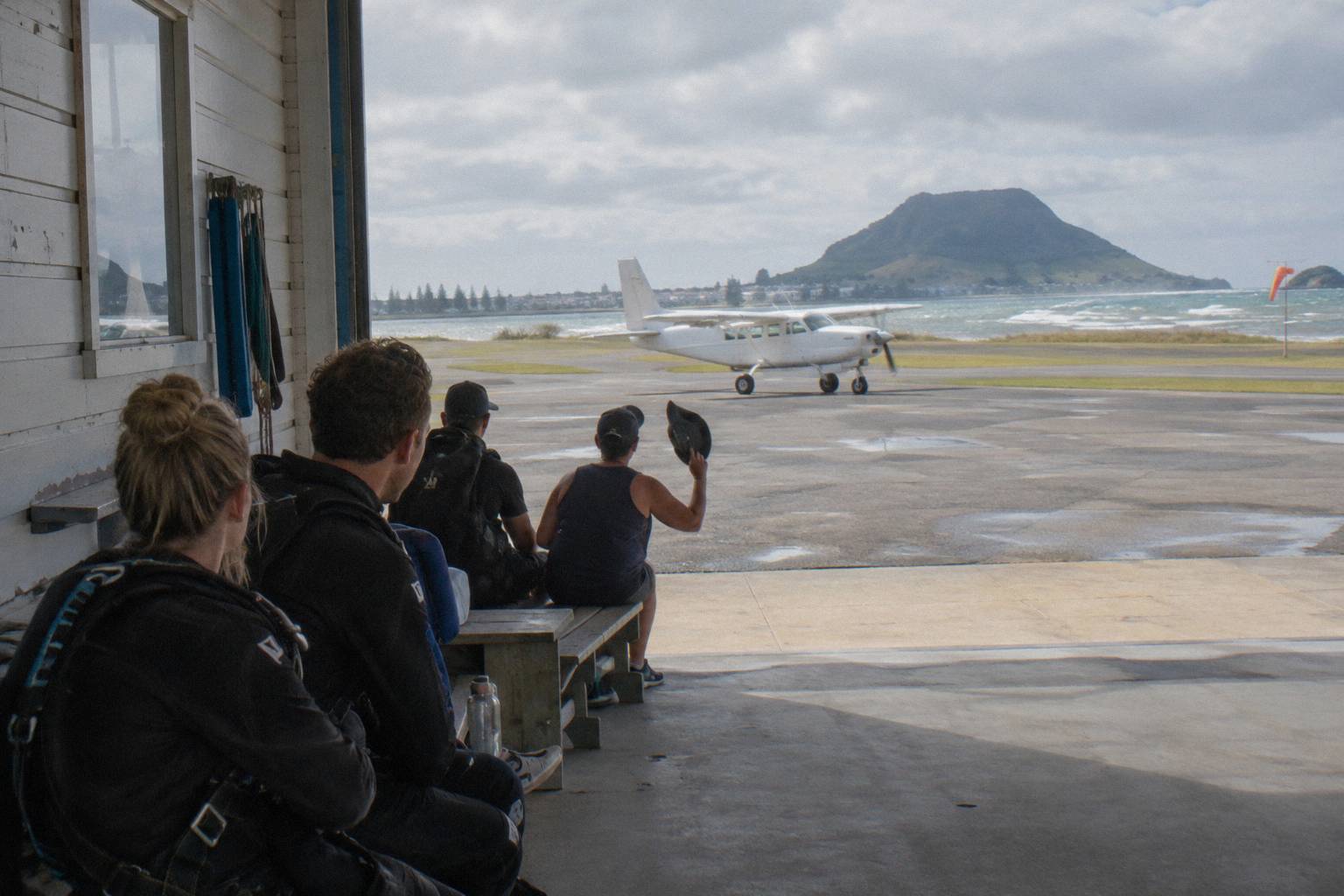
Timing first. The operator asks passengers to arrive at least 30 minutes before the scheduled takeoff and to allow 1.5 to 2 hours for the whole experience. That buffer covers the fitting, the briefing and weather or airport traffic delays, which the operator flags as a normal cause of running late. Turning up five minutes before a slot compresses the fitting, and a rushed harness fit is the one input a passenger controls that directly changes comfort at the opening.
Clothing and health second. Comfortable clothes, closed shoes that cannot fall off, and no thick padding under the harness. Declare congestion, severe motion sickness or any of the listed conditions on the waiver rather than working around them. If you have been scuba diving within 24 hours, the operator does not recommend jumping. Passengers under 18 need a consent letter from a parent or guardian, children under 12 are asked to visit the drop zone first, and the minimum age is 7.
Cameras third. Under New Zealand civil aviation rules, no tandem passenger may carry their own phone or camera on the jump, so plan for photos and video as paid extras rather than a selfie. The equipment and landing technique questions, legs up and hand the landing to the instructor, are briefed on the day; showing up already knowing them simply makes the briefing shorter.
Common Questions About Pain And Discomfort
How Painful Is Skydiving?
For most first-time tandem passengers, not very. The discomfort that does happen is specific: ear pressure on the climb and descent, harness pressure at the shoulders and legs, a firm pull when the parachute opens, and mild muscle stiffness the next day. The landing is usually gentle because the instructor flies the parachute while the passenger lifts their legs. Minor ankle or leg injuries on landing are the usual injuries when something does go wrong, and they are uncommon.
Does Freefall Hurt?
No. Freefall is sustained wind, not impact, and it lasts 30 to 45 seconds at 12,000 ft or about a minute at 15,000 ft at the Tauranga operation. The pair reaches speeds over 200 km/h but accelerates gradually from the aircraft's speed rather than dropping suddenly, so there is no jolt at exit. Breathing is normal air, just windy; screaming is actively encouraged, since forcing air out makes breathing easier.
Does The Parachute Opening Hurt?
It is the firmest moment of the jump but not a painful one. The canopy takes the pair's load over roughly two to three seconds and pulls them upright into the harness. Passengers are briefed to hold the straps and keep their legs back. A correctly fitted harness spreads that load across the shoulders, chest and legs; the ground fitting exists largely for this moment.
Do Your Ears Hurt When Skydiving?
They can, and ear pressure is the most commonly reported genuine pain on a tandem jump. The aircraft climbs to 12,000 or 15,000 ft and the descent under canopy is faster than the climb, so the middle ear needs to equalise both ways. Swallowing, yawning or a gentle nose-blow clears most cases. With a cold or sinus congestion, postpone: the operator's waiver asks you to declare nasal or sinus congestion, and staff can decline a jumper over it.
Can The Harness Hurt You?
It presses rather than injures. Straps sit across the shoulders, chest and legs, and the pressure is noticeable during the opening and under canopy. Fit is checked on the ground during the 30-minute pre-flight window, and passengers over 110 kg are asked to phone ahead so equipment and instructor are matched to the load. A snug, well-placed fit is the main comfort factor on the day.
How Often Do People Get Injured On Tandem Jumps?
Rarely. US figures recorded 16 skydiving fatalities in total from about 3.47 million jumps in 2025, of which one was a tandem accident, and the FAI's 2024 international report counted 3 tandem fatalities from over 7.28 million jumps. New Zealand's Civil Aviation Authority reported one tandem accident, broken bones with no fatality, in its 2024 to 2025 annual report. When tandem passengers are hurt, the usual injuries are minor ankle or leg issues at landing, most often from feet down instead of legs up.