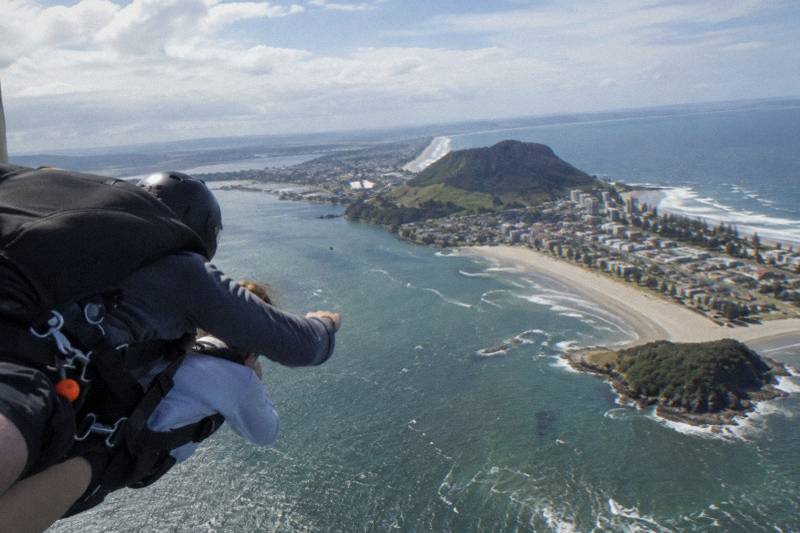
Do Heavier People Fall Faster Skydiving? Weight, Drag And Tandem Pairs
Physics, weight limits and tandem speeds: whether body weight changes how fast you fall on a skydive, and why operators cap passenger weight.
In short: Yes, heavier falls faster, but not by much and not in the way most people picture. Terminal velocity depends on mass versus drag, so a heavier body of the same shape settles at a higher speed. On a tandem jump the pair already weighs a lot, instructor and rig included, so a heavier passenger nudges the speed up only slightly. Weight limits like the operator's 110 kg rule are about harness fit, equipment certification and instructor strain, not fall speed.
Every tandem jump from the Tauranga 15,000 ft listing runs through one operator, and its weight rules shape who can book without a phone call. If you are weighing up a first jump and wondering whether your body changes the physics, the short version is that the aircraft does the climbing, gravity does the pulling, and your weight matters far more to the paperwork than to the speedometer. The Skydive Over Mount Maunganui listing, rated 5.0 from 66 reviews, uses the same 30 to 110 kg band as the other jump listings from this airport.
| Fact | Detail |
|---|---|
| Does weight change fall speed? | Yes, a heavier body of the same shape reaches a higher terminal velocity |
| How much on a tandem? | A small shift, because the instructor and gear form most of the pair's weight |
| Typical tandem pair speed | About 120 mph in a stable belly-to-earth position with the drogue deployed |
| Operator's stated freefall speed | Over 200 km/h |
| Booking weight band | Book freely under 110 kg; phone the operator if over |
| Minimum weight | 30 kg, harness fit being the real constraint |
| Why limits exist | Equipment certification, harness fit and strain on the tandem instructor |
| Freefall time at 15,000 ft | About 1 minute, an indication only and variable |
Do Heavier People Fall Faster Skydiving?
Yes, they do, and the reason is drag, not extra pull. Gravity accelerates every body at the same rate, so a heavy and a light passenger gain speed identically at first. The split happens at terminal velocity, where air resistance equals the weight pulling down. More mass pushes that balance point higher, so a heavier person of similar shape settles slightly faster. The gap between two passengers is real but modest.
The clean way to say it in words: terminal velocity grows with the square root of mass, and shrinks with the square root of the drag area times the drag coefficient. Double the mass without changing the shape and the speed rises by about 40 percent, not 100 percent. The terminal velocity explainer on Wikipedia walks through the same equation. Notice what the formula does not say: it never asks how hard gravity pulls, because that part is identical for everyone.
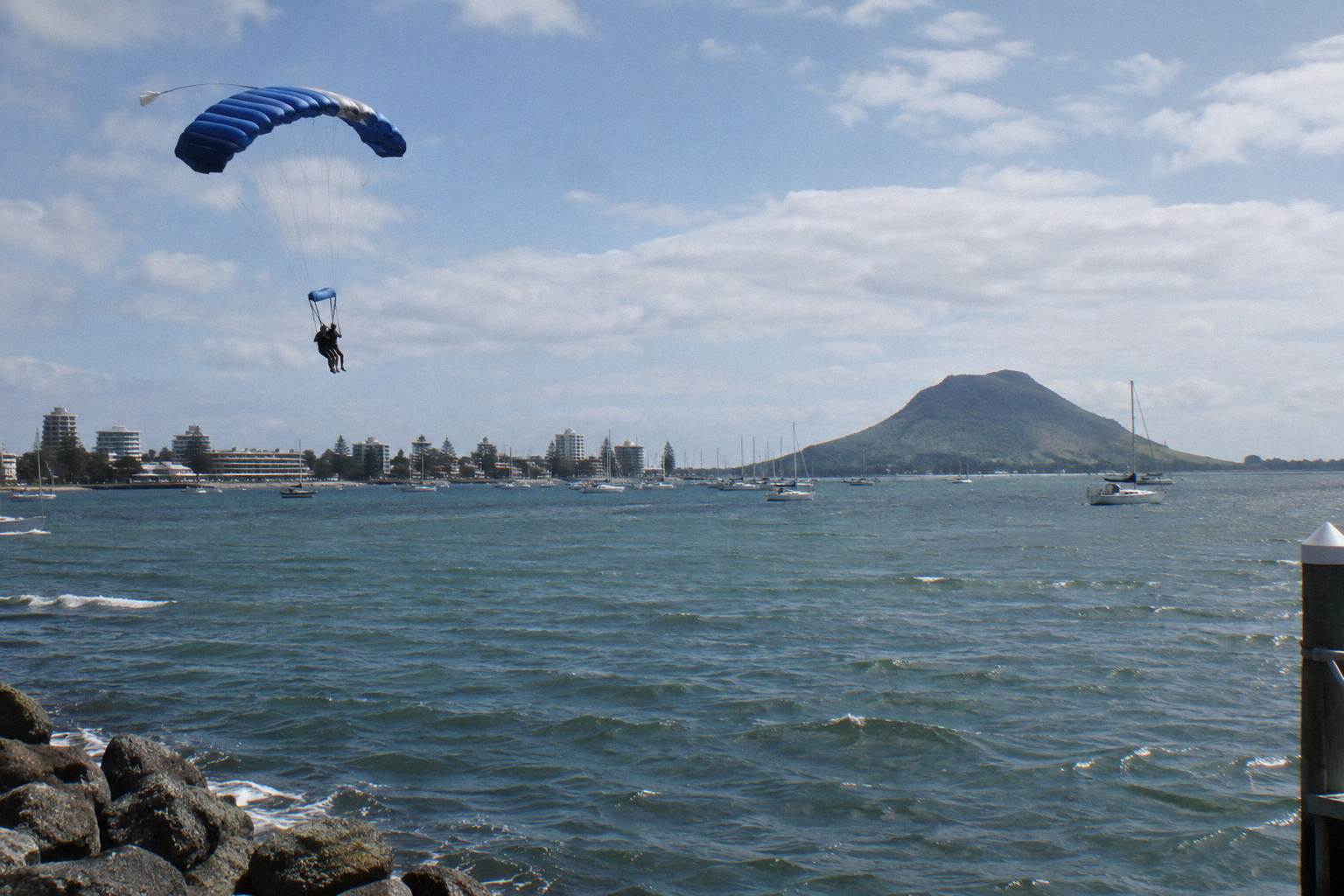
On a tandem jump there is a further flattening effect. The pair is one system: passenger, instructor, harnesses and a rig containing main and reserve parachutes. The drogue, a small parachute trailing behind the pair, adds drag deliberately so the tandem system falls at a speed the equipment and the instructor's procedures are built around. The typical tandem pair settles near 120 mph, which the operator's own what-to-know page expresses as over 200 km/h. A passenger heavier than another shifts that figure by a much smaller margin than most people guess, because the change is a fraction of the whole system's mass.
That is also why heavier solo skydivers, the people who fall without an instructor attached, notice the effect more clearly than tandem passengers ever will. A tandem pair is already heavier than nearly every solo jumper, and so already falls at a speed comparable to a heavy solo skydiver. The physics is the same at both scales; the tandem just starts life near the top of the range.
If a first jump is on your list, the Skydive Over Mount Maunganui link beside the Mount Maunganui listing shows dates for the 12,000 and 15,000 ft options, both flown from the same airport.
Why Does Weight Change Terminal Velocity?
Because falling is a tug of war between weight and air resistance, and weight scales with volume while drag scales with area. When a body gets bigger, mass grows faster than the frontal area that catches the air, so the balance speed climbs. Shape matters too: a compact faller slips the air more cleanly than a spread one, which is why skydivers speed up by pulling their arms in and slow down by arching wide.
Picture two objects dropped from the jump aircraft: a sphere of one kilogram and a sphere of two, both the same material. Both accelerate identically at first. The heavier one keeps accelerating longer, because it takes more air resistance to balance its weight, and air resistance only builds with speed. Its final speed is higher by the square root of two, about 1.4 times, not double.
Body position works on the other side of the same equation. Tuck into a dive and you shrink the drag area; the speed rises. Flatten out and the drag area grows; the speed drops. Instructors use exactly this on every tandem jump, flying the pair stable and belly-to-earth so the drogue and the harness loads behave the way the training expects. The passenger's weight is one input among several, and not the loudest one.
The question also runs the other way, and the US Parachute Association safety page is the reference most often cited when people start comparing weight classes in the sport. The short answer there and here: heavier falls faster, everyone learns to manage it, and the equipment, not the physics, is what sets the passenger limits.
What Is The 110 Kg Rule About, Then?
It is about equipment limits and the human body of the instructor, not fall speed. Parachute systems are certified for a maximum total weight of passenger, instructor and gear, and harnesses only fit a certain range of bodies. The operator lets anyone under 110 kg book without asking, and asks heavier passengers to phone, with a small surcharge above that threshold that goes to the tandem instructor for the added strain. Speed never enters the stated reasoning.
The operator's FAQ page puts it plainly: under 110 kg, just book; over 110 kg, call, and there will be a small surcharge. No dollar figure for that surcharge is published. The same page sets the minimum at 30 kg, noting the real constraint is fitting safely into the harness rather than the number on the scale.
The operator's own pages are not perfectly aligned on the ceiling. The booking form states a maximum of 110 kg and says to call above it, while the what-to-know page states 115 kg including shoes and clothes. The 110 kg figure is the one to plan around, with a phone call above it. Our fuller treatment of the bands and the surcharge sits in the weight limit guide.
Why do drop zones anywhere set bands like this? The industry reasoning, echoed across operator pages, is threefold: the tandem rig is certified for a total suspended weight, the harness must fit the body it is holding at 200 km/h, and the instructor absorbs the landing forces alongside the passenger. None of those three is about how fast the pair falls. A heavier passenger changes the fall speed by a small fraction and changes the landing loads by a real margin.
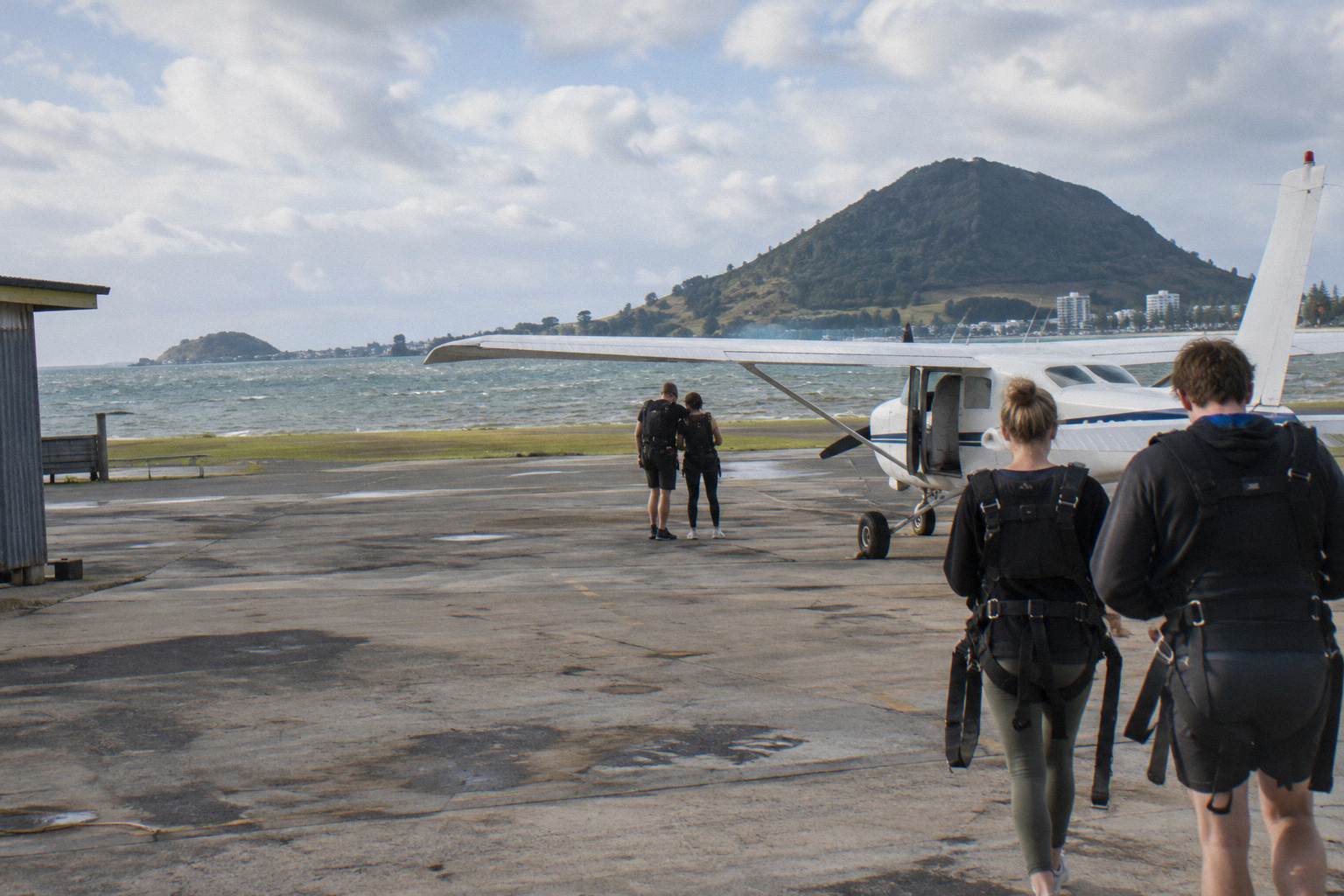
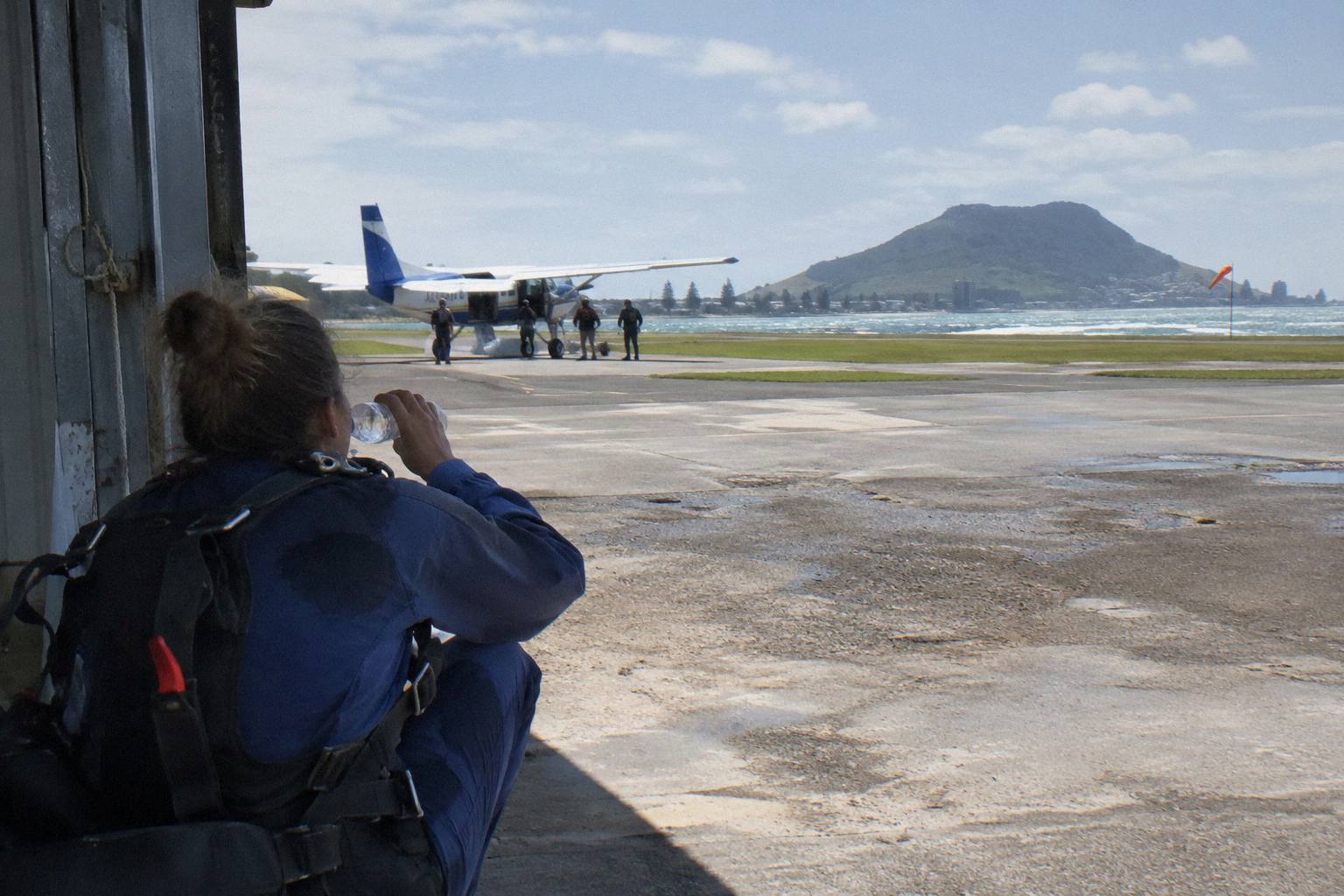
The 15,000 ft jump listings from this airport carry a maximum of two travellers per booking alongside the 110 kg limit, a pairing that exists because the aircraft, a Cessna 182, takes two tandems at a time.
Does A Tandem Pair Fall Faster Than A Solo Skydiver?
Roughly, yes, and that is by design. A tandem pair weighs far more than a solo jumper, so without help it would fall meaningfully faster. The drogue, a small stabilising parachute trailing the pair, adds drag and holds the system near the speed a heavy solo skydiver would see, around 120 mph. That keeps the freefall inside the envelope the equipment, the training and the camera setups are built for.
The drogue does two jobs at once. It adds drag to counter the extra mass, and it stabilises the pair so the passenger and instructor fly in a predictable attitude. Without it, the math of the previous section would run away: more mass at similar drag area means a higher terminal velocity, and the rig would be working outside the speeds it was built and packed for.
For the passenger, this is invisible bookkeeping. You do not choose the drogue, tune the fall speed or notice the square root of anything. The operator describes freefall at over 200 km/h and the whole experience on site as 1.5 to 2 hours door to door, with the 15,000 ft option giving about 1 minute of freefall, an indication only, and a few minutes under canopy.
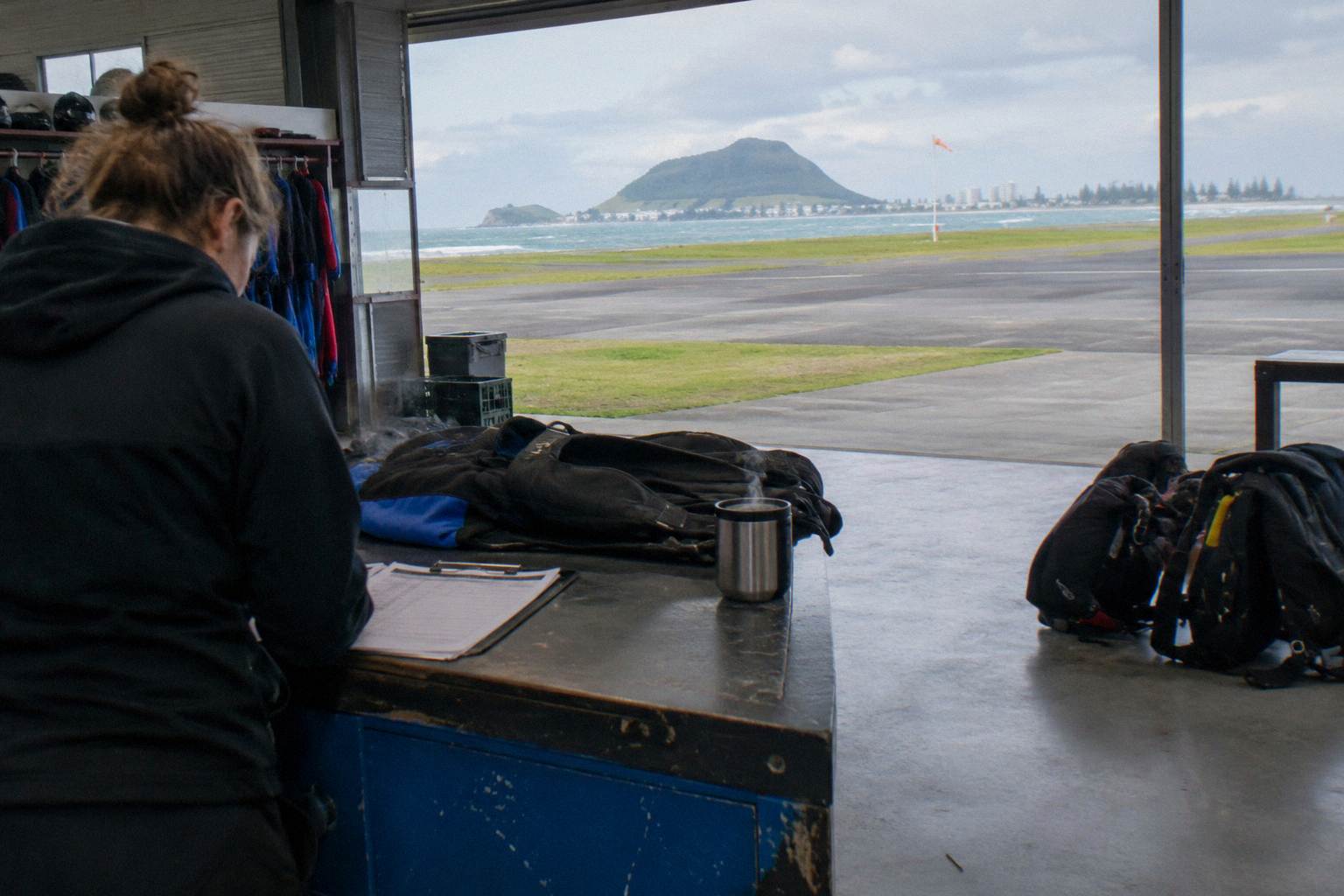
One caution worth carrying into any weight conversation: freefall times vary. The operator's own waiver says the published times are an indication only and can vary with weather and body shape. A heavier, more compact pair may run a touch faster and marginally shorter on the clock; a lighter pair the opposite. Nobody books a jump and gets a stopwatch guarantee.
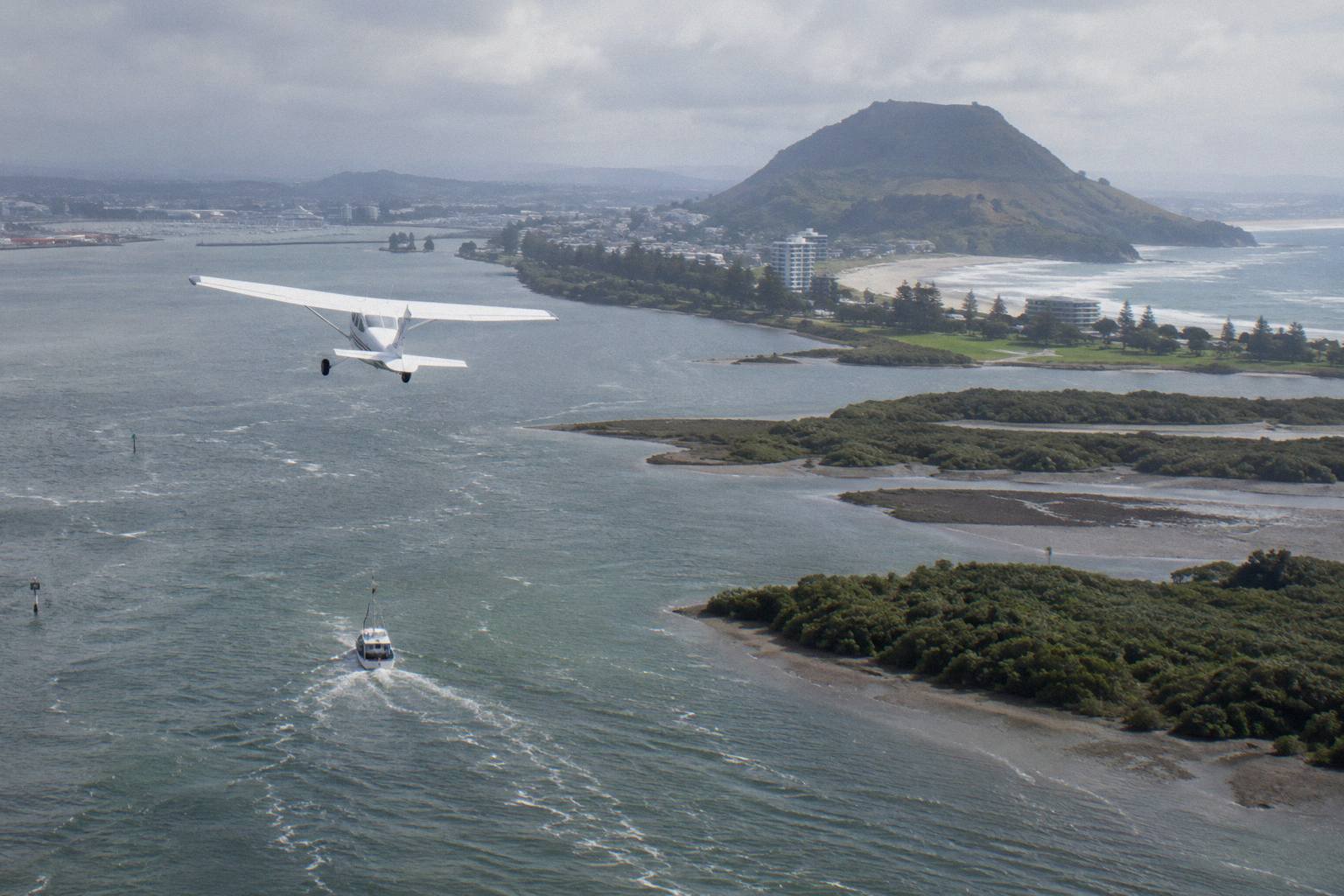
Do Weight Limits Change The Speed You Book At 12,000 Or 15,000 Ft?
No. The altitude choice sets the freefall length, not the fall speed, and the weight band decides who can board, not how the pair flies. At 12,000 ft the operator lists about 40 seconds of freefall after a 15 minute climb; at 15,000 ft, about 1 minute after a 20 minute climb. Both speeds sit in the same over 200 km/h territory, because the same physics and the same drogue govern both.
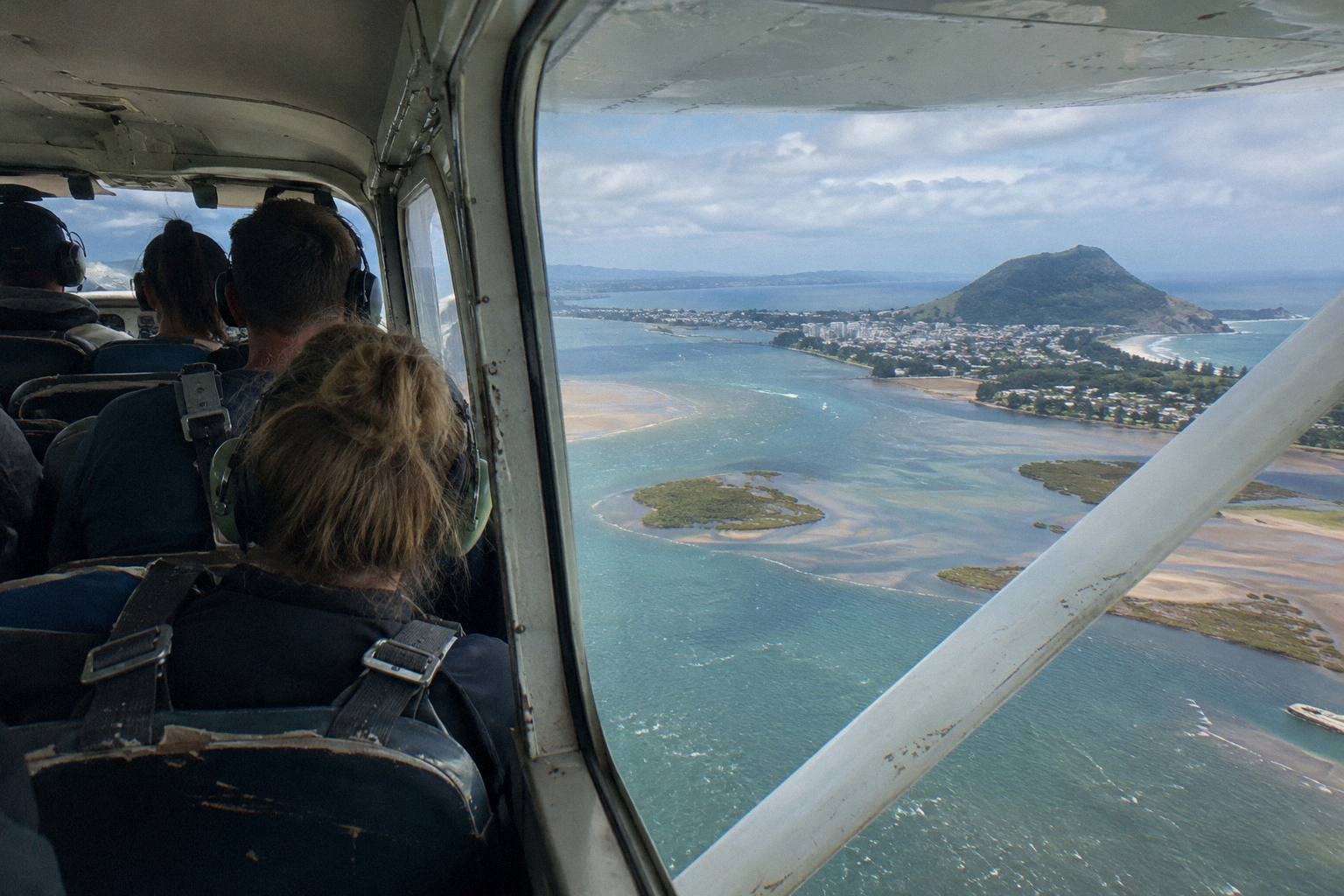
Choosing between the two heights is a question of time in freefall and time in the aircraft, not of going faster. The extra 3,000 ft at the top option buys roughly twenty more seconds of freefall and five more minutes of scenic climb over the harbour and the coast. Weight does not move that arithmetic: two passengers of different weights on the same load both get the same listed freefall window, with the indication-only caveat above.
What weight does change is the booking conversation. Under 110 kg, both height options book straight through. Over it, the call comes first, and the operator talks through fit and sizing before anything is locked in. The comparison of the two heights, including what the extra minute costs in experience terms, is laid out in the 12,000 vs 15,000 ft guide.
If the fall-speed question is really a nerves question, that is normal and worth naming.
How Fast Do You Actually Fall, In Numbers You Can Use?
The figures worth remembering are three. A stable tandem pair flies at about 120 mph, the operator's own page says over 200 km/h, and the freefall lasts about 40 seconds from 12,000 ft or about 1 minute from 15,000 ft. Those are the same speed described from two directions, and the operator's figure allows for the pair running at or slightly above the sport's typical range. Nothing here scales dramatically with passenger weight.
| Figure | Value | Where it comes from |
|---|---|---|
| Tandem pair terminal velocity | About 120 mph, stable belly-to-earth with drogue | Sport-wide physics description |
| Operator's stated freefall speed | Over 200 km/h | Operator's what-to-know page |
| Freefall at 12,000 ft | About 40 seconds | Operator's homepage |
| Freefall at 15,000 ft | About 1 minute | Operator's homepage |
| Freefall guarantee | None; times are an indication only | Operator's waiver |
| Canopy ride | 3 to 5 minutes depending on the page quoted | Operator's homepage and what-to-know page |
The two speed figures are not in conflict; they are the same reality stated from opposite sides of a line that a tandem pair sits right on. A pair near the typical figure will read as "over 200 km/h" on one scale and "about 120 mph" on the other. If a heavier passenger adds a few km/h, the description still holds.
What you cannot do with these numbers is build a personal speed forecast. The variables that matter most, exact system mass, drogue trim, air density on the day and the pair's attitude, are not things a passenger controls or predicts. The figures exist to set expectations, and they do that job well: fast, loud, about a minute, then quiet under canopy.
Who Sets The Weight Rules, And Can An Operator Bend Them?
The operator sets its own passenger band, and the rules above it are certification rules that nobody can waive. New Zealand tandem operations sit under Civil Aviation Rule Part 115, which requires an adventure aviation operator certificate, and Part 105, which governs the parachuting itself, including a requirement that the main parachute be activated no lower than 5,000 feet on a tandem. Equipment certification limits, written into the gear, are what make weight bands firm rather than negotiable.
The Civil Aviation Authority Part 115 rule is the public text of the first of those, and the tandem master's opening altitude sits in Part 105. Neither rule prints a passenger weight number; the numbers come from the equipment manufacturer's certified total suspended weight and from each operator's own assessment of harness fit and instructor load. That is why bands differ between drop zones and why the phone call above 110 kg is a genuine conversation, not a formality.

For a passenger, the practical sequence is simple. Weigh yourself accurately, check the band, book if you are under 110 kg, and call if you are not. The minimum side is 30 kg with a harness-fit caveat, and the age rules run in parallel: jumpers from 7 years old, a consent letter under 18, and a dropzone visit first for anyone under 12. The full band-by-band detail, including the surcharge wording, is in the age limit guide and the weight guide linked earlier.
What Trips People Up Before You Book
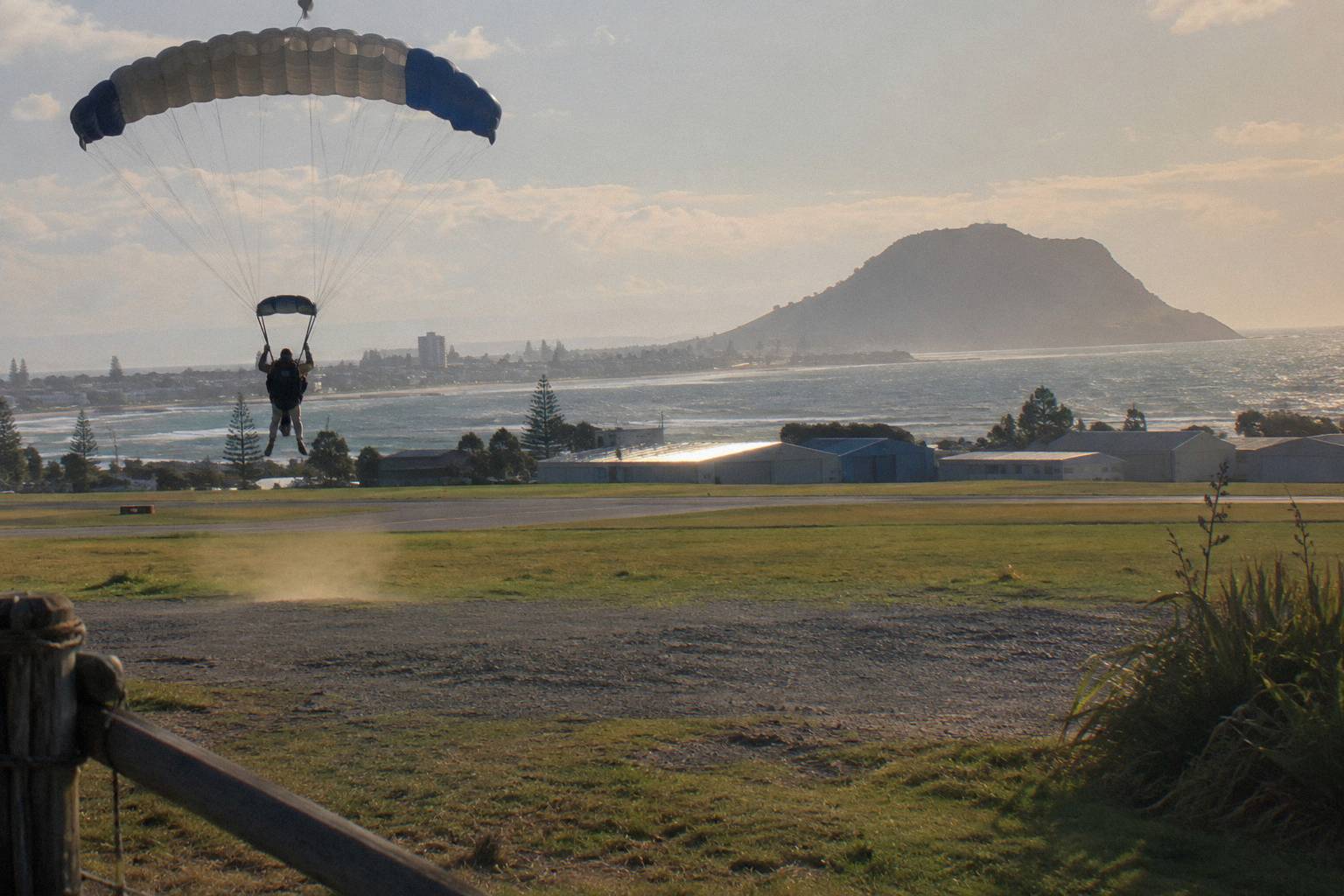
Three assumptions cause most of the trouble. First, people read the weight limit as a speed limit; it is not, it is an equipment and instructor limit. Second, people weigh themselves with clothes and shoes and compare against the wrong number; the what-to-know page measures the maximum including shoes and clothes. Third, people book different heights to compensate for weight; the altitude choice is about freefall time, not speed.
A fourth trap deserves a line of its own: reading the operator's two ceiling figures, 110 and 115 kg, as a contradiction worth arguing about. They are two pages of the same operator describing the same reality with different framing, and the booking path is the one that matters: book under 110 kg, phone above. A fifth: assuming the surcharge above 110 kg is a penalty with a published price. No figure is published, and the FAQ says only that it is small and goes to the instructor.
Finally, do not build a plan around a specific fall speed or freefall stopwatch number. The waiver language, indication only, exists precisely because body shape and conditions move the outcome. Book the height whose freefall length you want, wear closed shoes, arrive 30 minutes early, and let the drogue handle the arithmetic.
The 15,000 ft Bay of Plenty listing above runs on the same aircraft, the same weight band and the same freefall window as its sibling listing, so the choice between them comes down to how the product page and its options are described rather than any difference in physics. If speed is the worry, neither listing falls differently.

Common Questions About Weight And Fall Speed
Do Heavier People Fall Faster Skydiving?
Yes, slightly. Terminal velocity rises with mass and falls with drag area, so a heavier body of the same shape settles faster. On a tandem jump the instructor and gear form most of the pair's weight, so the passenger-to-passenger difference is small, and the drogue holds the pair near 120 mph regardless.
Does The 110 Kg Limit Exist Because Heavier People Fall Too Fast?
No. The operator's stated reasons are harness fit, a small surcharge for the added strain on the tandem instructor, and the certified weight limits of the equipment. Fall speed is a side effect of weight, not the constraint the rule protects against.
Will I Fall Noticeably Faster Than A Lighter Friend On The Same Day?
You may fall a touch faster and a touch shorter on the freefall clock, but the difference is a fraction of the pair's total weight and stays inside the operator's indication-only freefall window. You will both be described by the same over 200 km/h figure.
Do Heavier Skydivers Fall Faster On Solo Jumps Too?
Yes, and the effect is clearer without an instructor and drogue in the system, because the jumper's own mass is the whole mass. This is why experienced solo skydivers adjust body position, not just equipment, to manage fall rate.
What Happens If I Weigh Over 110 Kg?
Phone the operator before booking. The FAQ says the team will talk it through based on your weight and size, and a small surcharge applies that goes to the tandem instructor. No surcharge figure is published.
Does Being Heavier Mean A Longer Or Shorter Freefall?
Slightly shorter, all else equal, because a faster terminal velocity covers the same altitude in less time. The operator lists about 40 seconds from 12,000 ft and about 1 minute from 15,000 ft, both described as an indication only.
Ready to put the physics to the test? The jump listings from this airport all fly the same weight band, and every one carries free cancellation up to 24 hours before the start.