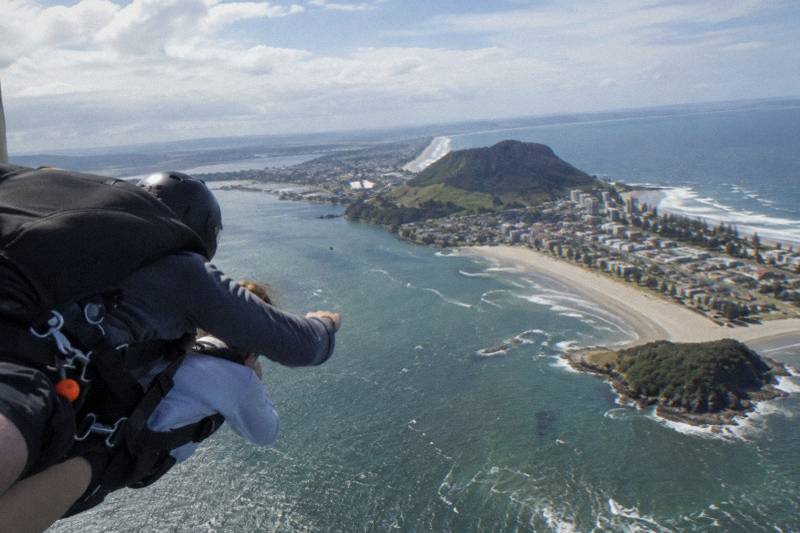
Can You Wear A Helmet When Tandem Skydiving? Hats, Goggles And Gear In Tauranga
Tandem passengers at Tauranga Airport are issued a hat and goggles rather than a helmet, while instructors typically wear helmets. Here is what that means for your jump and what to bring.
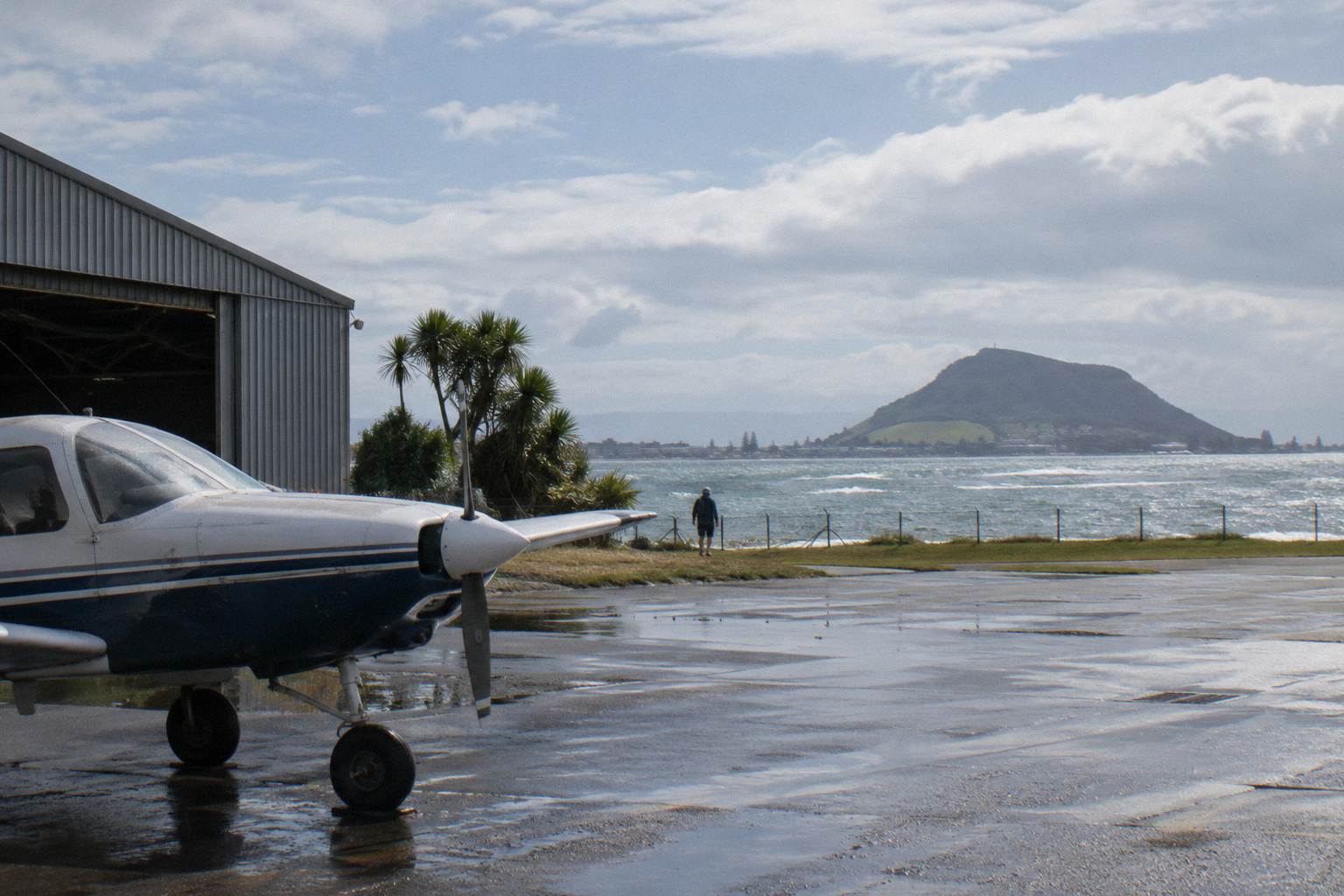
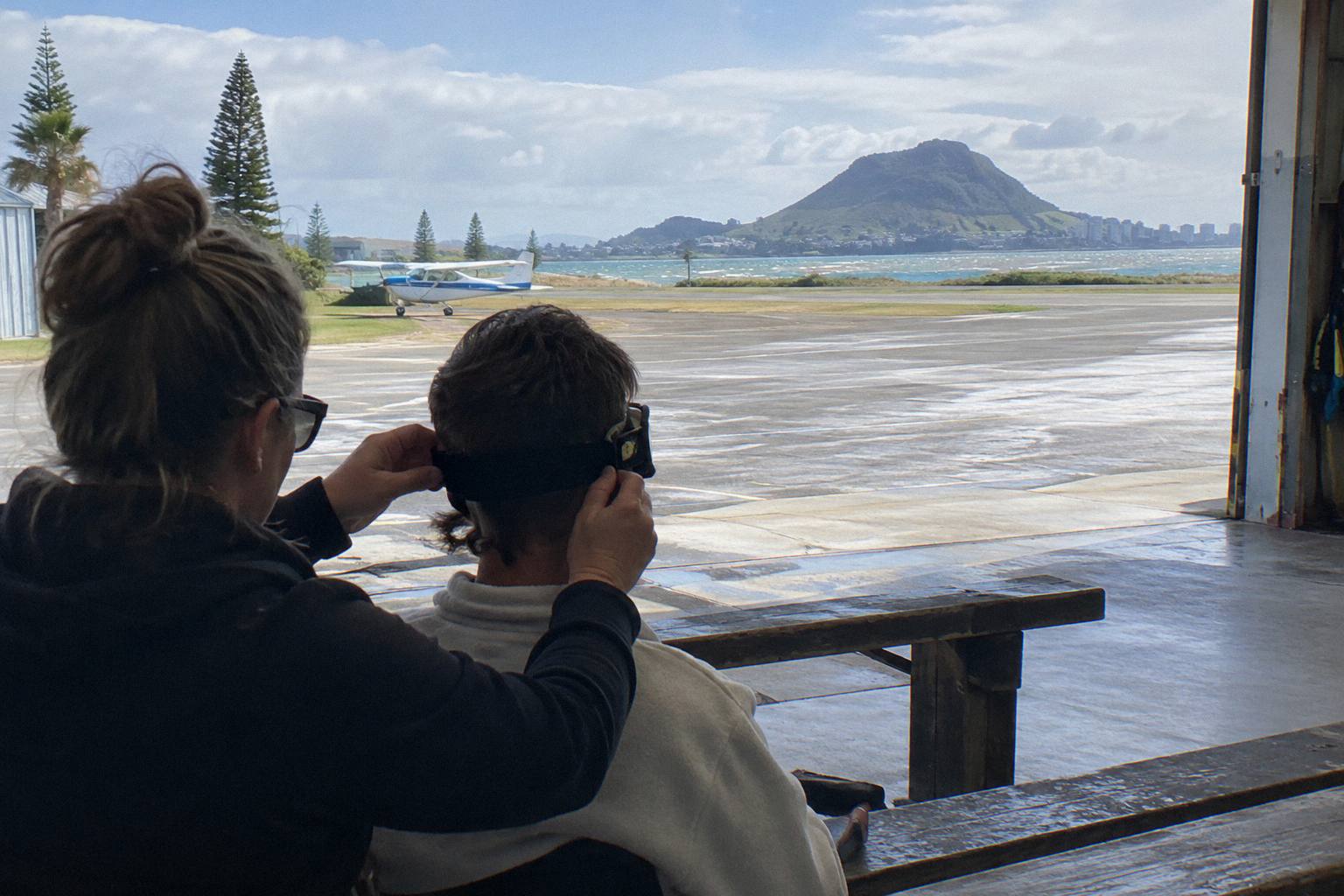
In short: tandem passengers generally do not wear helmets, and the instructor strapped to you generally does. The reason is not cost cutting, it is that a passenger's hard helmet can injure the instructor during the exit, in freefall and at opening, because the two of you are harnessed together and your heads end up close. What you get instead at Tauranga Airport is a soft hat and a pair of goggles, both supplied by the operator, and the hat is required under New Zealand civil aviation rules.
If you are weighing a first jump, start with the options at Tauranga Skydive, where the takeoff and landing both happen at the same spot on the airfield at Mount Maunganui.
| Fact | Detail |
|---|---|
| Passenger helmet | Tandem passengers generally do not wear one |
| Instructor helmet | Instructors typically wear one |
| Headwear issued | A soft hat, supplied by the operator under NZ civil aviation rules |
| Eyewear issued | Goggles, with versions that fit over glasses |
| Own camera in freefall | Not permitted for tandem passengers under NZ civil aviation law |
| Clothing advice | Comfortable, weather-appropriate clothes |
| Footwear rule | Closed shoes are mandatory and must not fall off |
| Winter extras | Jumpsuit and gloves supplied in the colder months |
Can You Wear A Helmet When Tandem Skydiving?
In almost every tandem operation the passenger does not wear a helmet, and the reason is the instructor's safety as much as yours. Because you are harnessed together, a hard shell on your head can strike the instructor's face or skull at exit, during the roll at parachute opening, or on landing. Operators therefore issue passengers soft hats and goggles instead, and the instructor wears the helmet. At Tauranga Airport this is exactly the arrangement.
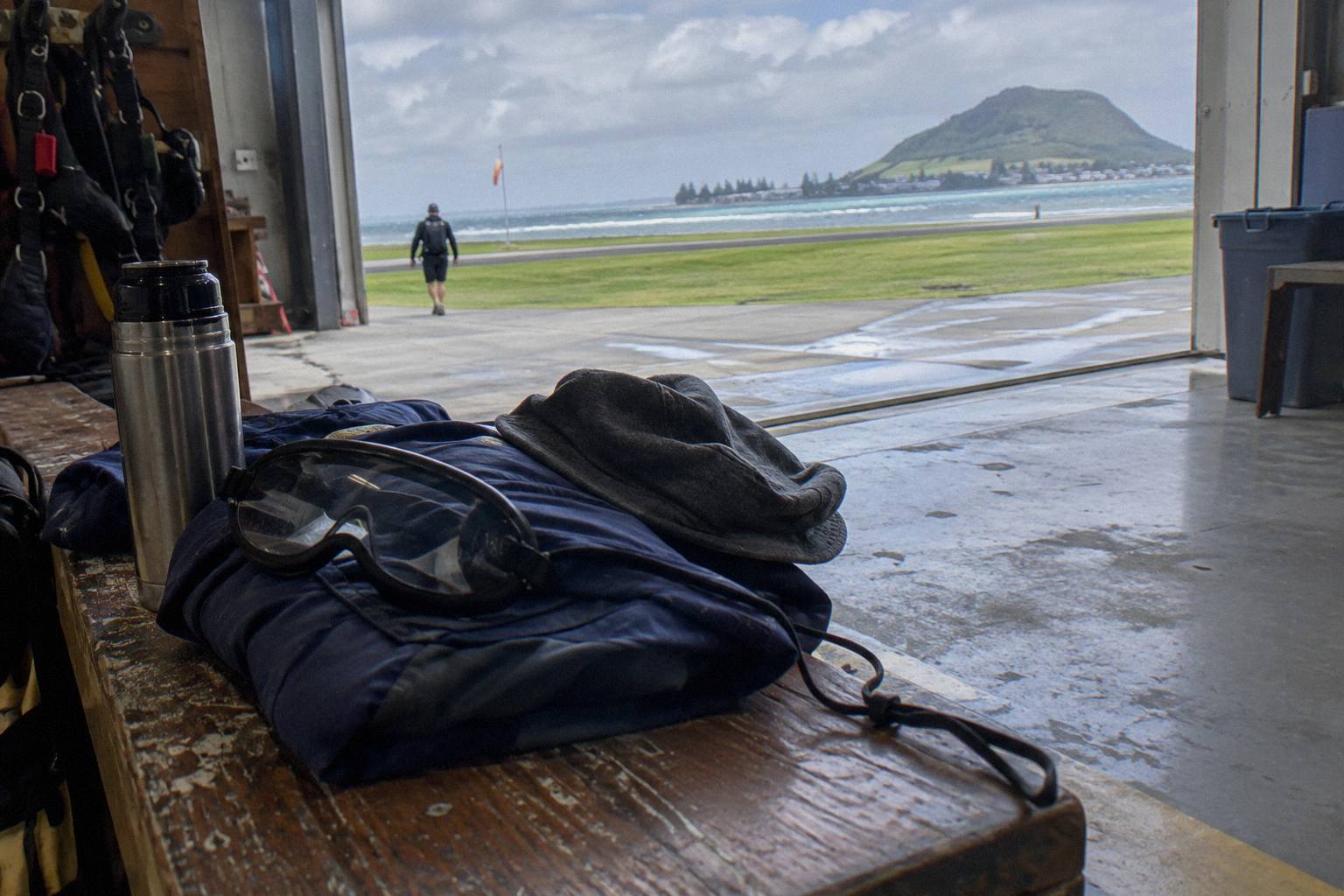
The pattern is described by skydiving instructors across the industry: tandem passengers do not wear helmets while their instructors typically do, precisely to prevent the student's helmet from injuring the instructor during the jump. The passenger's head protection is, in effect, the instructor's competence plus the soft hat. It sounds counterintuitive to anyone who has worn one for cycling or climbing, where the helmet exists to absorb your own impacts. In a tandem jump the geometry is different. You are attached at four points to another human being, and during the drogue fall, the opening sequence and the parachute ride your bodies move as one unit. Two hard shells near each other in that unit are a hazard, not a protection.
The gear you are actually issued serves two jobs that matter more. The goggles protect your eyes from a wind blast of over 200 km/h, which the operator's what-to-know page describes as the speed you reach in freefall. The hat keeps your scalp warm at altitude and, under New Zealand civil aviation regulations, is supplied by the operator as standard. Neither item is optional in the sense that you can skip it, and neither costs extra, they are part of the jump.
For the jump itself, the Skydive Over Mount Maunganui listing runs from the same airfield at 12,000 or 15,000 ft with a 20 to 25 minute scenic flight to altitude, and every piece of headgear described here comes with it.
Why Does The Instructor Wear A Helmet But Not You?
The instructor wears a helmet because their head matters to your survival. Strapped to your back, they must hold a stable body position, deploy at the right altitude, and fly the canopy to a controlled landing, so any blow to their head during exit or opening could compromise all three. Your bare or soft-hatted head cannot do them the same damage in reverse.
Think through the sequence. At the door, the two of you leave the aircraft together and immediately enter a 200 km/h airflow. In the first seconds, bodies shuffle and settle into the arched position the instructor holds. At deployment, the opening load decelerates the pair sharply and the harness geometry can swing your heads toward each other. Under canopy and at landing, you are instructed to lift your legs while the instructor handles the flare. At every one of those moments, a hard helmet on the passenger is a blunt object travelling next to the instructor's face.
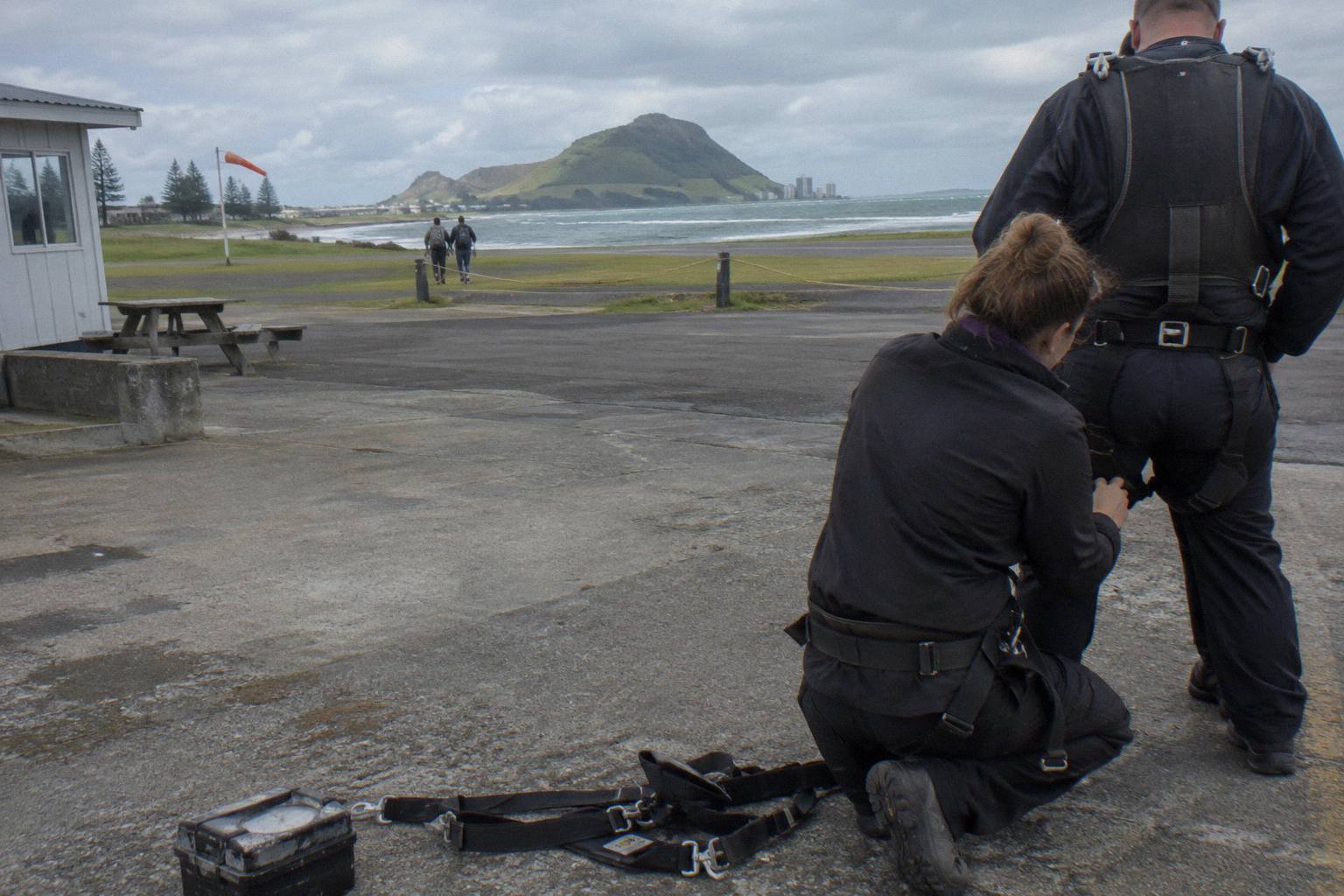
The regulatory backdrop is worth knowing without overreading it. Tandem parachute operations in New Zealand fall under the Civil Aviation Authority's adventure aviation framework, and the Civil Aviation Authority Part 105 rule sets the operating requirements for parachuting, including the minimum deployment height for tandem masters. The industry body, the New Zealand Parachute Industry Association, maintains standards and training programmes aligned with those rules. None of that mandates a passenger helmet, and the equipment logic above explains why.
None of this means the experience is risk free. Tandem skydiving carries real risk, like any aviation activity, and the straight answer on the helmet question is that it is a piece of equipment design settled industry-wide for reasons you can now check for yourself. If head protection worries you for a medical reason, declare it on the waiver, which asks you to list conditions the operator needs to know about.
What Gear Does The Operator Hand You At The Airport?
At Tauranga Airport the operator hands you a hat, goggles and, in winter, a jumpsuit and gloves, and that is the full kit beyond your own clothes. The hat is required under New Zealand civil aviation regulations. The goggles include versions that fit over prescription glasses. The jumpsuit is optional in warm months when you may jump in your own clothes, and gloves are offered in the colder part of the year.
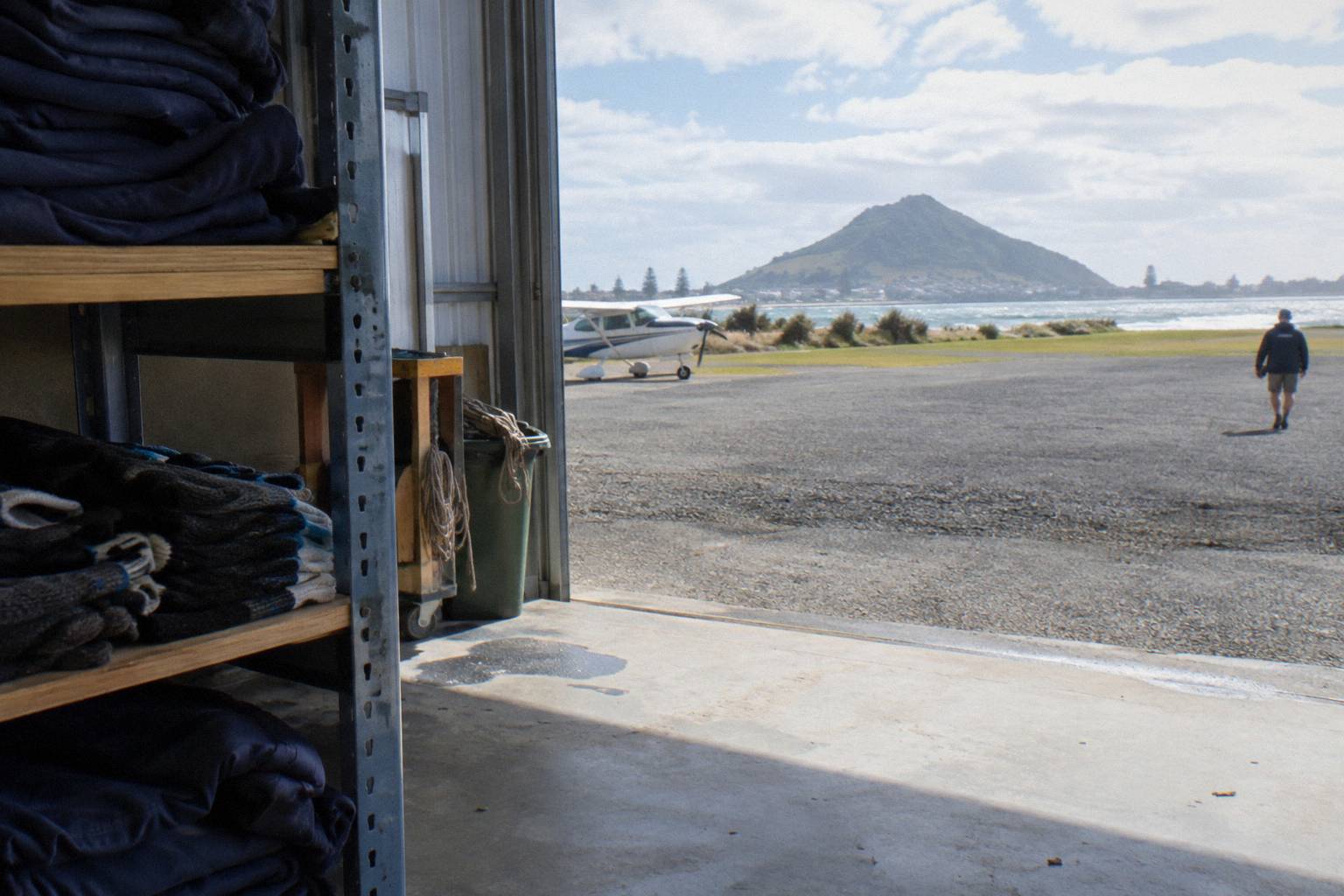
The operator's own pages set out the clothing advice plainly: comfortable, weather-appropriate clothing, gloves in winter, and closed shoes that cannot fall off during the freefall. Closed footwear is mandatory for everyone, for safety reasons, and this is one rule the operator does not bend. The specifics of what to wear through the seasons are covered in detail in what to wear for a Mount Maunganui skydive, including the winter glove and jumpsuit arrangements.
| Item | Who supplies it | When |
|---|---|---|
| Soft hat | The operator, under NZ civil aviation rules | Every jump |
| Goggles | The operator, including goggles that fit over glasses | Every jump |
| Jumpsuit | The operator | Colder months, optional when warm |
| Gloves | The operator | Winter |
| Closed shoes | You bring them | Always, mandatory |
| Helmet for passengers | Not part of tandem passenger kit | Instructors wear their own |
One thing you cannot bring is your own camera. Under New Zealand civil aviation law, no tandem passenger is allowed to carry a phone or camera during the jump, so the photos and video on offer are the operator's camera packages, from a wrist-mounted camera on the instructor's harness to an outside camera flyer who jumps alongside you. The choices and prices are laid out in the camera package guide.
If you are already matching gear questions against dates, Check availability on the jump page and pick your slot while you think the clothing list through.
A practical way to think about the kit list is to divide it into what you leave home wearing and what you pick up at the drop zone. Your half of the arrangement is small but strict: closed shoes that stay on your feet, and clothing that suits the season. The operator's half covers everything that attaches to you for the jump itself, namely the hat and goggles every time, plus the jumpsuit and gloves when the weather calls for them. Because the soft hat is a regulatory requirement rather than a comfort item, you do not get a say in whether to wear it, and the same firm line applies to closed footwear. If you arrive in sandals or slip-ons, expect to be asked to change before you can jump, so it is worth deciding on your shoes the night before rather than at the hangar door.
For anyone who wears glasses, the goggle detail matters more than it might first appear. Losing the ability to see clearly on the way up and on the way down would take away a large part of the experience, and prescription-compatible goggles solve that without needing contact lenses. If this applies to you, mention it when you are being kitted up so the right pair is handed over, and ask how they sit over your frames before you walk to the aircraft. It is a small request that protects the view of Mount Maunganui you came for.
The camera rule catches more people out than any clothing question. Phones in pockets, chest-mounted action cameras, and even a friend's spare camera all fall under the same prohibition, because the law applies to every tandem passenger without exception. Rather than treating this as a loss, treat it as a decision you can make in advance: look through the operator's photo and video packages before your jump day, decide which one you want, and then relax in the knowledge that someone else is handling the filming while you focus on the freefall. That also removes any temptation to sneak a device aboard, which would only end with you surrendering it on the ground.
Finally, a word on timing your clothing choices against the season you book in. Winter jumpers get the fuller kit, jumpsuit and gloves included, which means your own outfit underneath matters slightly less, while summer jumpers who skip the jumpsuit are wearing their own clothes on camera in any photos they purchase. If you are buying video, that is a good reason to dress as though you will be filmed, because you will be. Either way, the operator supplies the safety-critical items on every jump, so the only genuine preparation on your side is footwear and weather-sensible layers.
Do Goggles Fit Over Glasses And Contact Lenses?
Yes. The operator advises contacts where you can wear them, but if you wear glasses there are special goggles that fit over the frames, so you keep your vision for the view. Contacts are also fine, with the standard advice to tell your instructor so the goggles can be seated securely over them. Either way, you are not choosing between seeing the Bay of Plenty coastline and protecting your eyes, the issued goggles do both jobs.
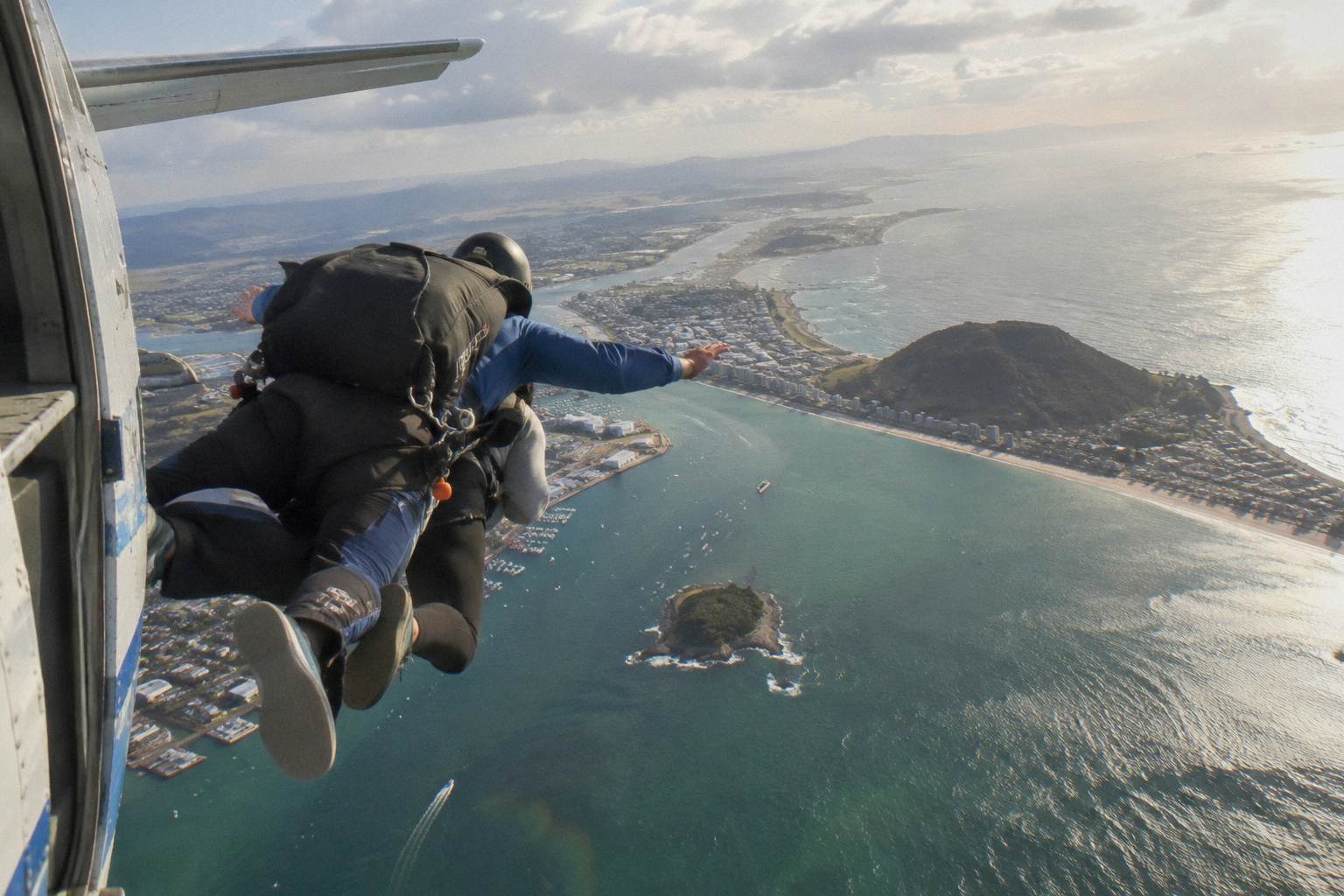
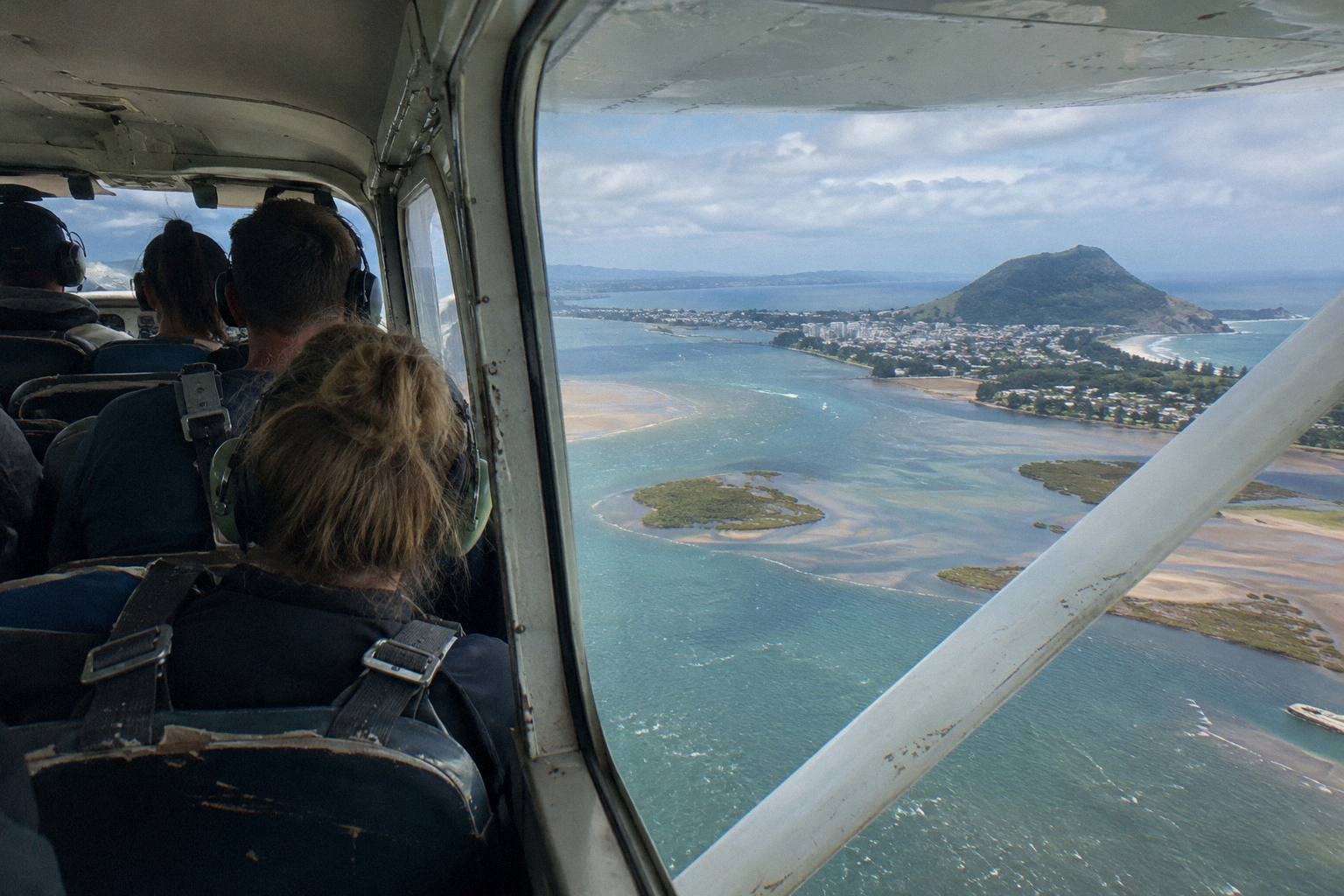
The question matters more than it first appears, because the scenic flight to altitude is a genuine part of the experience. The Cessna 182 takes two tandems at a time on a 15 to 20 minute climb, and the same pair of eyes that needs the goggles in freefall wants to read the coastline on the way up. Matakana Island runs 20 kilometres along the harbour mouth, and Mauao, the Mount Maunganui summit, stands 232 metres above the beach town, both visible from the aircraft and from the open door.
There is no helmet-and-glasses conflict to worry about, since passengers are not wearing a helmet in the first place. The goggle strap sits where a helmet band otherwise would. If you lose a lens in the wind somehow, the instructor is flying the jump regardless, your job in freefall is to arch and enjoy it.
What Trips People Up Before You Book
The four gear-related mistakes are these: arriving in shoes that rule you out, since closed footwear is mandatory, expecting a helmet and reading its absence as corner cutting, planning to film the jump on your own phone, which civil aviation law forbids for tandem passengers, and assuming winter and summer kit are the same. Each is avoidable with a little attention, and none of them costs money to fix.
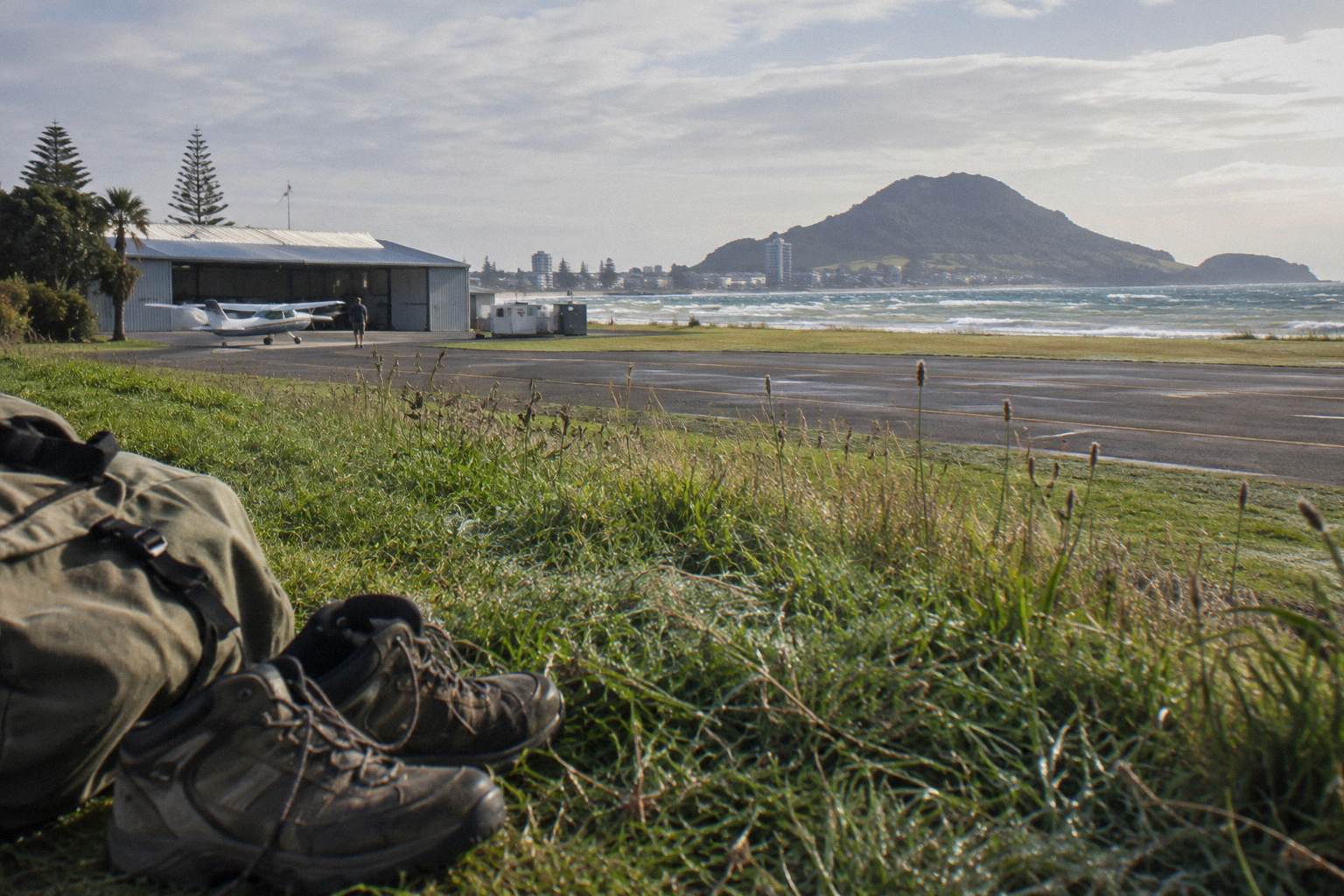
Start with the shoes. Sandals and slip-ons fail the closed-shoe rule, and the operator applies it to everyone on the load. Next, reset the helmet expectation before you arrive, so the sight of bare-headed passengers does not unsettle you on the day. Third, leave the phone on the ground and prebook the camera package you want if you want one, because the outside camera flyer option has to be booked ahead. Fourth, dress for the season you are jumping in, with the operator supplying the cold-weather extras rather than you having to buy them.
A calmer framing helps too. The question "how scary is a first skydive" is usually about the unknown, and the gear briefing is where most of the unknown gets removed: you learn the arch position, the leg-lift at landing and what each strap does. People who read how scary a first skydive really is before their jump tend to arrive with better questions, and the helmet question is one of the better ones to ask in person.
When you are ready, the 15,000ft Tandem Skydive and the Bay Of Plenty 15,000ft Skydive both run from the same Tauranga Airport operation with free cancellation up to 24 hours before the start on the booking page, and the 15,000 ft Tandem Skydive listing caps a booking at two travellers.
Does Headgear Change With Age Or Body Size?
No, headgear stays the same regardless of age or body size: the hat and goggles are identical kit for a 7 year old jumping with parental consent as for a 70 year old, and they do not scale with the 30 kg minimum weight or the 110 kg booking threshold. What changes with size is the harness fit, which the operator checks in person, while children under 12 are asked to visit the dropzone first.
The full age and weight rules, including the consent letter wording and the call-ahead advice above 110 kg, are laid out in the age limit guide and the weight limit guide, and they matter far more to your booking than anything worn on your head. A soft hat fits every head that fits the harness, and the goggle strap adjusts. The medical side is the one place headgear meets health: if a condition affects your head, neck or sinuses, it belongs on the waiver, where the operator asks you to declare things like severe motion sickness, asthma, allergies, heart conditions and epilepsy.
There is no maximum age for tandem skydiving in New Zealand, so the question of whether you are too old is really a fitness question, and the operator's waiver page is the place that lists what gets declared. The operator reserves the right to withdraw anyone likely to endanger themselves or others, which is the same discretion every drop zone works with.
For a fuller walk through of the whole sequence from check-in to landing, what happens on a Bay of Plenty tandem skydive covers the briefing, the climb and the canopy ride in order, with the gear issued at each step.
Common Questions About Skydive Helmets And Gear
Can You Wear A Helmet When Tandem Skydiving?
Generally no. Tandem passengers do not wear helmets because a hard shell on the passenger's head can injure the instructor during exit, opening and landing, since the pair are harnessed together. Instructors typically wear helmets. Passengers are issued a soft hat and goggles instead.
Why Does The Instructor Wear A Helmet And I Do Not?
The instructor has to fly the jump: hold the body position, deploy the parachute and land the canopy. A blow to their head at any of those moments affects you both, so they wear the helmet. Your soft-hatted head poses them no equivalent risk.
Can I Wear My Glasses Or Contact Lenses On The Jump?
Yes to both. The operator advises contacts if you can wear them, and supplies special goggles that fit over glasses. Tell your instructor if you wear lenses so the goggles can be seated securely.
Can I Bring My Own Camera Or GoPro?
No. Under New Zealand civil aviation law, tandem passengers may not carry their own phone or camera during the jump. Photos and video are available as paid extras through the operator's camera packages, filmed by the instructor's wrist or 360 camera or by an outside camera flyer.
What Happens To The Gear If The Weather Is Doubtful?
The operator calls you on the day if the weather looks poor and works something out with you to fit your schedule. Gear is issued on the day regardless, so nothing about helmets or goggles needs deciding in advance.
Do Children Jumping Tandem Get Different Headgear?
No. The same hat and goggles are issued to every passenger. The operator's minimum age is 7 with a consent letter required under 18, and children under 12 are asked to visit the dropzone first so the harness fit can be checked in person.