What Is The Biggest Cause Of Skydiving Death? Landing Errors, Canopy Control And Tandem Rules
Landing problems are the biggest single cause of skydiving deaths in the United States data for 2025, and tandem passengers are protected from that cause by design. Here is what the numbers say.
The question that brings most people to this page is the one they half dread asking: what actually kills skydivers? The short, documented answer is that landing problems lead the counts, and that the tandem format, the one almost every first jumper books, removes the passenger from the controls at exactly the moment those deaths happen. If a Bay of Plenty jump is on your shortlist, start with the Mount Maunganui tandem skydive, where the parachute work belongs to the instructor, not to you.
| Fact | Detail |
|---|---|
| Biggest cause in the 2025 United States data | Landing problems, 25 percent of 16 fatalities |
| 2025 United States fatality rate | 0.46 per 100,000 jumps, from about 3.47 million jumps |
| 2024 United States fatality rate | 0.23 per 100,000 jumps, from about 3.88 million jumps |
| International tandem deaths in 2024 | 3 of 27 fatalities across 41 reporting countries |
| Who flies a tandem canopy | The tandem master, not the passenger |
| Minimum opening height for a tandem main canopy | 5,000 ft under New Zealand Part 105 rules |
| Backup equipment on a tandem rig | Reserve parachute plus an automatic activation device |
What Is The Biggest Cause Of Skydiving Death?
Landing problems are the single biggest cause, and the numbers say so plainly: the United States Parachute Association's 2025 fatality summary attributes 25 percent of that year's 16 civilian deaths to landing problems. That category covers mistakes made under an open, functioning parachute during the final descent and touchdown, not equipment failing mid-air. The same data shows one fatal tandem accident in the United States in 2025 and one in 2024, out of millions of jumps.
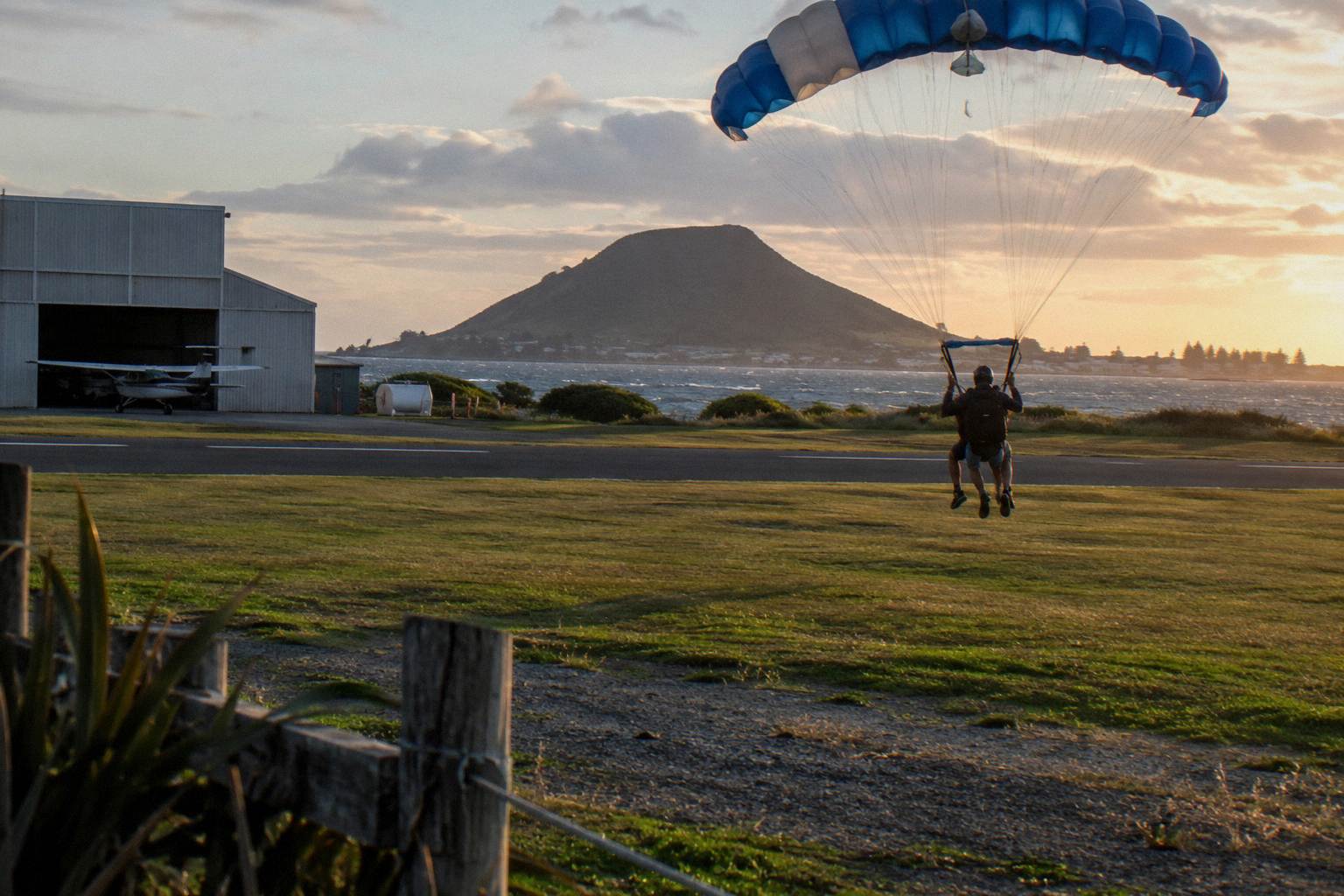
To unpack that: a landing problem is a canopy control error. The parachute is out and flying, and the skydiver misjudges the turn, the altitude, the wind or the flare, and hits the ground with too much horizontal or vertical speed. High-performance manoeuvres close to the ground are the classic pattern, and they are a pursuit of experienced jumpers, not beginners. A tandem passenger never executes those manoeuvres. The tandem master flies the canopy from opening to touchdown, and the passenger is briefed to lift their legs for landing while the instructor manages the flare.
The scale matters as much as the cause. About 3.47 million jumps were made in the United States in 2025, producing 16 civilian fatalities, a rate of 0.46 deaths per 100,000 jumps. The year before was lower still: 9 deaths from roughly 3.88 million jumps, or 0.23 per 100,000. The United States Parachute Association safety page carries both figures, and the 2025 fatality summary is the source of the landing problem share.
Internationally the picture matches. The FAI's 2024 safety report recorded 27 fatalities across 41 reporting countries from more than 7.28 million jumps, of which 3 were tandem fatalities, according to the FAI safety report. New Zealand's own record for 2024/25, published by the Civil Aviation Authority, lists one tandem parachute accident in the adventure aviation sector, resulting in broken bones and no fatalities.
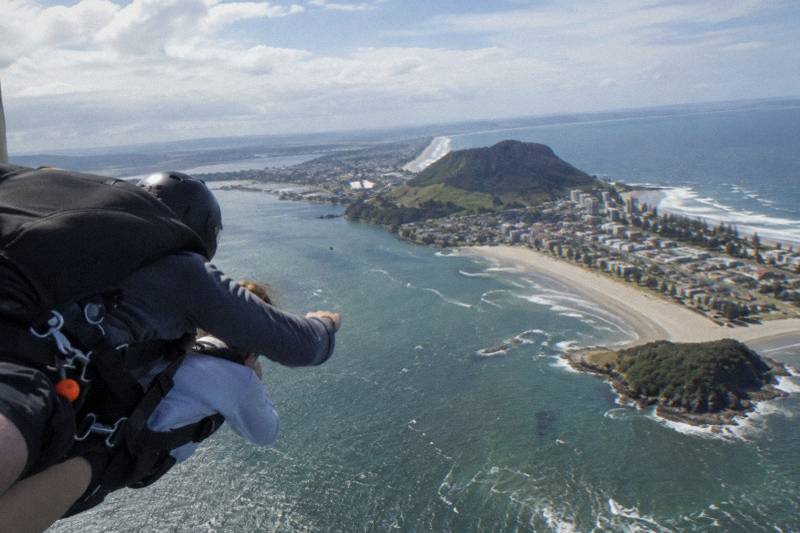
That context is why the tandem products exist in the shape they do. On the From Tauranga: Skydive over Mount Maunganui jump, rated 5.0 from 66 reviews, freefall runs 30 to 45 seconds at 12,000 ft or about a minute at 15,000 ft, then the tandem master flies about 5 minutes under canopy while you watch the coastline. You can check availability at the operator's booking page.
How Rare Are Skydiving Deaths Actually?
Rare enough that the denominator dwarfs the numerator: 16 deaths against 3.47 million jumps in the United States in 2025, a rate of 0.46 per 100,000, and 2024 ran at 0.23 per 100,000. Tandem deaths are a small slice of an already small total, with one recorded United States tandem fatality in each of 2024 and 2025. Most tandem injuries are minor ankle and leg issues.
Put the two United States years side by side and the trend line is toward fewer deaths even as jump numbers hold in the millions. The 2024 figure of 9 deaths was reported as a record low. The 2025 rise to 16 is real but stays within a band the sport has occupied for years, and the summary behind it emphasises vigilance rather than alarm.
| Measure | 2024 (United States) | 2025 (United States) |
|---|---|---|
| Civilian fatalities | 9 | 16 |
| Estimated jumps | About 3.88 million | About 3.47 million |
| Deaths per 100,000 jumps | 0.23 | 0.46 |
| Landing problems share of deaths | Not broken out here | 25 percent |
| Fatal tandem accidents | 1 | 1 |
The injury side of the ledger is where a first jumper should look. Most tandem injuries are minor ankle or leg issues during landing, and landings themselves are typically gentle because the instructor controls the parachute and the passenger is told to lift their legs. The harness, the briefing and the instructor's flare all exist to keep your feet and ankles out of the statistics.
Why Landing Errors Lead The Fatal Counts
Because the landing phase is where a skydiver has the most control and therefore the most opportunity to misuse it: the parachute is open, the ground is close, and any aggressive turn or late flare converts directly into impact speed. The equipment almost always works; the decisions under a working canopy are what kill. That is why the fatality summaries keep pointing at the final seconds of a jump rather than the freefall.
A parachute descending straight and slow is a forgiving machine. The danger arrives when a jumper turns the canopy sharply at low altitude: a turn builds speed, and speed takes height to recover. Cut the turn too close and there is no height left, so the jumper strikes the ground mid rotation, still diving. Nothing failed. The canopy was open, the lines were clear, and the reserve was never needed.
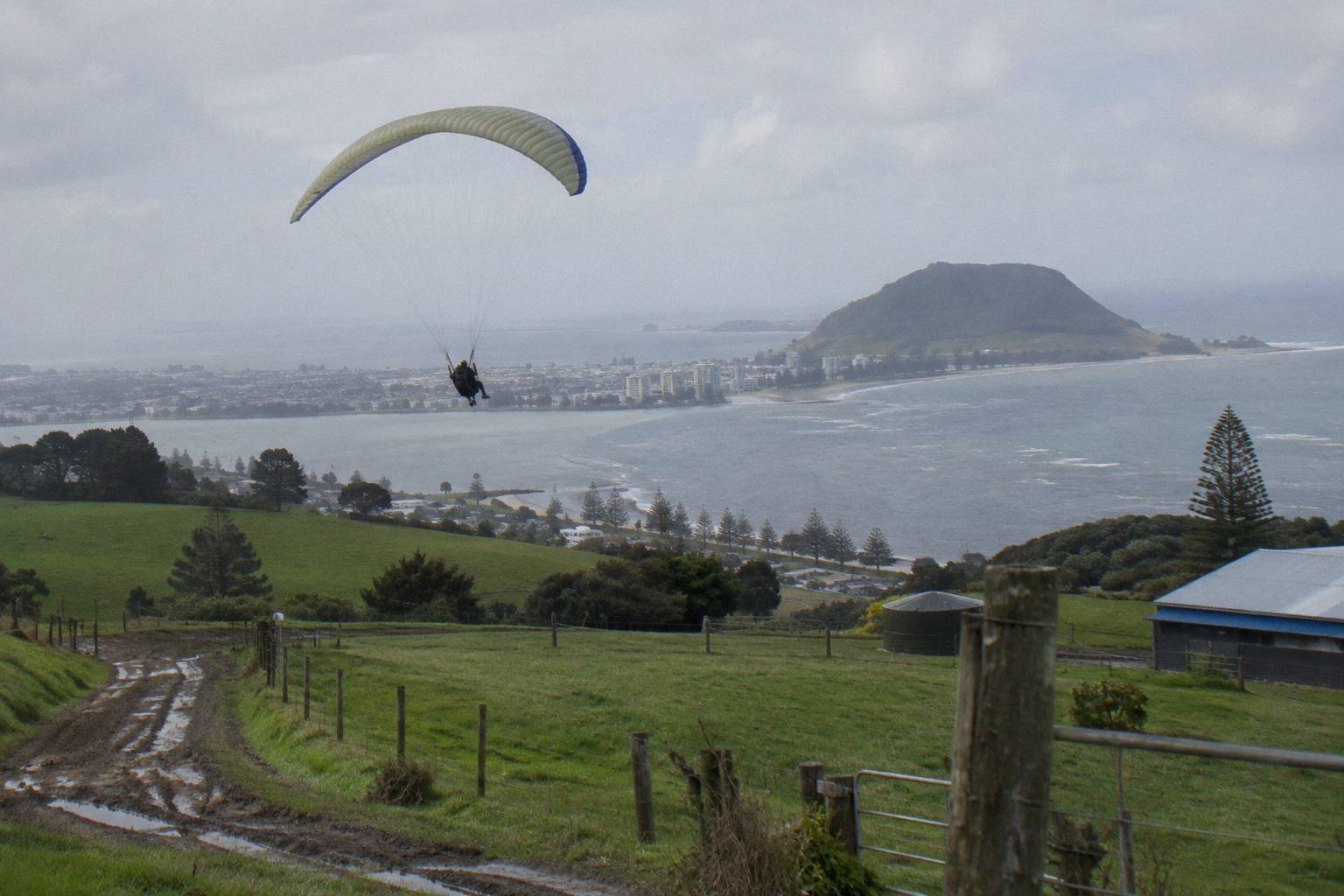
High performance canopy flying, swooping, is a discipline experienced skydivers choose. It shrinks the margin for error deliberately in exchange for speed and lift across the ground. The fatality summaries treat it as the engine of the landing category, and safety bodies publish the numbers precisely to push experienced jumpers toward more altitude, more conservative turns and currency checks.
Now hold that against a tandem jump at Tauranga. The passenger's job under canopy is to sit in the harness and lift their legs when told. The tandem master chooses the landing pattern, times the flare and absorbs the technical work. The one cause that leads the fatality data is, for a tandem passenger, a cause somebody else is trained and equipped to manage.
What Tandem Rules Change For A First Timer
Tandem equipment and tandem rules attack the fatal categories one by one: a reserve parachute packed and inspected on a fixed cycle, an automatic activation device that deploys the reserve if the pair falls too fast at low altitude, a legally set minimum opening height of 5,000 ft for the main canopy, and a trained tandem master flying everything from exit to touchdown. The passenger's decisions shrink to arriving on time, wearing closed shoes and lifting their legs.
The automatic activation device is worth understanding, because it is the layer most first jumpers have never heard of. It monitors altitude and descent rate throughout the jump. If the pair is still falling too fast at a low altitude, it fires the reserve. Even in the rare event a passenger loses consciousness, the instructor maintains control of the descent and landing while the device stands behind them. That is redundancy by design: two parachutes, plus a machine watching the pair.
| Protection layer | What it does | Who controls it |
|---|---|---|
| Main parachute | The primary canopy, opened by the tandem master | Tandem master |
| Reserve parachute | A second, independently packed canopy | Tandem master, or the AAD |
| Automatic activation device | Deploys the reserve if descent is too fast at low altitude | Automatic |
| 5,000 ft minimum opening height | Buys time to handle any problem with the main | Set by Part 105 rules |
| Harness and briefing | Secures the passenger and sets the landing posture | Passenger follows instruction |
New Zealand's rule set puts numbers on this. The Civil Aviation Authority's Part 115 rule requires an adventure aviation operator certificate for tandem parachute operations, and Part 105 sets the operating requirements, including the rule that a tandem master must activate the main parachute at not less than 5,000 ft. That opening height is not decoration: it is the altitude budget that makes a reserve deployment survivable if it is ever needed.
What About Equipment Failure And Mid-Air Problems?
Equipment failure is a small part of the fatal counts, because the two-parachute design means a single malfunction has a built-in answer: cut away the main, fly the reserve. The fatalities that do trace to equipment are dominated by cases where the jumper's response, not the gear, ran out of altitude. For a tandem pair, the cutaway decision and the reserve handle both sit with the instructor.
The distinction matters because popular imagination puts the failure first. The data puts decision making first. Malfunctions happen and are handled routinely; what the fatality summaries punish is responding to them too low, or not at all. The reserve is packed and inspected by certified riggers every 180 days regardless of use, so the backup canopy carries its own maintenance regime independent of how often it flies.
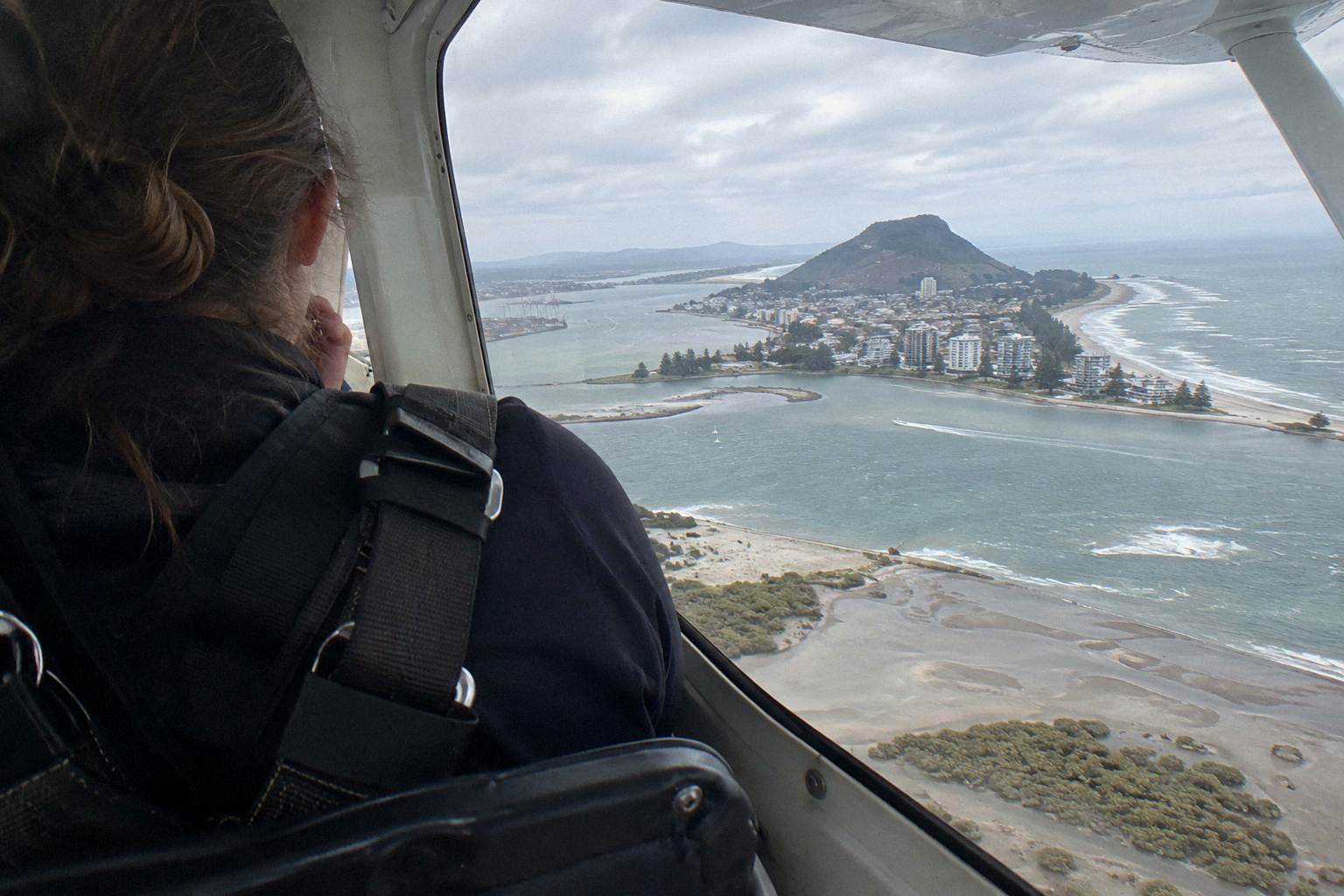
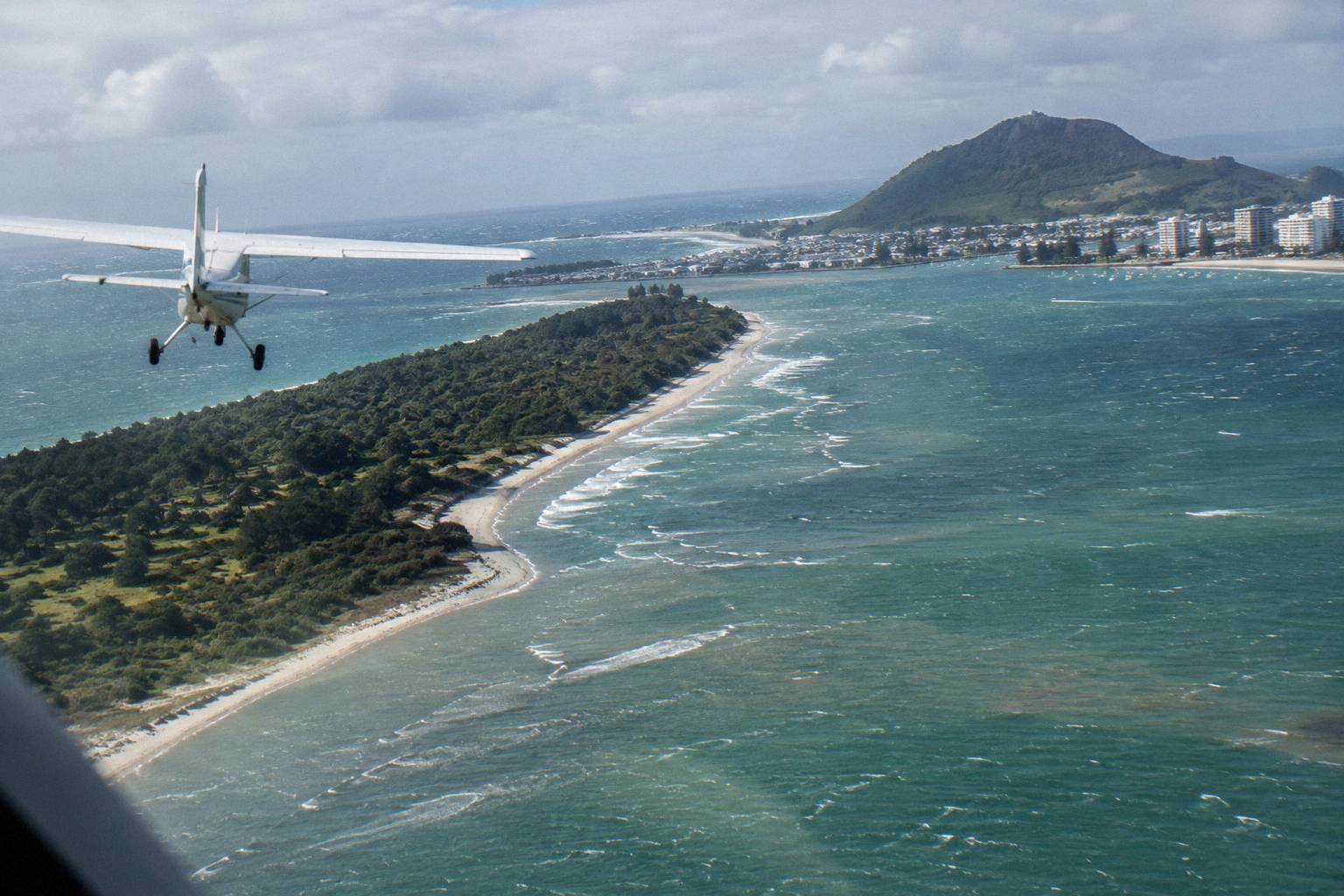
Mid-air collision is another feared scenario and a genuinely rare one, concentrated among groups of experienced jumpers flying close formation. A tandem pair exiting on a clear drop zone with one aircraft load at a time, the setup at Tauranga Airport, where the Cessna 182 takes two tandems at a time, does not fit the collision pattern at all.
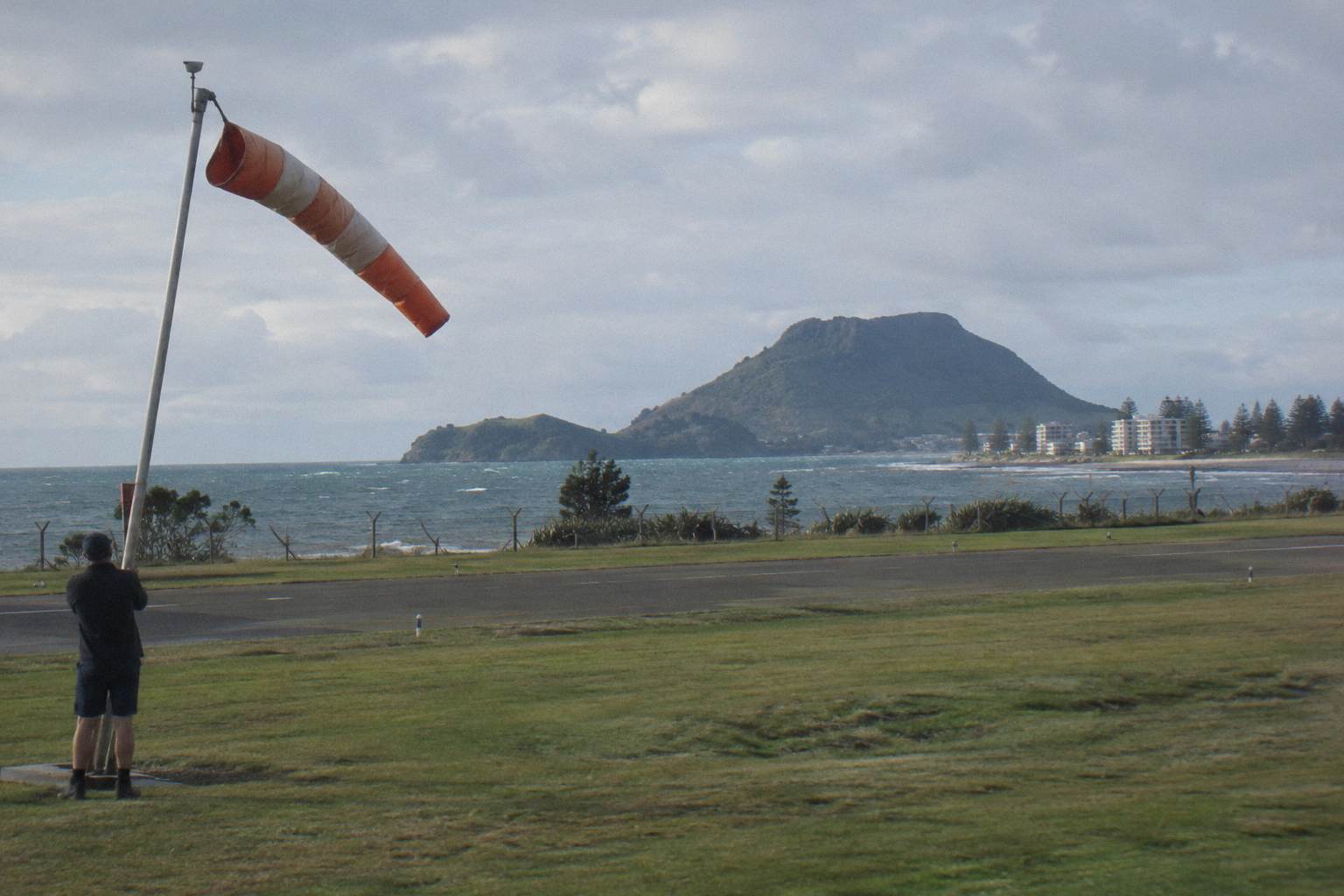
What remains for a tandem passenger is the ordinary stuff of any aircraft activity: weather calls made by the operator, not by you. If the conditions look poor, the operator phones on the day and works out a reschedule. That judgement, the go or no-go call, is another decision removed from the passenger, and it is one of the reasons Tauranga Skydive exists as a resource: to make clear which decisions you actually make and which ones you do not.
How New Zealand Regulates And Records Tandem Jumps
Tandem skydiving in New Zealand sits under the Civil Aviation Authority through Part 115 adventure aviation certificates and the Part 105 parachuting rules, not under the WorkSafe adventure activity audit regime, which lists skydiving as nearly certain not to be covered because it is aviation rather than a land or water based activity. The published record for 2024/25 shows one tandem accident with broken bones and no fatalities in the sector.
The separation confuses people. Adventure activities that must register and be safety audited by WorkSafe are defined as land based or water based; skydiving is not, so it is regulated as aviation. The operator certificate framework under Part 115 is what governs who may legally run tandem operations, and Part 105 prescribes the equipment and operating requirements those operators must follow, including the 5,000 ft tandem opening rule cited earlier.
The accident record published by the Authority for 2024/25 records one tandem parachute accident in the adventure aviation sector: broken bones, no fatalities. It is a small sector record, and it should be read as what it is, one year of one country's data, not a rate to extrapolate. The United States and international figures carry the statistical weight because their jump counts run into the millions.
For a reader booking a first jump, the regulation story translates simply. The instructor flying your canopy works inside a rule set that prescribes equipment, opening heights and procedures. Your side of the bargain is the passenger side: closed shoes that cannot fall off, the medical declaration on the waiver, and full disclosure about conditions such as heart problems, epilepsy or asthma so the operator can decide safely.
What Trips People Up Before You Book
The biggest pre-booking mistakes are misjudging the risk, fixating on freefall instead of the landing, hiding a medical condition on the waiver, and ignoring the weight and age rules that determine whether a jump can run at all. Passengers under 110 kg can book freely and should phone above that, the minimum age is 7 with a consent letter needed under 18, weather calls belong to the operator, and free cancellation applies up to 24 hours before the start.
Hiding a condition is the most consequential one, because the waiver language is specific: pregnancy, scuba diving within 24 hours and spinal or back injury are not recommended, and heart conditions, epilepsy, asthma and severe motion sickness must be declared. The operator can withdraw anyone likely to endanger themselves or others. Declaring is not a formality, it is the mechanism that keeps the medical decision with people who can make it.
Weight causes more day-of disappointments than any other rule. Under 110 kg, book freely; above it, call first, because a small surcharge applies and harness fit has to work. Children under 12 are asked to visit the drop zone first to be fitted in a harness. Every one of these is settled in a two minute conversation before you pay, and none of them is a judgement call you should leave to the day.
Time and weather are the last traps. Allow 1.5 to 2 hours on site and arrive 30 minutes before your slot. If the weather turns, the operator calls on the day and reschedules around your plans, and the booking page terms allow free cancellation up to 24 hours before the start. If you would rather see the fuller version of the day, the Bay of Plenty tandem skydive walkthrough sets out the whole sequence, and the deeper statistics sit in how rare dying from skydiving really is.
Common Questions About Skydiving Death Causes
What Is The Biggest Cause Of Skydiving Death?
Landing problems are the biggest single cause: they accounted for 25 percent of the 16 United States skydiving fatalities recorded in 2025. These are canopy control errors under an open parachute during the final descent, concentrated among experienced jumpers making aggressive low turns.
How Often Do Tandem Skydivers Die?
Rarely. The United States recorded one fatal tandem accident in 2025 and one in 2024, from millions of jumps each year. The FAI's 2024 international report counted 3 tandem deaths among 27 skydiving fatalities across 41 reporting countries and more than 7.28 million jumps.
Do Tandem Passengers Fly The Parachute?
No. The tandem master flies the canopy from opening to landing, and under New Zealand Part 105 rules must open the main parachute no lower than 5,000 ft. The passenger is briefed to lift their legs for touchdown while the instructor manages the landing.
What Happens If The Parachute Fails?
Tandem rigs carry a main and a reserve parachute, plus an automatic activation device that deploys the reserve if the pair descends too fast at low altitude. The instructor handles any malfunction, and the 5,000 ft minimum opening height exists to leave time for that response.
Is Freefall The Dangerous Part?
No. Freefall generates most of the fear and few of the fatalities. The fatal counts concentrate under open canopies, in landing, where speed is built by turns and recovered by altitude. A tandem passenger spends freefall attached to an instructor with no control inputs to get wrong.
Who Checks Whether A Jump Is Safe To Run?
The operator does. Weather and wind decisions are made by the drop zone, which phones on the day and reschedules if conditions are unsuitable. The passenger's responsibilities are the declaration on the waiver, closed shoes and the weight rules: book freely under 110 kg, phone above it.