Is It Common To Pee While Skydiving? What Tandem Operators Say
No, peeing during a tandem skydive is rare, adrenaline usually suppresses the urge, and one toilet stop before the harness goes on solves the rest. Here is what matters for a Tauranga jump.
It is the question almost nobody asks out loud and nearly everybody types into a search box the night before a first jump. The straight answer is reassuring: no, it is not common, and the way your body responds to adrenaline makes it far less likely than the nervous imagination suggests. Operators who field this question regularly report that involuntary urination mid-jump is rare, and that the far more useful habit is a toilet stop before the harness goes on, because after that the door is closed, literally.
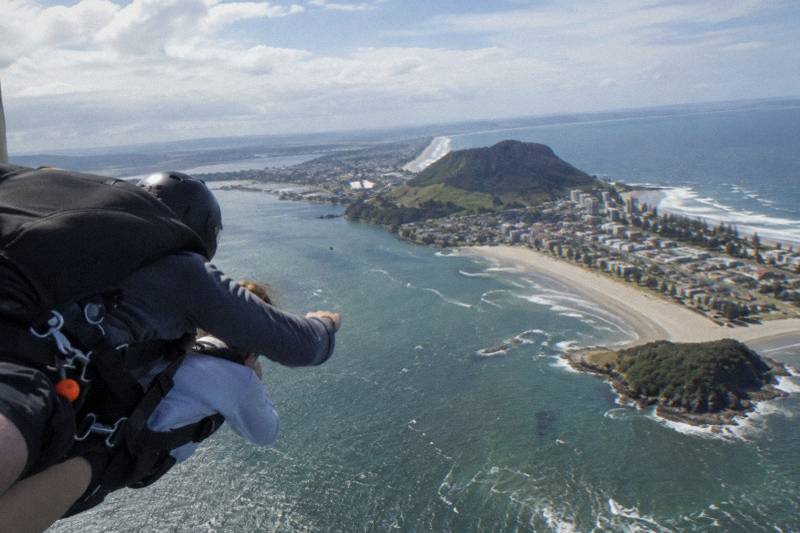
Start with the jump itself: the tandem options from Tauranga Airport all lift off and land at the same spot beside Mount Maunganui, with the whole visit running about 1.5 to 2 hours door to door.
| Fact | Detail |
|---|---|
| Is it common? | No, involuntary urination during a tandem skydive is rare |
| Why not | Adrenaline dominates, and most first-time jumpers notice no urge |
| The real constraint | Once the harness is fitted there is no bathroom access |
| The fix | A final toilet stop before gearing up |
| Related worry | Feeling sick is also uncommon, roughly 2 percent of first-timers |
| Time on site | About 1.5 to 2 hours for a Tauranga jump, arriving 30 minutes early |
Is It Common To Pee While Skydiving?
No, it is not common. Operators who publish on this question describe involuntary urination during a tandem skydive as rare, and most first-time jumpers report not noticing any urge to urinate at all, because adrenaline takes over the body's priorities. The problem people actually run into is smaller and fully avoidable: needing the toilet in the hour before the jump, or after the harness is already on and cannot be removed.
The fear usually arrives with a mental image: freefall, a full bladder, and no options. The physiology does not cooperate with that image. When you exit the aircraft, your system is flooded with adrenaline, which shifts blood away from the digestive tract and toward the muscles, and it sharpens attention onto the immediate moment. Operators familiar with thousands of first jumps describe the bladder as effectively forgotten once the door opens. One widely cited drop zone answer puts it plainly: involuntary urination is rare, and most first-time tandem students do not notice any need to go because of the adrenaline.
That does not mean the worry is silly. It means it is aimed at the wrong part of the day. The risk window is not the 40 seconds or minute of freefall, and it is not the few minutes under canopy. It is the ground time: arrival, paperwork, fitting, briefing, and waiting. Solve it there and the sky takes care of itself.
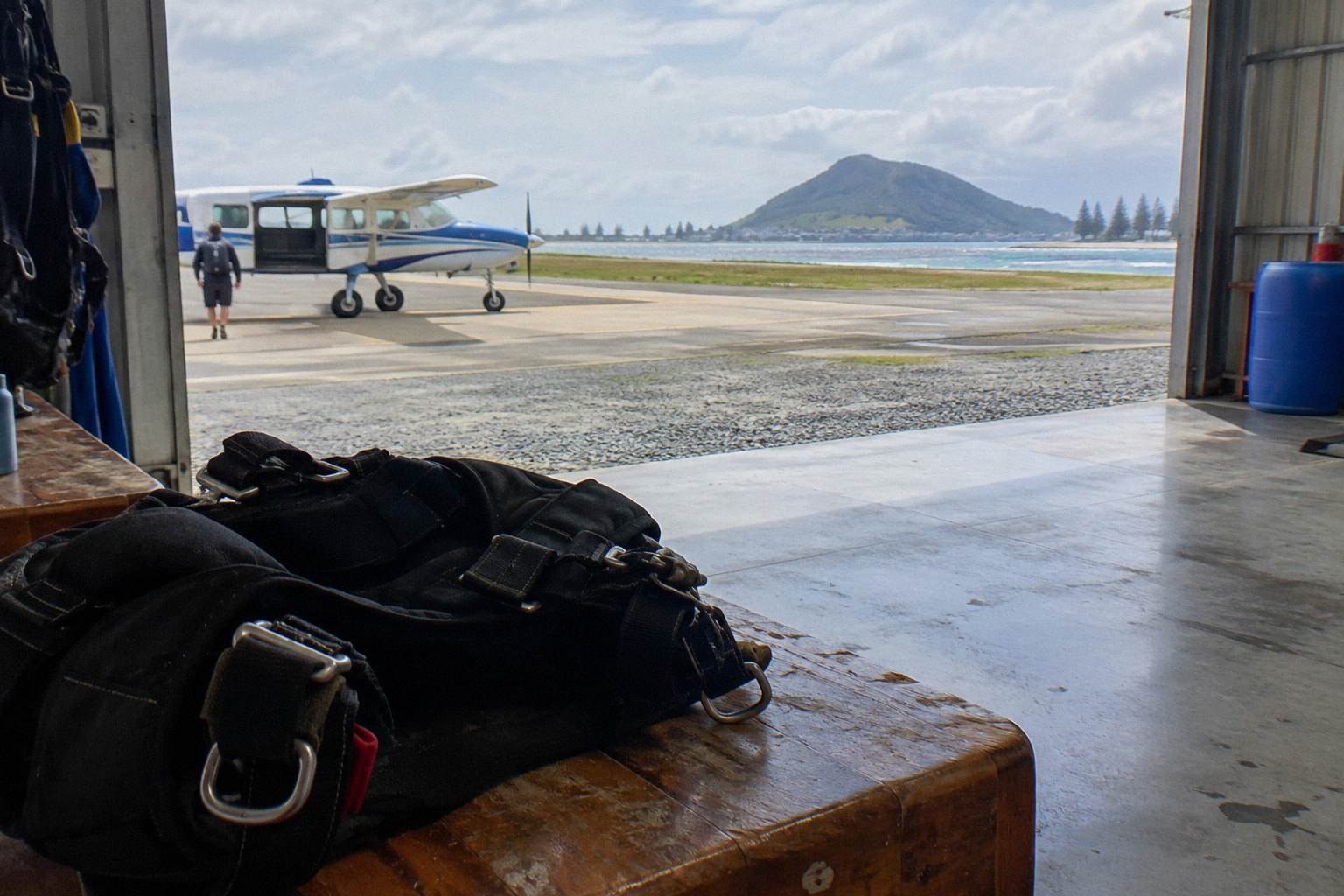
There is also a simple mechanical fact worth stating. A tandem harness is fitted snugly over the hips and legs, and it is not something you unbuckle at 12,000 or 15,000 ft. Jump masters cannot pause a jump for a bathroom break, and the aircraft is a Cessna 182 carrying two tandems at a time, so the whole flight runs to a schedule. The practical consequence is a single rule: go before you gear up.
Why Fear Alone Does Not Empty Your Bladder Mid-Air
Fear and urination are connected in the popular imagination, but on a tandem jump the connection mostly runs backwards. Adrenaline is a survival chemical: it constricts blood vessels, raises heart rate, and directs the body's attention to action, and jumpers overwhelmingly report that the urge to urinate simply disappears once the jump is underway. The nervous hour before the plane is when a bladder causes trouble, not the freefall itself.
The distinction matters because it changes what you prepare for. If you spend the drive to the airport worrying about freefall, you are worrying about the 40 seconds or so when the problem statistically cannot happen. What you should think about instead is the waiting room, and that is where a little planning beats all the reassurance in the world.
Two practical points follow. First, nerves on the ground can genuinely send you to the toilet more than once, which is normal and fine, and better out than aloft. Second, once you are called to gear up the countdown is short: fitting, a briefing, a walk to the aircraft, a 15 to 20 minute climb to altitude, then the jump. Operators ask you to arrive at least 30 minutes before your scheduled takeoff, and the whole experience takes 1.5 to 2 hours, per the operator's what-to-know page. That 30 minute buffer is exactly the window for a last toilet stop.
A related note on the same page: screaming during freefall is encouraged, not embarrassing. Forcing air out against the wind stream actually makes breathing feel easier, so the loud jumper beside you is doing it right, and the same adrenaline that loosens vocal cords is the one quietly ignoring your bladder.
What The Harness Changes About Toilet Access
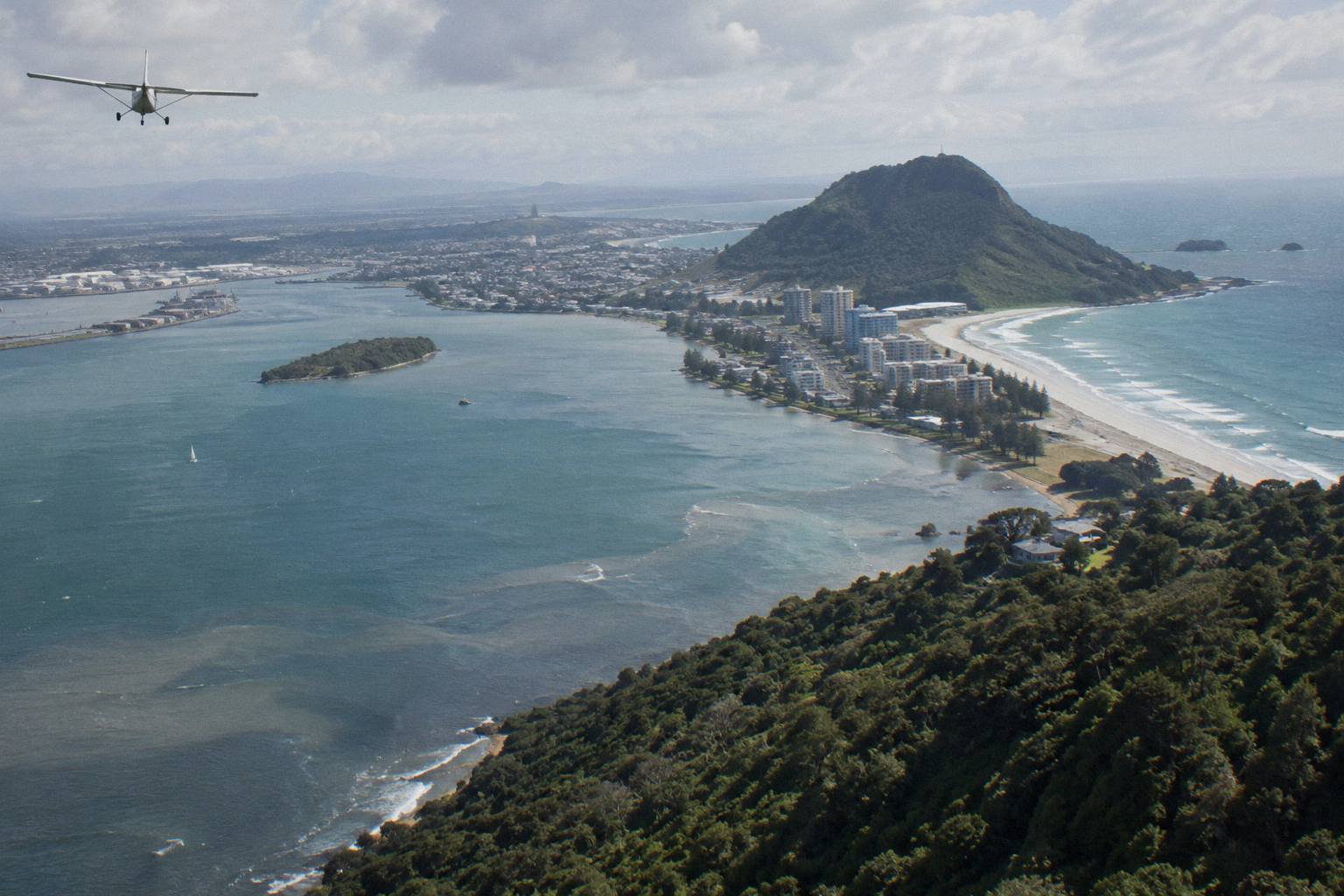
A tandem harness is the reason the toilet question exists at all. It is fitted tight across the hips and legs, it stays on from ground briefing until after landing, and there is no way to remove it mid-flight, so from the moment it is buckled there is no bathroom access for the duration. That is usually under two hours end to end, and the operator's own answer is a final restroom stop before getting geared up.
Think of the harness as the point of no return, and plan backwards from it. Once fitted, your commitments are: the safety briefing, boarding, the climb to altitude, the jump, and the few minutes of canopy ride back down to the same airfield you left. Skydive Tauranga lands you at the same place you took off from, Tauranga Airport beside Mount Maunganui, so there is no long transfer tacked on afterward either. Land, unbuckle, and normal life resumes, bathrooms included.
For anyone weighing how the timing fits a morning, the booking system's defaults are worth knowing: if no booking exists, the first jump of the morning is 10am and the first of the afternoon is 12pm, with earlier or later slots assigned by availability. Picking the first slot of the day is a quiet advantage for the toilet-anxious: less waiting around, less time to drink three coffees and stare at a wall.
What To Do In The Hour Before You Gear Up
Keep the hour before your jump boring in the best way: eat a normal light meal one to two hours ahead rather than arriving either full or empty, drink water steadily rather than in a panic chug, go easy on coffee if you are not a regular drinker, and make a deliberate toilet stop as the last thing you do before the harness goes on. Those four habits cover almost everything the bladder question asks about.
The eating advice is not a detour, it is the same system. An empty stomach increases the odds of feeling lightheaded or queasy during or after a jump, and jump-day nerves amplify that. Something plain, a sandwich, eggs, fruit, oatmeal, an hour or two before you arrive sits better than either a skipped breakfast or a big one. The same guidance applies to caffeine: a jittery baseline plus adrenaline is an uncomfortable combination, so a normal amount if you normally drink it, and less if you do not.
Water follows the same logic. Steady sips across the morning beat a large volume at once, which mostly guarantees a full bladder right when the harness appears. And alcohol is simply off the table before a jump; operators treat it as a serious safety issue, and it is one of the factors linked to the small share of first-timers who do feel sick.
Then the final step, stated as a rule by operators who answer this daily: a last restroom stop before getting geared up, because the harness prevents bathroom access afterward. Build it into your mental checklist alongside closed shoes (mandatory at the operator's FAQ page) and any medical declarations. Checklist done, the question is closed for the day.
| Timing | What Helps | Why |
|---|---|---|
| 2 hours before | Normal light meal | Avoids an empty stomach and lightheadedness |
| Morning overall | Steady water sips | Prevents a suddenly full bladder at fitting |
| 1 hour before | Keep caffeine normal or lower | Adds no jitters to adrenaline |
| Before fitting | Final toilet stop | Harness prevents bathroom access afterward |
| At the airfield | Arrive 30 minutes early | Built-in buffer for paperwork and the stop |
Motion Sickness, Nausea And The Other Embarrassment Question
The worry people voice second is sickness, and the numbers are similarly kind: only about 2 percent of first-time tandem jumpers get sick, and it is often linked to alcohol the night before or skipping meals, not to the jump itself. The same adrenaline that suppresses the bladder urge also tends to hold nausea down, and the precautions are identical: eat lightly, hydrate, arrive rested and sober.
Two percent is a small number, and the linked causes are the avoidable ones. That is worth dwelling on, because it means the two embarrassing-question fears share one prevention list. Eat something plain a couple of hours out. Skip the big night before. Do not arrive having drunk nothing all morning, and do not arrive having drunk three energy drinks either. The body you bring to the airfield does most of the deciding.
If you are the rare person who does feel queasy, it is manageable and not shameful: instructors see it regularly and know what to do, and motion-sensation issues under the parachute can be eased with breathing and the instructor's guidance. Ear pressure on descent affects some jumpers the same way, and mentioning sinus congestion on your medical form beforehand lets the drop zone advise you properly.
None of this is specific to one operator, but the frame is: a Tauranga jump is a short, contained visit, about 1.5 to 2 hours, at one airfield, with a 15 to 20 minute climb, up to about a minute of freefall at 15,000 ft, and a few minutes under canopy. There is not much time in the air for problems to develop, which is part of why the percentages run so low.
Where A Tauranga Jump Fits Your Day Plan
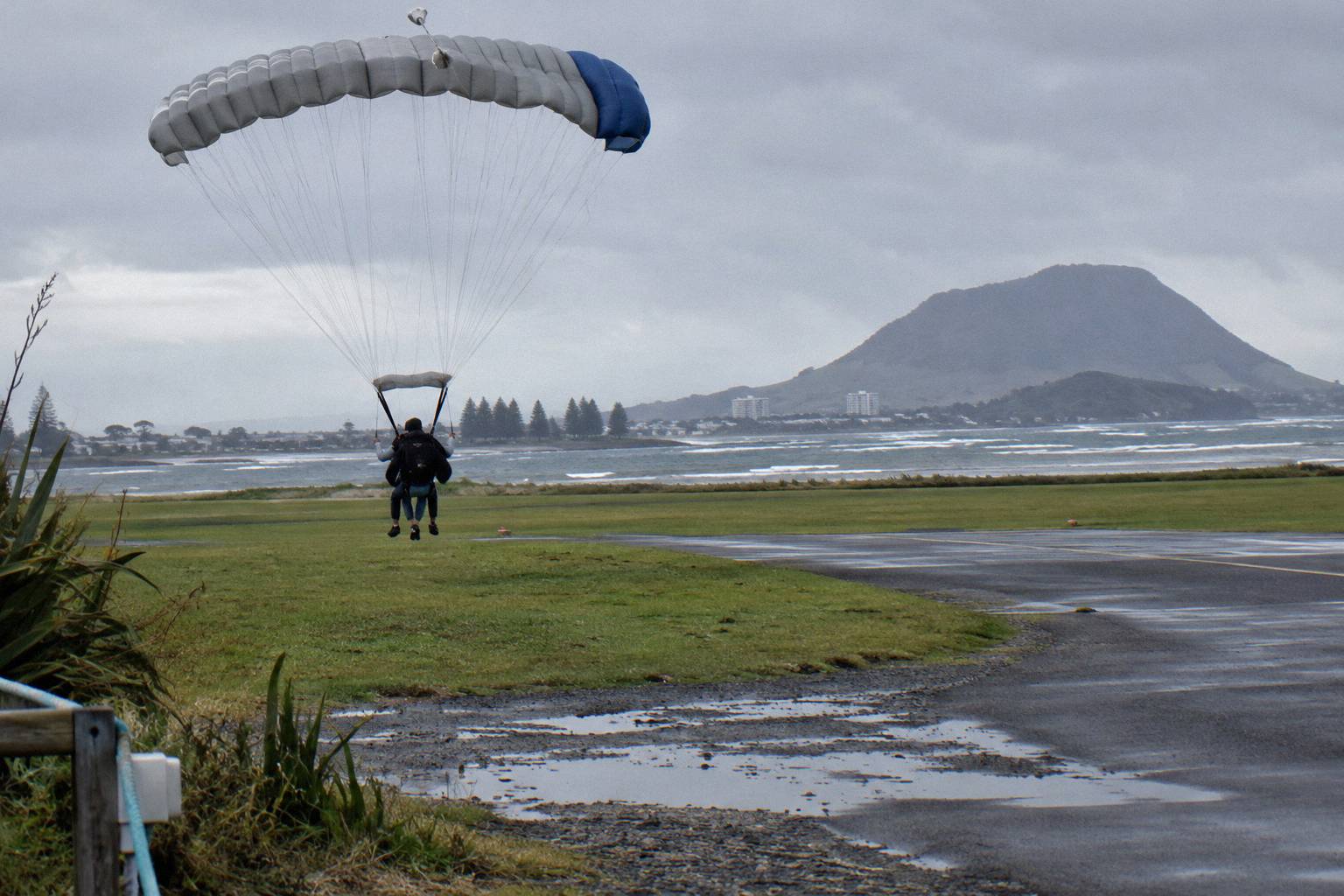
The jump slots neatly into a Bay of Plenty day because everything happens from one place. You take off and land at Tauranga Airport in Mount Maunganui, the whole visit runs about 1.5 to 2 hours, and the airport sits roughly a 5 to 10 minute drive from the cruise dock. Plan the toilet stop into the 30 minute early arrival and the rest of the day stays your own.
Cruise passengers get the tightest version of this arithmetic, and it still works: a morning slot, the airport a short drive from Salisbury Wharf, and the rest of the day in and around Mount Maunganui. Independent travellers have even more slack. If you are pairing the jump with the day plan ideas around a Mount Maunganui skydive, the jump is deliberately the first item on that list, precisely because it is short and weather-dependent.
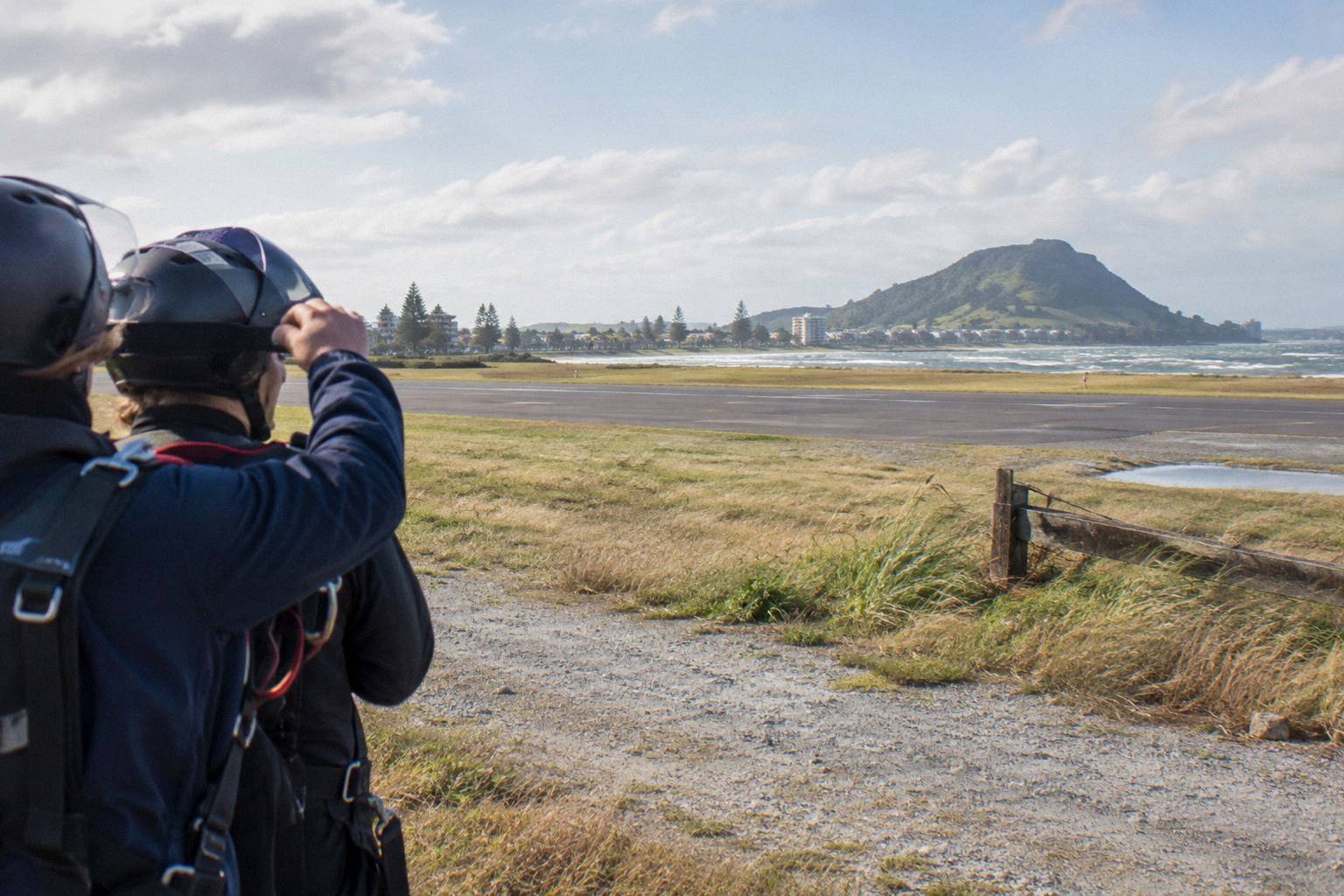
Choosing between the listings comes down to height and framing rather than fundamentals. The From Tauranga: Skydive over Mount Maunganui listing offers 12,000 or 15,000 ft by option with a 20 to 25 minute scenic flight and a 5.0 rating from 66 reviews; the 15,000ft Tandem Skydive in Tauranga runs the same drop zone at 15,000 ft with freefall up to 40 seconds of climb-time difference priced on the booking page. If you are still weighing heights, the 12,000 versus 15,000 ft comparison breaks down exactly what changes, and you can check availability once you have settled on one.
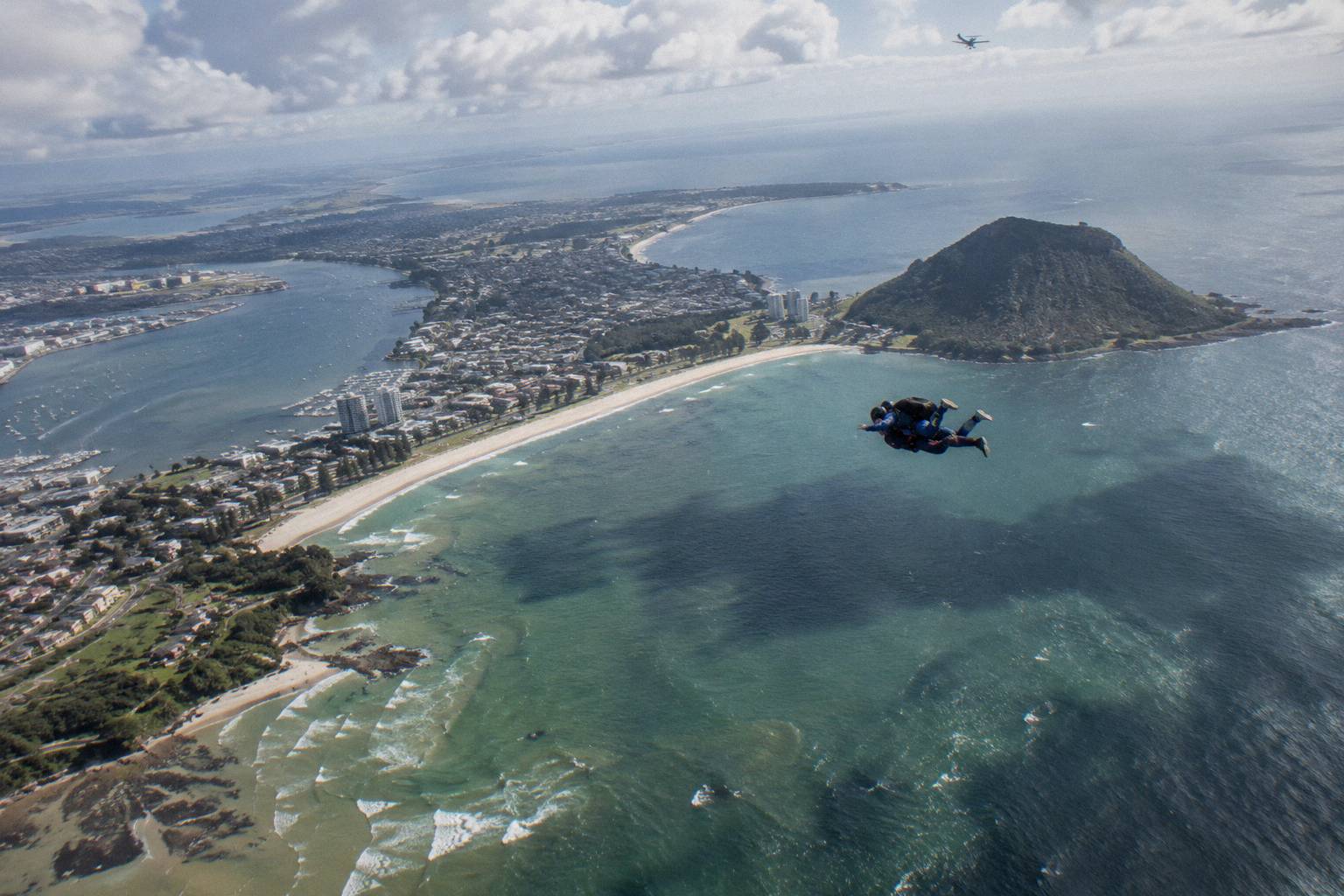
Both of the Tauranga 15,000 ft listings, the 15,000ft Tandem Skydive and the Bay Of Plenty 15,000ft Skydive, take a maximum of two travellers per slot at 110 kg each, so a pair books together and jumps together. Photos and video are paid extras on every Tauranga jump, never part of the ticket, which matters if your post-jump plans include sharing the footage before the day ends. Tauranga Skydive keeps the whole operation at one airfield, which is the quiet reason the day plan stays simple.
The Bay Of Plenty 15,000ft Skydive is the same jump sold with the region in the name: 15,000 ft, about 1.5 hours, minimum age 7, book freely under 110 kg and phone above it. First-timers with a full morning of nerves ahead of them sometimes prefer its plain framing to deciding between options, and there is something to be said for removing choices on a day that already has enough of them. See dates on its booking page before you lock in a morning.
What Trips People Up Before You Book
The recurring mistakes are small and avoidable: skipping breakfast out of nerves, over-drinking coffee or water in the waiting hour, treating the 30 minute arrival buffer as slack to eat into, and never making the deliberate toilet stop before the harness goes on. A few jumpers also book a tight post-jump schedule and then discover the day has no give in it when weather or airport traffic delays a slot, which the operator warns can happen.
Each one deserves a sentence. Skipping food backfires: an empty stomach raises the odds of lightheadedness, and it is one of the factors behind the small minority who feel sick. Over-correcting with three coffees does the same from the other direction. Arriving with only minutes to spare converts your buffer into a dash, and the toilet stop is the first thing that gets sacrificed, which is exactly the mistake this whole article exists to prevent.
Booking a cruise-transfer or a lunch reservation hard against the jump is the quieter trap. The operator notes that sometimes jumps run a little late due to weather or traffic on the airport, and on a day with morning slots the safe assumption is that your 1.5 to 2 hour window can stretch. Give the afternoon a seam.
Finally, do not overthink the headline fear. The sequence that actually protects you is boring: light food, steady water, a normal caffeine day, one final stop, closed shoes, and the 30 minute early arrival. Every listing on the site carries free cancellation up to 24 hours before the start for a full refund on the booking page, so the decision to book is low-risk, whatever your bladder has to say about it.
Common Questions About Toilet Needs On Jump Day
Is It Common To Pee While Skydiving?
No. Operators describe involuntary urination during a tandem skydive as rare, and most first-time jumpers notice no urge at all because adrenaline dominates the experience. The practical rule is a toilet stop before the harness goes on, since it cannot be removed once fitted.
Can I Use The Toilet During The Jump?
No. Once the tandem harness is fitted there is no bathroom access until after landing, and the harness stays on through the briefing, the climb to altitude, freefall and the canopy ride. The whole experience runs about 1.5 to 2 hours.
Does Being Scared Make You More Likely To Need The Toilet?
Nerves on the ground can send you to the toilet more than once, which is normal. Once the jump starts, adrenaline typically suppresses the urge rather than triggering it, and the risky window is the waiting hour, not the freefall.
What Should I Eat And Drink Before A Skydive?
Eat a normal light meal one to two hours before, drink water steadily through the morning rather than all at once, keep caffeine at your usual level or lower, and avoid alcohol entirely before a jump. An empty stomach increases the chance of feeling lightheaded or queasy.
Is Feeling Sick More Common Than Needing The Toilet?
Both are uncommon. Only about 2 percent of first-time tandem jumpers get sick, and it is often linked to alcohol or skipped meals. The same preparation list, light food, steady hydration and a rested arrival, lowers both risks at once.
How Early Should I Arrive At The Drop Zone?
At least 30 minutes before your scheduled takeoff. That buffer covers paperwork, fitting and briefing, and it is the natural window for the final toilet stop before the harness goes on.